
How Much Does It Really Cost to Build a Fitness App Like Strava in 2026?
83 Views 2 min February 24, 2026

Introducing Nalini, our tech-savvy content expert at Apptunix, with 8+ years of experience in technical content writing. With a knack for making complex ideas simple, she turns intricate tech concepts into engaging reads. Her work highlights emerging trends such as AI-powered applications, cross-platform development, digital transformation initiatives, and B2B technology solutions. Through her strategic storytelling, she plays a vital role in advancing Apptunix’s mission to shape the future of mobile and web experiences, enabling clients to make smarter, technology-driven decisions that accelerate growth and secure a competitive edge.

Wondering about smart contracts development costs? Before we dive into that, let’s start from the basics!
When smart contracts were first reintroduced by Ethereum back in 2015, people were skeptical about their importance. Fast forward to 2023 and businesses across the globe are vying for smart contract development. Previously, the smart contracts market was valued at $183 million and is expected to cross $1.5 billion by 2032.
Reintroduced, yes, you read that right! Ethereum wasn’t the one who birthed the concept of smart contracts. It was the one who bolstered the idea though. In fact, it was Nick Szabo – the pioneer of blockchain and the possible contender for Satoshi Nakamoto – who coined the term during the early 90s.
Smart contracts make it possible to remove intermediaries from financial transactions. This not only brings down the cost but also makes the process more efficient, faster, and less prone to conflicts.

Interestingly enough, a vending machine can serve as a typical example of the implementation of smart contracts. If you’re looking to leverage smart contract development and want to know the estimated smart contract development cost, then you’re in the right place.
In this detailed guide, we will discuss more about smart contracts, how smart contracts benefit your business, how much it costs to build a smart contract, and the shortcomings of smart contracts – let’s discuss it all!
A smart contract is a program on a blockchain that executes when certain conditions are met. It is a self-executing contract programmed to carry out a specific action when certain conditions are met.
In simple terms, smart contracts let two or more people or businesses exchange something of a certain value in a transparent and conflict-free ecosystem without the need for any third-party, such as a banking institution or a real estate broker.
A smart contract is executed on the blockchain. This means that the terms are stored in a distributed database that doesn’t allow them to be changed.
Smart contracts serve a fundamental purpose in the implementation of DeFi (decentralized finance) applications. They are also among the top applications of blockchain, other than NFTs, and cryptos.
Also Read: What is DeFi Lending and How Does it Work?

There is a lot that goes into the working of smart contracts. Let’s understand how a smart contract works with an example. Suppose, a person – say ABC – needs to sell land to another person – say XYZ – via a smart contract.
Let us assume that the transaction amount is $50,000. To accomplish the deal, the two parties will form an agreement on a blockchain platform via a smart contract that states, “If ABC receives $50,000 from XYZ, then XYZ receives the ownership of the land.”
As this smart contract is stored on the blockchain, it can’t be altered. Thus, XYZ need not worry that ABC will increase the amount demanded. Moreover, XYZ doesn’t need to pay any additional fee to a third-party like a lawyer or broker to ensure that they have made the payment.
Thus, as we can see from the above example the person doesn’t need to worry about the terms being changed or sparing extra money for closing the deal.
The terms and conditions are added to a smart contract in the form of code. Once the conditions are met, the smart contract enters execution and accomplishes what it needs to do. The final results are applied to the decentralized database of the blockchain.
There are several benefits of leveraging smart contracts development. Let’s know each one of them one by one in brief:
The complexity of a smart contract plays a major role in determining development cost. Simple contracts that handle basic functions like token transfers or single-condition execution require less time and effort. However, contracts with advanced logic—such as multi-signature approvals, automated workflows, staking mechanisms, or DeFi functionalities—require more planning, coding, and testing, which significantly increases costs.
The choice of blockchain platform directly affects smart contract development costs due to differences in programming languages, tools, and ecosystem maturity. For example, Ethereum-based smart contracts often cost more because of gas optimization and security requirements, while platforms like Polygon or Binance Smart Chain may reduce costs. Emerging or complex platforms such as Solana or private blockchains typically require specialized expertise, increasing overall expenses.
Security is a critical factor in smart contract development and a major contributor to cost. Since smart contracts are immutable once deployed, they must be thoroughly tested and audited to prevent vulnerabilities. Projects that involve financial transactions, tokens, or sensitive data often require third-party security audits, which can significantly increase the total development budget but are essential to avoid costly exploits.
Smart contracts often need to interact with external systems such as web or mobile applications, payment gateways, wallets, or blockchain oracles. Each integration adds complexity to the development process, requiring additional development time, testing, and maintenance. The more external dependencies a smart contract has, the higher the overall development cost.
Using pre-built smart contract templates or established libraries like OpenZeppelin can reduce development costs and time. In contrast, fully custom smart contracts designed for unique business logic require extensive development, testing, and security validation. Customization increases flexibility and functionality but also raises the cost due to additional development effort.
Some projects rely on a single smart contract, while others require multiple interconnected contracts to function properly. Multi-contract architectures, upgradeable contracts, or modular systems require more design, coordination, and testing. As the number of smart contracts increases, so does the overall development and maintenance cost.
The level of testing and deployment strategy also impacts smart contract development costs. Deploying on test networks, performing automated and manual testing, and simulating real-world scenarios all add to development time. Enterprise-grade projects often require extensive testing before mainnet deployment, increasing costs but ensuring reliability and performance.
For industries such as finance, healthcare, or government, compliance with legal and regulatory standards can significantly impact smart contract costs. These requirements may involve additional documentation, security checks, and approval processes. Ensuring compliance adds complexity and time to development, but it is essential for operating within regulated environments.
The experience level of blockchain developers and the location of the development team influence pricing. Highly experienced smart contract developers command higher rates but reduce the risk of errors, vulnerabilities, and rework. While offshore teams may lower costs, complex or high-value projects often benefit from senior expertise, which can increase the overall budget.
Although smart contracts are designed to be self-executing, many projects require ongoing maintenance, optimization, and upgrades. Costs increase if the contract needs future enhancements, bug fixes, or performance improvements. Projects that plan for long-term scalability and upgrades typically invest more upfront to reduce future risks and expenses.

Smart contracts come useful for various purposes in different market segments. Some of the most important ones are explained below:
1. FinanceThere are many walks of finance where smart contracts can be deployed. These include:
2. HealthcareThere are many uses for smart contracts in healthcare. These range from health insurance to health tracking and medical research. Let’s know each one of them, one at a time:

3. IoTThe Internet of Things, just like blockchain, is an emerging technology that has a lot of potential. Smart contracts have a multi-faceted impact on IoT.
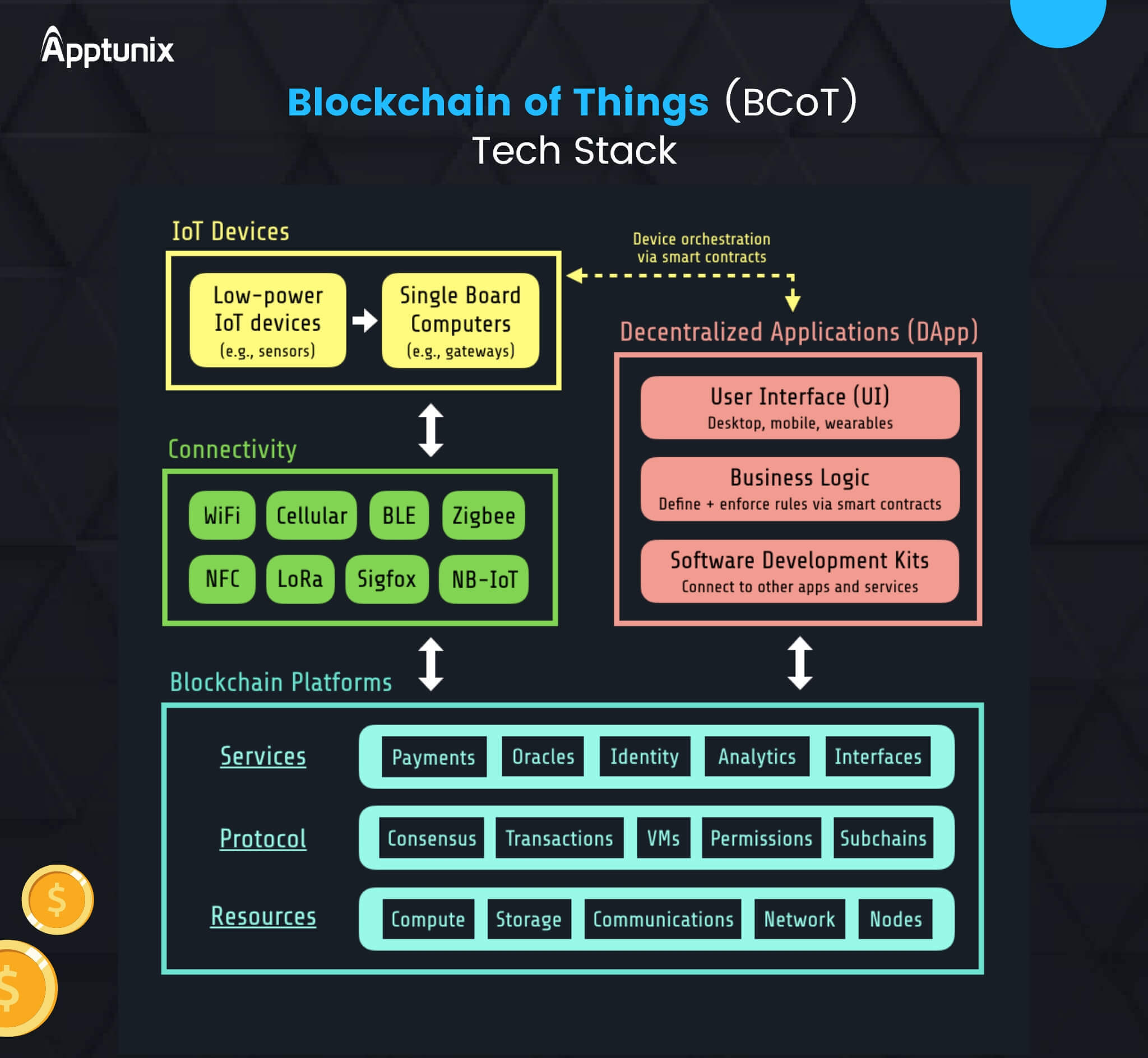
4. MediaThere are several benefits that smart contracts offer when it comes to selling and distributing media. This includes:
5. Supply Chain ManagementThe supply chain is a field that is immensely transformed by smart contracts, which have a galore of applications in managing supply chains, including:
6. VotingAnother important use of smart contract development is for facilitating voting.
7. Other Uses of Smart Contracts
To be frank, smart contract development isn’t cost-efficient yet. That is because the technology is still in its infancy. Hence, finding reliable service providers and experienced professionals is a challenge.
Consequently, smart contract development cost can range anywhere between $7k to $15k, whereas for a complex smart contract development cost can vary between $25k to $45k. Nonetheless, for a smart contract that is developed for a full-fledged organization, the price might reach or even exceed $100k.
Mind you, this cost is strictly for developing the smart contract only and not deployment (on the main net), which will further add to the overall amount that you need to spare. Other costs that you need to consider are transaction costs and audit costs.
Transactional costs are mainly influenced by network fees. In most cases, transactions on smart contracts cost less than those in traditional contracts, but sometimes they might be costlier. Also, the transaction fees involved depend on the Blockchain Development Platform you are using as well as the current market conditions.
Organizations offering smart contract audit services can charge anywhere between $5k to $15k. The exact amount depends on the code complexity. In certain cases, the price can be as low as $5k or as high as $15k.
Although smart contracts development is the future, there are many pitfalls – which stem from the nature of smart contracts and the fact that they aren’t fully developed yet – that you need to avoid. So, let’s go through them one by one:

1. Immutability Means No Scope of CorrectionSimilar to the blockchain, smart contracts are immutable, which means once the terms are defined, they can’t be altered. This is not entirely a disadvantage – as it provides better security – but it is a double-edged sword for sure.
Even a minute error in code can cost businesses a lot of effort, time, and money to fix it. A turnaround for this is defacto mutability, where blockchain developers store segments of code in other contracts and store the location of the same in the changeable storage.
2. Incomplete Intermediary EliminationYes, smart contracts allow the elimination of having a third-party govern the deal, but not entirely. For now, it is not possible to eliminate third-parties completely. In fact, the roles might be changed and the third-party might be still involved, but for some other purpose and in a lesser capacity.
Let us understand this with an example. Suppose two people want to make a land-selling deal then they do not need a lawyer for developing the smart contract. However, they need to consult a lawyer to know the exact terms to be added to the smart contract.
3. Legal InvolvementIn paper contracts, a dispute can be raised over an unclear statement. In smart contracts, such a case might arise if a party states that the code is buggy.
The parties involved will have to initiate a legal procedure to solve this issue, avoiding which was the primary purpose of smart contracts. Two options that can solve this problem are:
For now, it is not possible to completely remove the dependency on legal involvement until and unless the parties involved have a strong understanding of each other.
4. Loophole ExploitationSmart contracts are yet to be regulated by the law. Thus, it is difficult to ensure that the terms met are the exact ones that were implied before executing the contract.
Many individuals and businesses are always looking forward to explicit loopholes, which is easier with something like smart contracts that don’t come under the jurisdiction of the law.
5. Unclear T&CIf you have gone through the terms and conditions of anything, one thing that you might have noticed is that almost nothing is entirely black or white. A contract has numerous terms and conditions that are implied. Hence, their meaning might differ from context to context.
It might be easy to make the terms and conditions of a smart contract simple if only a few parties are involved. However, doing the same when a huge number of parties are involved becomes almost next to impossible.
So you see, smart contracts development is on the rise. Also, there are several sectors that can use the concept for making life easier for both businesses and consumers.
The concept of smart contracts is still in its infancy. Therefore, there are many limitations that you need to consider before delving into smart contract development. Thankfully, with careful planning and thoughtful partnerships, these can be mitigated.
You may expect major developments in the field of smart contracts in the near future. With the rise of blockchain-powered tech, we are yet to see smart contracts in full-fledged action.
If you aren’t sure whether you should go for smart contract development, you can contact Apptunix. Our experts will analyze your requirements and objectives, and then offer you sound advice.

Q 1.What is smart contract development?
Smart contract development is the process of developing a smart contract and deploying it onto a blockchain platform.
Q 2.How to develop smart contracts?
At our blockchain development company, we specialize in smart contract development. Explore top platforms like Avalanche, Ethereum, Hyperledger Fabric, and Solana for your project needs
Q 3.What are the limitations of smart contracts?
Smart contracts aren’t fully developed yet. As such, smart contracts face issues like legal uncertainty, incomplete elimination of third-parties, and the need to add legal services for conflict resolution.
Q 4.What are some of the most popular blockchain platforms for smart contracts?
Avalanche, Algorand, Ethereum, Hyperledger Fabric, and Solana are five of the most popular blockchain platforms for deploying smart contracts.
Get the weekly updates on the newest brand stories, business models and technology right in your inbox.
Introducing Nalini, our tech-savvy content expert at Apptunix, with 8+ years of experience in technical content writing. With a knack for making complex ideas simple, she turns intricate tech concepts into engaging reads. Her work highlights emerging trends such as AI-powered applications, cross-platform development, digital transformation initiatives, and B2B technology solutions. Through her strategic storytelling, she plays a vital role in advancing Apptunix’s mission to shape the future of mobile and web experiences, enabling clients to make smarter, technology-driven decisions that accelerate growth and secure a competitive edge.
83 Views 2 min February 24, 2026

55 Views 2 min February 13, 2026

54 Views 2 min February 12, 2026
Book your free consultation with us.
Book your free consultation with us.

One Central, The offices 3, Level 3, DWTC, Sheikh Zayed Road, Dubai, United Arab Emirates
+971 50 782 1690