Wedding/Marriage App Development for KSA and GCC: A Founder’s Playbook
337 Views 13 min December 26, 2025

Over the next few years, businesses are expected to rely even more heavily on mobile-first products to drive revenue, operations, and customer engagement. As competition grows, expectations rise faster than timelines or budgets. That pressure often pushes teams to rush one of the most important decisions they will make: hiring the right development partner.
Most mobile app projects don’t fail because the idea was weak.They fail because the wrong decisions were made before development even began.
When businesses start hiring mobile app development companies without a clear evaluation process, small gaps turn into large problems. Missed deadlines. Unclear scope. Features that look complete but fail to perform. Budget overruns that were never part of the original plan.
A mobile app development company becomes an extension of your product, your brand, and often your internal team. When that relationship is misaligned, the cost shows up everywhere. Over time, what started as a promising initiative turns into a stalled product that never reaches its potential.
Understanding where hiring mistakes happen and why they repeat is the first step toward avoiding them.
The risk of hiring mistakes changes by industry, but the outcome rarely does. Lost time. Lost money. Lost momentum. Here is how those mistakes show up across different sectors.
1. Fintech and Financial ServicesSeveral fintech platforms rushed into development with vendors that lacked regulatory experience. The result was repeated compliance revisions and delayed approvals. In many cases, established mobile app development companies were later brought in to restructure architecture and security layers so the product could actually launch.
2. HealthcareHealthcare apps have failed not because of features, but because development partners treated them like regular consumer apps. Data privacy gaps and poor workflow design forced many providers to switch teams mid-project and rebuild with healthcare-focused mobile app consulting services.
3. Ecommerce and RetailMajor retail brands have launched apps that looked polished but failed to convert. The issue was not design quality. It was poor performance under load and slow checkout flows. After changing development partners, these brands simplified journeys and recovered user trust.
4. Logistics and Supply ChainLogistics platforms often suffer from scalability issues when development partners lack enterprise system experience. Several large operators had to replace early vendors and rework integrations with teams that understood complex backend systems.
5. Media and Content PlatformsSome content platforms invested heavily in feature-rich apps that confused users. After switching to product-focused development teams, they reduced complexity and improved retention through clearer navigation and performance fixes.
6. Real Estate and MarketplacesMarketplace apps have failed when early partners overbuilt features without validating demand. Rebuilding with experienced product development companies helped these platforms focus on core transactions and grow sustainably.
7. SaaS and Enterprise ToolsEnterprise tools frequently struggle when development partners do not understand internal adoption. In many cases, replacing the original vendor helped align product design with real user workflows.
→Across all industries, the pattern is clear. Hiring mobile app development companies without proper diligence leads to expensive corrections later. The impact may look different, but the cost is always real.

The numbers around mobile app failures are stark and telling. According to industry research, over 70% of apps launched annually fail to meet user expectations or gain meaningful traction within the first year. The reason rarely lies in technology—it’s almost always in early-stage decisions: scope, strategy, and partnership.
Budget overruns are another common story. A report by Statista shows that nearly 60% of app development projects exceed initial budgets by 30–50%. The leading causes? Unclear scope, misaligned expectations, and poor vendor evaluation. Communication breakdowns and rushed timelines often compound the problem.
Even top brands have faced costly app missteps before finding the right development partner:
Target initially launched a mobile app with minimal features for online shopping. Users abandoned it due to poor performance and confusing navigation. After partnering with a skilled mobile app development company, the revamped app increased daily active users by 40% within six months.
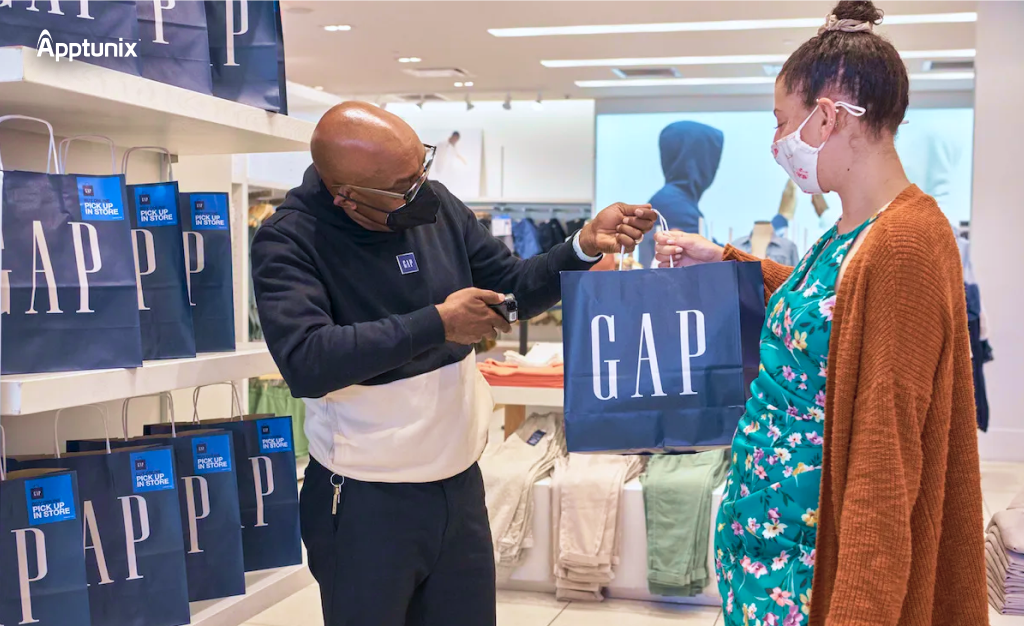
Gap struggled with a retail app that failed to integrate loyalty programs. After revisiting strategy with a product development company, Gap launched a custom mobile app that improved engagement and drove 25% higher in-app sales.
Zara once launched a global app without proper backend support. The early version suffered crashes and delays. Post re-development with a consulting-focused app development company, the app stabilized and became a critical driver of online revenue.
Projects that involve the right mobile app development partner from the start consistently perform better:
Hiring mistakes with mobile app development companies often create a cycle of delays, cost overruns, and vendor changes. Each misstep compounds the risk and reduces internal confidence.
The lesson is clear: most failures are not sudden. They are predictable and almost always begin with rushed hiring or wrong evaluation criteria.
Most problems with mobile apps do not show up on day one. They surface weeks or months later, once timelines slip, costs rise, and expectations stop lining up.
What makes this frustrating is that the same hiring mistakes with mobile app development companies keep repeating. Different industries. Different budgets. Same patterns.
Before diving into specifics, it helps to name the high-level errors businesses still make when selecting a partner.
These common mistakes when hiring app developers rarely look serious at the start. But together, they create fragile foundations that cannot support real growth.
Let’s break down where things actually go wrong.
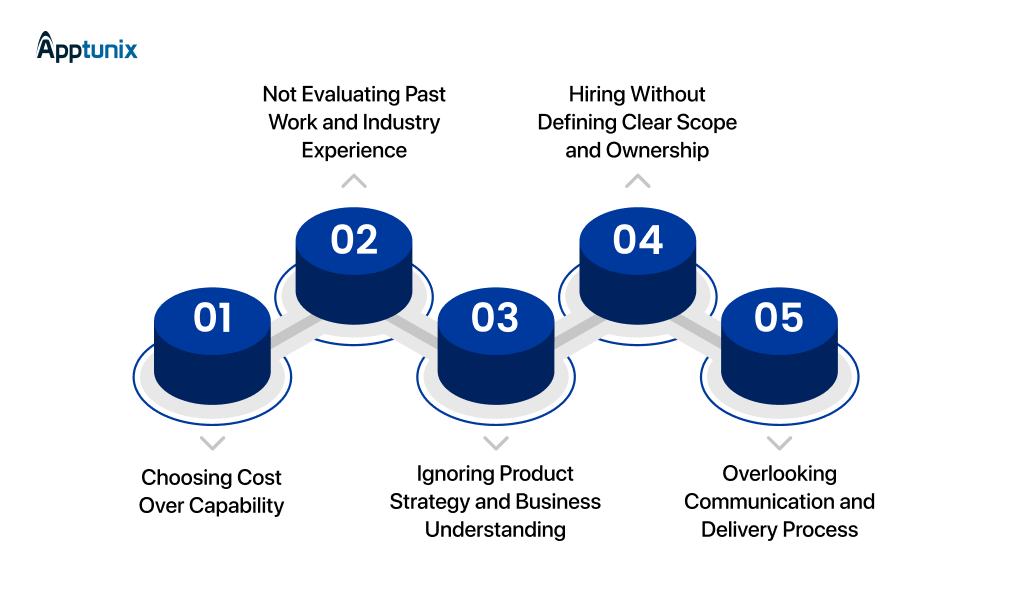
Mistake #1: Choosing Cost Over CapabilityIt is tempting to filter vendors by price. Budgets are real. Pressure is real. But choosing the lowest quote is one of the most expensive decisions businesses make.
The best mobile app development companies do not compete on price alone. They compete on clarity, planning, and long-term value. Lower-cost vendors often under-scope, overpromise, and rely on change requests to stay profitable.
What looks affordable upfront usually becomes costly later through rework, delays, and technical debt.
Strong mobile app development services reduce uncertainty. They invest time in understanding the product before writing code. That investment saves money across the entire lifecycle of the app.
Cheap builds are rarely cheap in the long run.
Mistake #2: Not Evaluating Past Work and Industry ExperienceA polished portfolio can be misleading.
Many businesses evaluating mobile app development companies focus on visuals instead of relevance. The real question is not how good an app looks, but whether the team has solved problems similar to yours.
What to look for in mobile app development companies goes beyond screenshots. It includes industry experience, scale handled, complexity managed, and decisions made under pressure.
A team that has built games may not be right for enterprise tools. A team experienced in consumer apps may struggle with internal workflows. Evaluating mobile app development companies without context often leads to mismatched expectations.
Experience matters when things go wrong. And something always goes wrong.
Mistake #3: Ignoring Product Strategy and Business UnderstandingBuilding software is easy. Building the right product is not.
Many businesses hire development teams that focus only on execution. They expect the client to provide perfect requirements and assume the rest will fall into place. It rarely does.
A capable product development company challenges assumptions early. It asks uncomfortable questions. It pushes back when features do not serve the business goal.
Mobile app consulting services exist for a reason. Strategy reduces risk. Teams that understand business logic build products that last. Teams that only code build products that stall.
If your development partner never asks why, that is a warning sign.
Mistake #4: Hiring Without Defining Clear Scope and OwnershipUnclear scope is one of the fastest ways to lose control of a project.
When businesses jump into custom mobile app development without documented responsibilities, assumptions fill the gaps. Features expand. Timelines stretch. Budgets follow.
A reliable app development company defines ownership clearly. What is included and not. Who approves changes. How decisions are made.
Without this clarity, every update becomes a negotiation. Scope creep is not a technical problem. It is a planning problem.
Mistake #5: Overlooking Communication and Delivery ProcessGood communication is not about frequent meetings. It is about accountability. Many enterprise mobile app development companies fail because governance is weak. No clear reporting or visibility into risks until it is too late.
The right mobile app development partner sets expectations early. Regular progress reviews. Transparent timelines. Honest conversations when something slips.
Delivery is not just about shipping features. It is about trust. And trust is built through consistent, clear communication.
Most businesses do not make these mistakes because they lack experience. They make them because they are under pressure to move fast. But speed without clarity creates drag.
Mobile app development companies for business should reduce friction, not add to it. Choosing the right partner requires patience upfront, but it protects momentum later.
Avoiding these mistakes is not about finding perfection. It is about finding alignment.
How to Make and Market an App in 2026: An Ultimate Guide to Scaling Your Idea
Choosing a development partner is not a procurement task. It is a product decision that shapes timelines, budgets, and long-term outcomes.
Most businesses searching for top mobile app development companies are not looking for talent alone. They are looking for clarity. Someone who can reduce uncertainty and help them move forward with confidence.
Here is a practical way to approach how to choose the right mobile app development company without guesswork.
A. Start With Business Understanding, Not CodeBefore discussing features or tech stacks, pay attention to the questions being asked.
The right mobile app development partner wants to understand your business model, users, and constraints. They ask why before how. They challenge assumptions instead of blindly accepting requirements.
An app development company that jumps straight into timelines and pricing without context is not thinking long-term.
B. Evaluate How They Think, Not Just What They BuiltPortfolios matter, but thinking matters more.
When hiring mobile app development companies, ask how decisions were made in past projects. What trade-offs did they face. How did they handle scope changes or missed assumptions.
The best mobile app development companies can explain their reasoning clearly. They treat product development as a series of informed decisions, not a checklist.
C. Look for Product Ownership, Not Order TakersStrong mobile app development services come with accountability.
A reliable product development company does not wait to be told what to do. It takes ownership of outcomes, flags risks early and pushes back when features do not align with goals.
If a team never disagrees with you, they are not protecting your product.
D. Assess Process and Communication EarlyProcess is not paperwork. It is how progress stays visible.
Ask how updates are shared. How risks are escalated. How decisions are documented. These answers reveal how the team operates when pressure increases.
When you are figuring out how to hire mobile app development companies, communication structure is as important as technical skill.
E. Think Beyond LaunchMany businesses focus only on getting to version one. That is short-sighted.
Custom mobile app development should support growth, changes, and learning. The right partner plans for evolution without forcing rebuilds.
A long-term mindset separates transactional vendors from real partners.
Before finalizing any agreement, slow down and validate your decision with this checklist. It helps avoid common hiring mistakes with mobile app development companies that only show up later.
✅Strategy Support
Do they offer mobile app consulting services or only execution
Can they help prioritize features based on business value
Do they understand your market and user behavior
✅Technical Expertise
Have they delivered apps at a similar scale or complexity
Do they explain technical choices in plain language
Can they support future integrations and growth
✅Process Clarity
Is the development roadmap clearly defined
Are milestones, reviews, and approvals documented
How do they handle scope changes and new requirements
✅Communication
Who is your point of contact
How often will progress be shared
What happens when timelines or assumptions change
✅Scalability Mindset
Does the architecture support future features
Is performance considered from the start
Will the product grow without rework
Here is the hard truth most businesses learn late.
Every app development company can build screens. Very few can build outcomes.
The gap between average vendors and top mobile app development companies shows up in moments that matter. When assumptions break, or priorities shift. Even real users behave differently than expected. Here is what truly separates the best mobile app development companies from the rest.
Apptunix leads because it approaches product building as a business problem, not a coding task.

The team works across strategy, design, and engineering to help companies avoid early mistakes that drain budgets later. From startup validation to enterprise-scale delivery, Apptunix brings structure, clarity, and accountability to every phase.
What stands out is the consulting-first mindset. Clients do not just get mobile app development services. They get guidance on scope, priorities, and long-term product direction. That is why Apptunix consistently earns trust as a product development company, not just a delivery partner.
Known for strong engineering practices and complex enterprise systems. Best suited for large organizations with mature internal teams and long timelines.
Strong in UX execution and consumer-facing apps. A good fit for brands that already have clear product direction and need polished delivery.
Focused on enterprise digital transformation projects. Works well for businesses modernizing legacy systems.
Design-driven agency with strong branding capabilities. More aligned with funded startups and marketing-led products.
Not all businesses need the same type of development partner. Treating startups and enterprises the same is one of the most common mobile app development outsourcing mistakes.
Startups move fast, but budgets are tight. They need validation, not perfection. Speed matters, but clarity matters more. For startups, mobile app development companies for business must help reduce uncertainty early. Startups benefit most from partners who offer mobile app consulting services alongside execution.
That means:
Enterprises operate under a different reality. Security, scalability, compliance, and internal alignment matter more than speed alone. Enterprise mobile app development companies must manage stakeholders, documentation, governance, and long-term support.
Here, risk management is as important as delivery.
Startups ask, Will this work
Enterprises ask, Will this scale safely
Choosing the wrong partner for your stage leads to delays, rework, and internal friction. Evaluating mobile app development companies based on your maturity level is non-negotiable.
How to Monetize Your Mobile App: A Complete Guide for Entrepreneurs
Hiring the right partner is not about spending more. It is about losing less. Most businesses do not overspend because development is expensive. They overspend because mistakes compound. A reliable right mobile app development partner helps you save money in practical ways.
How the Right Partner Reduces Cost
This is where many common mistakes when hiring app developers show up. Businesses choose speed or cost and sacrifice thinking. A strong app development company protects your investment by slowing down at the right moments. Asking uncomfortable questions early. Making trade-offs visible.
Apptunix operates with this exact mindset. Instead of selling everything at once, the team helps businesses decide what not to build yet. That discipline alone saves months of development cost.
Through structured discovery, clear roadmaps, and accountable delivery, Apptunix helps companies move forward with confidence instead of hope. When you hire right the first time, custom software development solutions become an asset, not a liability.
When planning your app, understanding cost ranges is crucial. Not every project requires an enterprise-level investment from day one. The right approach balances features, speed, and budget.
The table highlights a simple truth: you get what you plan for. Spending smartly at the start with the right partner saves time, money, and headaches later.
Costs vary by complexity, integrations, and platform (iOS, Android, or both). Choosing the wrong mobile app development company can inflate costs significantly due to scope creep, poor architecture, or delays. Investing in a product development company that offers custom mobile app development and mobile app consulting services upfront often reduces total cost by preventing rework.
Choosing a development partner is not about finding someone who says yes to everything. It’s about finding a team that knows when to push back, who thinks strategically, and who is committed to outcomes.
Apptunix works with businesses that care about real results. The focus is always on building products that perform in the market, not just look good in demos.
With 12+ years of experience and 1,500+ projects delivered globally, Apptunix has worked with startups, scaleups, and enterprise teams across industries including fintech, healthcare, logistics, real estate, marketplaces, and consumer apps. Every engagement starts with clarity, structure, and a roadmap for growth.
Here’s how Apptunix ensures success for every client:
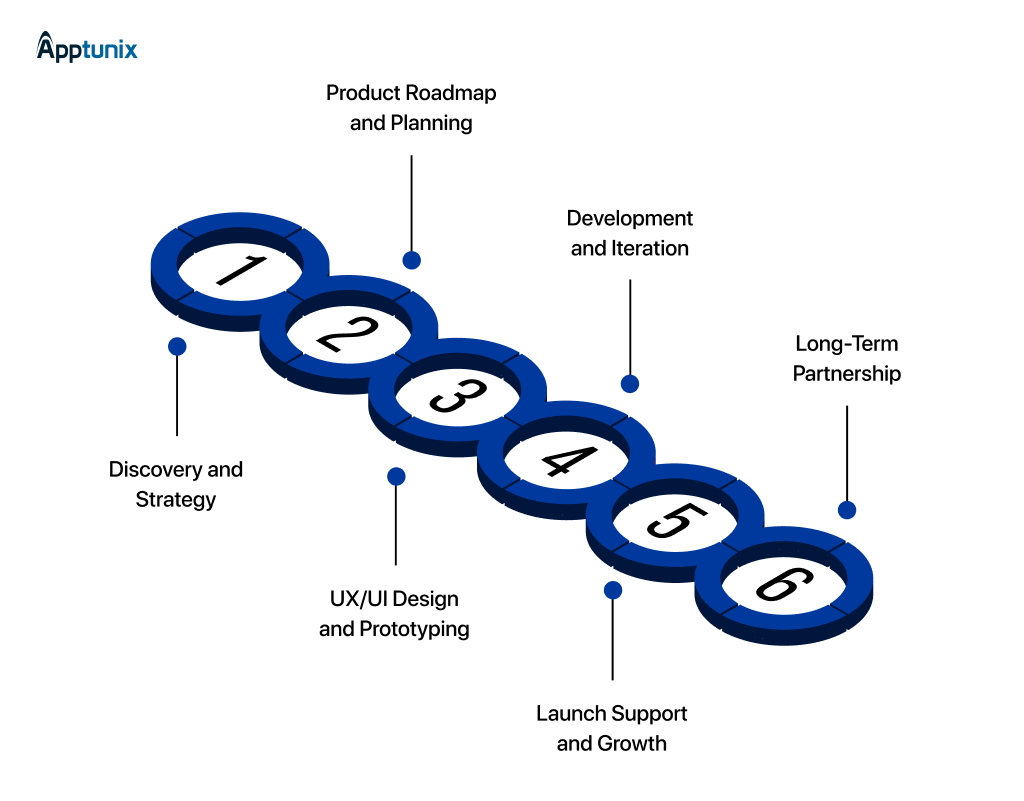
We begin by understanding your business, market, and users. This isn’t about features. It’s about the why behind the app. This phase ensures your app idea is validated before a single line of code is written.
Once the goals are clear, we map out a detailed MVP or MLP roadmap depending on your needs. This creates a structured plan that guides development without surprises.
Design is more than visuals. It’s about user behavior and first impressions. Early validation at this stage reduces rework later and ensures a lovable product experience.
With a validated design, our mobile app development services take over. This step ensures functionality meets both business and user expectations.
Delivery is not the end. Apptunix supports real-world adoption and iteration. Every release is designed to grow with your business, not require a full rebuild.
We aim to be more than an app development company. We are your strategic partner. Custom mobile app development works best when it’s flexible and future-proof. Apptunix ensures your product evolves with your business.
The truth about app failures is simple: most are not caused by technology. They are caused by strategy.
Businesses rarely fail because an app couldn’t be built. They fail because early decisions were rushed, assumptions went unchecked, or choices were made purely to save money. By the time the issues surface, deadlines have slipped, budgets are stretched, and user trust is at risk.
Hiring the right mobile app development company from the start saves time, money, and stress. The wrong choice can cost exponentially more—not just in dollars, but in momentum and missed opportunities.
Take the time to evaluate. Ask hard questions. Look beyond portfolios. Think about who will still be there when priorities shift and the product needs to grow. If you are planning your next product build, start the conversation with a product development company that understands both risk and opportunity.
Smart hiring is an investment. It costs less upfront than paying to fix mistakes later. Your product’s future depends on the choices you make today.

Q 1.What should I look for in a mobile app development company?
Look for technical expertise, experience in your industry, a clear development process, communication transparency, and the ability to provide mobile app consulting services.
Q 2.How do I evaluate mobile app development companies for my business?
Check their portfolio, client reviews, case studies, team expertise, and approach to MVP or custom mobile app development. Ask about project management, reporting, and post-launch support.
Q 3.What are common mistakes when hiring app developers?
Rushing the decision, choosing cost over capability, ignoring product strategy, not defining scope clearly, and overlooking communication or governance processes are the most common mistakes.
Q 4.How much does it cost to hire a mobile app development company?
Costs vary based on complexity. MVP apps start around $10,000, moderate apps range from $25,000 to $60,000, and advanced apps with AI or enterprise features can go $60,000+.
Q 5.Should I hire a mobile app development company or build an in-house team?
For most businesses, outsourcing to a trusted app development company provides faster delivery, lower risk, and access to specialized expertise compared to building an in-house team.
Q 6.How do I know if a company is the right mobile app development partner?
A good partner asks strategic questions, validates your business goals, offers roadmap guidance, has experience scaling apps, and demonstrates accountability beyond delivery.
Q 7.What industries do mobile app development companies typically serve?
Top companies like Apptunix serve fintech, healthcare, logistics, real estate, marketplaces, eCommerce, and consumer-facing mobile apps, among others.
Q 8.How long does it take to develop a mobile app?
Timelines depend on complexity. MVP apps typically take 6–12 weeks, moderate apps 12–20 weeks, and advanced AI or enterprise apps 20–40 weeks.
Q 9.Can a mobile app development company help with product strategy?
Yes, leading companies offer mobile app consulting services and product development guidance, helping you choose the right MVP or custom app strategy for your business.
Q 10.Why is hiring the wrong mobile app development company so costly?
Wrong hires can cause delays, budget overruns, rework, poor user experience, and stalled adoption. Choosing the right partner upfront ensures faster launches, scalable architecture, and better ROI.
Get the weekly updates on the newest brand stories, business models and technology right in your inbox.
Book your free consultation with us.
Book your free consultation with us.

One Central, The offices 3, Level 3, DWTC, Sheikh Zayed Road, Dubai, United Arab Emirates
+971 50 782 1690