Top 16 AI Consulting Companies in Saudi Arabia: Compare Services, Expertise & Pricing
119 Views 10 min January 22, 2026

What stands out today is the scale of Saudi Arabia’s push toward technology. The Kingdom is investing hundreds of billions of dollars in digital infrastructure that touches everyday life. How citizens access government services, how businesses are created, and how industries are regulated now rely heavily on software and data.
Estimates suggest that digital economy initiatives could contribute more than 19% to Saudi Arabia’s GDP by the end of this decade.
Digital transformation in Saudi Arabia is the backbone. Many of the vision’s goals could not succeed without strong digital foundations. For businesses, the opportunities presented by Saudi Vision 2030 are significant and hard to ignore.
At Apptunix, we look beyond the headlines. We see Vision 2030 as a set of practical challenges. The real questions are:
This blog unpacks those questions and explores how technology is shaping Saudi Arabia’s next phase of growth.
Saudi Vision 2030 is a way to move beyond oil and build a future with many sources of growth. Launched in 2016, the vision focuses on technology, tourism, manufacturing, financial services, and digital entrepreneurship.
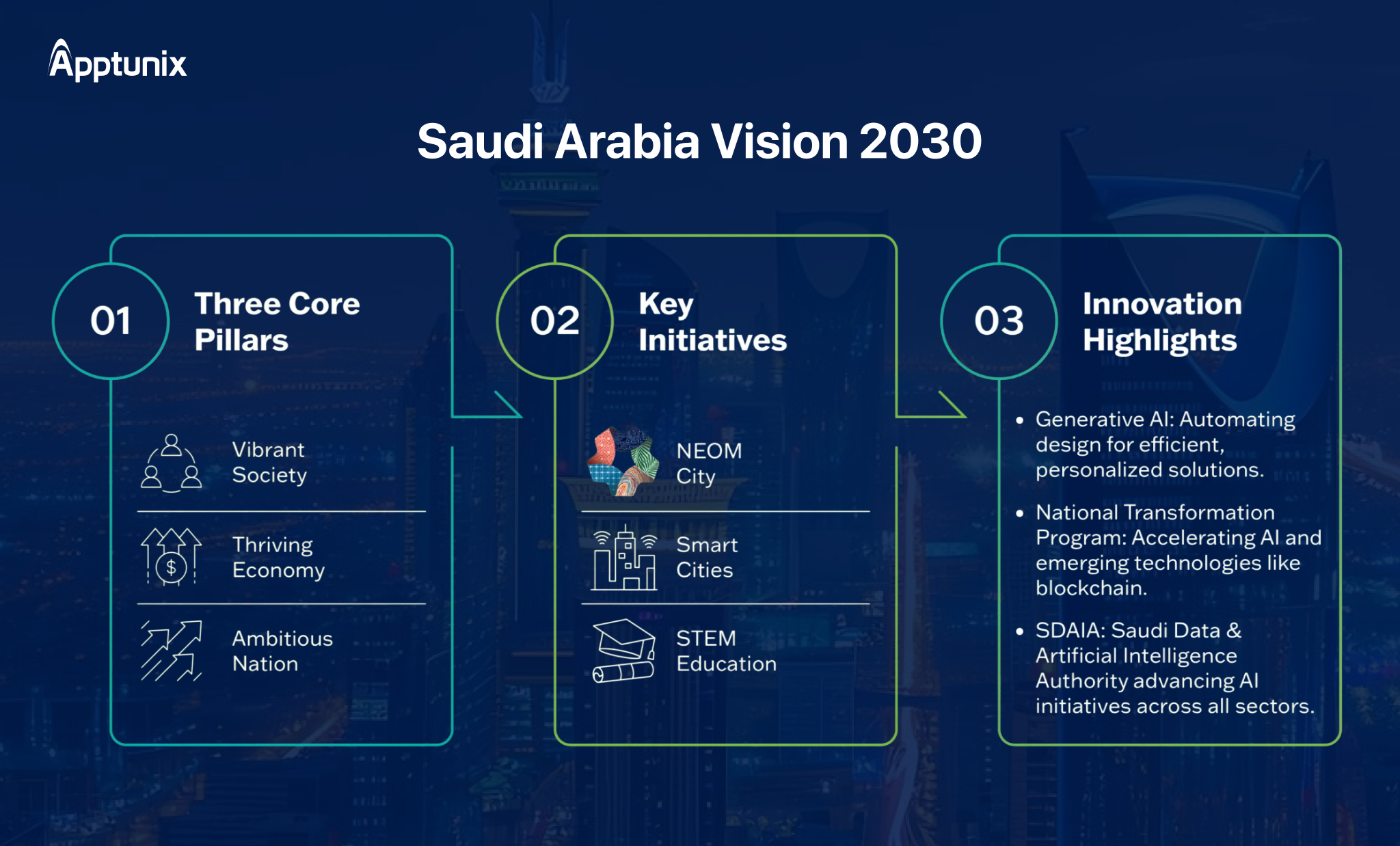
The strategy has three main goals. Economic diversification is about creating industries that can grow on their own and attract investment. Societal enrichment focuses on improving education, healthcare, quality of life, and culture. Global competitiveness aims to make Saudi Arabia a hub for business, innovation, and investment.
Demand for a reliable app development company KSA is rising as enterprises recognize that speed, execution, and the right digital strategy are as important as the vision itself.
Digital transformation in Saudi Arabia is more than a trend. It is what makes Vision 2030 real. Government investment in cloud infrastructure, cybersecurity, and centralized platforms has already reshaped how services are delivered. Tasks that used to take hours, like renewing licenses, paying bills, or accessing public services, can now be completed in minutes.
For businesses, this shift brings clear expectations and opportunities:
This is where digital transformation services in the Middle East play a key role. Companies need partners who understand local rules, Arabic-first design, and the scale of Saudi systems. Whether it is mobile app development services in Saudi Arabia for consumer-facing platforms or AI development in Saudi Arabia for enterprise analytics, the right technology choices today can drive long-term growth.

Technology doesn’t develop by itself. Large-scale infrastructure investments are combined with organised initiatives in Saudi Arabia to accelerate adoption across the public and private sectors. An intentional, quantifiable, and increasingly predictable digital ecology is the end outcome.
The National Transformation Program (NTP) is at the core of implementing Vision 2030. This effort is more than just a set of rules; it establishes specific goals for the use of technology, operational effectiveness, and digital service delivery in government and semi-government organisations. The approach incorporates accountability: agencies are required to digitise procedures, track results, and continuously improve services.
This clarity is important for private businesses. The playing field becomes more predictable, integration norms are recorded, and expectations are established. Businesses can plan digital initiatives with confidence, knowing what compliance and operational requirements will look like before launching platforms or scaling services.
Although NEOM is frequently referred to as “futuristic,” its scope and integration are what truly make it significant. Digital-first urban design, AI-driven operations, and smart infrastructure are viewed as fundamental rather than optional.
These initiatives serve as sophisticated testbeds for international technology partners, not just demonstrations. AI applications, data platforms, software systems, and mobility solutions all address real-world challenges that are uncommon in standard deployments. NEOM is a high-impact opportunity and a model for wider digital transformation because the lessons acquired here can be applied to other locations.
Saudi Arabia has made significant investments to develop its startup community. Innovation hubs, accelerators, and government-backed funding programs have made it easier for entrepreneurs to test and expand their ideas. More importantly, this has created a culture where technology-led ventures are expected rather than exceptional.
This ecosystem growth feeds demand across the board. Startups require mobile platforms, AI-driven analytics, and scalable backend infrastructure. Enterprises need partners who can deliver solutions quickly while adhering to regulatory frameworks.
Ranked & Reviewed by Experts- Top 15 Mobile App Development Companies in Saudi Arabia
When people talk about Saudi Vision 2030 digital transformation, the focus is usually on ambition or scale. But what really matters is execution. Ideas alone don’t create change. The systems behind them have to work at a national level, and that is exactly where Saudi Arabia has invested its efforts. The goal has been to build platforms that deliver results, not just impressive pilots.
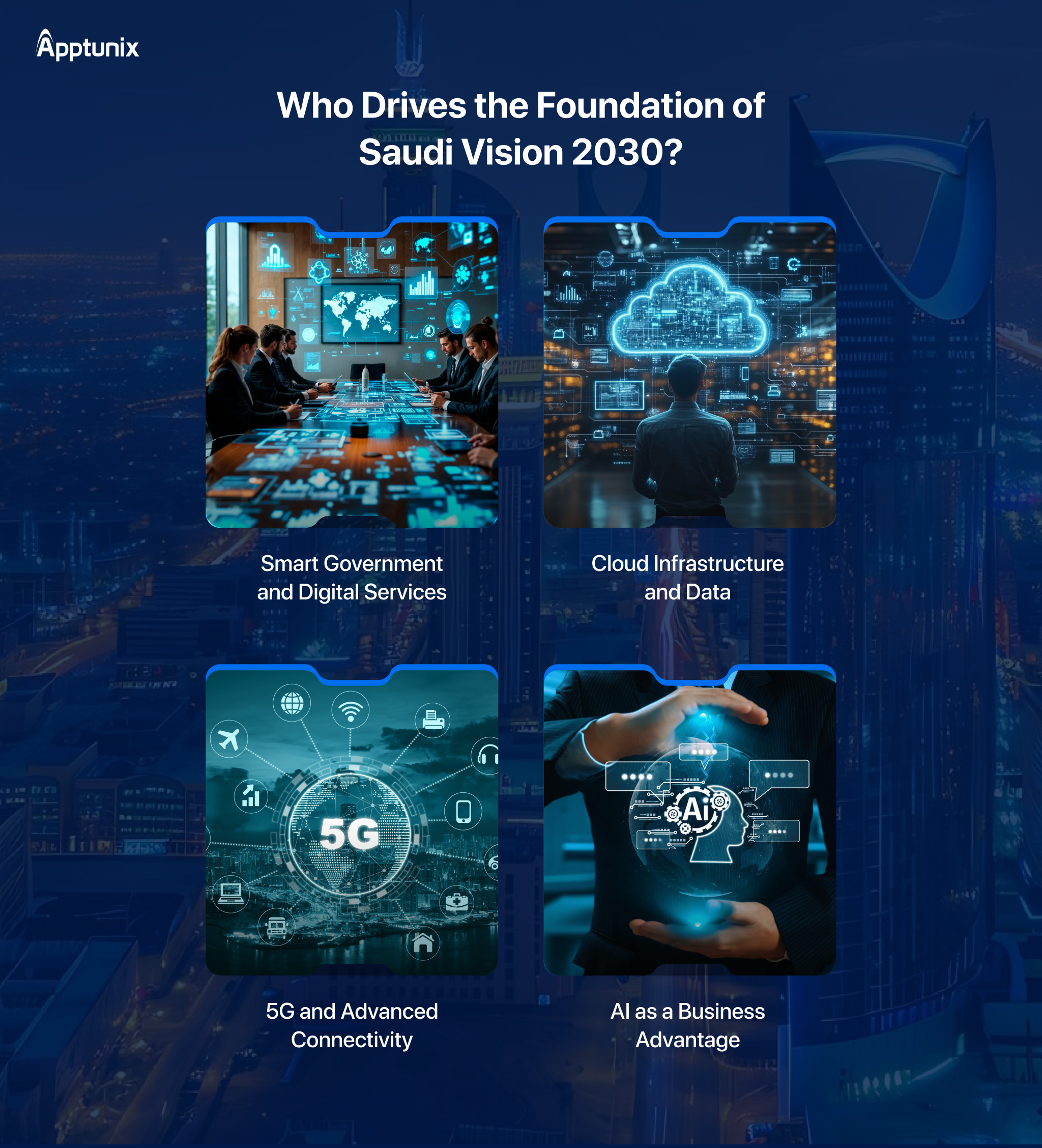
One of the clearest examples of the KSA digital transformation strategy is how government services have gone digital. Tasks that once took multiple offices, forms, and long waiting times can now be completed through centralized platforms. Absher is a strong example. It brings dozens of government services into one place that millions of citizens and residents use regularly.
Platforms like Tahaluf highlight another dimension. They connect government agencies, private companies, and innovation ecosystems in a shared digital space. This collaboration reduces delays and speeds up results. From a technology perspective, these systems need to be secure, intuitive, and capable of handling large numbers of users. This has fueled demand for enterprise app development in Saudi Arabia, particularly for platforms where uptime and reliability are critical.
Behind every smooth public service is a strong cloud infrastructure. Saudi Arabia has invested heavily in local cloud systems that balance scalability with control. Data sovereignty is a key concern that determines where systems are hosted and ensures businesses stay compliant. These investments allow organisations to modernise safely and use analytics in near real time. Data is actively used to guide decisions and improve outcomes.
Connectivity is now a growth driver, not invisible infrastructure. With 5G rolling out widely, technologies that seemed futuristic are now practical. Smart factories, connected logistics, and real-time monitoring systems are operational. High-speed networks let businesses test ideas, run Industry 4.0 initiatives, and implement smart city solutions more effectively. This level of connectivity speeds up innovation and reduces the cost of experimenting with new models.
AI is becoming a core tool for top AI consulting companies in Saudi Arabia. Organisations are using it to predict demand, streamline operations, detect risks, and personalise services. Combined with cloud infrastructure and fast connectivity, AI turns data into actionable insights. It helps businesses make informed decisions, improve efficiency, and grow in line with Vision 2030 objectives.
Many business owners are asking themselves how to make the most of Vision 2030. The Kingdom’s focus on digital transformation in Saudi Arabia is not just about government systems. It is opening doors for private companies to grow, innovate, and compete. Faster business registration, digital services, and incentives for tech adoption make it easier than ever to expand operations.
The key is digital readiness. Businesses that invest in mobile app development services in Saudi Arabia, cloud systems, or AI development in Saudi Arabia can serve customers faster, improve efficiency, and make smarter decisions. Modern technology also allows companies to integrate with public platforms, which builds trust and ensures smoother operations.
This is where Apptunix can help. As a leading app development company KSA, we guide businesses through the digital transformation process. We design and build mobile and web platforms that meet local regulations, handle scale, and deliver real results. Whether you are modernising legacy systems, launching new apps, or implementing AI-driven solutions, our team helps you turn Vision 2030 opportunities into tangible growth.
The question for every business is clear. Are you ready to act now and leverage technology to grow and stay competitive? Those who take the step today can position themselves for success in the new Saudi economy.
Apptunix is a full-service software development company that helps businesses turn ideas into real digital products. We work with startups, enterprises, and government-aligned initiatives to build apps, platforms, and AI solutions that actually work in the real world.
We are a team of designers, developers, and strategists with over 12 years of experience creating technology solutions for global markets. Our focus is simple: make technology work for people and businesses, not the other way around.
We help organizations across the Middle East, including Saudi Arabia, with:
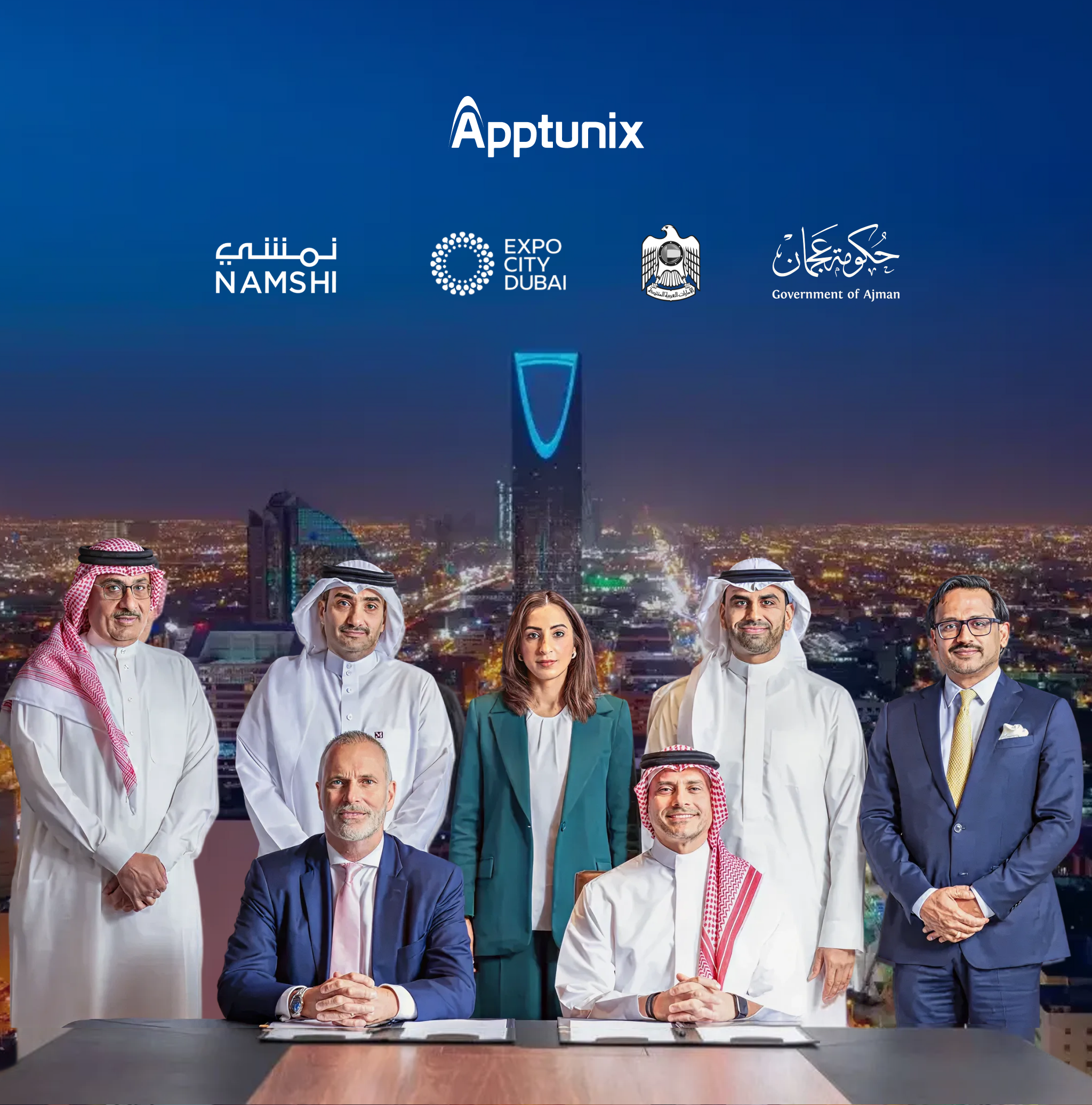
We understand the Saudi market like few others. That means we design apps and platforms that follow local regulations, support Arabic-first interfaces, and scale reliably. We also work closely with teams, offering nearshore or on-site collaboration to deliver quickly without compromising quality.
Our approach is practical and results-driven. We help businesses solve problems, grow faster, and stay competitive in a rapidly changing market.
When it comes to Vision 2030, we see the bigger picture. We know that digital transformation is about building technology that supports real growth, improves user experience, and turns government-backed initiatives into real business opportunities.
Partnering with Apptunix means having a team that understands both the technology and the local market, helping businesses succeed in Saudi Arabia today and beyond.
Saudi Vision 2030 digital transformation has reached a stage where execution matters more than vision. Businesses that align early with these trends are better positioned to benefit from Saudi Arabia tech investments and long-term policy support.
The common thread across all eight trends is intent. The companies that succeed are not chasing technology for its own sake. They are choosing tools that fit their business model, regulatory environment, and growth plans.
AI in Saudi Arabia has moved past proof of concept. Businesses are now using it to solve everyday problems such as demand forecasting, customer support automation, pricing optimization, and fraud detection. The real opportunity lies in applying AI where it reduces cost or improves speed, not where it looks impressive in presentations.
Companies that start with narrow, high-impact use cases tend to see faster returns. Over time, these systems evolve into broader AI-driven operations that support long-term scale.
Digital identity systems are becoming a core layer for accessing services in the Kingdom. Businesses that integrate identity verification, secure onboarding, and consent-driven data access into their platforms will move faster as regulations mature.
This matters especially for fintech, healthcare, logistics, and enterprise platforms. When identity is handled correctly, customer journeys shorten, and compliance becomes easier to manage.
Cloud adoption is no longer about cost savings alone. It is about agility and compliance. With Saudi Arabia investing heavily in local cloud infrastructure, businesses can now modernize their systems while complying with data residency requirements.
Organizations that plan cloud migration strategically rather than rushing it tend to avoid downtime and rework. Hybrid models are becoming common, especially for enterprises balancing legacy systems with modern applications.
Many companies start digital transformation at the surface level, focusing on websites or apps. The next phase focuses on automating what happens behind the scenes. Inventory management, approvals, reporting, and customer data flows are all areas where automation reduces friction.
This is particularly relevant for companies scaling across regions or departments. Automation creates consistency, which becomes critical as operations grow more complex.
Enterprise app development in Saudi Arabia is accelerating as businesses realize that internal teams also expect mobile-first tools. From field service apps to executive dashboards, mobile platforms are improving decision-making and responsiveness.
These apps are not consumer-facing, but they often deliver the highest productivity gains. Businesses that invest here usually see faster internal adoption compared to traditional desktop systems.
Cybersecurity is no longer treated as a defensive expense. In Saudi Arabia, strong security practices are becoming a prerequisite for partnerships, government contracts, and sector licensing.
Businesses that embed security early move faster later. Secure systems pass audits more easily, integrate better with national platforms, and earn user trust faster.
Blockchain adoption in the Kingdom is becoming more focused and practical. Businesses are using it to track transactions, verify records, and maintain transparent logs in regulated environments.
This is especially relevant for supply chains, real estate, and cross-entity workflows. The value lies in accountability, not speculation.
AR and VR are finding their place in training, maintenance, tourism, and retail experiences. For industries where mistakes are costly or access to environments is difficult, immersive tools reduce risk and improve learning outcomes.
Companies that adopt these tools selectively often gain efficiency without large infrastructure changes.
Vision 2030 has changed Saudi Arabia’s trajectory in visible ways, but its deeper impact lies in how technology is being woven into daily life and business operations. The real shift is cultural. Digital is no longer a department or a side project. It is how work gets done.
For organizations, this is a moment to pause and assess. Are your systems built to adapt. Can they integrate, scale, and comply as expectations rise? Are you positioned to take advantage of the next wave of Saudi Arabia future technology, or are you still catching up on the last one?
Working with an experienced software development company in Saudi Arabia can shorten that gap. The right partner helps translate strategy into execution, avoiding costly missteps along the way.
If you are planning your next phase of growth or modernization, it may be time to have that conversation.
Partner with Apptunix to accelerate your digital transformation in KSA. Explore our services or book a consultation to understand what your roadmap could look like.
Q 1.What is Saudi Vision 2030 and why does it matter for businesses?
Saudi Vision 2030 is the Kingdom’s long-term plan to diversify its economy and modernize key sectors using technology, policy reform, and private sector participation. For businesses, it creates clear opportunities in digital services, infrastructure, and innovation-led growth.
Q 2.How does digital transformation support Vision 2030 goals?
Digital transformation in Saudi Arabia enables faster service delivery, better governance, and scalable business operations. Technology acts as the execution layer that turns Vision 2030 policies into real, measurable outcomes across industries.
Q 3.Which industries benefit the most from Vision 2030 digital initiatives?
Sectors such as healthcare, fintech, e-commerce, logistics, tourism, and education see the strongest impact. These industries rely heavily on software platforms, mobile access, and data-driven decision-making to scale under Vision 2030 frameworks.
Q 4.Why is mobile app development important in Saudi Arabia right now?
Mobile app development services in Saudi Arabia are in high demand because users expect mobile-first access to services. From government platforms to enterprise tools, apps have become the primary interface for engagement and service delivery.
Q 5.How is AI being used by businesses in Saudi Arabia?
AI development in Saudi Arabia focuses on practical use cases such as demand forecasting, customer support automation, fraud detection, and process optimization. Businesses are using AI to improve efficiency rather than run experimental projects.
Q 6.What role do IT services play in Saudi Arabia’s digital economy?
IT services in Saudi Arabia help organizations modernize legacy systems, maintain compliance, and scale digital platforms. Many companies rely on experienced partners to bridge talent gaps and accelerate transformation timelines.
Q 7. Is cloud adoption safe and compliant in Saudi Arabia?
Yes, cloud adoption is supported by strong national infrastructure and clear data residency guidelines. Businesses that follow local compliance rules can safely migrate systems while benefiting from scalability and improved performance.
Q 8.How can enterprises prepare for long-term digital growth under Vision 2030?
Enterprises should focus on scalable architecture, cybersecurity, and data readiness. Investing in enterprise app development Saudi Arabia helps organizations build systems that grow alongside regulatory and market changes.
Q 9.What should businesses look for in a software development partner in KSA?
A reliable software development company in Saudi Arabia should understand local regulations, user behavior, and infrastructure requirements. Experience with enterprise-scale platforms and long-term support matters more than speed alone.
Q 10.How can Apptunix help businesses align with Vision 2030?
Apptunix supports organizations with digital transformation services in the Middle East, including enterprise mobility, AI-driven platforms, and custom software aligned with Vision 2030 sectors. Our focus is on execution that delivers measurable business value.
Get the weekly updates on the newest brand stories, business models and technology right in your inbox.
119 Views 10 min January 22, 2026
149 Views 10 min January 8, 2026
4513 Views 10 min January 5, 2026
Book your free consultation with us.
Book your free consultation with us.

One Central, The offices 3, Level 3, DWTC, Sheikh Zayed Road, Dubai, United Arab Emirates
+971 50 782 1690