A Comprehensive Guide to Mobile Banking App Development
4 Views 11 min March 11, 2026

Nishant Saini is a web content writer with over five years of experience, specializing in understanding businesses from an entrepreneur’s perspective. His writing process begins with in-depth business research, enabling him to craft clear, audience-focused content that explains complex ideas concisely and supports lead generation. He focuses on practical, value-driven content that aligns business goals with real user intent.
Zhang was late again. No taxis, no rides, just frustration. That’s when the idea hit: why not build an app like DiDi that actually works?
People everywhere hate waiting. Cities are crowded. The opportunity is huge for anyone who can fix the chaos. The real question: can you be the one to make it simple, fast, and reliable?
If you’re asking how to build a Taxi booking app like DiDi, you’re already thinking beyond ideas and into real market opportunities.
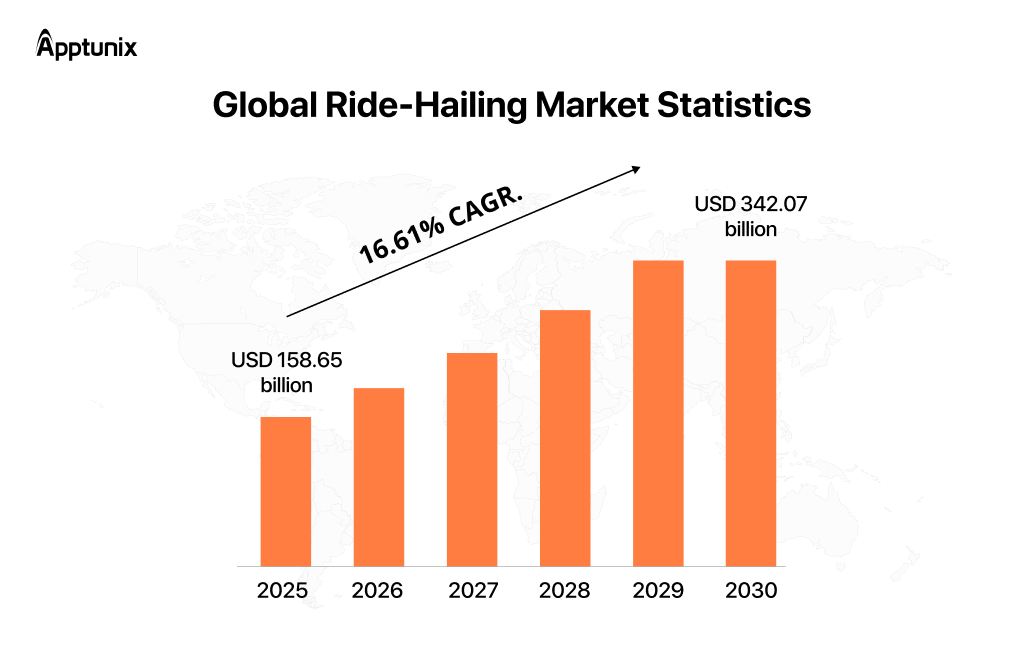
This isn’t about copying a feature list. It’s about understanding why ride-hailing keeps pulling in capital, users, and long-term investments from serious founders and investors. According to Mordor Intelligence, the global ride-hailing market is projected to grow from USD 158.65 billion in 2025 to USD 342.07 billion by 2030, with a strong 16.61% CAGR.
User growth tells the same story. Statista estimates the number of ride-hailing users will reach 2.34 billion by 2030. More users mean more trips, more data, and more revenue layers. And the successful companies don’t just chase downloads. They optimize the metrics that matter: revenue, ARPU, user penetration, and smart distribution across online and offline bookings.
The opportunity is clear. The question is whether you know how to build an app like DiDi right and scale it without spending much.
Creation of a taxi booking app like DiDi isn’t about cloning features from a competitor. It’s about understanding why the model works, where most apps fail, and how to execute each stage without wasting budget or time. The smarter route is a clear plan, tight execution, and realistic expectations to create a taxi-hailing app.
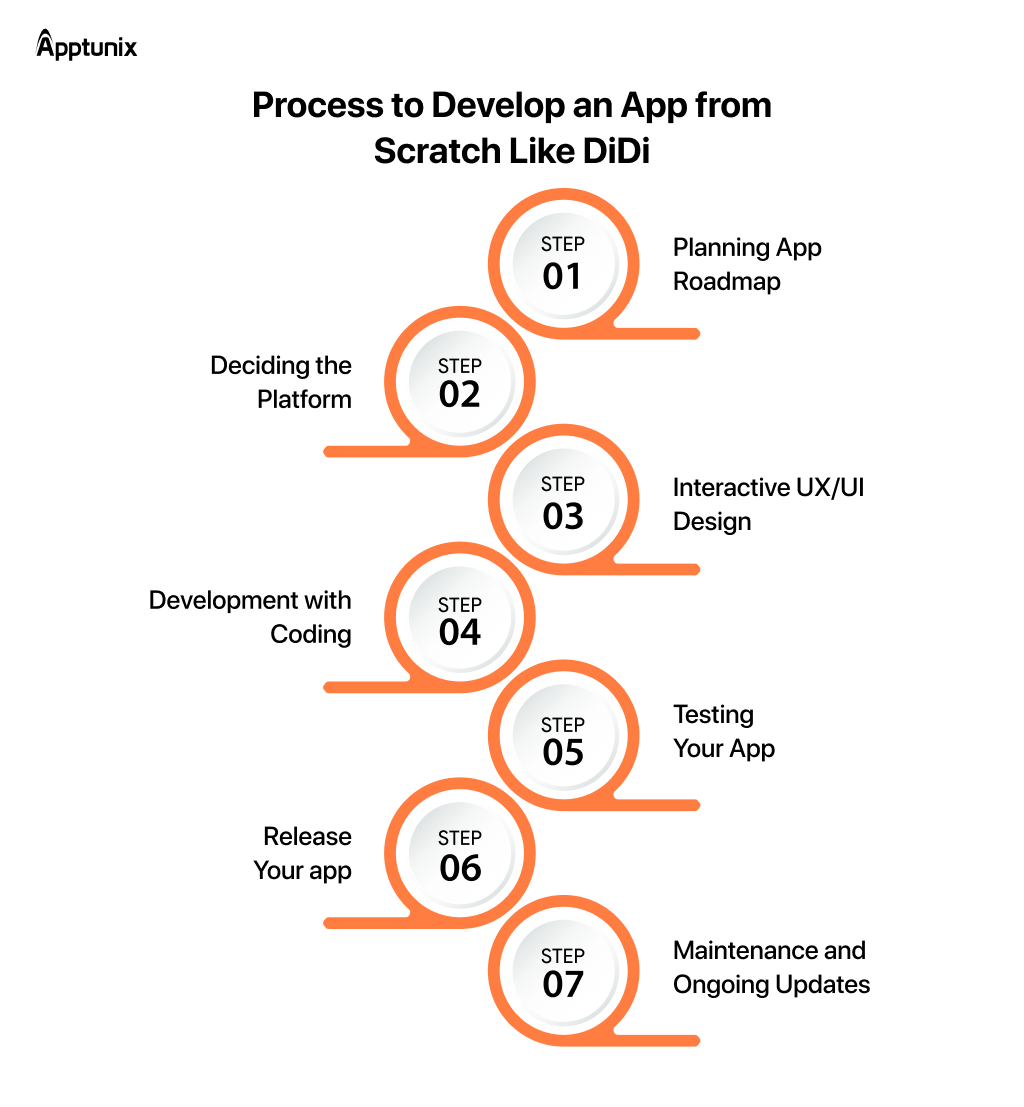
Here’s a step-by-step guide to build a taxi app in 2026, based on what actually works in real-world product launches.
Before you go for the design or code, you need clarity. This is where most DiDi-like app development projects either gain momentum or quietly fall apart.
Start by defining:
Your roadmap should answer one question clearly: What does the first usable version of the app need to do well?
This decision affects the cost, timeline, and future scalability of the application. It also ensures your app reaches the right users first, instead of trying to be everywhere from day one.
You generally have three choices:
| Platforms | Best Fit | Why it Works |
|---|---|---|
| Android-first | Emerging and price-sensitive markets | Wider device reach and lower development costs. |
| iOS-first | Premium or enterprise-focused regions | Higher user spend and consistent performance. |
| Cross-platforms | Fast go-to-market strategies | Single codebase enables quicker launch. |
Note: If you’re trying to move fast with controlled costs, cross-platform often makes sense early on. But if performance and native experience are critical, go platform-specific.
Think long-term here. Platform choice influences maintenance, hiring, and expansion.
Design is not decoration; it’s conversion. For a DiDi-like app, interactive UX/UI design plays a key role in making ride sharing and booking feel quick and effortless. When users understand the app instantly, engagement and retention improve automatically.
Good UX reduces drop-offs. Smart UI builds trust. Things like real-time maps, clear CTA buttons, and minimal booking steps matter more than fancy visuals.
This is where ideas turn real and where budgets can spiral if you’re not careful. The app development procedure needs two types of code ends: frontend and backend. Let’s see how these steps work to create an app like DiDi.
Frontend handles what users see and interact with:
The backend is the engine of the app:
A scalable backend is non-negotiable if you plan to grow. This is the backbone of the entire DiDi app development process, and cutting corners here always shows later.
Testing is not optional. It’s your safety net. You must test your car-hailing app before the launch in order to ensure that there are no issues before the final opening.
You should test for:
Run both automated and manual tests. Also, test with real users—drivers and riders behave differently than developers expect. Many founders underestimate this stage and pay for it post-launch.
Remember, it’s not the end of the mobile app development process; you have to acknowledge people’s feedback and upgrade the app accordingly. So,
Early feedback is like gold. It helps you fix friction points fast. This phase often decides whether DiDi-like app development becomes a scalable business or a stalled product.
If you think development ends after launch, that’s a costly misconception. Launching the app isn’t the finish line. It’s the starting point. Real users behave differently from test users, and that’s where ongoing maintenance matters.
Ongoing work includes:
The reality is, to develop a taxi booking app from scratch and keep it competitive, you need continuous improvement. DiDi evolved because it responded to data and adapted fast.
Once the development roadmap is clear, the next step is identifying the features that make the app truly functional and user-friendly.
When people open a ride-hailing app, they want it fast and simple. Every feature should make the ride easier, not add steps. These are the features that actually keep riders coming back and drivers on the road.
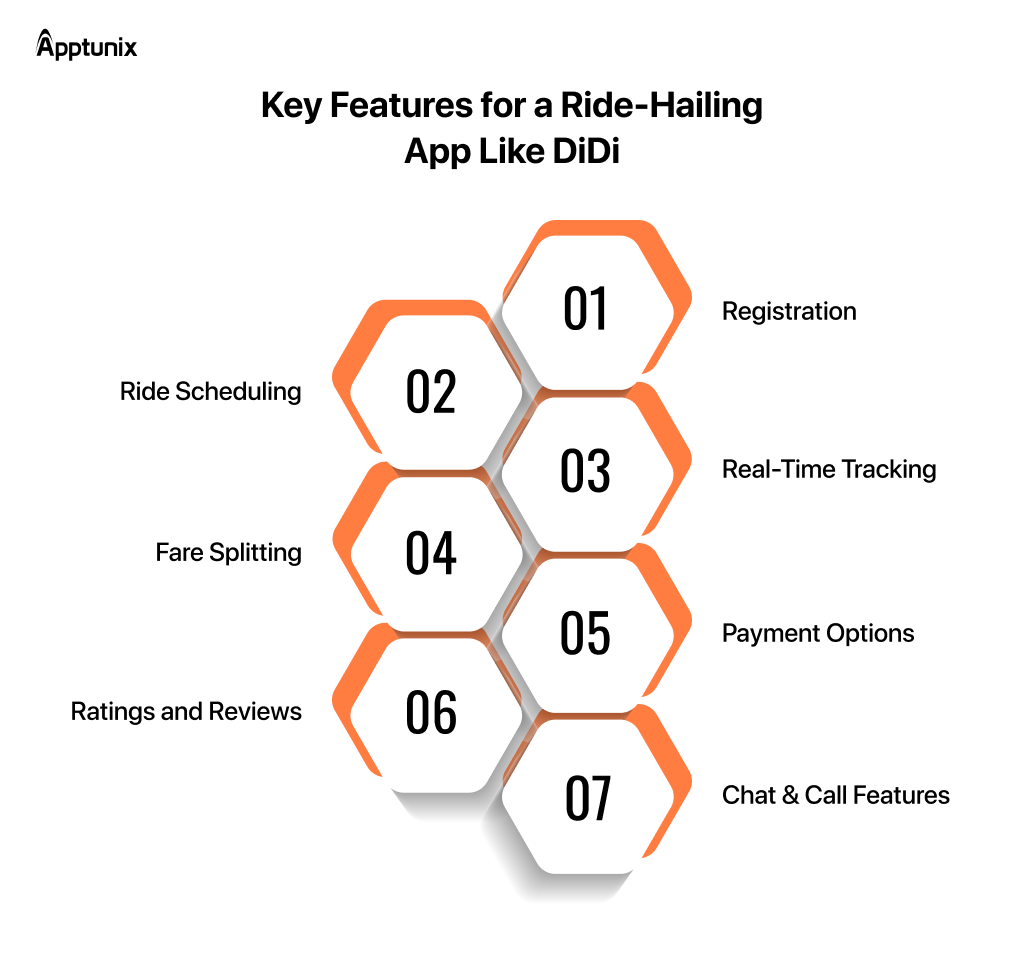
1. RegistrationPeople opening a ride-hailing app are usually in a hurry. Forcing email confirmations or long forms upfront increases drop-offs. DiDi keeps it simple: phone number first, verification fast, profile later. That order matters.
2. Ride SchedulingInstant rides are great, but scheduling is what builds habit. DiDi’s booking works well for airport runs and office commute-like situations. Scheduled rides reduce cancellations and stabilize demand. They also attract business users, which usually means higher lifetime value.
3. Real-Time TrackingA solid real-time ride tracking app shows the driver’s movement, ETA changes, and pickup accuracy in one view. The real value here is transparency. When riders know exactly where the driver is, they’re far more forgiving about delays.
4. Fare SplittingFare splitting encourages group rides and removes the awkward “I’ll pay you later” moment. In markets with younger users or shared commutes, this directly increases ride frequency. It’s one of those features users don’t search for but miss badly when it’s not there.
5. Payment OptionsDiDi’s strength lies in flexibility: wallets, cards, cash, and local payment methods. More payment options mean fewer abandoned rides. In price-sensitive or cash-heavy regions, limiting payments can quietly reduce adoption, no matter how good the app looks.
6. Ratings and ReviewsWhen both riders and drivers know they’re being rated, service quality improves naturally. The trick is balance. DiDi keeps feedback simple and actionable; instead of overwhelming users with surveys they’ll never complete.
7. Chat & Call FeaturesIn-app chat and masked calls solve real problems like wrong pickup points, traffic confusion, or last-minute clarifications. What matters is privacy. By hiding personal numbers, the app protects both parties while still enabling fast communication, which reduces cancellations and frustration.
With these core features in mind, let’s take a look at five alternatives to DiDi that offer unique takes on ride-hailing.
DiDi is big, no doubt. But in real-world mobility, users don’t care about brand names as much as they care about price, availability, and how fast a driver shows up.
That’s why the market is crowded and competitive. If you’re studying ride-hailing apps or planning something similar, these platforms show how different strategies actually work on the ground.
Here are 5 alternatives worth paying attention to:

Uber didn’t succeed because it was perfect. It succeeded because it scaled fast and fixed problems quickly.
Surge pricing frustrates users, but it keeps drivers active. Features like Uber Pass and scheduled rides aren’t flashy, but they reduce retention. Uber’s real advantage is operational discipline, not innovation hype.
If you’re building an app like Uber, this is the model you study for execution, not inspiration.
Lyft feels calmer. That’s intentional. It focuses mainly on the US and Canada and doesn’t try to be everything at once. Pricing is more predictable, branding feels friendly, and safety features are easier to understand.
Lyft proves a simple point: you don’t need global reach if your local experience is solid.
Grab is what happens when you really understand a region. In Southeast Asia, transportation alone doesn’t build loyalty. So Grab added payments, food, and everyday services. Once users rely on it daily, switching becomes inconvenient.
Among apps like DiDi, Grab is closest in strategy, but stronger at ecosystem thinking.
Kueski isn’t a traditional ride app, and that’s exactly why it’s unique. In markets where credit cards aren’t common, access matters more than UX polish. Kueski’s lending model helps users pay for on-demand services when cash flow is tight.
It’s a reminder that sometimes the problem isn’t transportation: it’s affordability.
Flix plays a different game. It focuses on long-distance and intercity travel, not short rides. The app works because it’s predictable, cheap, and easy to plan around. No surprises.
Not every alternative needs to compete head-on. Some win by serving a different mobility habit altogether.
Now, you must be asking about how much it costs to create an app like DiDi in 2026. Here it is.
The cost to build a ride-hailing app like DiDi in 2026 depends heavily on the level of functionality you choose. A basic-level app with limited features costs between USD $10,000 and $30,000. A medium-complexity app typically ranges from $30,000 to $60,000. Advanced developments can push the cost to $60,000–$120,000+. So, the total cost will vary from USD $10,000 to $120,000+.
| App Complexity | Cost in USD | Description |
|---|---|---|
| Basic Level | $10,000-$30,000 | Limited ride types, simple matching logic, core-features |
| Medium Level | $30,000-$60,000 | Real-time GPS tracking, stable payments, smarter dispatching |
| Highest Level | $60,000-$120,000+ | Dynamic pricing, AI-based matching, analytics dashboards, high-load performance |
Also, there are several factors that influence the cost to develop a car booking app like DiDi..
The question that falls through the cracks for every founder or investor is how to save money in mobile app development process.
Here are a few tips that you can try to reduce the cost. These tips often work very well to fall within the average budget.
You don’t need everything on day one. A clean booking flow, driver discovery, live tracking, and payments are enough to launch. Start with an MVP that has basic features and core functions. This alone helps reduce the cost to create an app because you’re not paying for features nobody has asked for yet.
Cross-platform development lets you launch on Android and iOS with one codebase. It’ll be like Faster build, lower cost, easier updates. If you plan to create a taxi-hailing app like DiDi, speed matters more than perfection early on.
Every extra feature adds time, and time adds cost. Skip the advanced stuff for now—AI matching, loyalty programmes, deep analytics. Focus on what makes the app work: booking, tracking, and payments. You can always layer more once users start booking rides.
Fancy design looks good in demos, and the fact is that a simple design works in real life. A clean interface is faster to build, easier to test, and easier for users to understand.
Less design = fewer revisions = lower cost.
A good taxi booking app development company won’t just code. They’ll push back when something doesn’t make sense. They’ll help you prioritize. That guidance often saves more money than it costs.
Lowering your development expenses is just the start. Now, let’s look at ways to generate revenue from your ride-hailing app.
When you plan to build an app like DiDi, the real challenge isn’t technology alone. It’s designing revenue streams that scale without irritating users or squeezing drivers too hard. Below are the most practical and field-tested ways successful car booking apps generate income and why they are effective.
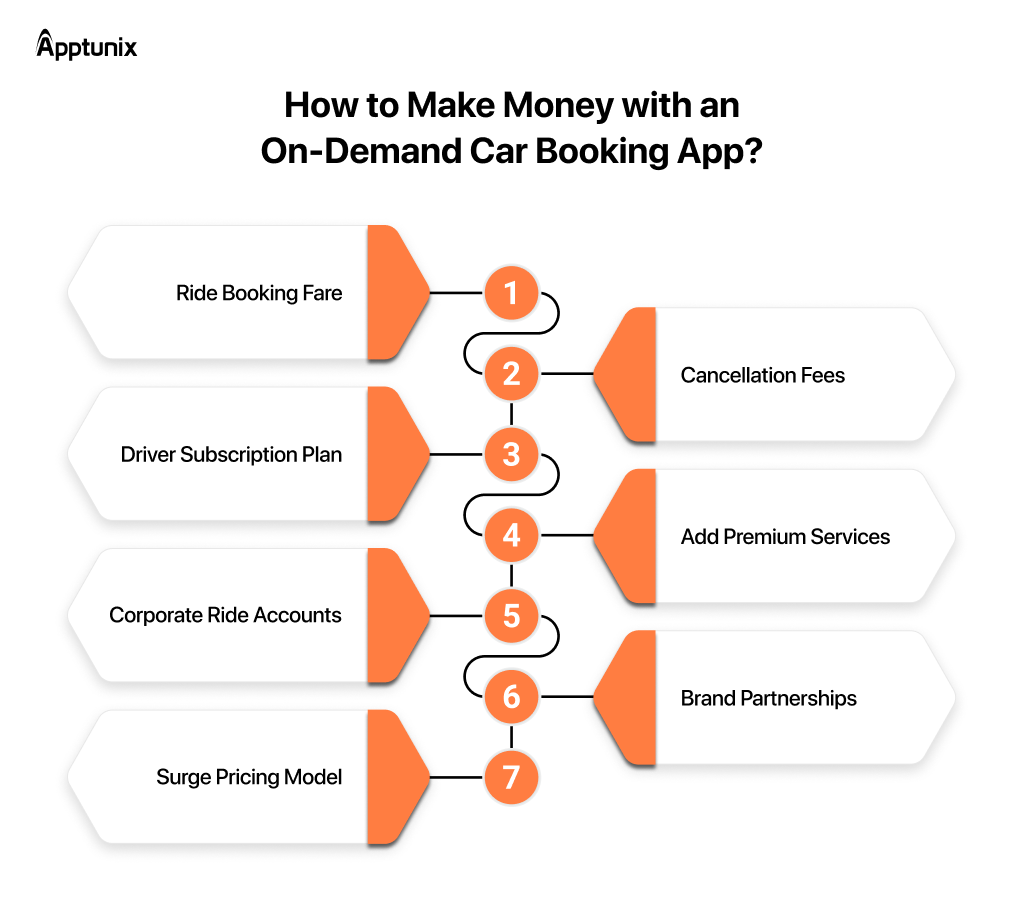
Instead of a flat commission, many platforms adjust rates based on city, demand, or vehicle type. This keeps drivers motivated while ensuring the platform stays profitable across different markets.
Cancellation Fees typically apply only after a grace period, which keeps users from feeling punished for honest mistakes. Over time, cancellation fees don’t just add revenue; they improve system efficiency by reducing casual cancellations.
For the platform, subscriptions stabilize income even during slow demand periods. This model is one of the most effective ways to make money with DiDi-like app without constantly tweaking ride prices.
Premium services also attract a higher-value customer segment, which improves average revenue per ride without impacting standard users.
This model brings in bulk usage and long-term contracts. It’s one of the quieter but more sustainable revenue streams in the ride-hailing business.
Ride-hailing apps like DiDi have something brands want: attention during idle moments. In-app promotions, branded rides, discount partnerships, or sponsored notifications open the door to advertising revenue.
Users tolerate brand partnerships when they add value, like discounts or rewards, rather than interrupting the booking flow.
It’s often controversial, but it exists for a reason. When demand spikes, higher prices attract more drivers and balance supply. From a business standpoint, surge pricing boosts revenue during peak hours and ensures service availability.
If you’ve read this far, you’re not just exploring an idea. You’re weighing whether it’s worth building the right way. And that’s where execution matters more than theory.
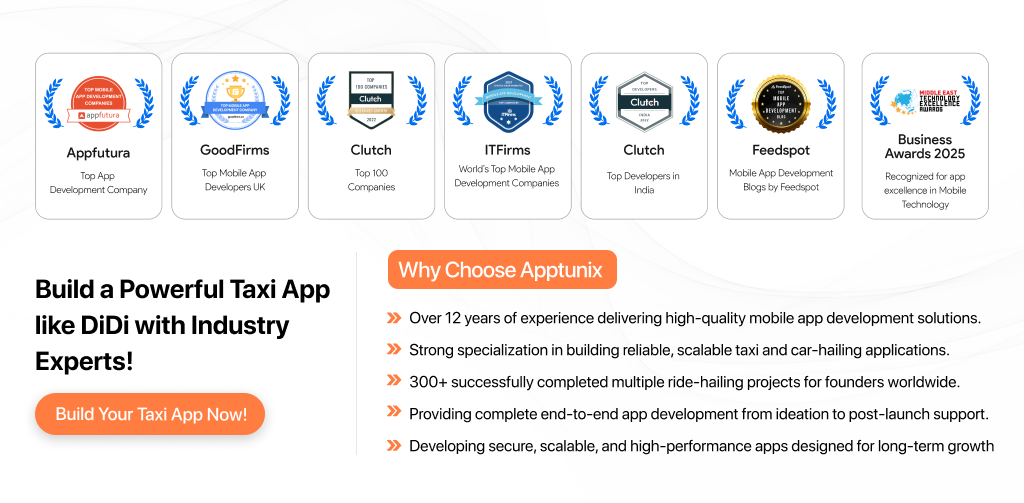
This is also where Apptunix, a taxi app development company, fits naturally into the picture. We don’t treat ride-hailing apps like templates. We think in terms of markets, traffic patterns, user behaviour, and long-term cost control. The kind of details that decide whether an app scales or stalls.
If you want to explore what your version of a DiDi-like platform could realistically look like, starting a conversation with Apptunix makes sense. Not to be sold to. Just to see the gaps, the opportunities, and whether the numbers add up before you move forward.
What also sets Apptunix apart is how their teams work day-to-day. Product strategists, designers, and developers operate in teams.
We collaborate early, question assumptions, and align decisions around real user behavior and business goals. It’s a practical, transparent process that helps founders stay in control of scope, cost, and direction as the app takes shape.
Q 1.How much time does it take to create a taxi booking app?
Answer: Most taxi apps take 3–6 months to build. A simple MVP can launch sooner if the scope is clear. More features and integrations add time. Ongoing updates and maintenance should also be planned after launch.
Q 2.How much does it cost to build an app like DiDi?
Answer: A basic app starts around $10,000–$30,000. Mid-level builds range between $30,000–$60,000. Advanced versions can go beyond $120,000. Costs vary based on features, platform, and location of the development team.
Q 3.How to reduce the cost to develop the DiDi-like app?
Answer: Start with an MVP and core features only. Use cross-platform development to save time and money. Scale features after real user validation. Prioritize features based on user needs to avoid unnecessary expenses.
Q 4.What are the steps for cab booking app development?
Answer: Begin with planning and market clarity. Design UX, build frontend and backend, then test thoroughly. Launch, gather feedback, and improve continuously. Iterative development ensures the app evolves with user expectations.
Q 5.How does Apptunix help to develop your taxi booking app?
Answer: Apptunix focuses on planning before coding. Teams align features with business goals early. This avoids rework and keeps costs predictable. We also provide post-launch support to ensure smooth scaling.
Q 6.Can a taxi booking app scale after launch?
Answer: Yes, if the backend is built for growth. Scalable architecture prevents performance issues later. This is critical during peak-hour demand. Monitoring and optimization post-launch are key to handle increasing users.
Q 7.Is cross-platform development good for taxi apps?
Answer: For early-stage apps, yes. It reduces development time and initial cost. Native builds can come later if needed. It also allows reaching both iOS and Android users quickly.
(1 ratings, average: 5.00 out of 5)
Get the weekly updates on the newest brand stories, business models and technology right in your inbox.
Nishant Saini is a web content writer with over five years of experience, specializing in understanding businesses from an entrepreneur’s perspective. His writing process begins with in-depth business research, enabling him to craft clear, audience-focused content that explains complex ideas concisely and supports lead generation. He focuses on practical, value-driven content that aligns business goals with real user intent.
4 Views 11 min March 11, 2026

6 Views 11 min March 10, 2026

71 Views 11 min February 24, 2026
Book your free consultation with us.
Book your free consultation with us.

One Central, The offices 3, Level 3, DWTC, Sheikh Zayed Road, Dubai, United Arab Emirates
+971 50 782 1690