
How Voice Technology in Healthcare Enhances Patient Experience and Efficiency?
59 Views 12 min February 24, 2026

According to Strait Research, the logistics software market size is expected to reach $39.66 billion by 2033, with a CAGR of 9.36% between 2026 and 2033.
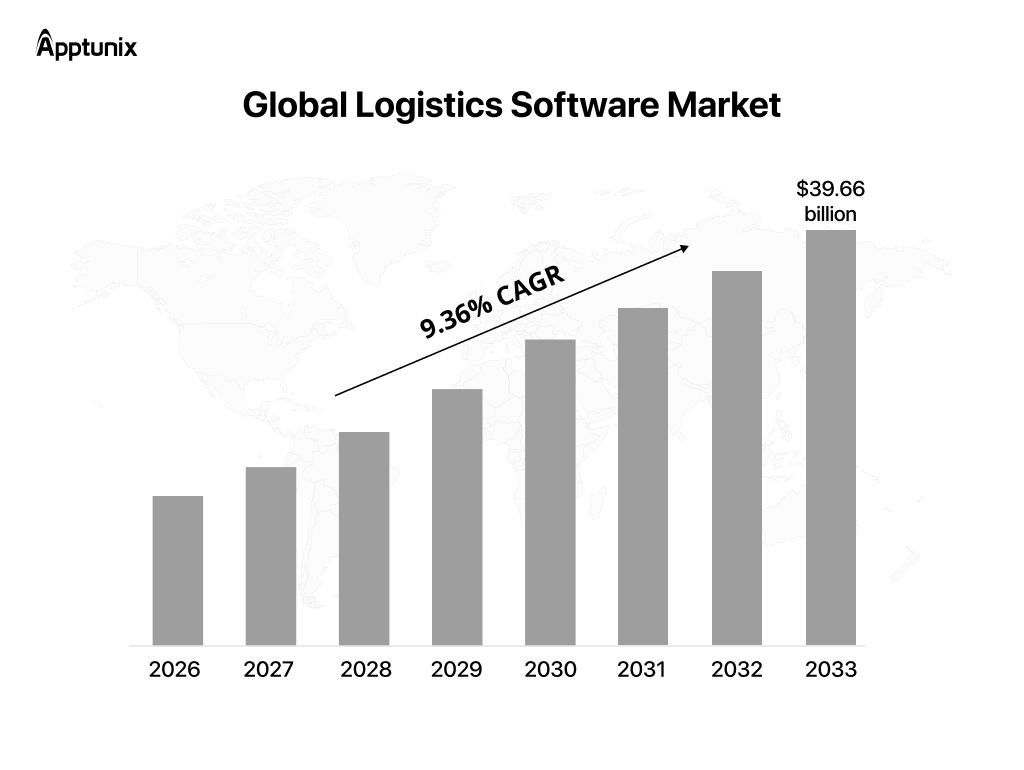
It is growing rapidly because businesses across various industries, from retail and e-commerce to healthcare and pharmaceuticals, are utilizing smart logistics platforms like Uber Freight in the highly competitive digital market.
To provide a digital and end-to-end logistics platform that connects shippers and carriers, it is essential to create an Uber-like app for trucks that streamlines the process of moving goods.
With Uber-like truck booking app development, businesses across industries can enable real-time freight matching, transparent pricing, and faster deliveries. It enhances operational efficiency, reduces manual coordination, and ensures scalable freight management.
Developing an Uber-like app for trucks gives big opportunities to entrepreneurs, so if you’re also looking to build an app like Uber Freight, you’re at the right place.
Explore this blog to examine the on-demand freight app development steps, freight matching app features, the cost to build a trucking app, and more.
Let’s get started!
Uber Freight is a truck booking digital platform for businesses and individuals, developed by Uber. It allows shippers to connect with truck drivers and carriers for logistics delivery.
The application works like a digital freight marketplace, allowing businesses to book trucks, track shipments in real time, and manage logistics operations.
The Uber Freight app allows users to
An Uber-like app for trucks works much like an Uber-like app for ride-booking, matching riders with drivers.
Uber Freight follows a two-sided marketplace model:
Business Model:
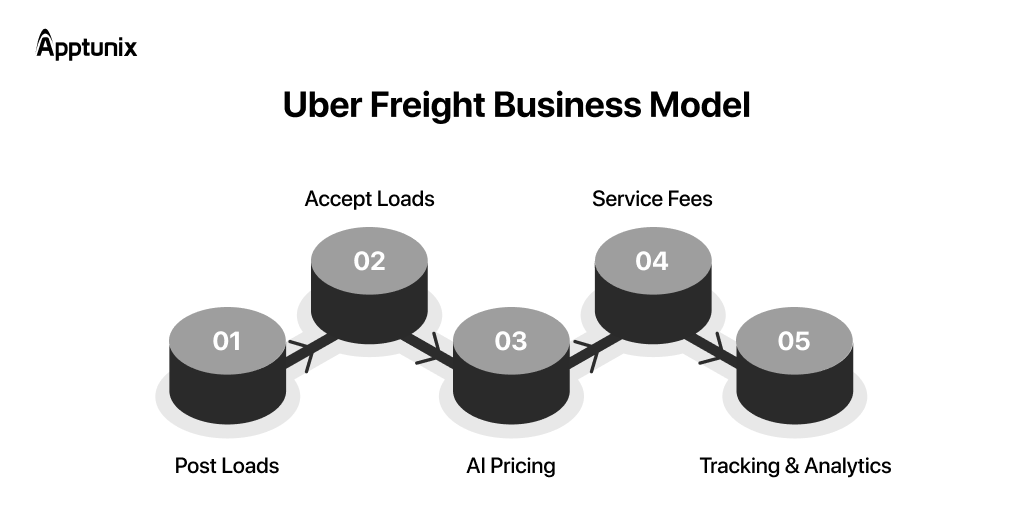
Post Loads -> Accept Loads -> AI Pricing -> Service Fees -> Tracking & Analytics
Uber Freight is one of the leading online booking truck platforms. Some must-know facts about Uber Freight are as follows:
-> Uber Freight was launched in May 2017 and bridges the gap between shippers and carriers through a mobile app.
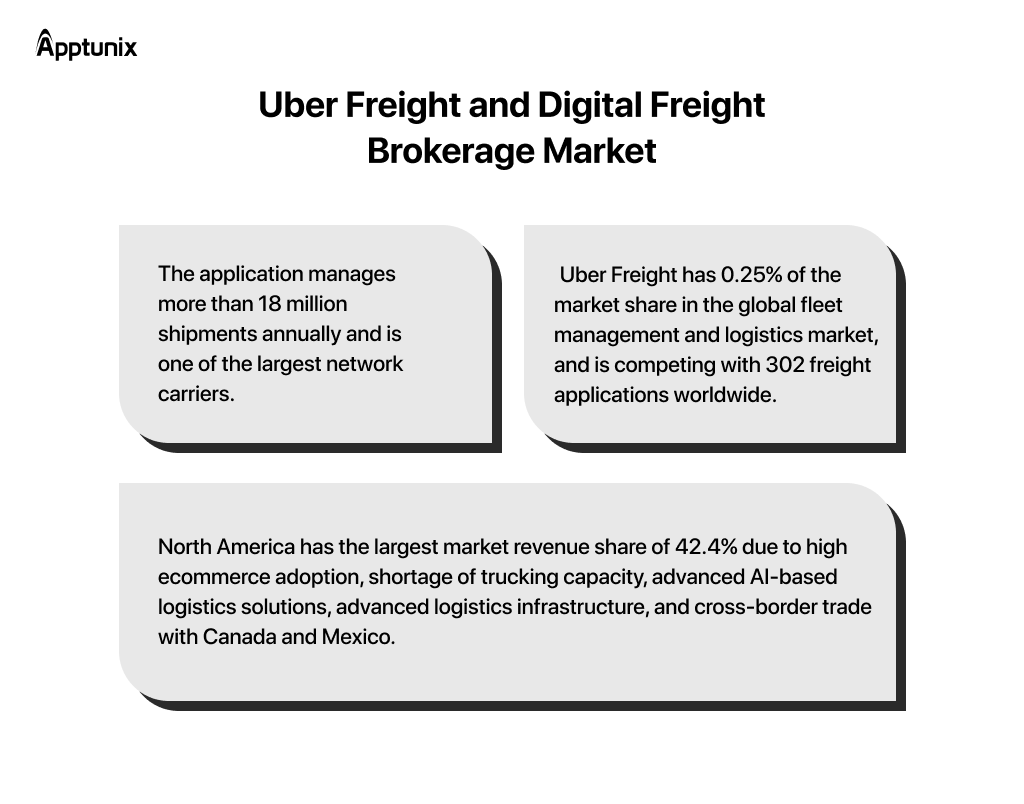
-> The application manages more than 18 million shipments annually and is one of the largest network carriers.
-> Uber Freight has 0.25% of the market share in the global fleet management and logistics market, and is competing with 302 freight applications worldwide.
-> North America has the largest market revenue share of 42.4% due to high ecommerce adoption, shortage of trucking capacity, advanced AI-based logistics solutions, advanced logistics infrastructure, and cross-border trade with Canada and Mexico.
-> The third-party logistics provider, bigger than Uber Freight, like app for trucks includes C.H. Robinson, XPO Logistics, DSV, JB Hunt Transport, and DHL.
In today’s competitive market, the logistics industry is transforming with the shift toward digital and on-demand solutions like Uber Freight. Developing a real-time truck tracking app helps businesses streamline freight operations, reduce costs, and meet modern delivery expectations.
Here are the 3 reasons why to build a logistics app like Uber Freight:
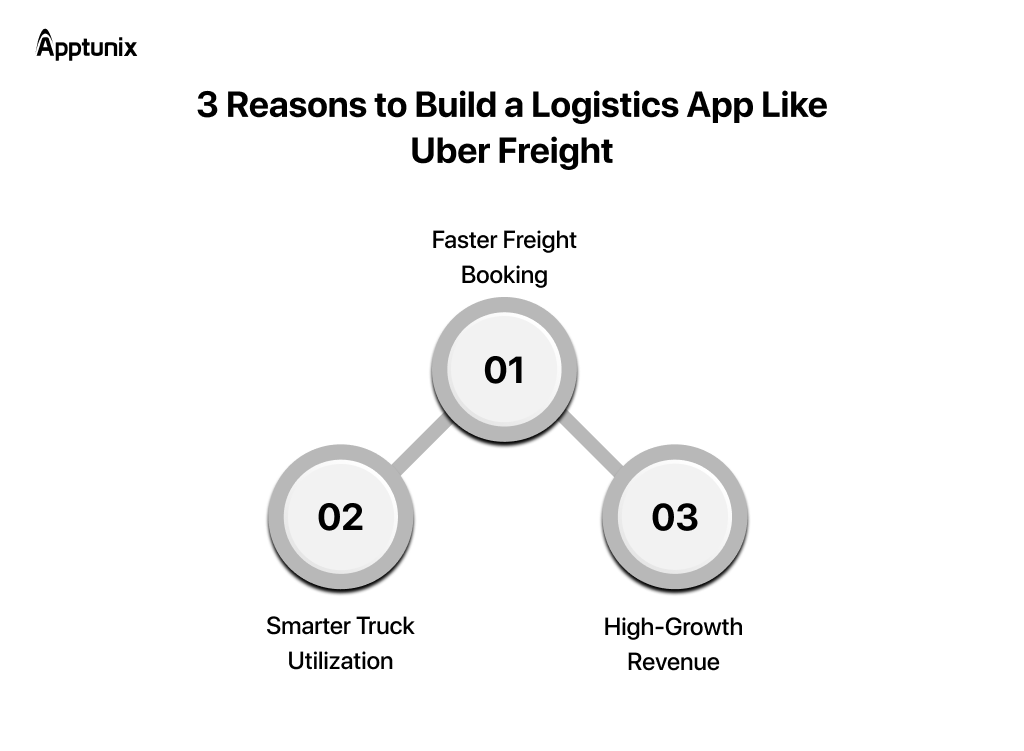
1:Faster Freight BookingToday, 75% of shippers prefer digital freight platforms like Uber Freight for faster decision-making and transportation. Despite the industries, businesses today seek faster and more flexible shipping options rather than traditional logistics solutions. Uber Freight like smart logistics platforms, allows instant load booking and real-time visibility.
2:Smarter Truck UtilizationDo you know that about 35% of truck miles are driven empty? Yes, that’s right. However, an Uber-like app for trucks uses smart matching to connect available trucks with nearby loads, which cuts down the chances of empty returns. This eventually helps carriers save gas, time, and operational costs.
3:High Growth RevenueThe digital freight matching market is expected to grow at over 30% CAGR through the end of the decade. You should build an app like Uber Freight to open multiple revenue streams like premium services, commissions, and analytics. Today, early adopters gain a clear competitive edge as logistics goes digital.
Now, it’s time to examine the on-demand freight app development steps.
You must require a combination of solid market knowledge, sound technology decision-making, and a scalable development strategy to create an Uber-like trucking app. From defining your business model and target users to scaling with advanced features, here are the 6 steps for Uber-like trucking app development:
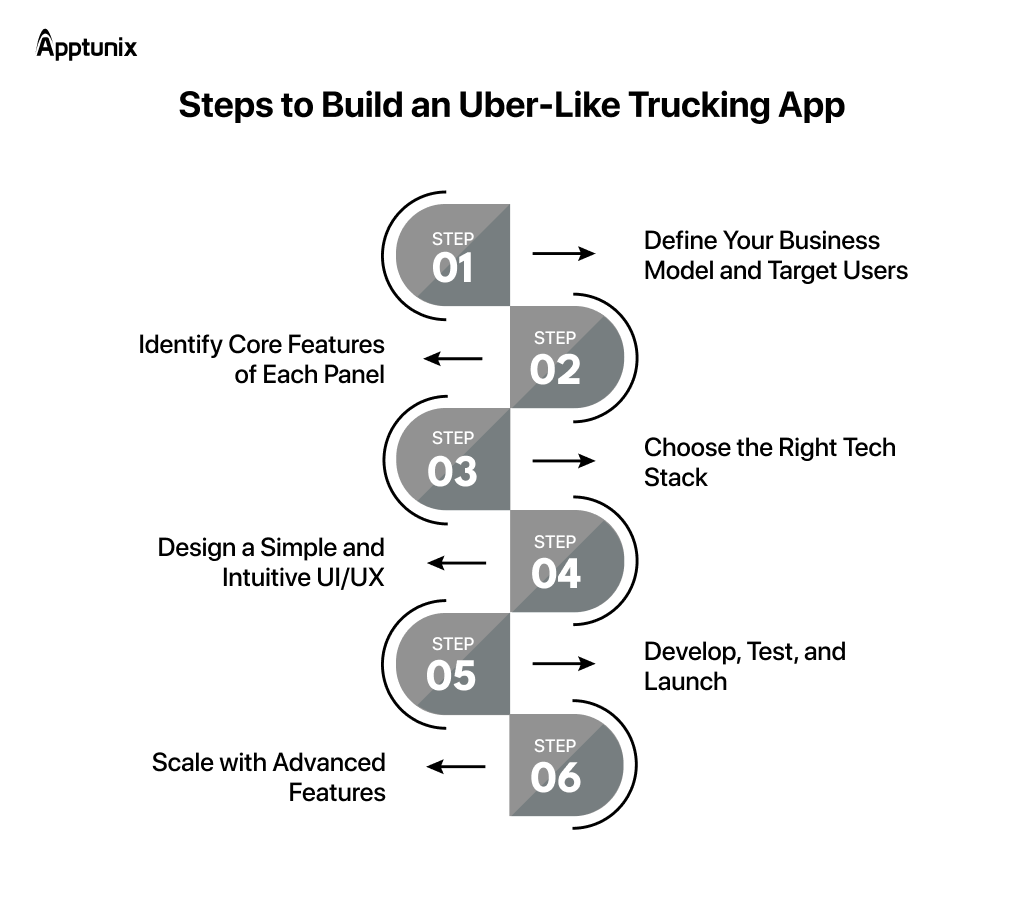
Step 1:Define Your Business Model and Target UsersYou should start building your Uber-like trucking app by defining your business model and identifying your target customers, whether individuals or companies. You must identify:
Decide whether your truck booking app development will follow a marketplace model, a fleet-based model, or a hybrid model. Apart from that, plan monetization strategies like commissions, subscriptions, premium services, etc., for your Uber-like app for trucks for long-term scalability.
Step 2:Identify Core Features of Each PanelAfter defining your Uber-like app’s business model and target users for the trucking industry, you must identify the core features for each panel of your platform. Well, on-demand trucking app development includes three main panels:
Each panel requires its respective features; for example, the shipper panel requires real-time tracking and freight posting, and the driver panel needs load discovery and navigation. On the other hand, the admin panel requires features such as managing pricing and analytics.
Define your app features clearly to improve usability and streamline the freight booking app development workflow.
Step 3:Choose the Right Tech StackThe technology stack is an essential factor that affects the future of mobile app development. The Android and iOS app developers must choose the right tech stack for scalable logistics app development. To build a high-performance app, you must use cloud infrastructure, GPS tracking, secure payment gateways, etc.
This is the foundation of the application that ensures your Uber-like trucking app can efficiently handle growing demand and future upgrades. Analyze the table of top android and iOS app frameworks:
Step 4:Design a Simple and Intuitive UI/UXDesigning a simple and intuitive user interface is the most important part to create an Uber-like app for trucks. The application must be easy to use for both shippers and drivers. Eventually, designers focus on:
Your application should be user-friendly because it improves adoption rates, reduces friction, enhances the overall app experience, and plays a crucial role in the success of your on-demand truck booking app, like Uber Freight.
Step 5:Develop, Test, and LaunchIt’s time for real Uber-like trucking app development. Start by creating an MVP (minimum viable product) that includes only core features. This allows you to test your idea quickly and cost-effectively. Well, an MVP is best suited to take your business online. It helps in:
→ Test Core Idea
→ Launch Faster
→ Lower Development Cost
→ Collect User Feedback
→ Reduce Market Risk
Perform extensive testing for performance, security, and real-time accuracy before launch. Remember, a stable launch builds trust and encourages early adoption among shippers and carriers.
Step 6:Scale with Advanced FeaturesAfter successfully launching your Uber-like app for trucks, scale the application with AI in logistics app development. Integrate features like AI-powered pricing, route optimization, automated dispatching, and analytics dashboards.
Incorporate features and adopt more technological advancements into your business as per business and users’ demands. The enhancement will improve efficiency and profitability while keeping your on-demand logistics platform competitive in a fast-growing digital freight market.
Now that you have understood the custom trucking app development steps. It’s time to examine freight matching app features.

Smart logistics platforms like Uber Freight are built around three core panels: the shipper panel, the driver panel, and the admin panel. Every single panel is designed to solve specific problems and ensure smooth freight booking, tracking, and management across the logistics ecosystem. Examine the core features of each panel:
This panel allows businesses to post loads, book trucks, and track shipments efficiently. The key features of an Uber-like app for truck shippers’ panel include:
Easily create freight listings by entering pickup location, drop-off point, and cargo information.
View transparent freight costs instantly before booking, with no hidden charges or surprises.
Track trucks live on the map and monitor shipment status throughout the delivery journey.
Communicate directly with drivers through chat or calls for quick updates and coordination.
Make secure online payments and receive automated invoices for faster, hassle-free transactions.
Access past bookings, delivery records, and detailed reports to analyze logistics performance.
This driver or carrier panel focuses on improving drivers’ earnings and streamlining daily operations. Key features of a driver panel of an Uber-like app for trucks include:
View nearby available loads and accept jobs instantly based on preference and availability.
Receive load recommendations matched to location, truck type, and delivery route.
Get optimized routes with turn-by-turn navigation to save fuel and delivery time.
Update shipment status easily from pickup to delivery with real-time notifications.
Receive timely payments and track earnings through a transparent driver payout system.
View ratings, reviews, and performance metrics to improve service quality and earnings.
This panel is for you to check and manage everything within the application and your business. The features that give you full control over the tucking app and its operations are as follows:
Manage shippers, drivers, carriers, and fleet details from a centralized dashboard.
Configure pricing rules, commissions, and payouts for smooth platform monetization.
Track ongoing shipments and efficiently handle disputes between shippers and carriers.
Monitor bookings, revenue, user activity, and platform growth in real time.
Ensure platform safety with identity verification, fraud alerts, and access control tools.
Manage app settings, content, notifications, and feature updates without development effort.
Artificial intelligence is one of the imperative technologies to integrate into an Uber-like app for trucks. It helps in building smart, scalable, and efficient Uber Freight-like apps.
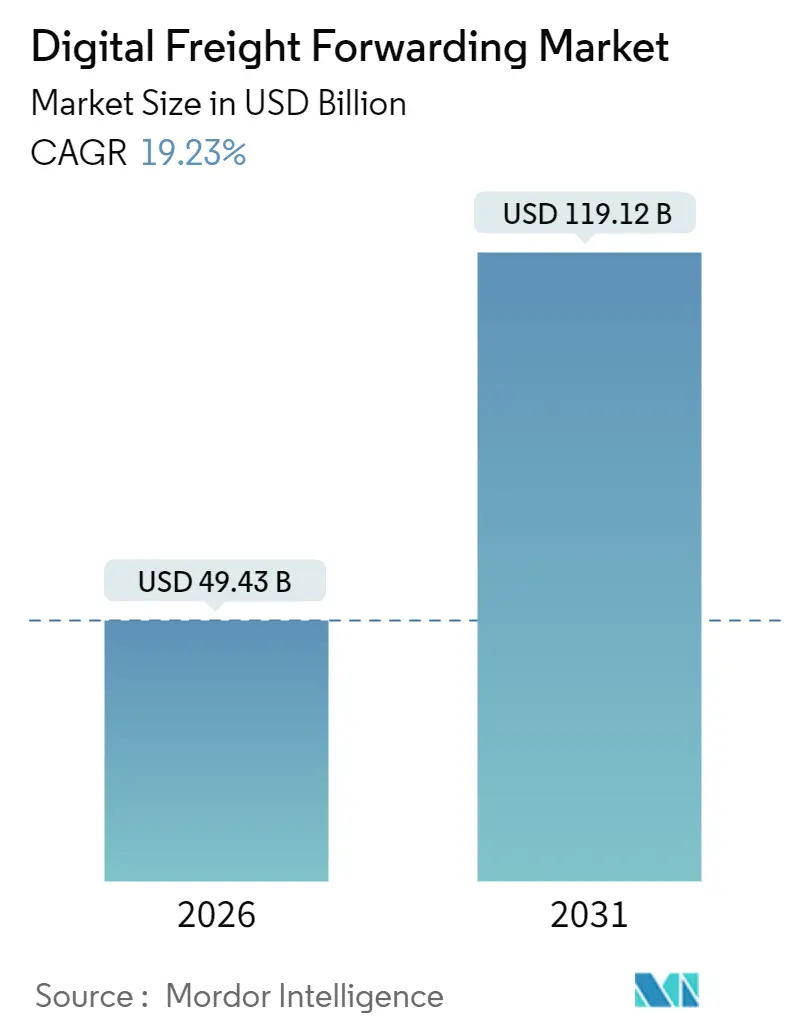
Examine the Digital Freight Market Size by analyzing the image:
The best thing about AI in logistics app development is that it automates complex logistics operations and helps businesses in many ways, such as:
-> Reduce operational costs
-> Improve delivery speed
-> Enhance overall user experience
Modern custom logistics software development is highly dependent on AI to make real-time decisions based on data, demand, and location. Examine the benefits of AI in Uber like app for Trucks:
One of the key benefits of AI in freight apps is that it analyzes truck availability, driver location, load type, and delivery time. This helps the app to instantly match the right carrier with the right shipment, reducing delays and empty miles.
AI also helps in predictive and dynamic pricing. It evaluates demand, distance, fuel costs, traffic patterns, and seasonality to suggest accurate pricing. This helps shippers to control costs while ensuring fair earnings for carriers.
Route optimization with AI helps the application select the fastest and most cost-efficient routes by analyzing road conditions, real-time traffic, and weather. This ensures timely deliveries and reduces fuel consumption and operational costs.
Apart from that, artificial intelligence also improves demand forecasting, fraud detection, and performance analytics. This helps logistics app solutions scale efficiently and stay competitive in today’s highly digital freight marketplace.
B2B logistics mobile applications like Uber Freight are not limited to logistics companies alone; many industries depend on such applications to deliver their products to their respective locations. These fast and reliable on-demand trucking solutions help industries like
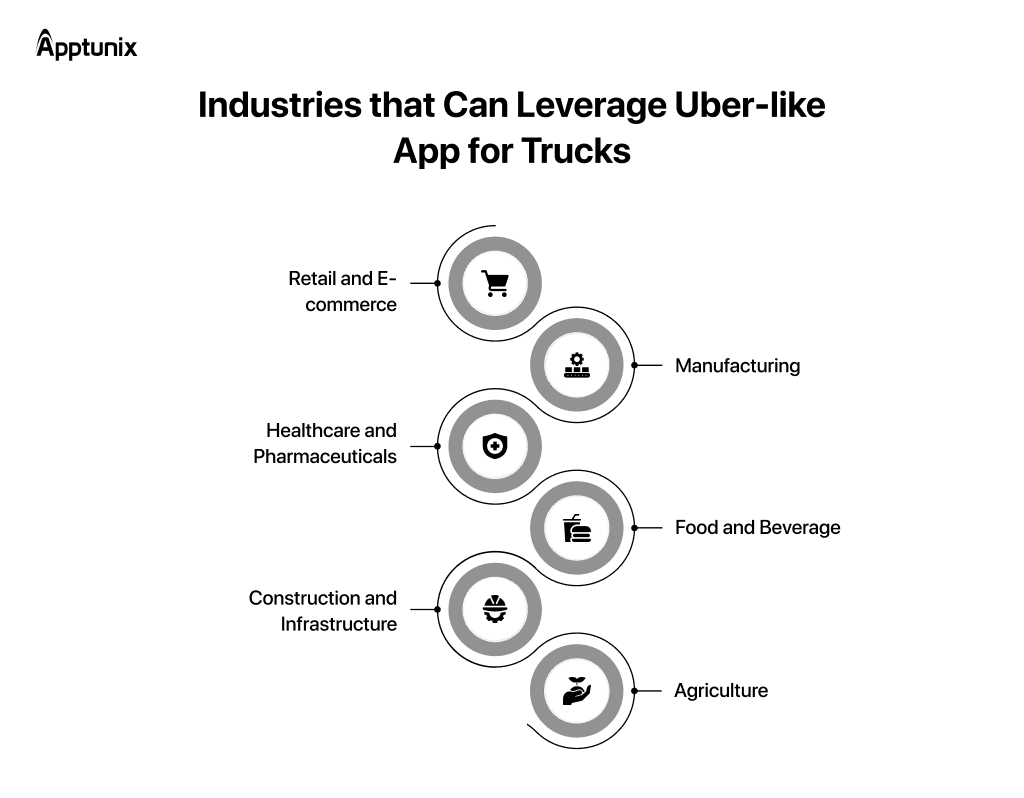
1:Retail and E-commerceRetail and e-commerce businesses leverage logistics apps like Uber Freight the most. They use trucking apps to ensure faster inventory movement, last-mile delivery, and real-time shipment tracking, especially during peak times.
2:ManufacturingTo transport raw materials and finished goods efficiently, manufacturers rely on trucking apps. It also helps reduce delays and maintain smooth production cycles. Manufacturers use the Uber Freight platform to streamline supply chains, gain visibility, reduce costs, and improve efficiency.
3:Healthcare and PharmaceuticalsThis industry requires timely and secure transportation of medicines, medical equipment, and supplies; as a result, they use apps like Uber Freight. The platform’s reliable delivery service and real-time tracking make the solution highly valuable here.
4:Food and BeverageTo maintain product freshness and quality, it is essential to deliver the items on time. This makes food and beverage companies use online logistics solutions and experience temperature-controlled transport, route optimization, and faster deliveries.
5:Construction and InfrastructureConstruction and infrastructure businesses also use smart logistics platforms to move heavy materials, machinery, and equipment efficiently between sites. Uber Freight-like app offers specialized solutions like dynamic and project-based transportation requirements.
6:AgricultureVegetable and fruit distributors or farmers also use on-demand trucking apps to transport their products on time. Using such applications helps them to reduce spoilage and reach markets on time.
Do you also run businesses of this type, or would you like to build an Uber-like app for trucks to help these businesses transport their products on time? If yes, examine the cost to build an Uber Freight-like app.
The cost to build a trucking app is somewhere between $20,000 and $120,000+, depending on app complexity and features integration. The other factors that affect the overall app development cost include:
Examine the table to understand the cost and timeline based on app complexity:
Across different continents and countries, iOS and Android app developers charge different prices. Examine the table to know the difference:
Now, before wrapping up this detailed guide on building an Uber-like app for trucks, examine the revenue model of the application.
Choosing the right strategy depends on your target market, users, and feature offerings. However, on-demand transportation software like Uber Freight generates revenue through multiple monetization models. From commission models to subscription plans, here are the 5 ways how Uber Freight-like apps make money:
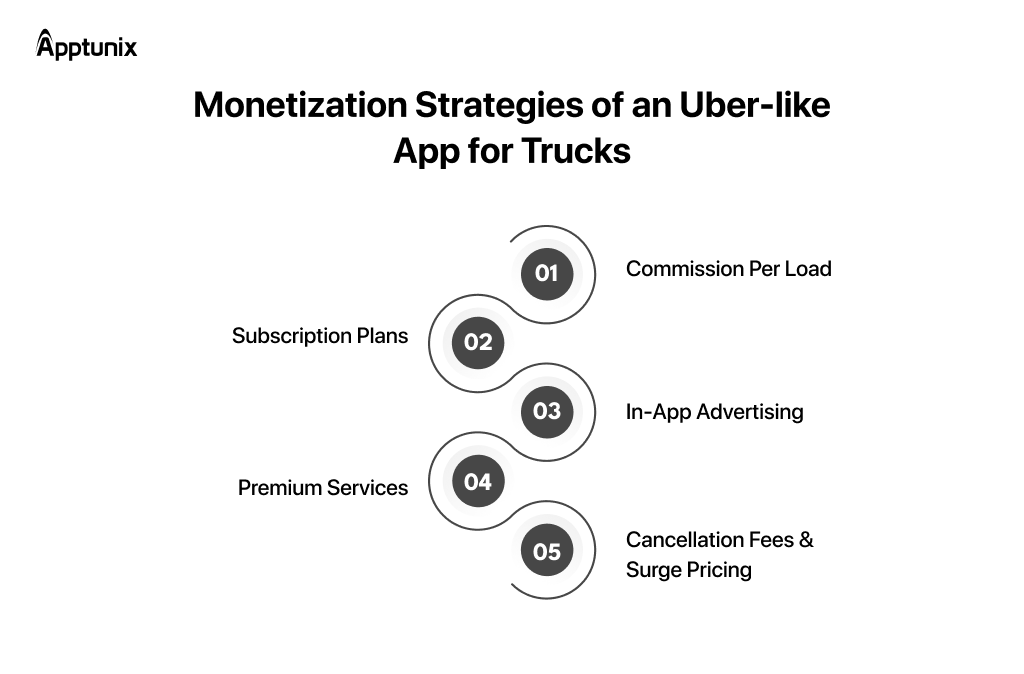
1:Commission Per LoadCommission is the core revenue model of an Uber Freight-like app, which pays a commission on every completed freight booking. The Uber solution takes a fixed percentage from shippers or carriers, resulting in consistent earnings as transaction volume grows.
2:Subscription PlansWith this revenue model, you can offer monthly or annual subscription plans to shippers or fleet owners to drive premium success. This revenue model includes benefits like lower commission rates, priority load matching, and advanced analytics.
3:In-App AdvertisingAn Uber-like app for trucks also makes money by promoting carriers’ trucks or giving priority access to high-value loads. This improves visibility for carriers or becomes an additional revenue stream for the platform.
4:Premium ServicesAn Uber Freight-like app also generates revenue through enhanced features such as faster matching, dedicated support, and specialized cargo handling, all for a fee. These premium services are a strong source of revenue, helping the platform increase profitability.
5:Cancellation Fees & Surge PricingIf a third-party carrier cancels the ride at the last minute, the platform charges a penalty. Moreover, surge pricing during peak times can sometimes become a major revenue stream.
To turn your Uber Freight-like idea into a scalable and revenue-driven platform, you must choose the best logistics software development company like Apptunix.
As a leading AI mobile app development company, Apptunix is known for providing the best logistics software development services in the United States and other countries. The company builds intelligent, secure, and performance-driven trucking apps since it has deep expertise in custom logistics software development.
Apptunix designs Uber-like apps for trucks for growth and efficiency by using AI-powered freight matching, real-time tracking, seamless UI/UX, and scalable cloud architecture. Our top iOS Uber-like app developers for trucks follow an agile development approach to ensure faster time to market and future-ready technology.
We have an experienced app development team that has helped many entrepreneurs create an Uber-like app for trucks, making us a trusted and reliable technology partner. So whether you want to launch an MVP or a full-scale logistics solution, Apptunix delivers solutions that drive results.
Q 1.What is the app like Uber, but for trucks?
An app like Uber for trucks is a digital freight platform, such as Uber Freight, that connects shippers with truck drivers. It enables on-demand load booking, real-time tracking, transparent pricing, and faster goods transportation.
Q 2.How to Create an Uber-like App for Trucks?
Uber-like truck booking app development steps include:
Q 3.What are the key features of an Uber-like app for trucks?
The key features of an Uber Freight-like app include:
Q 4.How much does it cost to build an Uber-like app for trucks?
The Uber Freight app development cost is somewhere between $20,000 and $120,000+, depending on app complexity and feature integration. A basic Uber-like app for trucks costs between $20,000 and $30,000; a mid-level app costs between $30,000 and $60,000; however, an advanced Uber-like app with high-end AI-powered features costs up to $120,000 or even more.
Q 5.How long does it take to develop an Uber Freight-like app?
It takes 3-8 months or more to build an app like Uber Freight. A basic custom solution for trucks takes 2-3 months, and a mid-level solution takes 3-5 months; however, a complex Uber logistics solution can take up to 8 months or more to build from scratch.
Q 6.What is the role of AI in logistics app development?
Artificial intelligence helps automate freight matching, optimize routes, predict pricing, forecast demand, and detect fraud. It enables logistics apps to make real-time decisions, reduce costs, improve delivery speed, and enhance overall user experience.
Q 7.Why is Apptunix the best logistics app development company?
Apptunix is the best Uber-like app development company for trucks because it delivers scalable, custom software solutions with AI-powered features and a user-friendly interface. Its end-to-end app development services make it the leading logistics app development company.
Get the weekly updates on the newest brand stories, business models and technology right in your inbox.
59 Views 12 min February 24, 2026

57 Views 12 min February 18, 2026

55 Views 12 min February 13, 2026
Book your free consultation with us.
Book your free consultation with us.

One Central, The offices 3, Level 3, DWTC, Sheikh Zayed Road, Dubai, United Arab Emirates
+971 50 782 1690