
Top 10+ AI Consulting Companies in USA
121 Views 4 min December 16, 2025

Introducing Nalini, our tech-savvy content expert at Apptunix, with 8+ years of experience in technical content writing. With a knack for making complex ideas simple, she turns intricate tech concepts into engaging reads. Her work highlights emerging trends such as AI-powered applications, cross-platform development, digital transformation initiatives, and B2B technology solutions. Through her strategic storytelling, she plays a vital role in advancing Apptunix’s mission to shape the future of mobile and web experiences, enabling clients to make smarter, technology-driven decisions that accelerate growth and secure a competitive edge.
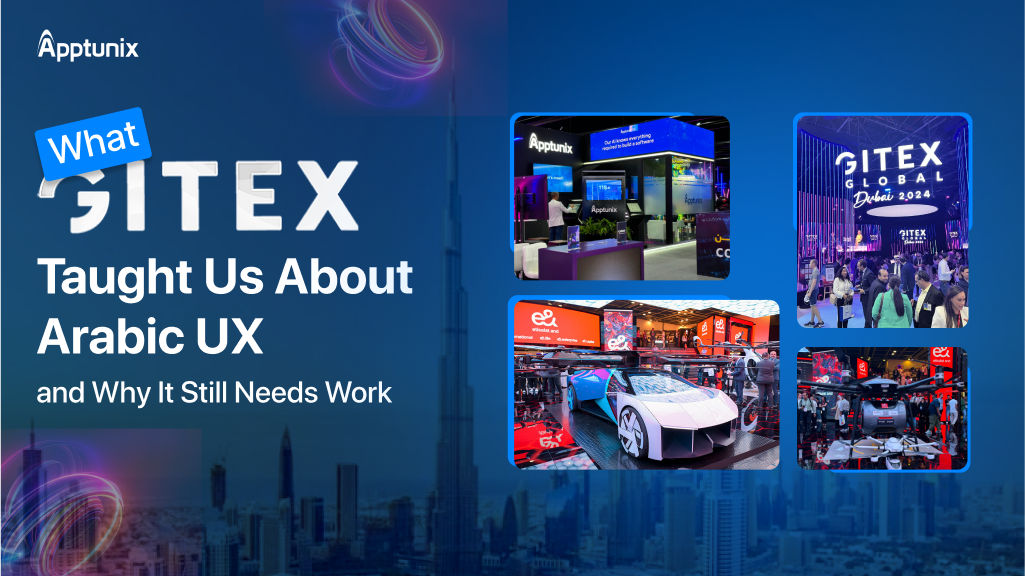
What comes to mind when we talk about smart cities, innovative cars, or AI robots? – Yes, we’re talking about GITEX Global. But amid all the flashy innovations lies a quieter (yet significant) trend that has started gaining momentum: Arabic UX.
As the MENA region emerges as a digital powerhouse, one thing is clear: you can’t serve Arabic-speaking users with the same UX design as Western apps. One cannot beat the experience of regional language, culture, and most importantly, emotional resonance that makes users feel seen and understood.
Fortunately, we’re finally starting to witness real movement in that direction. GITEX 2024 proved that Arabic UX is now recognized and is definitely an utmost priority. Although it’s still in its early stages—and that’s actually a good thing. It means there’s still room for learning and growth.
Let’s dive into what GITEX taught us about Arabic UX—and what still needs to be done.
The MENA region is one of the fastest-growing digital economies globally. With over 400 million Arabic speakers, the demand for Arabic UX is not just nice-to-have but a business necessity.
What GITEX showed us is that companies who invest in culturally fluent design will be the ones that lead in user trust, retention, and market share.
Without Arabic UX, your app (no matter how good your backend or features) won’t be able to stay ahead in the competition. That’s why Arabic UX isn’t just a design issue—it’s a business growth strategy.
As regional governments encourage local innovation, and as users expect more personalized, intuitive digital experiences, the need for Arabic-first digital experiences is totally in demand. It helps to lay a strong foundation for long-term success.
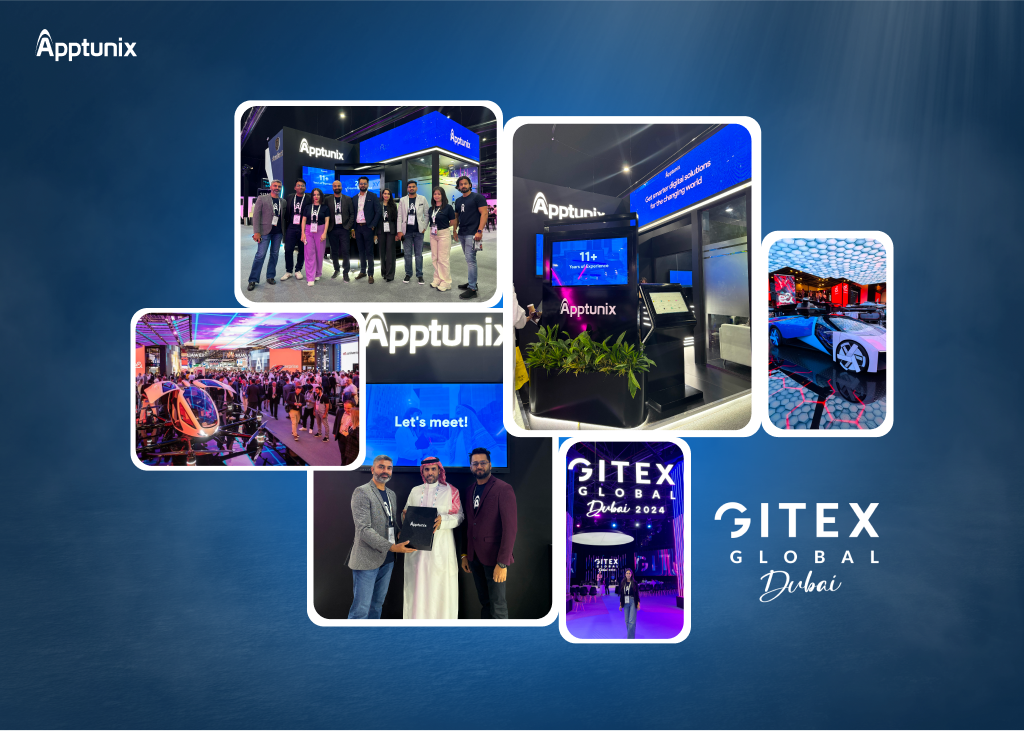
1. Stronger RTL Design ImplementationMost of the apps and websites showcased clear and functional right-to-left RTL design support. Layouts were seamless, intuitive, with natural flow and navigation (tailored for Arabic users).
It signifies that developers emphasised RTL principles and are working towards Arabic UX best practices. Although consistency and responsiveness still require improvement.
2. Cultural Sensitivity in Visual DesignAt GITEX, it was clear: great Arabic UX isn’t just about translating words; instead, it’s about designing with cultural respect and emotional connection.
Visual elements, such as icons, illustrations, images, and colour schemes, were aligned with regional values and norms. For instance, apps showcased at GITEX avoided culturally inappropriate visuals and instead leaned into designs that resonated with Arab traditions, family values, modesty, and even local calligraphy styles.
That’s why culturally sensitive visual design is not just a creative choice, but a strategic UX advantage.
3. Localized Microcopy and VoiceGITEX has strategically used localized microcopy and voice – the small texts users can interact with to enhance the user experience.
Arabic UX isn’t just about translating English copy word for word. It’s about using language that feels familiar, respectful, and natural to the local audience.
From CTA buttons like “اشترِ الآن” (Buy Now) to helpful tooltips or onboarding messages, every word needs to reflect the tone, formality, and rhythm of the Arabic language.
Because when your app speaks the user’s language—not just literally but emotionally—it builds trust and keeps users coming back.
This represents a significant step forward in establishing trust and relatability with Arabic-speaking users.
Of course, the journey is not yet complete. GITEX also revealed key areas that still need attention:
That said, these challenges are no longer being ignored. And that’s progress worth celebrating.
GITEX 2024 marked a pivotal moment. For the first time, Arabic UX was no longer hidden in the background. It was part of the main event. However, for this momentum to translate into real change, companies must take the next step.
That means:
If you’re building for the MENA region, remember: Arabic users aren’t looking for a translation—they’re looking for an experience that feels made for them.
And if GITEX is any indication, the future of Arabic UX is not just promising—it’s already in motion.
Looking to launch in the MENA region? Apptunix helps you design apps that don’t just speak Arabic—but feel native to Arabic users.
Let’s build a digital experience Arabic users will love.

Get the weekly updates on the newest brand stories, business models and technology right in your inbox.
Introducing Nalini, our tech-savvy content expert at Apptunix, with 8+ years of experience in technical content writing. With a knack for making complex ideas simple, she turns intricate tech concepts into engaging reads. Her work highlights emerging trends such as AI-powered applications, cross-platform development, digital transformation initiatives, and B2B technology solutions. Through her strategic storytelling, she plays a vital role in advancing Apptunix’s mission to shape the future of mobile and web experiences, enabling clients to make smarter, technology-driven decisions that accelerate growth and secure a competitive edge.
Book your free consultation with us.
Book your free consultation with us.

One Central, The offices 3, Level 3, DWTC, Sheikh Zayed Road, Dubai, United Arab Emirates
+971 50 782 1690