Smart City App Development: Connecting Citizens, Infrastructure, and Data
26 Views 15 min July 24, 2026

If you are planning to build a grocery delivery app like Instacart, you are not late. Shopping has moved away from a fixed weekly routine to frequent, on-demand orders. Families want essentials delivered the same day. Working professionals rely on delivery apps like Instacart to save time. Once people place a few successful orders, grocery delivery becomes part of their normal routine.
That steady demand is why the space continues to attract founders, retailers, and new platforms. Instacart clone became the reference point because it chose the right approach. This guide is written for people who want clarity before they start building. It is for founders and business teams who want real answers to practical questions, such as:
If you are evaluating the idea, planning budgets, or deciding how to move from concept to launch, this blog walks you through those decisions with practical details!
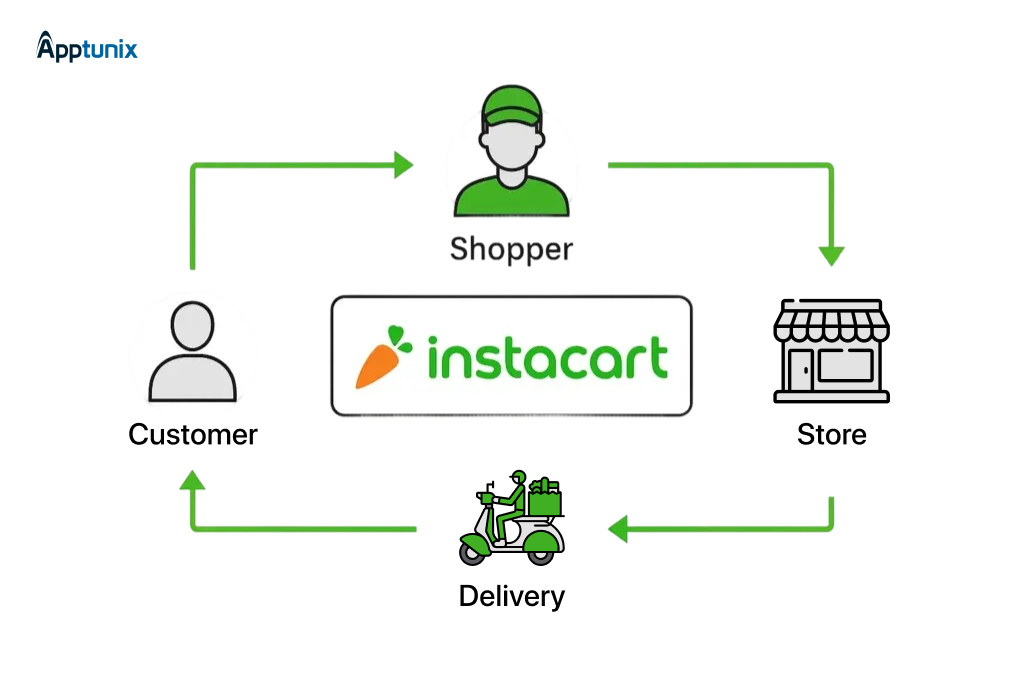
To understand how the Instacart app works and earns money, you need to see it as a connected system rather than a simple delivery app. Instacart operates as a grocery marketplace where multiple users interact at the same time. The platform succeeds because it aligns incentives for everyone involved instead of solving only one side of the problem.
Instacart’s structure is built around four key roles, each with a clear purpose.
Customers
Customers use the app to browse nearby grocery stores, search for products, add items to their cart, choose delivery times, and track orders in real time. They can approve substitutions while shopping is in progress, which reduces order cancellations and improves trust.
Shoppers
Shoppers are independent delivery partners. They accept available orders, shop inside physical stores, communicate with customers when items are unavailable, and complete doorstep delivery. Their experience directly affects delivery speed and customer satisfaction.
Grocery Stores
Grocery stores list their inventory on the platform without managing logistics. They gain online exposure, higher order volume, and access to digital customers without investing in their own delivery infrastructure or mobile apps.
Admin Team
The admin system manages everything behind the scenes. This includes store onboarding, order routing, commission setup, pricing rules, shopper activity, refunds, and customer support. The admin layer keeps the marketplace stable and profitable.
Throughout this flow, the platform handles inventory updates, live messaging, location tracking, payments, and order status updates without interrupting the user experience.
Instacart earns by positioning itself at the center of this ecosystem. It charges delivery and service fees to customers, commissions to grocery stores, and generates recurring revenue through subscriptions and sponsored product placements.
Because the platform does not own inventory or operate stores, revenue grows with order volume rather than fixed operational costs. This is what makes the on-demand grocery delivery app development attractive to founders looking to build scalable grocery delivery platforms.

To build something sustainable, you need to understand the Instacart business model at a practical level. The Instacart app business model works because it removes friction for every party involved, without forcing any of them to change how they already operate.
At its core, Instacart runs on a marketplace-based grocery delivery model. The platform does not own stores, stock inventory, or manage warehouses. Instead, it acts as the connector that brings customers, shoppers, and retailers together inside one system.
The success of the Instacart app business model lies in balance. Stores keep inventory control, shoppers have flexible earning opportunities, and customers enjoy convenience. By connecting all participants efficiently, Instacart maximizes value for each user without taking on the heavy costs of inventory or logistics.
At its core, Instacart runs on a multi-sided marketplace model. The platform does not own stores or stock inventory. Instead, it acts as a connector: customers shop from multiple stores, shoppers pick and deliver orders, and retailers gain online visibility without building their own delivery tech. This setup keeps costs low and makes it easy to expand into new cities.
The platform serves three primary user groups:
Instacart sits in the middle, managing order flow, payments, and communication so all sides benefit.
A major revenue driver in the Instacart business model is commissions. Stores pay a percentage for every order processed through the platform. Because the platform does not carry inventory, revenue grows as order volume increases, making the model highly scalable.
Instacart uses subscriptions to encourage repeat usage. With Instacart+, customers pay a monthly or annual fee for free or discounted deliveries. This creates predictable revenue while turning occasional users into loyal, long-term customers.
Brands pay Instacart to promote products within search results and category pages. Sponsored listings integrate naturally, benefiting both brands and customers. This adds a high-margin revenue stream on top of commissions and delivery fees, making the platform more resilient.
Many founders choose to develop an app like Gourmet Egypt or Instacart because the model solves multiple challenges at once. It reduces operational complexity while tapping into a rapidly growing market with long-term potential.
One of the biggest advantages for startups is that you do not need warehouses or stocked inventory. Grocery stores already have products. Your app simply connects demand with supply, lowering upfront costs and reducing early-stage risk.
This approach aligns perfectly with the marketplace trend, where the platform earns from transactions without carrying the overhead of inventory.
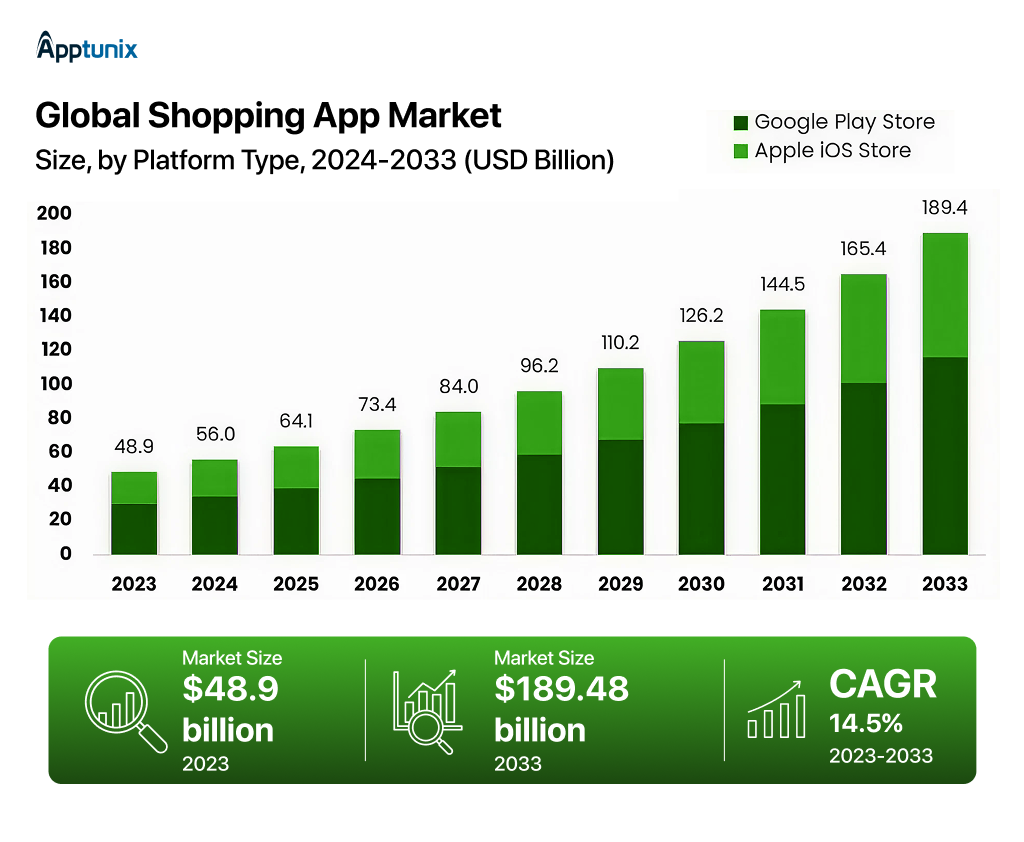
Groceries are purchased repeatedly, often weekly or multiple times a week. This built-in repeat usage makes grocery apps highly sticky. Once users trust your service, they become loyal, creating a predictable revenue base. By end of 2026, the global online grocery market is projected to surpass $1.8 trillion, with on-demand and recurring orders driving a large share of growth.
Quick commerce and hyperlocal delivery are expected to account for over 30% of all online grocery sales in major urban markets by 2027, creating opportunities for startups to capture first-mover advantage. The marketplace model scales easily. Start in one city, validate demand, and then expand by onboarding more stores and shoppers. The core platform remains the same while your network grows.
Not every grocery app needs to compete with national chains. Startups can thrive by focusing on niche segments, including:
Rapid grocery delivery or “quick commerce” is reshaping customer expectations. Same-hour deliveries, micro-fulfillment centers, and AI-driven route optimization are creating high-value opportunities for startups that target specific niches.
By 2028, the online grocery delivery market in North America and Europe is expected to grow at a CAGR of 15–18%, highlighting continued expansion potential for new entrants.
With low inventory risk, high repeat usage, scalable models, and emerging trends like quick commerce, the grocery delivery space offers a rare combination of predictable revenue and rapid growth. Startups that move fast and focus on real user needs can carve out profitable positions even in markets dominated by large players.
Let’s get into the numbers. When businesses ask about the cost to build a grocery delivery app like Instacart, the honest answer is: it depends on scope. Every feature you add, every platform you target, and every integration you choose will shift the budget. That said, we can outline some realistic ranges to give you a solid starting point.
So, when businesses ask about the grocery delivery app development cost, the honest answer is: it depends on scope, team, and ambition. That’s why the planning phase of defining must-have features, selecting the right tech stack, and choosing the right partner is so critical. The wrong decisions here don’t just increase cost; they can kill scalability before you even start. The cost to build a grocery delivery app like Instacart depends on dozens of choices you make along the way. But you can get clarity by understanding the factors that matter most.
The takeaway: Your investment depends on where you are in your journey. If you’re validating an idea, start small. If you’re scaling aggressively, prepare for enterprise-level budgets. Either way, working with an experienced grocery marketplace app development partner helps you invest wisely instead of overspending in the wrong areas.
Strong grocery delivery app features decide whether users stay or uninstall after their first order. A good grocery app feels simple on the surface but handles a lot behind the scenes. Each user type needs tools that match their role. These features form the foundation of any serious grocery delivery platform. Whether you start with an Instacart clone app or choose custom grocery delivery app development services, getting these features right is what turns an app into a real business.
A grocery delivery app that combines these features efficiently can outperform competitors, retain users, and scale quickly. Choosing the right features to create an on-demand grocery delivery app from the start also helps startups save cost and development time.
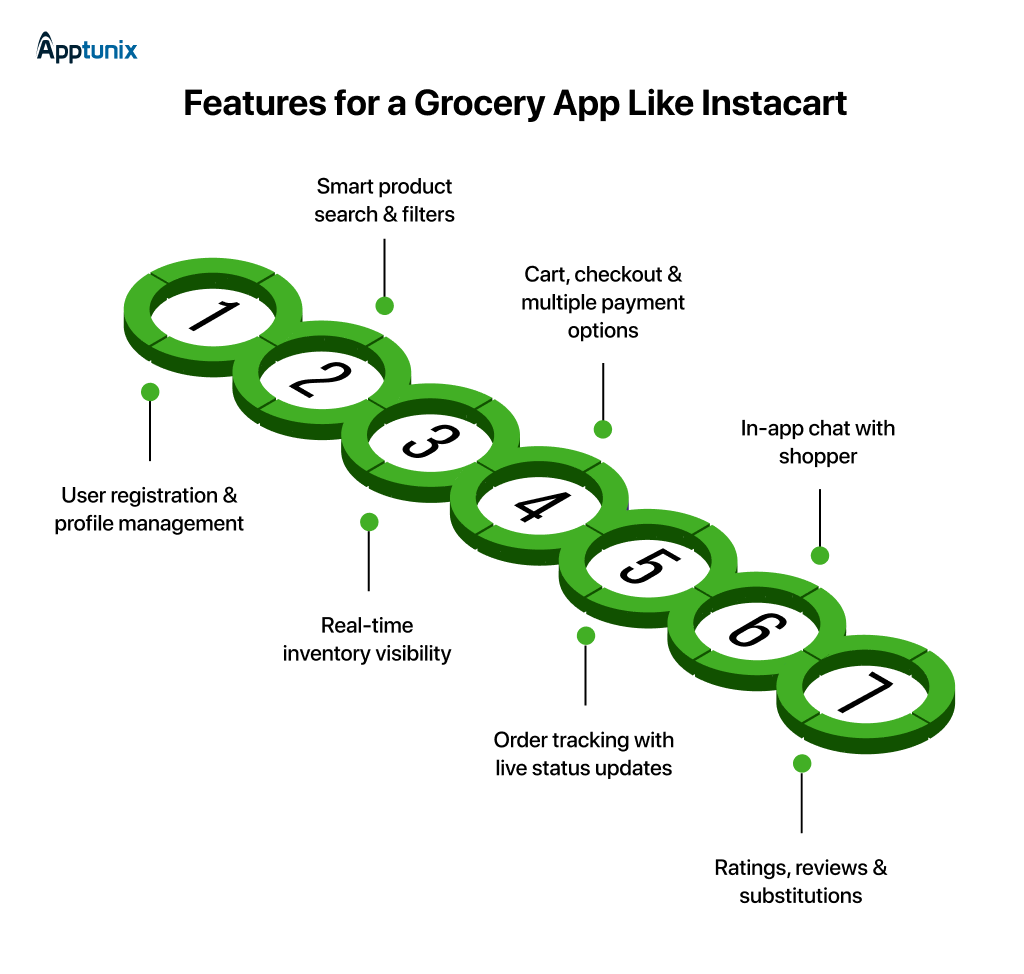
The customer app drives adoption, retention, and repeat orders. It must be intuitive, fast, and reliable.
Shoppers are the backbone of operations. Their app must be clear, efficient, and reliable.
The admin panel gives you complete control over the platform, stores, and users.
Founders often ask, how do I build a grocery delivery app like Instacart without wasting time or budget. The answer is not to copy features blindly. It starts with clear decisions that shape everything that follows.
Building a grocery delivery app like Instacart is more than coding an app. It’s a carefully planned journey that combines market strategy, technology, and user experience. Skipping steps or making assumptions can lead to delays, overspending, and a platform that fails to meet user needs. Here’s how the process actually works.
Before designing screens or writing code, you must clarify who your app serves and how it delivers groceries.
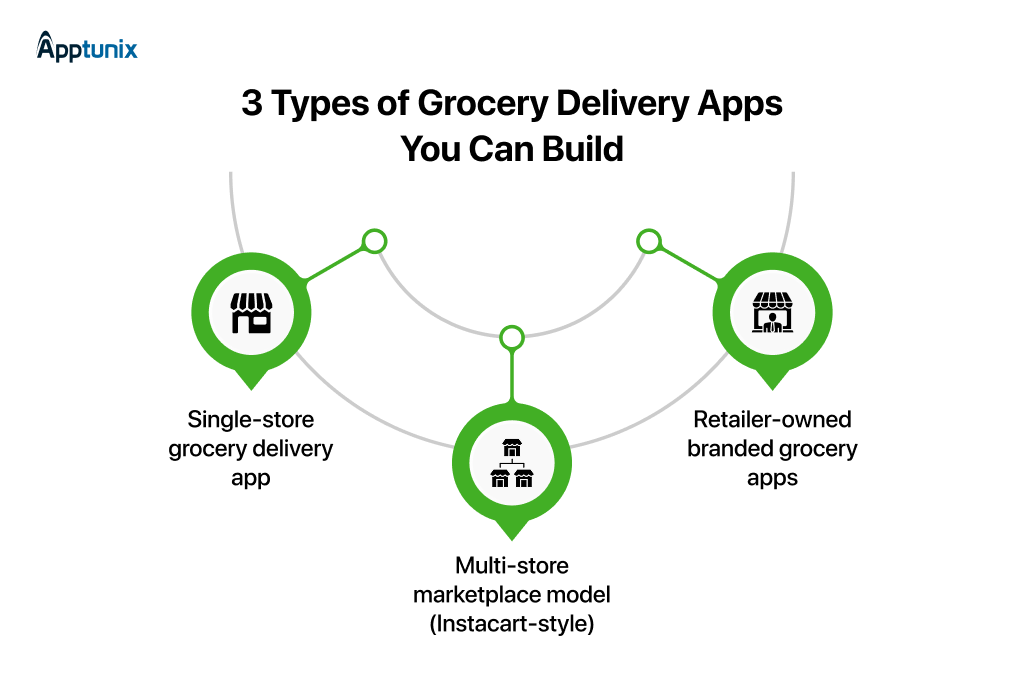
Key considerations:
Clear answers here guide logistics, features, and technology choices, and prevent costly rework later.
Once the market is defined, you need idea validation and requirement analysis. This phase turns concepts into actionable specifications. This step ensures your app solves real problems instead of just copying competitors.
Focus areas include:
Most successful platforms start with a Minimum Viable Product (MVP).
MVP typically includes:
A full-scale launch adds subscriptions, promotions, analytics, AI recommendations, and automated logistics. Starting small allows you to validate user behavior before investing heavily.
Design is more than aesthetics—it drives user adoption and operational efficiency. Wireframes and prototypes test flows before coding, reducing errors and improving usability.
Good design ensures:
With design approved, development begins.
A grocery app depends on external services to function efficiently:
Testing ensures the app works as expected and is secure. This iterative process turns a grocery app into a scalable business. This phase includes:
How to Build a Grocery App Like Kibsons in 2026: Cost, Features & Strategy
Let’s be clear: your tech stack can make or break the app. It impacts how fast your platform runs, how secure it is, and how much you’ll pay for updates down the road. The Instacart app development cost is closely tied to these technology choices.
The Instacart app development cost varies greatly depending on how advanced you want your tech stack to be. For instance, a simple Firebase + React Native app is cheaper upfront, while a highly scalable AWS + Node.js + MongoDB setup will cost more but last longer. Partnering with an experienced grocery delivery app development company like Apptunix ensures you pick the right stack from day one, saving both money and headaches down the road.
Budget is only half the story. Time-to-market is equally critical. The faster you can launch, the quicker you can capture customers and refine based on real-world feedback. Here’s a realistic timeline breakdown for online grocery shopping app development:
This is where ideas turn into blueprints. You’ll work with your development team to define requirements, research competitors, and lock down the feature set for your MVP. Clear planning here saves weeks (and thousands of dollars) later.
Design is where your brand personality meets usability. Wireframes, prototypes, and design systems are created at this stage. A well-designed interface can dramatically reduce customer drop-offs and make your app feel trustworthy.
This is the most time-intensive stage. Developers build out your customer app, delivery partner app, and admin panel while integrating APIs, payment gateways, and cloud hosting. The complexity of your feature set will decide whether you’re closer to three months or six.
Every app has bugs—it’s how quickly you catch and fix them that matters. QA teams test across devices, OS versions, and real-world scenarios to ensure smooth performance. For apps handling payments and personal data, security testing is especially critical.
The launch is just the start. Once your app hits the market, expect to spend weeks monitoring feedback, fixing issues, and pushing updates. Post-launch support is where strong partnerships with a grocery delivery app development company really pay off.
When companies think about launching a grocery delivery platform, they don’t just want an app. They want a partner who understands business models, technology, and scale. That’s where Apptunix stands out.
Apptunix has been helping businesses worldwide with on-demand grocery app development for more than a decade. We don’t build cookie-cutter solutions. We design platforms that align with your unique market, customers, and long-term growth plan. Whether it’s grocery marketplace app development for multi-vendor platforms or online grocery shopping app development for single brands, our team has done it all at scale.
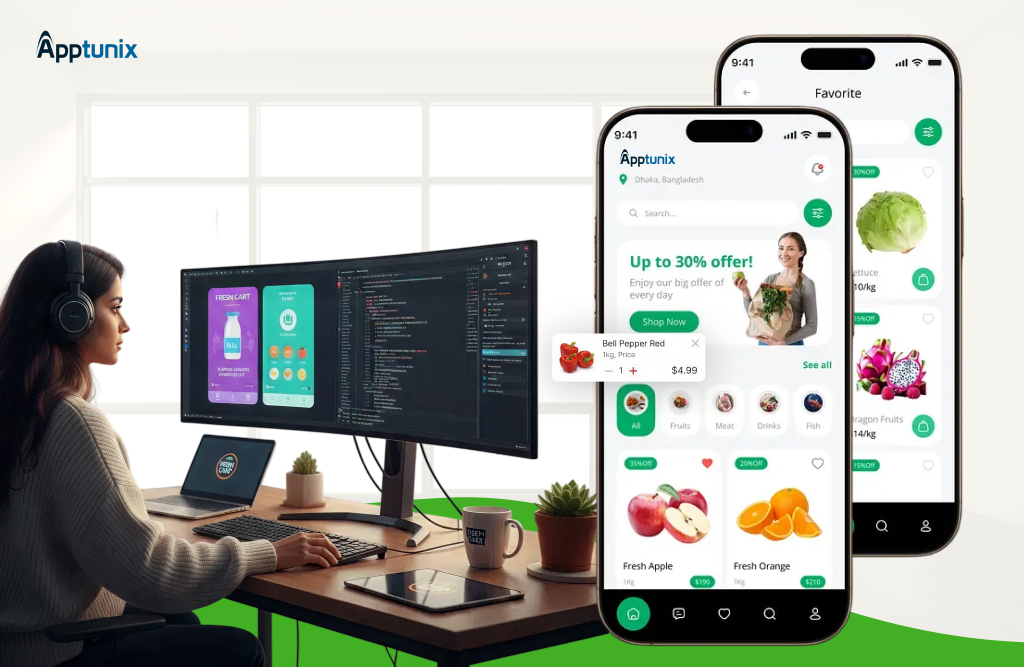
Many startups fail because they launch before validating their concept. At Apptunix, we turn your idea into a clear product roadmap. Every screen, workflow, and feature is tied to real business goals: faster deliveries, higher repeat orders, and smoother operations. We don’t just code; we strategize to build products that work.
An Instacart-like platform is complex—it needs to connect stores, shoppers, and customers seamlessly. Our experience in on-demand marketplaces ensures order flows are intuitive, shoppers have tools that speed up deliveries, and admins manage stores and commissions effortlessly. Every user feels like the app was built for them.
Every city, neighborhood, and user behaves differently. We create custom features that match real-world shopping patterns, whether it’s same-hour delivery in urban areas, subscription boxes for repeat orders, or loyalty programs for frequent buyers. Your app doesn’t just exist; it becomes part of people’s routines.
Apps crash under high demand when the architecture isn’t ready. Apptunix designs scalable, future-ready systems that handle thousands of orders simultaneously, onboard new stores instantly, and expand to multiple regions without major rebuilds. Your platform is built for growth from day one.
A grocery app’s success depends on how it feels in the user’s hands. We design experiences that are simple, fast, and intuitive. Customers find products quickly, complete checkout without friction, and track their orders in real time. Shoppers get clear instructions and navigation, while admins see everything under control. Every interaction is designed to delight.
In grocery delivery, speed and accuracy matter. We integrate real-time inventory updates, live tracking, notifications, and secure payments. Customers know what’s in stock, when it will arrive, and can approve substitutions instantly. This reduces cancellations, builds trust, and keeps shoppers and stores aligned.
Your app doesn’t stop evolving after launch, and neither do we. Apptunix provides ongoing support, data-driven optimization, and feature upgrades to keep your platform competitive. From improving delivery efficiency to introducing AI-powered suggestions, we help your app grow into a market leader, not just another clone.
The truth is, building a grocery delivery app isn’t about copying Instacart feature by feature. What sets winners apart is execution, strategy, and understanding the market. The apps that thrive solve real problems for customers, shoppers, and stores at the same time—and do it consistently.
Instacart became a benchmark because it mastered efficiency, convenience, and trust. But the opportunity is far from over. The online grocery market is booming, quick commerce is rising, and every city presents untapped potential. Waiting too long means someone else will capture your audience first.
Your market is ready. The demand is growing. The only question is—will you build it before someone else does?
Every day you wait is an opportunity lost. The first-movers in a city or niche can dominate quickly, while others scramble to catch up. A short consultation with a grocery delivery app development company like Apptunix can save months of trial and error and set your product on a path to success from day one.

Q 1.What is the cost to build a grocery delivery app like Instacart?
The cost to build a grocery delivery app like Instacart generally ranges from $25,000 for a basic MVP to $100,000+ for a full-featured platform. The final budget depends on features, tech stack, design complexity, and whether you choose iOS, Android, or both.
Q 2.What factors influence the Instacart app development cost?
Key factors include app features, technology stack, third-party integrations, UI/UX design, backend scalability, and developer expertise. Adding AI recommendations, real-time order tracking, and multi-language support will raise the Instacart app development cost.
Q 3.How long does it take to build grocery app like Instacart?
On average, it takes 4–8 months to build a grocery app like Instacart. A simple MVP may take around 3–4 months, while an advanced grocery marketplace app development project can take longer due to complex features like logistics management and in-app advertising.
Q 4.What are the must-have features in online grocery shopping app development?
Essential features include user onboarding, product catalog, shopping cart, payment integration, real-time order tracking, push notifications, and admin dashboard. Advanced grocery app development services also include loyalty programs, AI-driven recommendations, and multiple delivery options.
Q 5.Is it better to build a custom grocery app or use an off-the-shelf solution?
Custom grocery app development companies offers scalability, security, and unique branding, while off-the-shelf apps are cheaper but less flexible. If you plan long-term growth, custom grocery app development is a smarter investment.
Q 6.How does Apptunix help reduce grocery delivery app development cost?
Apptunix follows an agile development approach, reusable components, and cost-effective project planning to minimize unnecessary expenses. This ensures businesses get high-quality grocery app development services without overspending.
Q 7.Why should I choose Apptunix as my grocery delivery app development company?
Apptunix is a trusted grocery delivery app development company with 12+ years of experience, 300+ global experts, and 2,500+ apps delivered. From startups to enterprises, we specialize in on-demand grocery app development that’s scalable, secure, and tailored to business goals.
Q 8.Can Apptunix handle grocery marketplace app development at scale?
Yes. Apptunix has expertise in grocery marketplace app development for both regional and enterprise-level businesses. We build apps that support multiple vendors, real-time inventory sync, advanced analytics, and high user volumes without compromising performance.
Q 9.How can grocery delivery apps make money like Instacart?
Revenue streams include delivery fees, subscription plans, retailer commissions, and in-app advertising. A well-planned online grocery shopping app development strategy should include multiple monetization models for long-term growth.
Q 10.What’s the best way to get started with grocery delivery app development?
The first step is to define your business model and features. Next, consult with an expert grocery delivery app development company like Apptunix to get a detailed cost estimate, tech stack guidance, and launch plan.
Get the weekly updates on the newest brand stories, business models and technology right in your inbox.
26 Views 15 min July 24, 2026

25 Views 15 min July 17, 2026

126 Views 15 min June 25, 2026
Book your consultation with us.
Book your consultation with us.


One Central, The offices 3, Level 3, DWTC, Sheikh Zayed Road, Dubai
+971 50 782 1690


Offer Ends Soon
Get a quick expert response in under 5 minutes.