How to Build an App Like Calendly: Features, Cost & Tech Stack
5 Views 14 min August 3, 2026

Arohi Singh is a technology content strategist at Apptunix, where she writes about software and app development across industries, from on-demand and logistics to fintech, healthcare, and applied AI. With over 5 years of experience, she works closely with Apptunix’s engineers, product managers, and solution architects to turn real project insights into clear, decision-ready guidance for founders and business leaders. Her writing focuses on what matters before you build: market context, feature trade-offs, realistic costs, and compliance considerations
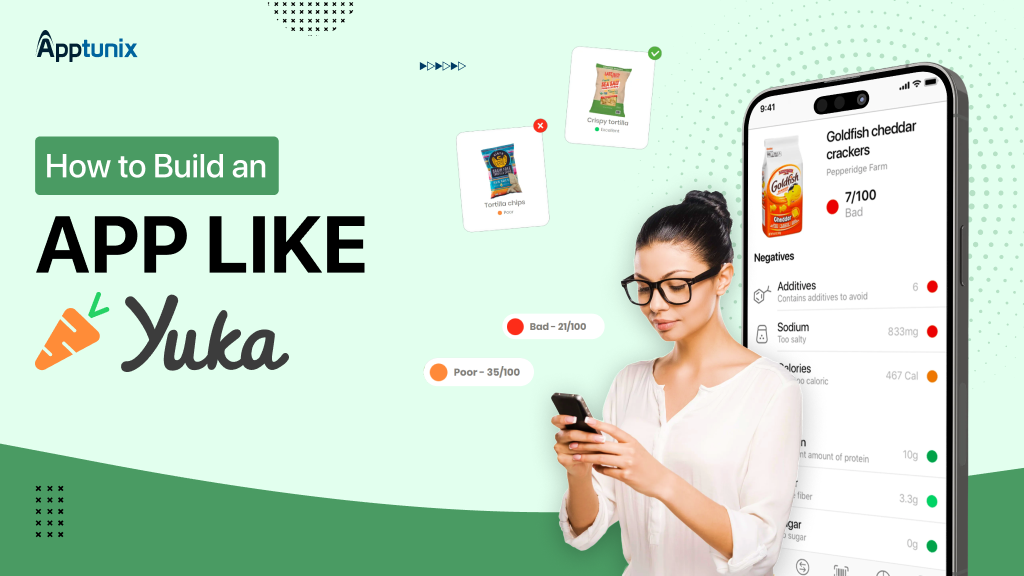
Shoppers don’t trust labels anymore: they trust the apps that decode them. That’s exactly why Yuka exploded across Europe. One quick scan, one clear rating, and people finally understood what they were buying. And suddenly, millions changed how they shop.
That shift didn’t happen by luck. It happened because people want transparency they can act on. The latest research shows that the global barcode scanner market is projected to reach $15.8 billion by 2035. This data marks tremendous opportunities propelled by the health, wellness, and ingredient-focused apps.
So, businesses are now asking: “How do we build an app like Yuka and capture this demand?”
The answer is not “just add a barcode scanner.” A food & cosmetic scanner app like Yuka works because it feels personal. It gives users clarity in seconds. It earns trust through data. And it helps them make wiser choices without extra effort.
No matter where you launch: Europe, the US, or the Middle East, the opportunity is massive. The market is wide open for businesses ready to innovate.
And if you’re exploring Yuka-like health & fitness app development, this guide will walk you through everything. So let’s get started on developing a product that will enable millions of people to shop more wisely.

Yuka is a French-born mobile app that completely changed how people evaluate everyday products. Launched in 2017 by three founders: Julie Chapon, Benoît Martin, and François Martin. The app was initially a small passion project inspired by a simple idea: “help people understand what they’re really putting on their plates and their skin.”
What started as a local initiative in France soon spread worldwide. Yuka is now used across Europe, the United States, the United Kingdom, Spain, Belgium, and even parts of Latin America. Its mission remains straightforward yet influential: scan a product, understand its impact, and choose healthier alternatives instantly.
Yuka analyzes ingredients using independent scientific research and assigns each product a simple score. Making it the go-to tool for consumers who want transparency without confusion.
This rise in global trust is exactly why brands are now developing apps like Yuka that guide users toward smarter choices. Whether it’s a food barcode scanner app or a cosmetic ingredients scanner app, Yuka has set the standard for user-friendly transparency.
It’s not that hard to develop an app like Yuka, but it takes smart planning to nail that seamless scanning magic. Here’s a 6-step roadmap that helps you move from concept to launch competently:
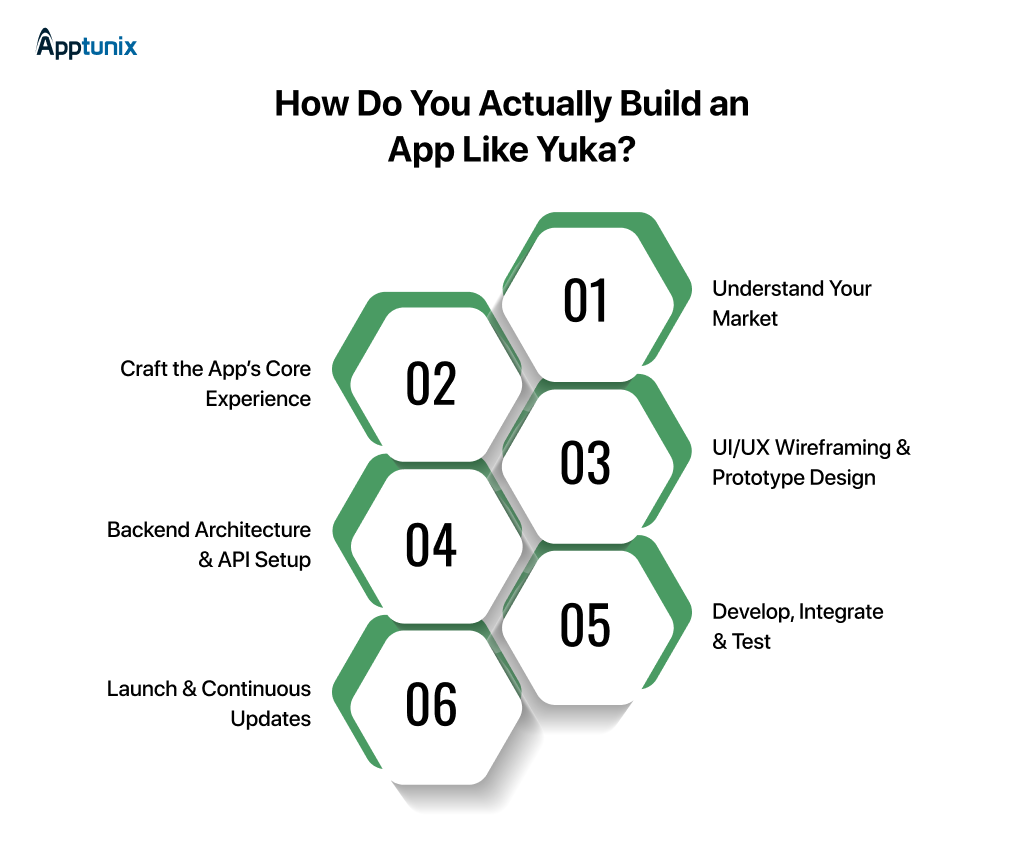
Step 1: Understand Your MarketEvery great product starts with clarity. Before development, you dig deep into why today’s consumers rely on scanners and what gaps exist in apps similar to Yuka. Are people looking for healthier swaps? Cleaner cosmetics? Allergy-safe products?
This research anchors your app’s personality and helps you shape a strategic Yuka-like health & fitness app development. Not just another barcode scanner.
Step 2: Craft the App’s Core ExperienceOnce you understand user needs, you start shaping the experience. Here, you define what your version of Yuka will do better: faster scans? Deeper ingredient breakdowns? Global product coverage?
This step is when features like barcode scanning, AI-powered product ratings, and alternative suggestions begin to take shape. Think of it as building the “soul” of your food scanner app like Yuka.
Step 3: UI/UX Wireframing & Prototype DesignNow the visuals come in. People use scanner apps on the go in grocery aisles, cosmetic stores, and pharmacies. Therefore, the UI/UX needs to be clean, quick, and emotionally comforting.
To make sure the user journey feels natural, designers create wireframes, prototypes, and test flows. This step transforms your idea into something people can touch and feel before it’s coded.
Step 4: Backend Architecture & API SetupThis is where the “brain” of your app is developed.
Your tech team sets up APIs, organizes product databases, builds scoring algorithms, and powers the AI models that evaluate ingredients.
If you’re planning to develop a product scanner app like Yuka, this stage is crucial. It ensures your system handles millions of scans while remaining fast during peak usage.
Step 5: Develop, Integrate & TestWith the brain and design ready, developers bring everything to life. They code the scanning features, scoring engine, dashboards, preferences, and everything that makes your app similar to Yuka feel alive.
QA engineers then test every corner: barcode accuracy, speed, real-time scanning interface behavior, and reliability across devices.
This step ensures your app is not only functional but also trustworthy.
Step 6: Launch & Continuous UpdatesOnce your app goes live, the actual journey begins.
Users scan new products, ask for additional categories, request more transparency, and your team responds with updates.
Continuous improvements help your Yuka-like app development evolve into a global wellness tool. That’s how Yuka grew, and that’s how your app grows, too.

When building an app like Yuka, it is highly recommended to select a tech stack that remains fast, reliable, and scalable as the user base grows. Every scan triggers data requests, health scoring, and real-time responses. That’s why the right mobile, backend, and database architecture matters from day one.
A well-planned stack ensures smooth performance, accurate product insights, and room to scale across regions. Below is the breakdown of technologies commonly used to build a Yuka-like product scanner app:
Consumers nowadays examine all products before purchase. This behavioral change has created a significant market opportunity for brands seeking to build trust and deliver smarter shopping experiences.
Here are the reasons why investing in a product scanner app like Yuka is a resilient business approach:
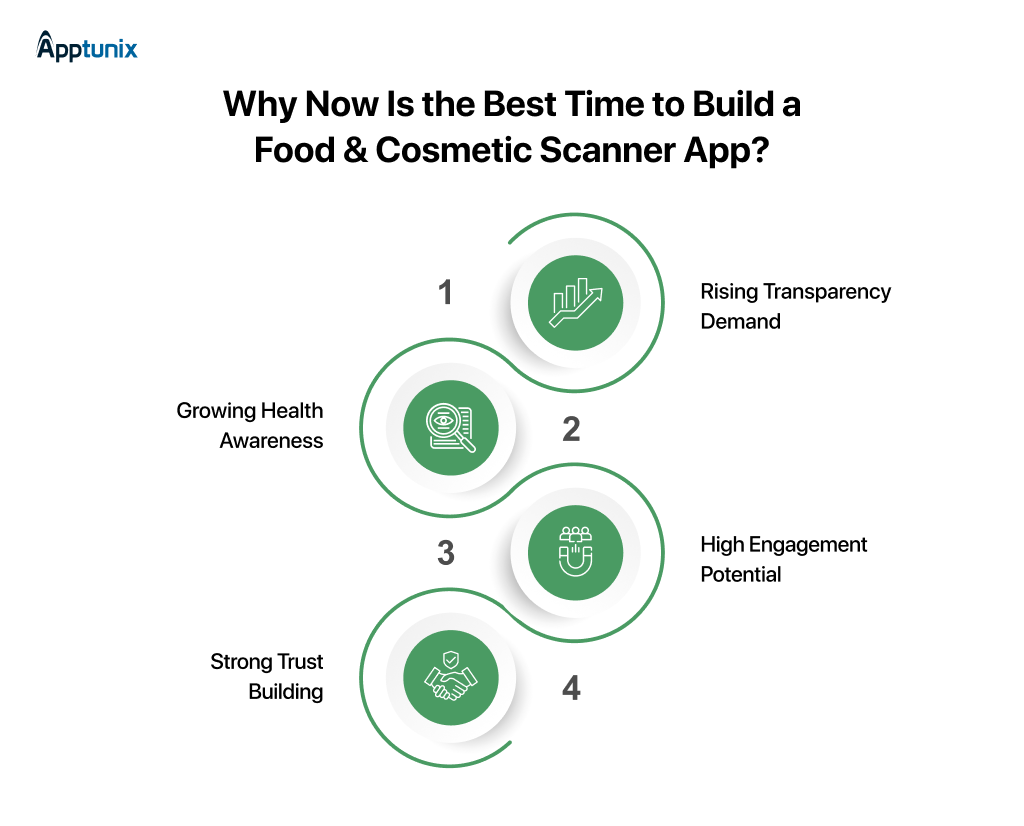
1. Rising Transparency DemandOver 70% of global consumers read ingredient labels before making a purchase. However, most people still can’t decipher complicated chemical names and additives. By investing in Yuka-like app development, businesses can bridge this gap with simple, trusted product analysis. This rising demand ensures consistent user adoption and long-term retention for apps offering clear insights.
2. Growing Health AwarenessA survey report states that more than half of the European population actively monitors their nutrition. This makes Europe a prime market to build an app like Yuka. The rise of mindful eating and clean beauty is reshaping user habits. This shift creates a strong opportunity for apps that guide healthier choices.
3. High Engagement PotentialApps similar to Yuka see millions of daily scans, proving how sticky and habit-forming these platforms can be. Whether it’s a food barcode scanner app or a cosmetic ingredients scanner app, users return multiple times a day. High engagement directly fuels monetization through subscriptions, affiliate models, and product recommendations.
4. Strong Trust BuildingApps that provide unbiased, science-backed insights enjoy up to 40% greater user loyalty. When you create an app like Yuka, you’re giving reassurance and credibility. And trust is the strongest currency in the digital health ecosystem.
Building an app like Yuka is about creating a companion that users trust every time they shop, rather than just scanning barcodes. If you want your healthy product scanner app to stand out, here are the core features that shape a significant experience:
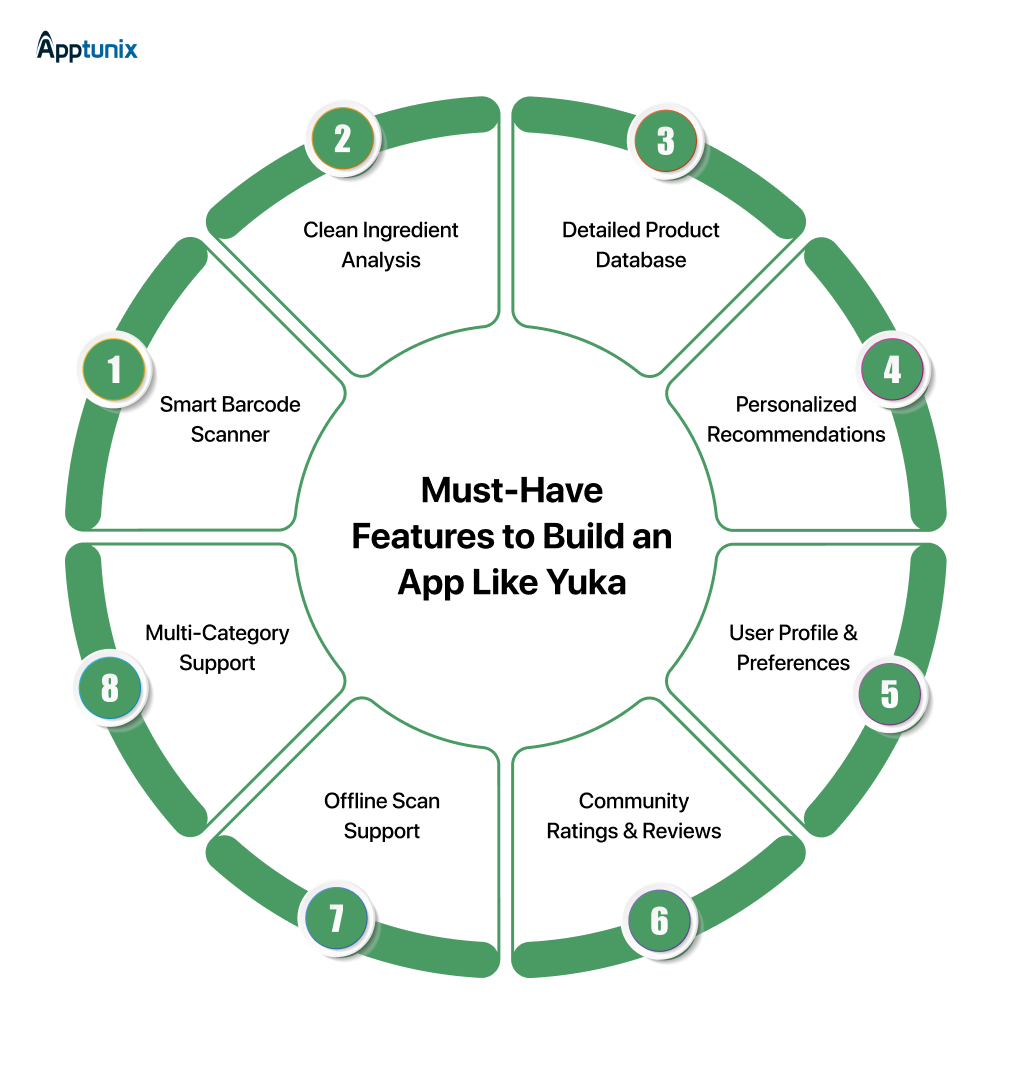
1. Smart Barcode ScannerYour app must scan products instantly and accurately. Users expect a seamless scan that gives them nutritional insights within seconds. This is the heart of every food scanner app development. And it must work flawlessly across different lighting conditions, packaging types, and international barcode formats.
2. Clean Ingredient AnalysisPeople love Yuka because it simplifies complex labels. Your app must include a clear description of all ingredients and identify any unhealthy additives. Also, offer a health rating that is easy to decipher. This feature alone is enough to make a simple scanner a potent Yuka alternative.
3. Detailed Product DatabaseA robust, well-updated product database is required. Whether it’s snacks, skincare, or beverages, your system must provide high-quality information on nutrition, ingredients, and allergen risks. The richer the database, the more reliable your Yuka-like app becomes.
4. Personalized RecommendationsOnce users scan a product, they should get smarter suggestions. Such as healthier alternatives, cleaner skin-care swaps, or products aligned with dietary preferences. Personalization turns your tool into a guidance engine, helping users gradually and effortlessly improve their choices.
5. User Profile & PreferencesUsers should be able to customize dietary needs, allergens, lifestyle choices, and favorite product categories. This ensures scanning results feel tailor-made. It’s also a great way to amplify retention and turn your app into a daily habit.
6. Community Ratings & ReviewsPeople trust people. Let users share experiences, give ratings, or flag inaccurate product data. Adding a social layer builds credibility and transforms your scanner from a tool into a community-driven, healthy product analysis app.
7. Offline Scan SupportBuyers often lack good internet in grocery stores. Scans that work without internet help save time. It also minimizes annoyance and makes your app seem reliable wherever people use it.
8. Multi-Category SupportDon’t limit yourself to food. Extend the scanning experience to skincare, home care, baby products, and supplements. A multi-category approach gives your Yuka-like app a global, lifestyle-focused advantage.
If core features help you build a basic Yuka-like app, advanced features help you make one that users can’t live without. These additions elevate your product scanner app from a simple utility to a personal wellness companion.
1. AI-Based Ingredient Risk ScoringMove beyond simple red–green ratings. With AI-driven models, your app can analyze ingredient patterns, detect harmful combinations, and alert users instantly. This takes food scanner app development to a smarter, predictive level.
2. Visual Recognition for Non-Barcoded ItemsNot everything comes with a barcode, such as fresh fruit, bakery items, and local produce. The addition of AI-based image recognition will allow a user to scan anything, at any time. This feature can instantly position your app as a powerful Yuka alternative.
3. Personalized Health Insights DashboardGive users their own “health snapshot.”
Let them see scanned history, average product ratings, allergen risks, and improvement trends. When people see progress, they stay engaged longer.
4. Dietary Preference EngineFrom vegan to keto to gluten-free, help users tailor results with laser accuracy. Advanced personalization makes your Yuka-like app feel like a nutritionist in their pocket.
5. Smart Alternative FinderInstead of showing just one better option, use AI to suggest alternatives based on price, availability, and ingredient quality. This feels less like a feature and more like a friendly guide assisting shoppers in making better decisions.
6. Geo-Based Product AvailabilityUsers hate seeing recommended products they can’t find. Integrate location-based store data so your app can show alternatives available at nearby supermarkets or online stores.
7. In-App Expert ConsultationsFor premium users, offer advice from a nutritionist or dermatologist via chat or calls. It adds a high-value human layer to your healthy product scanner app.
8. Smart Grocery ListsTurn scans into actionable shopping lists. The app can auto-suggest healthier items, seasonal products, or personalized picks based on goals.
9. Seamless eCommerce IntegrationEnable users to order healthier alternatives directly from your partnered stores or marketplaces. This monetizes your app while improving user convenience.
10. Health-Based Product AlertsNotify users when a healthier product launches, when a scanned item is recalled, or when a product becomes available nearby.
If you’re planning to create an app like Yuka, the first major inquiry is: How much will it cost?
The reality is that it will cost you, depending on your feature depth and AI complexity. It also varies based on database size and whether you want a simple scanner or a full wellness ecosystem.
Generally, the cost of an app similar to Yuka ranges between $15,000 and $120,000+.
A basic MVP with essential scanning features sits at the lower end. An all-inclusive food and cosmetic scanner app, such as Yuka, with an AI score and personalization, is oriented towards the higher end.
Starting lean is preferred by the majority of businesses in Europe and beyond. Launching a functional version early, then scaling with premium features as the user base expands. This approach reduces risk and guarantees your Yuka-like mobile app development cost aligns with actual market needs rather than conjecture.
Yuka-Like App Development Cost Breakdown
Before determining your budget, you need to understand the reason for the significant price disparity. Every feature, technology choice, and development decision determines the final cost of your Yuka-like health & fitness app development.
Here are the six biggest cost influencers:
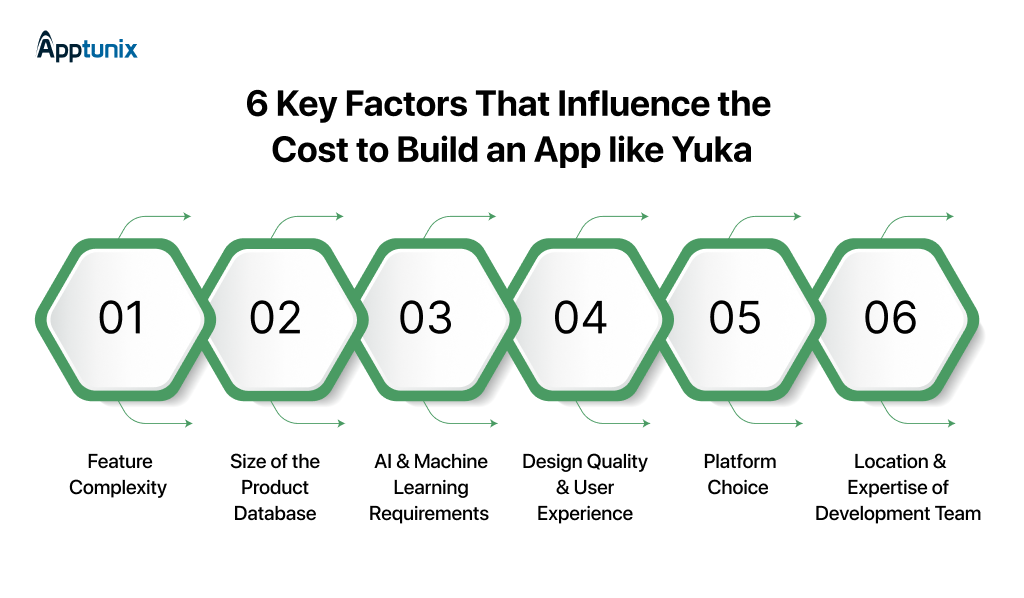
1. Feature ComplexityThe more advanced your features, the pricier it gets. A basic barcode scanner app requires a minimal capital investment. But adding AI-driven product scoring, ingredient risk analysis, allergen detection, and cosmetic safety grading increases development time.
To develop a product scanner app like Yuka that covers both food and cosmetics, each additional module requires new databases, algorithms, and testing cycles. That directly impacts the overall investment.
2. Size of the Product DatabaseYour product database can be small or global, and this choice changes everything. A local database is cheaper and easier to manage. A worldwide database needs API integrations, manual verification, and constant updates. More products require more storage and server power. This directly affects your Yuka-like mobile app development cost as the app grows.
3. AI & Machine Learning RequirementsAI is what makes a food & cosmetic scanner app like Yuka actually smart. Whether you want simple rule-based scoring or complex ML models, AI development demands skilled engineers, training datasets, and testing.
More intelligent recommendations = more time, more resources, and higher costs. But it’s also what elevates your app beyond basic barcode scanning tools.
4. Design Quality & User ExperienceGreat design isn’t optional for an app like Yuka; it’s expected. Users scan products quickly in supermarkets, pharmacies, and cosmetic stores. So your UI must be effortless, fast, and calming.
Custom animations, multi-step scanning flows, educational visuals, and ingredient breakdown charts add polishing costs. A premium UI always increases the cost of building an app like Yuka, but it also boosts conversions.
5. Platform Choice (iOS, Android, or Both)Developing a single platform costs less, but most brands choose both to reach a wider audience. Native development doubles the workload because each platform requires its own codebase.
Meanwhile, cross-platform development offers savings but may limit the use of advanced AR, AI, or camera-based scanning features. Your platform decision plays a major role in your Yuka-like mobile app development cost, especially at a global scale.
6. Location & Expertise of the Development TeamCosts vary depending on where your development team is based. US and European teams usually charge higher hourly rates. Offshore teams deliver similar quality at lower costs. But experience matters more than location. A skilled Yuka-like fitness app development company ensures accuracy, faster delivery, and a reliable product. The right team can save both time and money.
If you want to build an app like Yuka, it’s smart to understand who already dominates the wellness-scanner space. These Yuka app alternatives show what today’s users love, expect, and rely on:
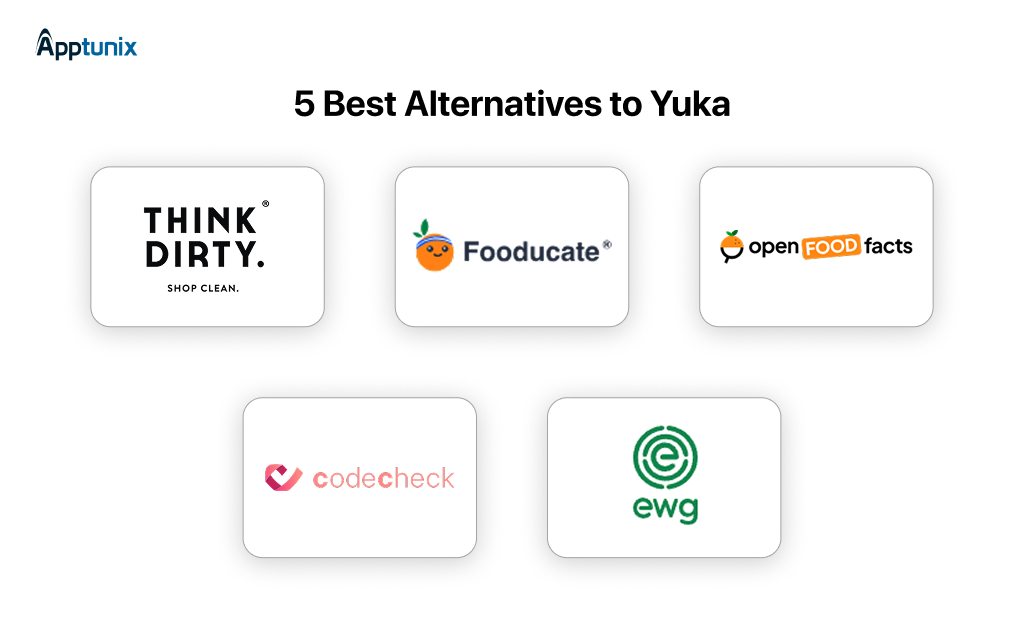
1. Think DirtyThink Dirty primarily emphasizes cosmetic and personal care products, making it a strong rival in the beauty safety category. Users scan items and instantly see toxicity ratings based on detailed component analysis. The app’s clean design and straightforward scoring help users trust it quickly.
For founders building cosmetic features, Think Dirty shows how transparency can win loyal users.
2. FooducateFooducate focuses on food products, with an intensive emphasis on nutrition, weight management, and healthier eating habits. It gives each product a simple letter grade, making choices easier for everyday shoppers. Users will be able to monitor their diet, get badges, and find healthier substitutes.
3. Open Food FactsOpen Food Facts is a massive open-source database powered by volunteers around the globe. It provides product descriptions, ingredient lists, and Nutri-Score ratings for millions of items. Its transparency and global reach make it a go-to database for many developers. This platform emphasizes the importance of scalability and community participation if you’re thinking about going global.
4. CodeCheckCodeCheck combines food and cosmetic scanning in one app, making it a direct competitor to Yuka. It offers information on sustainability, allergy warnings, and ingredient hazards. Users appreciate its well-rounded approach to safety, nutrition, and eco-impact. For founders aiming to build a multi-category scanner, CodeCheck is a powerful reference for versatility done right.
5. EWG’s Healthy LivingEWG’s Healthy Living app uses one of the industry’s most respected ingredient databases. It rates products based on safety, environmental impact, and health risks. Its expert-backed research builds high user trust, especially among conscious consumers. If your goal is to develop a highly credible app similar to Yuka, this app shows how authority drives long-term loyalty.
A Yuka-like app can generate strong, steady revenue with the right model. Here are winning revenue generation tactics that balance user value and business growth.
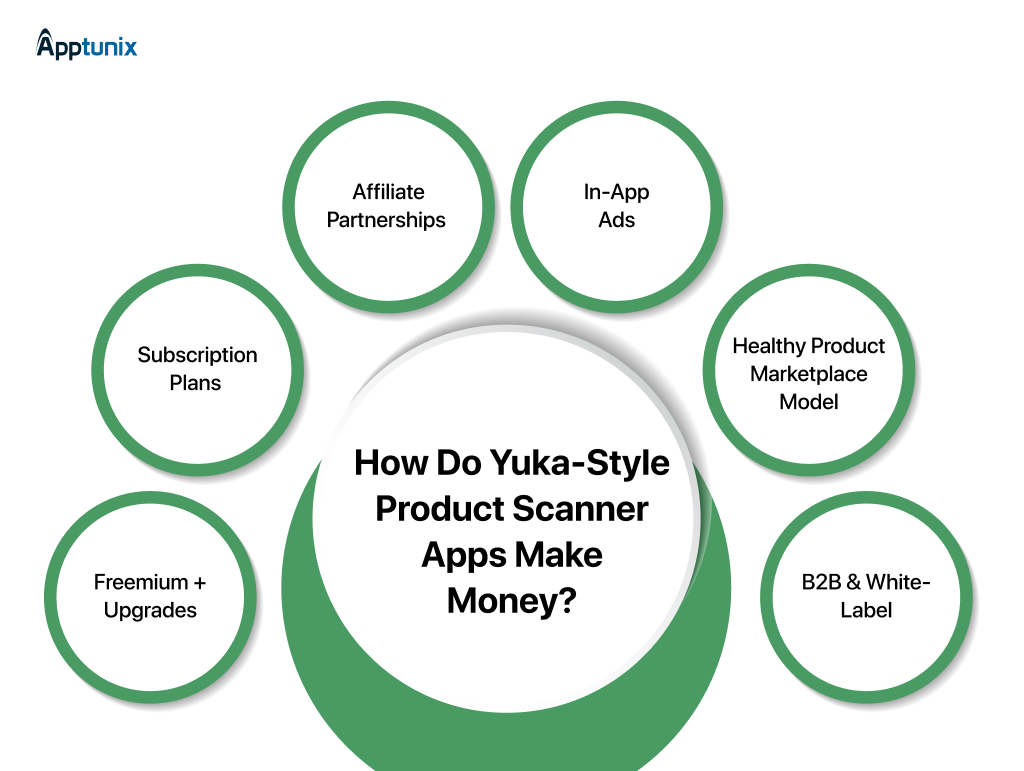
1. Freemium Model with Premium UpgradesThis is the most reliable model for health-oriented apps. Offer core scanning features for free to quickly win users. Unlock advanced insights, unlimited scans, and personalized reports with premium plans. This model initially builds trust and drives upgrades naturally. It also augments long-term retention.
2. Subscription Plans for Deep InsightsUsers pay when insights solve real problems. Offer monthly or yearly plans with advanced metrics. Include ingredient alerts, expert recommendations, and customized diet insights. Maintain transparent pricing to gain credibility. This increases the expected recurring revenue and user lifetime value.
3. Affiliate Partnerships with Ethical BrandsPartner only with clean, safe, and transparent brands. Recommend their products within the app with non-pushy suggestions. Get commissions with in-app purchases.
This model is effective because users trust data-driven recommendations. It is also a win-win for both the app owners and the affiliated brands.
4. In-App Ads with Responsible TargetingAds can work if they stay relevant and respectful. Show targeted ads from health, skincare, and food brands. Avoid interruptive ad formats that degrade user experience. Offer an ad-free upgrade inside the premium plan. This builds a balanced revenue stream without compromising user trust.
5. Marketplace for Safe and Healthy ProductsCreate a curated shopping section inside the app. List products that meet your safety or nutrition standards. Allow brands to showcase verified products directly to your users. This strengthens your authority and turns the app into a value-driven marketplace. It also increases purchase conversions because users already trust the scan results.
6. B2B Insights and White-Label SolutionsMany retailers want ingredient transparency and user behaviour insights. Offer anonymized data dashboards for brands and stores. Sell white-label scanning tools to nutritionists, wellness startups, and pharmacies. This forms a high-end revenue stream with the least reliance on consumer spending.
When someone decides to create an app like Yuka, they don’t look for “just a development team.” They look for a partner who understands product clarity, user psychology, data depth, and the realities of health-focused tech. That’s exactly where Apptunix fits in.
Apptunix is an AI-first enterprise digital transformation team that knows how to turn scanner apps into off-the-shelf products people actually use. If you want to build an app like Yuka, we bring the strategy, engineering, and AI capabilities needed to make it happen.
We help you shape the product from scratch. Our team has already worked on health, fitness, and product-scanning solutions. So you’re not starting from zero, you’re accelerating with people who understand the ecosystem.
Where most teams simply “code the app,” we help you think bigger.
Want an AI-powered scoring model? Done. Want real-time recommendations based on scanning habits? Possible.
Want to position your product as a strong Yuka alternative? We help you shape that value from day one.
Our job is to make sure your Yuka-like app development doesn’t feel like another copy but a product built to win in your market. If you’re serious about launching a food & cosmetic scanner app like Yuka, Apptunix is ready to help.
Let’s turn your idea into something people trust.
Contact us and let’s start the conversation.

Q 1.How to make an app like Yuka?
Building an app like Yuka involves a proper strategy, robust technology, and strong data sources. First, define the categories of your product. Integrate barcode scanning, ingredient analysis using AI, and a user-friendly scoring model. A skilled development team can help you with UI/UX design, backend API development, database setup, and accuracy. Lastly, test the app across various devices and get ready for launch.
Q 2.How much does it cost to build an app like Yuka in 2026?
The cost of developing a Yuka-like app in 2026 is based on the functionality, integrations, and platform options. A simple version may start around $15,000, while an advanced AI-driven scanner app can reach $120,000 or more. Costs vary based on database size, barcode API integrations, AI modules, and data accuracy requirements.
Q 3.How long does it take to develop a Yuka-like mobile app from scratch?
A Yuka-like app typically takes 3–12 months, depending on complexity. Basic scanning apps require around three months. AI-driven food and cosmetic scanner apps take longer due to data modeling, testing, and regulatory requirements. Timelines also depend on custom features like recommendations, dashboards, scoring algorithms, and compliance with your region.
Q 4.How does the Yuka app make money?
Yuka makes money through:
Q 5.Which emerging technologies can enhance product scanner app development?
Several advanced technologies now elevate product scanner apps like Yuka:
Q 6.What is the biggest challenge and cost driver when building an app like Yuka?
The biggest challenge and cost driver is establishing a trustworthy database of products. Accurate food and cosmetic datasets require barcode libraries, regulatory data, nutritional values, ingredient safety reports, and allergy details. Maintaining and updating this data adds complexity. AI training, compliance, and multi-region support also influence cost.
Q 7.How can I start developing my product scanner app with Apptunix?
Starting your Yuka-like app development with Apptunix is simple. Share your idea, preferred features, and target region. Furthermore, our team conducts a quick discovery session to map features, estimate costs, and define timelines. We handle it all, from design to AI integration, scanning technology, backend development, and launch support.
(4 ratings, average: 5.00 out of 5)
Get the weekly updates on the newest brand stories, business models and technology right in your inbox.
Arohi Singh is a technology content strategist at Apptunix, where she writes about software and app development across industries, from on-demand and logistics to fintech, healthcare, and applied AI. With over 5 years of experience, she works closely with Apptunix’s engineers, product managers, and solution architects to turn real project insights into clear, decision-ready guidance for founders and business leaders. Her writing focuses on what matters before you build: market context, feature trade-offs, realistic costs, and compliance considerations
Book your consultation with us.
Book your consultation with us.


One Central, The offices 3, Level 3, DWTC, Sheikh Zayed Road, Dubai
+971 50 782 1690


Offer Ends Soon
Get a quick expert response in under 5 minutes.