How to Build a Matrimonial App like Shaadi.com from Scratch?
81 Views 15 min December 24, 2025


Saudi Arabia and the wider GCC are entering a phase where digital platforms are expected, not questioned. Analysts project that digital consumer platforms across KSA will grow to 43 billion connections over the next five years, driven by mobile-first behavior and a young, connected population. Wedding/Marriage app development in KSA and GCC sits right at the intersection of these trends.
As smartphone usage moves closer to full penetration and digital trust increases, platforms that respect cultural values while offering convenience are positioned for long-term relevance. Families want visibility. Users want safety. Platforms that balance both earn trust.
Users in Saudi Arabia and the GCC are not looking for casual discovery platforms. This is why matrimonial app development in GCC markets looks very different from global dating platforms. The demand is for systems that help people move toward serious decisions. Let’s see how you can make money out of this!
There is a reason serious founders are paying attention to this space now. It is not about copying dating apps. It is about building platforms that fit Saudi users properly.
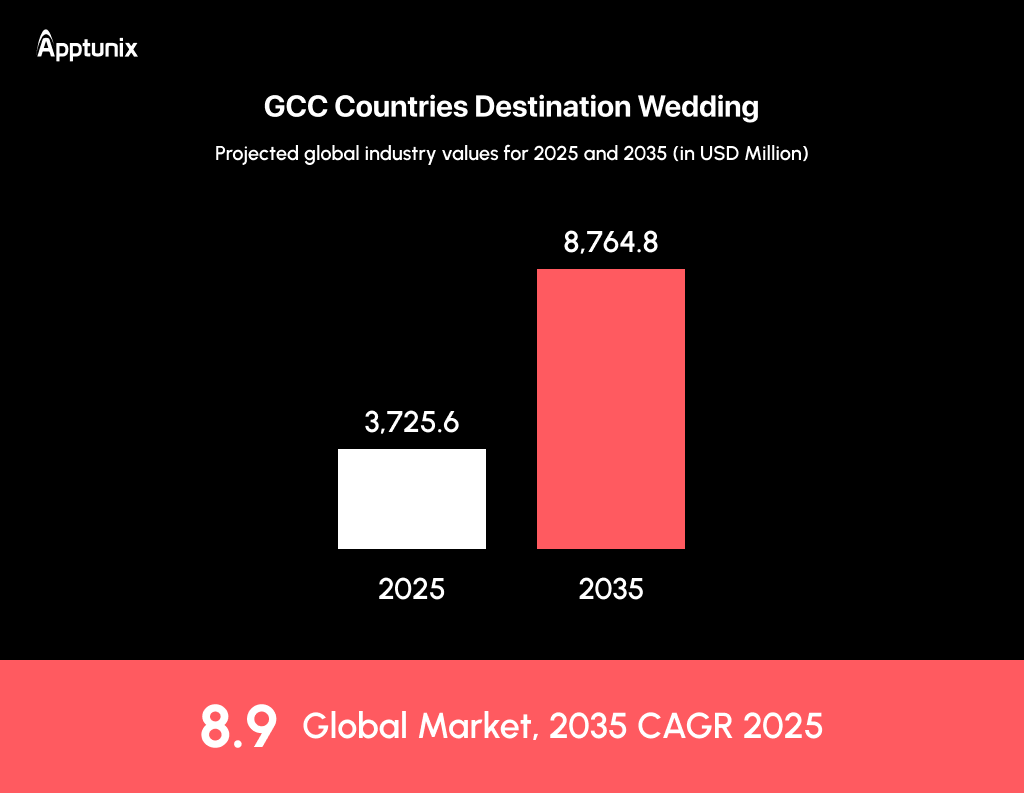
1. A young population with clear intentSaudi Arabia has one of the youngest populations in the region. Over the next few years, millions of users will enter the age group actively seeking marriage.
Five indicators founders are watching closely:
2. Why traditional matchmaking is moving onlineOffline matchmaking has always relied on trust networks. The challenge today is scale. As cities grow and social circles widen, relying only on word-of-mouth introductions becomes limiting. Digital platforms extend reach without removing control.
GCC marriage app platform development succeeds when it mirrors real-world matchmaking principles, just with better access and structure. This shift is already happening quietly. Founders who recognize it early have the advantage.
3. Verified and family-approved platforms win trustUsers do not want open networks. They want controlled access. Platforms that allow family involvement, profile verification, and structured communication perform better in Saudi markets. These features reduce risk and align with cultural expectations.
Founders who build wedding platforms without these controls struggle with adoption. Those who design for them see steady growth.
4. Why global dating apps fail in Saudi marketsMost global dating apps are built around discovery, speed, and minimal friction. That approach works in some markets. It fails here.
Issues include:
When users feel exposed or misunderstood, they leave. This is why localized platforms consistently outperform global imports.
If you plan to build a wedding app for Saudi users, localization is the core of the product. When built correctly, a marriage platform becomes part of a user’s life decision journey. That creates value far beyond downloads.
Many platforms fail here not because of technology, but because they misunderstand how marriage decisions actually happen in Saudi Arabia and across the GCC. Marriage in this region is not an individual-only decision. It is social, structured, and value-driven. When planning wedding app development in Saudi Arabia, founders must account for three realities that shape user behavior.
Users expect control from the first screen. Profile visibility should never be fully public. Photos, personal details, and even names often need layered access. Some information is visible only after approval. Some only to family members.
Marriage app development for KSA fails quickly when privacy is treated like a toggle instead of a system. Strong platforms let users decide who sees what and when.
Ignoring family involvement creates friction. In Saudi and GCC cultures, families often guide or approve matches. Successful wedding matchmaking app development includes optional family or wali access without forcing it.
This means separate roles, permissions, and communication paths. Not just shared logins. Apps that respect this structure feel familiar. Apps that do not feel uncomfortable.
How and when users communicate matters. Some platforms require approval before chat begins. Others limit early interactions to structured questions or mediated conversations. When founders ask how to build a wedding app for Saudi users, this is where most get stuck. The answer is not restriction. It is thoughtful flow design.
Compliance is not just legal. It is ethical. Communication should be respectful, purpose-driven, and traceable. Platforms that design clear boundaries earn trust from users and families alike. Marriage app platform like Shaadi.com succeeds when values are designed into the app, not added later.
Features do not create trust. How they work together does. Many apps fail not because features are missing, but because they are designed in isolation.
When working with app developers in Saudi Arabia or across the region, features must reflect culture, not fight it. Strong platforms feel natural to use. They do not ask users to adapt their values to the app. They adapt the app to the user. Below are the ten essential wedding matchmaking app features that consistently perform well in Saudi Arabia and across the GCC.
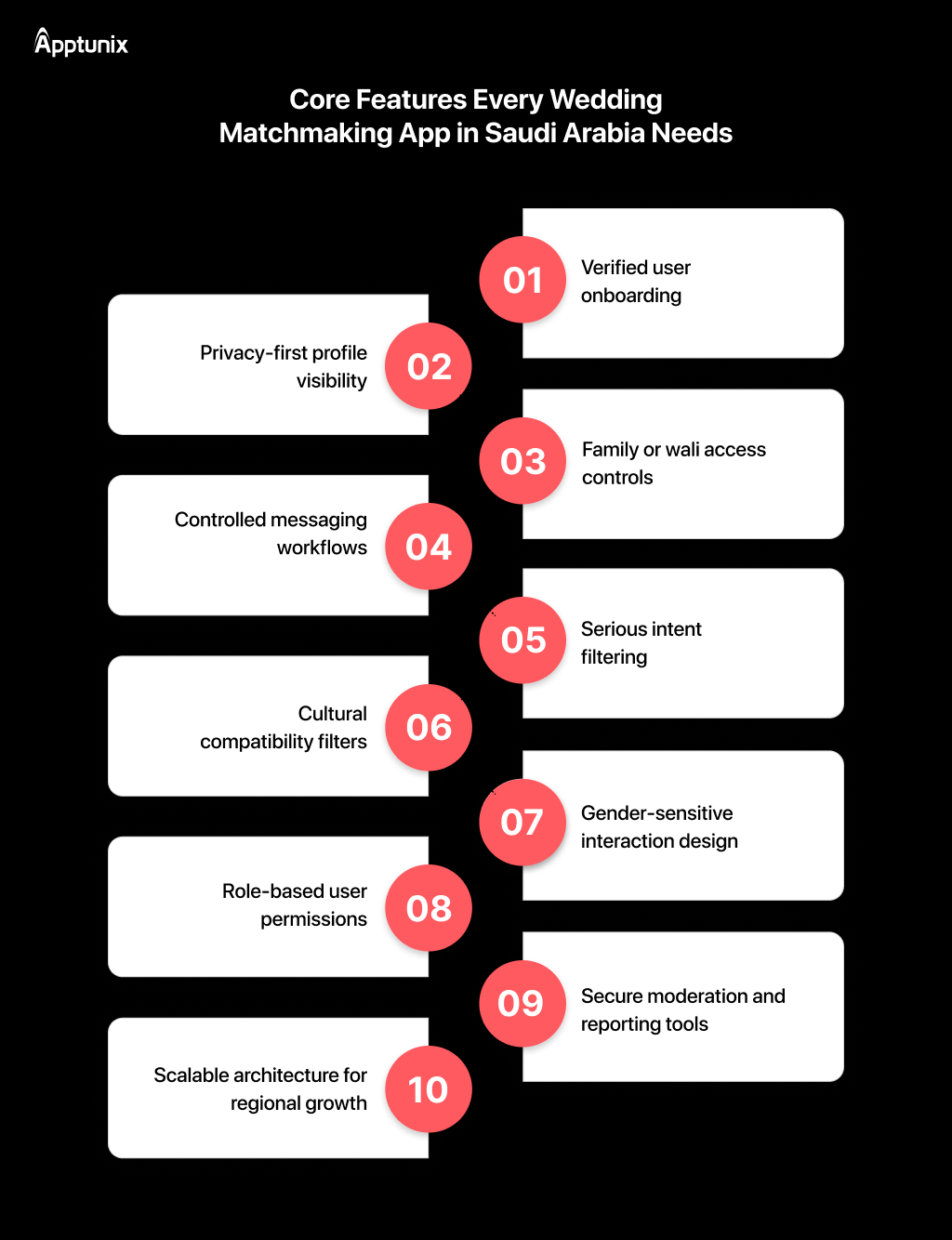
Identity verification is critical. This can include phone verification, ID validation, or controlled approval processes. Users are far more willing to engage when profiles feel real.
Users should control when photos, names, and personal details are visible. Tiered access builds comfort and reduces drop-off.
Optional family participation with defined permissions helps align the app with real marriage processes without forcing involvement.
Messaging should follow clear rules. Approval-based chats or structured introductions work better than open inboxes.
Platforms should separate users who are ready for marriage from those who are browsing. This improves match quality and retention.
Religion, sect preferences, location, family expectations, and lifestyle considerations matter. Matching logic must reflect this reality.
Clear boundaries around communication stages reduce misuse and increase trust among conservative users.
Different users need different access. Primary users, family members, and moderators should not share the same experience.
Trust grows when users know inappropriate behavior is handled quickly and fairly.
Founders often start in one market, then expand. Wedding/Marriage app development in KSA and GCC should support multi-region logic without rebuilding the platform.
A Comprehensive Guide to Metaverse Wedding Platform Development
Privacy is not a value add in Saudi markets. It is the minimum requirement.
Founders who want to develop a wedding app for Saudi users often focus on features and growth first. The platforms that survive do the opposite. They earn trust before they chase scale.
This is where most marriage app development in KSA goes wrong. Privacy is treated as a screen level choice instead of a system wide decision.
In Saudi Arabia, marriage platforms are used with caution. Users are not experimenting. They are evaluating risk. Multiple regional studies on digital trust show that users in the Middle East are significantly more likely to abandon platforms that expose personal information early. In matchmaking platforms, this sensitivity is even higher.
If users feel exposed at signup, they do not complain. They exit. This is why privacy design is not about compliance. It is about survival.
Female users set the tone for platform trust. They expect control over profile photos, names, location details, and visibility timing. Nothing should be public by default. Every reveal should feel intentional.
Platforms built by top mobile app development companies in Saudi Arabia, with regional experience, use layered visibility models. Profiles start private. Access increases only after mutual interest or approval.
Apps that ignore this lose credibility fast. Not just with users, but with families who influence decisions. Without female user trust, growth stalls quietly.
Open access models work for dating apps. They struggle in marriage focused platforms. Approval based flows allow users to review matches before interaction begins. Some platforms also allow optional family review at early stages. This structure reduces misuse and increases serious engagement.
In successful wedding matchmaking app development projects, approval flows consistently lead to higher conversation quality and lower abandonment in the first week.
Limited exposure logic ensures profiles are visible only to users who meet basic criteria. Serious intent. Verified profiles. Relevant matches.
This approach filters noise before moderation is needed. Strong wedding matchmaking app features guide behavior instead of reacting to misuse after it happens. When exposure is controlled, conversations improve naturally.
One visible mistake can travel across social circles faster than any paid campaign. In marriage platforms, reputation spreads through families, not ads. Founders who ask how to build a wedding app in Saudi Arabia often underestimate this risk.
Privacy failures do not create support tickets. They create silence. Successful platforms prioritize privacy architecture before growth tools. They accept slower onboarding in exchange for long term trust.
Let’s address the question founders ask quietly but need answered early. What does wedding app development for GCC markets actually cost?
There is no single price. App development cost in Saudi Arabia depends on scope, privacy depth, compliance needs, and how serious the platform is meant to be. Marriage app development in Saudi Arabia ranges widely because expectations are higher than in open dating markets.
This is where many founders misjudge early.
A startup-level wedding app focuses on validating demand. Profiles, privacy controls, limited messaging, and admin moderation. Mid level platforms expand into family involvement, verification layers, and smarter matchmaking logic.
Enterprise wedding app development services support scale. Multi-role access, advanced moderation, audit trails, compliance workflows, and performance optimisation across regions.
Each step increases cost because it increases responsibility.
Planning and discovery usually cost less than development but save the most money long term. Teams that skip this stage overspend later fixing decisions made too early.
Design and UX costs rise in Saudi markets because privacy flows are more complex. Screens cannot expose data by default. Backend development is the largest cost driver. Secure data handling, access control, and admin systems take time and experience.
Testing and compliance are not optional. Local expectations demand careful review before launch.
Several factors influence pricing more than features alone.
Founders who hire app developers in GCC with regional experience usually spend less over time because fewer systems need rebuilding.
Many teams overspend on surface features before validating behavior. Advanced matchmaking algorithms, recommendation engines, or marketing tools are often built too early. Without real usage data, these features add cost without value.
Smart founders focus first on trust, control, and reliability.

Time is not just a schedule question. It is a quality decision. Rushing marriage app development in Saudi Arabia almost always creates trust gaps that show up after launch. Platforms that take time to design systems properly survive longer.
Most Wedding/Marriage app development in KSA and GCC markets follows a phased timeline. The first phase focuses on architecture and core flows. This is where privacy, access rules, and user roles are defined. The second phase expands features based on real behavior. Testing and compliance run alongside development, not at the end.
An MVP usually takes 3 to 6 weeks when built properly.
This includes planning, design, development, and controlled testing. Anything faster usually means shortcuts in security or moderation.
Once user behavior is clear, feature expansion takes another 10 to 20 weeks.
This includes family workflows, improved matchmaking, and engagement tools.
Testing takes longer in conservative markets because mistakes carry higher risk.
Security audits, access testing, and moderation workflows must be reviewed carefully. This stage protects reputation.
Technology choices decide whether your platform grows smoothly or creates friction at every stage. Wedding app development in Saudi Arabia and across the GCC cannot rely on shortcuts. The platform has to support privacy rules, multiple user roles, secure data handling, and steady growth without constant rewrites.
This is why the right technology stack matters from day one.
A.Mobile application layer: iOS and Android built for trust and performanceMost users access marriage platforms through mobile devices. In Saudi markets, mobile usage dominates daily digital activity, especially among younger demographics.
For this reason, successful teams prioritize iOS and Android apps over web-first experiences.
Cross-platform frameworks like Flutter or React Native are commonly used because they allow shared logic across platforms while maintaining near-native performance. This approach reduces development time without compromising speed or stability.
Native technologies such as Swift for iOS and Kotlin for Android are preferred when advanced device-level controls or performance optimizations are required. Slow loading screens or unstable interactions damage credibility quickly. Users associate performance issues with poor security or low seriousness. That perception is hard to reverse.
B.Backend architecture: built for privacy, control, and scaleMarriage platforms process sensitive information. Personal details, family data, communication history. Backend systems must be designed with security as a baseline, not an upgrade.
Languages such as Node.js or Python are commonly used because they support scalable architectures and integrate well with secure APIs. For larger enterprise platforms, Java is often chosen for its stability and long-term maintainability.
Databases like PostgreSQL or MongoDB are selected based on data structure needs. Relational databases work well for structured user data and permissions, while document-based databases support flexible profile information.
Encryption at rest and in transit, access logs, and audit trails are mandatory. A serious wedding matchmaking app development partner plans these systems before feature development begins.
C.Authentication and access control: protecting user boundariesDifferent users interact with the platform in different ways.
Primary users manage their profiles. Family members may review or approve matches. Moderators oversee behavior. Administrators manage the system. Role based access control ensures each user sees only what they should. Technologies such as custom RBAC layers built on OAuth or secure authentication services like Firebase Auth are commonly used.
This structure prevents misuse, simplifies compliance, and makes future feature expansion easier. Without proper access control, systems become difficult to manage and risky to scale.
D.Moderation and admin systems: maintaining platform integrityNo marriage platform operates without oversight. Admin dashboards are essential for reviewing profiles, monitoring conversations, handling reports, and enforcing platform guidelines.
Custom admin panels are usually built using web frameworks that allow real-time updates and fine-grained control. Moderation tools should support cultural context, not just generic abuse detection.
Founders who develop a wedding app for Saudi users need moderation systems that respect values and respond quickly to issues. Delayed action erodes trust faster than most technical failures.
E.Why early technology shortcuts create long-term problemsTechnology decisions are expensive to reverse. Platforms that cut corners early struggle when user volume increases or regulatory expectations tighten. Rebuilding core systems later costs more than doing it right once.
This is why founders benefit from working with a custom wedding app development company that understands regional requirements, user behavior, and long-term growth patterns.
Strong platforms are not built by accident. They are built by making the right technical decisions before growth begins.
Monetization in Saudi markets follows a different logic. Users do not pay for entertainment. They pay for trust, control, and seriousness. Platforms that respect this build predictable revenue. Platforms that chase fast monetization struggle to keep users active.
If you are planning how to monetize wedding app development in Saudi Arabia, the question is not how many features you can charge for. It is what users believe is worth paying for. Successful founders combine subscriptions for stability, verification for trust, and selective premium services for upside. This layered approach protects credibility while growing revenue.
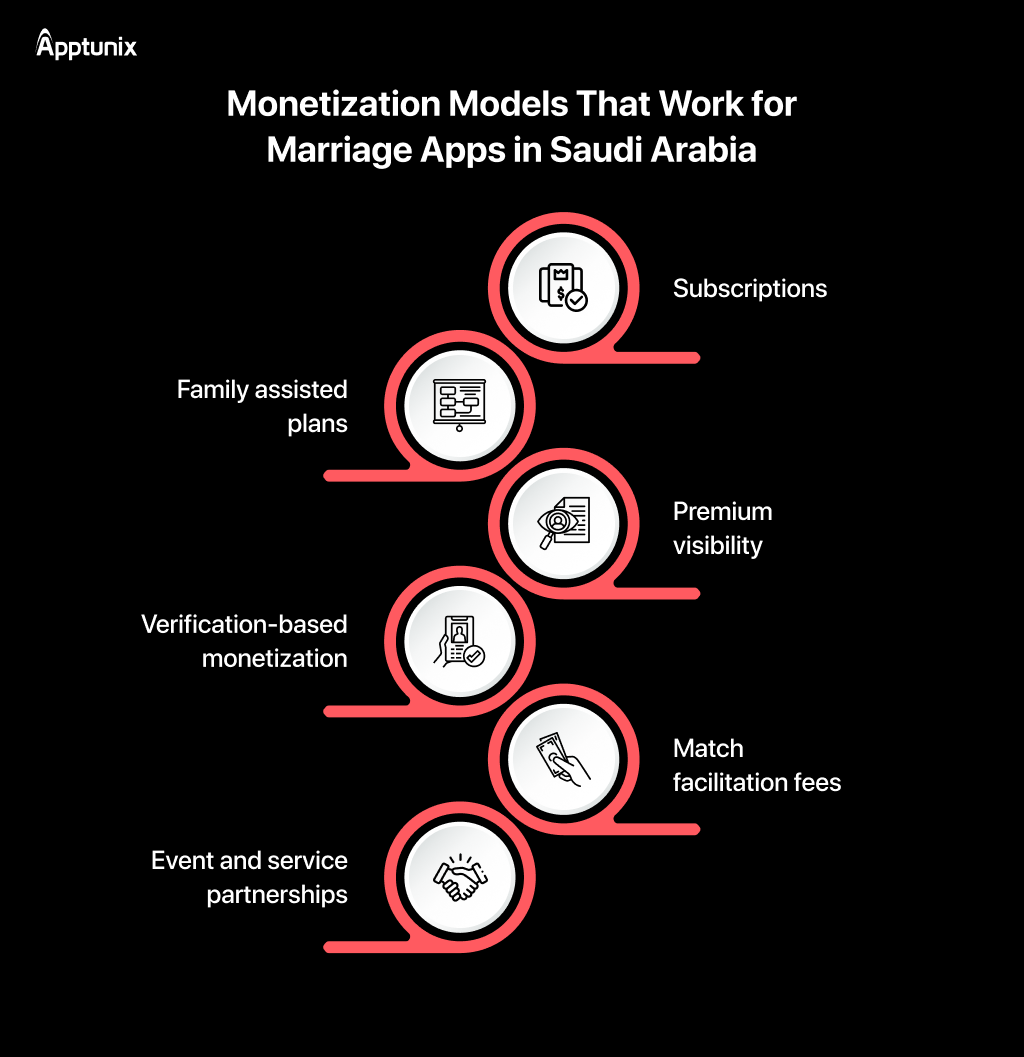
1.SubscriptionsSubscription plans unlock continued access, profile visibility, and communication beyond basic limits. This is not about unlimited chatting. It is about staying visible and active inside a serious ecosystem.
For KSA focused platforms, monthly subscriptions typically range between SAR 50 to SAR 150 per user depending on access depth. Even modest adoption rates create stable recurring revenue.
This is why most monetizing marriage app development for KSA strategies are built around subscriptions as the base layer.
2.Family-assisted plansFamily plans allow parents or guardians to participate in profile approvals, match reviews, or communication oversight. These plans are usually priced higher than individual subscriptions.
Family-assisted access often commands 1.5x to 2x the individual plan price. Adoption may be lower in volume, but revenue per user is higher and churn is lower. A custom wedding app development company with regional experience usually designs this as a premium tier, not an add on.
3.Premium visibilityPremium visibility places profiles in curated sections or priority discovery feeds without exposing users broadly. Visibility remains controlled and opt-in. Premium placement features can generate 20 to 30 percent of total platform revenue when used sparingly. Overuse kills trust. Controlled use increases intent-driven engagement.
4.Verification-based monetizationUsers pay for verified badges backed by identity checks, family confirmation, or document validation. Verification increases profile credibility.
Verification fees typically range between SAR 100 to SAR 300 per verification, depending on depth. Platforms that price this correctly see higher quality matches and lower moderation costs.
Verification works because users see it as protection, not friction.
5.Match facilitation feesSome users prefer guided introductions. Platforms charge a one time or per match fee when facilitators help connect compatible profiles.
Facilitated matches often range from SAR 300 to SAR 1,000 per introduction. Volume is lower, but intent is high and satisfaction rates are strong. This model suits users who value discretion over browsing.
6.Event and service partnershipsPlatforms partner with wedding planners, venues, photographers, legal consultants, or family services. Revenue comes through referral commissions or featured listings.
Partnerships can contribute 10 to 15 percent of total revenue once the platform reaches scale. Introducing this too early feels intrusive. Introducing it after trust is built feels helpful.
Most wedding and marriage apps don’t fail at launch.
They fail quietly, six to twelve months later, when real users show up and the pressure shifts from building to surviving. Scaling has a way of exposing every shortcut you took early on.
The good part is this. These mistakes are common. Which means they are avoidable.
This is the fastest way to lose trust. Western dating apps are built for speed and exposure. Public profiles. Instant messaging. Endless discovery. That works in casual markets. It does not work in Saudi or GCC regions.
Here, users expect structure and intent. When a platform feels too open, people don’t complain. They disappear! Female users leave first. Once that happens, families lose confidence, and the platform never fully recovers.
If you want Wedding/Marriage app development in KSA and GCC markets to succeed, design for seriousness, not swipe culture.
Trust is shaped in the details. Who sees a profile first. When photos unlock. How a message request appears. Whether family involvement feels natural or forced.
These choices decide whether users stay past week one.
Platforms with open browsing often show strong signups and weak retention. Platforms with gradual access grow slower but last longer.
Teams that hire app developers in Saudi Arabia with local context usually get this right early. Others learn after engagement drops.
Growth brings misuse. Always. Fake profiles and boundary testing increase as numbers grow. The mistake is assuming manual review will scale. It won’t.
Delayed moderation damages reputation fast, especially in close-knit communities where word travels offline. Platforms serious about marriage app development in Saudi Arabia build moderation into the system from day one.
If moderation cannot scale, trust won’t either.
Privacy issues multiply with growth. What works for a few thousand users often breaks at fifty thousand. One visibility rule misfire can expose profiles without warning. Most users won’t report it. They’ll just leave.
Founders who understand how to build a wedding app in Saudi Arabia treat privacy as a system rule, not a feature added later.
Expansion is not copy paste. It’s careful adjustment. Arabic comes first. English follows. But localization is not translation. Tone matters. Saudi users differ from UAE and Qatar users. Family roles differ. Verification depth differs. Successful platforms adapt region by region.
And finally, trust does not scale automatically. It grows only when rules are clear, enforcement is consistent, and systems don’t crack under pressure. The platforms that plan for this early don’t scramble later. They grow calmly while others rebuild.
Founders who act strategically save months of trial and error, reduce operational risks, and create platforms users trust. Don’t let a misstep cost adoption or credibility. When it comes to wedding/marriage app development in KSA and GCC, experience matters. Founders choose Apptunix because we combine local insight with enterprise-level expertise. Partner with Apptunix to get a marriage app development roadmap tailored to KSA and GCC success.
We understand the cultural, religious, and regulatory nuances that define success in these regions. Platforms must respect privacy, family involvement, and communication protocols. Our mobile app development services in Saudi Arabia knows how to design apps that users actually trust.
With over a decade in digital product development, we have delivered more than 700 solutions globally. This depth of experience ensures we anticipate challenges and avoid costly mistakes.
Our development process is structured around reliability and scalability. Whether you plan for thousands of active users or complex multi-role access, we build systems that scale without breaking.
Every platform we develop meets local regulations and privacy standards. From controlled data access to Sharia-compliant communication flows, our builds are ready for real-world use.
We know privacy drives adoption. Our architectures ensure sensitive data is protected, female privacy controls are enforced, and exposure rules scale with growth.
Unlike offshore vendors, we operate within the region. That means fast communication, cultural fluency, and immediate support. You get the reassurance of a partner who understands the market first-hand.
Building a platform is just the start. We provide monitoring, iterative updates, and long-term support so your app grows with your user base instead of becoming obsolete.
Launching a marriage or wedding app in Saudi Arabia is not about speed. Every day you wait, trust and adoption slip away. Founders who invest in thoughtful development avoid costly rewrites, poor adoption, and damaged reputation. Rushed apps may look ready, but real users quickly expose gaps. Build smart, not fast.
Success in KSA and GCC markets is tied to respecting family roles, privacy, and local norms. Apps that ignore this lose users silently but permanently. A misstep today can cost months of lost engagement. Platforms that prioritize cultural alignment over flashy features create loyalty, trust, and long-term adoption.
Working with the right partner reduces risk and maximizes impact. Apptunix ensures every feature, workflow, and privacy control is designed for scale and compliance. Founders who act strategically save 6–12 months of trial-and-error, reduce operational risks, and launch platforms users actually trust. Get a free feasibility audit and a custom roadmap for KSA & GCC launch—because every decision before launch sets the tone for success.
Q 1.What is the cost to build a wedding app for Saudi Arabia?
Wedding app development cost in KSA depends on features, complexity, and platform. Startup apps start around SAR 50,000, and enterprise solutions start at SAR 150,000+.
Q 2.How long does it take to develop a marriage app in GCC markets?
Time for marriage app development in GCC ranges from 3-6 weeks for an MVP to 10-20 weeks for enterprise-level apps with full features and compliance.
Q 3.What features should a GCC marriage app platform include?
Core features include profile verification, family access, controlled messaging, privacy-first design, matchmaking filters, payment integration, notifications, moderation tools, reporting dashboards, and premium subscriptions.
Q 4.How can I monetize marriage app development for KSA?
Common models include subscriptions, family-assisted plans, premium visibility, verification fees, match facilitation fees, and partnerships with wedding services.
Q 5.Can the app scale across GCC countries?
Yes, but scaling requires multi-language support, regional feature tuning, and infrastructure readiness. Apps must be built with expansion in mind from day one.
Q 6.Why should I hire a marriage app development company in KSA?
Local developers understand cultural norms, privacy expectations, and compliance requirements. They also ensure faster deployment and higher user trust.
Q 7.Why choose Apptunix for wedding/marriage app development in KSA and GCC?
Apptunix has 12+ years of experience, specializes in enterprise wedding app development services, and builds compliance-ready, privacy-first platforms tailored for KSA and GCC markets.
Q 8.Can Apptunix provide a roadmap before I start development?
Absolutely. Apptunix offers a free feasibility audit and a custom marriage app development roadmap for KSA & GCC to help founders plan cost, timeline, and features.
Get the weekly updates on the newest brand stories, business models and technology right in your inbox.
Book your free consultation with us.
Book your free consultation with us.

One Central, The offices 3, Level 3, DWTC, Sheikh Zayed Road, Dubai, United Arab Emirates
+971 50 782 1690