
Cost to Build an App Like Eventbrite: Complete Development & Pricing Guide (2026)
12 Views 10 min September 16, 2026

Reena Bhagat, the CTO and Head of AI at Apptunix, is a seasoned technology strategist with a deep-rooted expertise in emerging technologies. With a focus on AI/ML integration, product engineering, cloud management, she leads the technical vision for high-performance SaaS infrastructures. Reena is recognized for building secure, scalable, and decentralized systems that solve real-world complexities. Her passion lies in leveraging data science and future-tech to create resilient digital products, making her a trusted authority for organizations looking to lead in the age of intelligent automation.
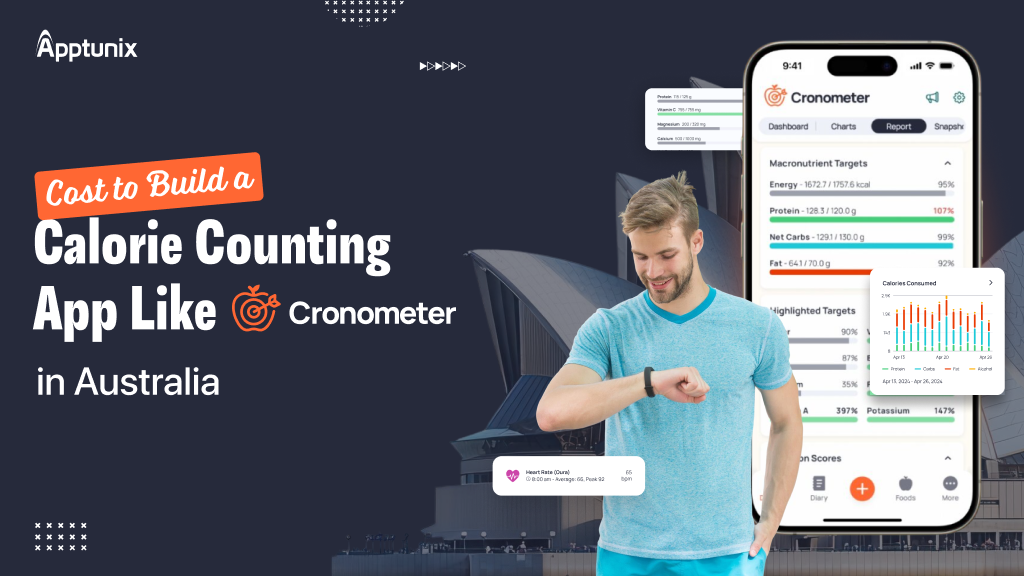
Every week, a new health app launches in Australia. And most quietly disappear within 90 days.
Brutal? Yes. But here’s what’s more interesting.
The ones that survive and scale aren’t built only on good intentions. They’re built on precision.
Right now, Australia’s health app market is growing at an unprecedented pace. And guess what’s leading that charge? Precision Nutrition. Users aren’t just counting calories anymore. They’re tracking magnesium absorption, monitoring omega-3 ratios, and mapping how a single meal affects their sleep, energy, and hormones.
Wild, right?
Cronometer saw this shift before anyone else did. While competitors were still logging “chicken breast, 200 calories”, Cronometer was charting 84 micronutrients per meal. That gap built a fiercely loyal user base. And honestly? That opportunity is still wide open.
Now comes the question most founders care about.
What does it actually cost to build this type of app?
Well, the calorie counting app development cost in Australia ranges from $20,000 to $200,000+. The difference isn’t luck. It’s strategy, features, and picking the right mobile app development company in Australia.
If you’re serious about launching a high-performing nutrition app, you need more than a feature list. You need a blueprint.
And that’s exactly what this guide will help you understand, step by step.
Ready? Let’s get into it.
In 2026, the cost to build a calorie counting app like Cronometer typically ranges from AUD 30,000 to AUD 300,000+.
That’s a wide gap, but it reflects ambition, not confusion. Because you’re not just building a tracker. You’re building a data-driven nutrition engine.
A simple MVP with basic logging, calorie tracking, and dashboards sits on the lower end. But the moment you add micronutrient tracking, integrations, and AI-driven insights, the investment scales fast.
This is where most founders miscalculate the calorie counting app development cost in Australia. They budget for features, but forget depth, accuracy, and user experience.
And in a market like Australia, users expect clinical-grade precision. Not rough estimates.
Working with top mobile app development companies in Australia ensures you don’t overbuild or, worse, underdeliver. The goal is not just to develop a calorie counting app like Cronometer, but to launch something users rely on daily.
If you’re planning a cronometer like app development project, think long-term. Think retention. Think trust.
Because in this category, accuracy is your product.
Now that you understand the investment range, let’s unpack what actually drives these costs behind the scenes.
When founders ask about calorie-counting software development cost in Australia, they expect one number. But in reality, cost is built layer by layer.
Every decision you make shapes the final budget. Let’s break down the cost to build an app like Cronometer in a way that actually helps you plan:
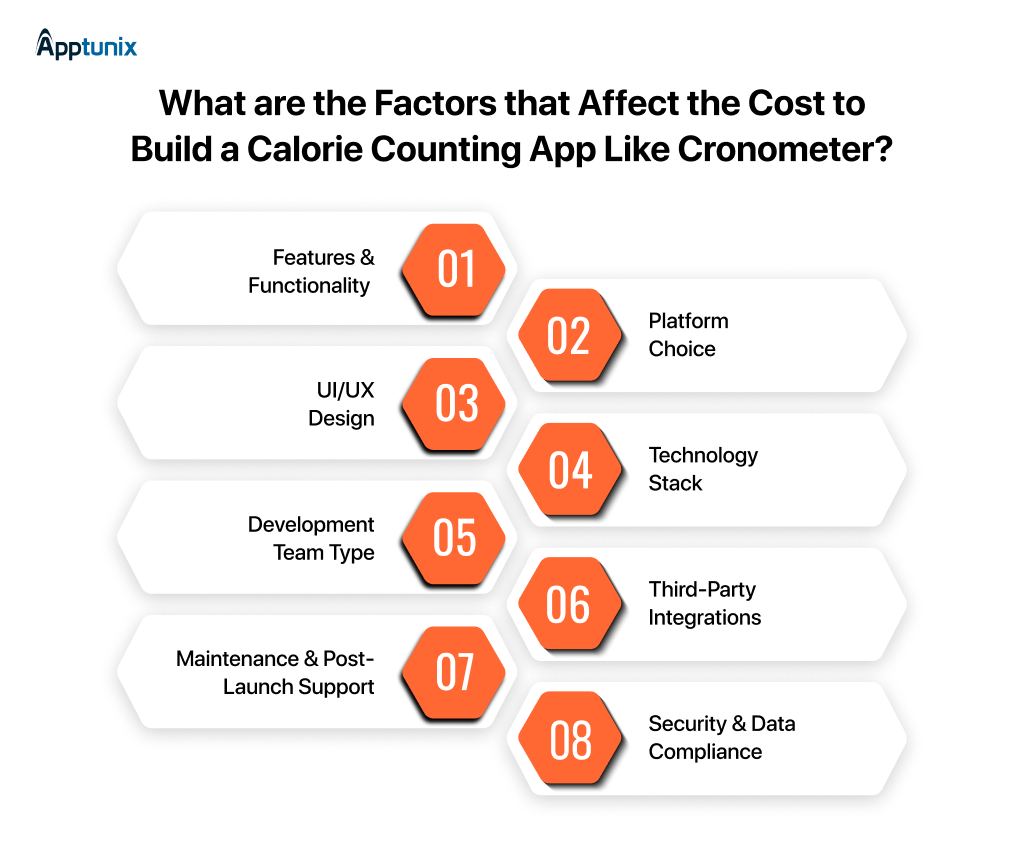
1. Features & FunctionalityThis is where most of your budget goes. A basic calorie counting app like Cronometer only tracks calories. That’s entry-level. But users today expect more. Much more.
They want insights, automation, and accuracy.
Here are the core features that define your product scope:
If you’re planning food tracking app development with advanced features, your cost naturally rises. No shortcuts here.
2. Platform ChoiceNot all platforms cost the same.
If you’re testing an idea, start small. If you’re scaling, go wider. Most successful calorie tracking app development projects in Australia target both platforms from launch.
3. UI/UX DesignDesign is not decoration. It drives retention. A poorly designed food tracking app loses users within 3 days. A clean interface, fast navigation, and simple logging matter more than flashy visuals.
For a calorie counting app in Australia, expect to spend AUD 8,000 to AUD 25,000 on quality design.
4. Technology StackYour tech stack decides how your app performs under pressure. A basic stack works for MVPs. But scaling requires a stronger architecture.
5. Development Team TypeWho builds your app matters as much as what they build.
Fitness app developers in Australia bring local market knowledge. Offshore teams offer cost savings. The right choice for developing an app like Cronometer depends on your budget, timeline, and quality expectations.
If you plan to hire mobile app developers in Australia, expect higher costs but better long-term stability.
6. Third-Party IntegrationsEvery integration adds complexity. And cost.
Apple Health, Google Fit, Nutritionix, and AUSNUT each require dedicated development and testing time. More integration means a richer experience. They also mean more QA cycles. Most Cronometer-like app development costs spike at this stage.
7. Maintenance & Post-Launch SupportApps need constant updates, bug fixes, and performance improvements. Budgeting for post-launch support is non-negotiable for any serious diet and nutrition app development project.
8. Security & Data ComplianceSecurity is not optional in health apps. It directly impacts trust and scalability.
In Australia, apps must comply with frameworks like the Privacy Act 1988, Australian Privacy Principles (APPs), and the evolving Australian Cyber Security Strategy 2023–2030.
For healthcare-grade apps, alignment with ISO/IEC 27001 is also expected.
These requirements increase the health app development cost Australia, but they are critical for user trust and legal safety.
Now that you understand what drives the cost, let’s break down the actual development process step by step.
Building a calorie counting app like Cronometer isn’t one big expense. It’s a series of controlled investments.
Each phase has a purpose. Skip one, and problems show up later. Here’s exactly how a calorie counting app like Cronometer gets built and what each stage costs in the Australian market:
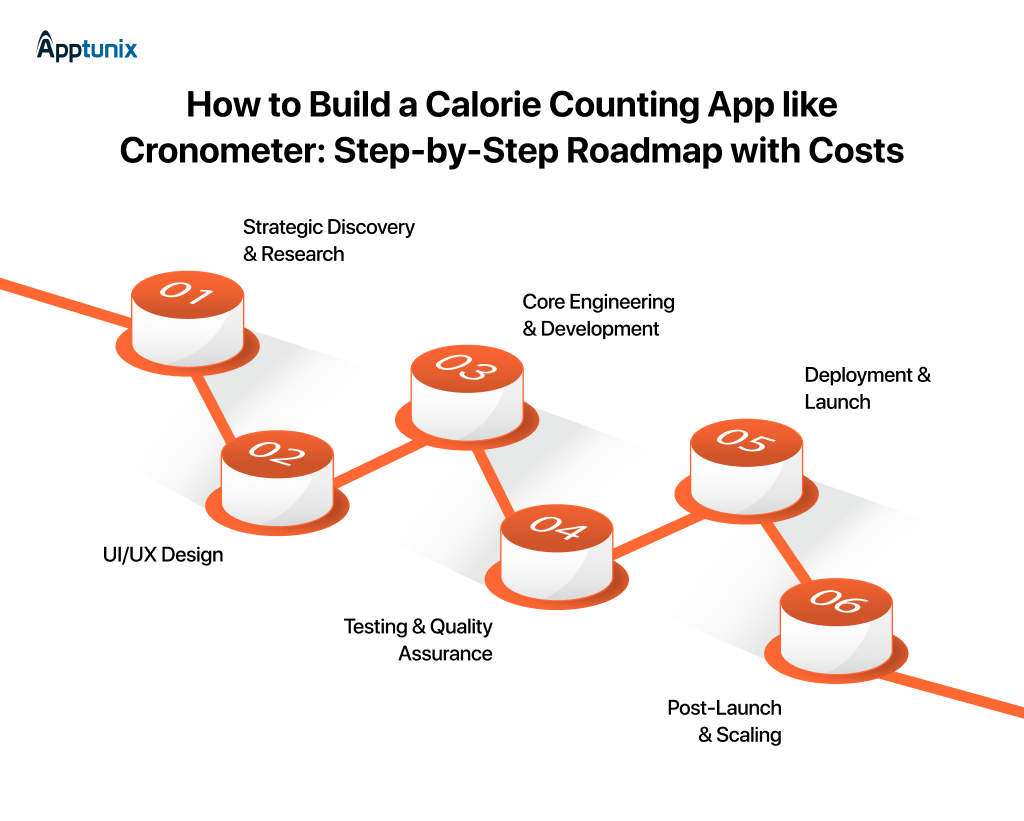
Step 1: Strategic Discovery & ResearchCost: AUD $3,000 – $15,000+
We start by dissecting the Australian wellness landscape. Our team conducts deep-dive research to define your MVP’s “Precision Nutrition” edge. By mapping user personas, we ensure your nutrition tracking app development cost is allocated to features that actually drive retention.
Step 2: UI/UX DesignCost: AUD $5,000 – $20,000+
We translate strategy into screens. Wireframes, interactive prototypes, and a complete design system get built here. Every tap, scroll, and transition is designed around how Australian users actually behave. This makes your food tracking app instinctively easy to use.
Step 3: Core Engineering & DevelopmentCost: AUD $10,000 – $100,000+
This is where our Sydney app developers add the most value. We build the backend engine, integrate global food databases, and sync wearable APIs. If you’re opting for AI fitness app development services, we deploy the machine learning models here.
Step 4: Testing & Quality AssuranceCost: AUD $5,000 – $30,000+
In calorie counting app development like Cronometer, there is zero room for data errors. We run rigorous stress tests and security audits. We verify every calorie and micronutrient calculation to ensure your app meets the highest standards of accuracy and local privacy compliance.
Step 5: Deployment & LaunchCost: AUD $4,000 – $40,000+
We handle the heavy lifting of App Store and Play Store submissions. Beyond the upload, we optimise your server infrastructure for scale. Launching your calorie counting app like Cronometer in Australia requires a clean rollout to capture and keep those crucial early adopters.
Step 6: Post-Launch & ScalingCost: AUD 3,000 – $15,000 annually
We continuously refine AI models, release new features, expand food databases, and scale infrastructure as your user base grows. Because we know the best health apps in Australia are built on continuous improvement cycles.
Beyond development, factoring in SEO pricing and other post-launch marketing costs helps businesses plan effectively for long-term growth and user acquisition.
Every phase adds value but also adds cost. The real game is not cutting steps but optimising them.
Let’s now explore how smart businesses reduce development costs to build an app like Cronometer without compromising quality.

Here’s the truth most app development companies in Australia won’t tell you.
You don’t need $200,000 to build a cronometer clone app. You need smart decisions made at the right stages.
Here’s how savvy founders do it:
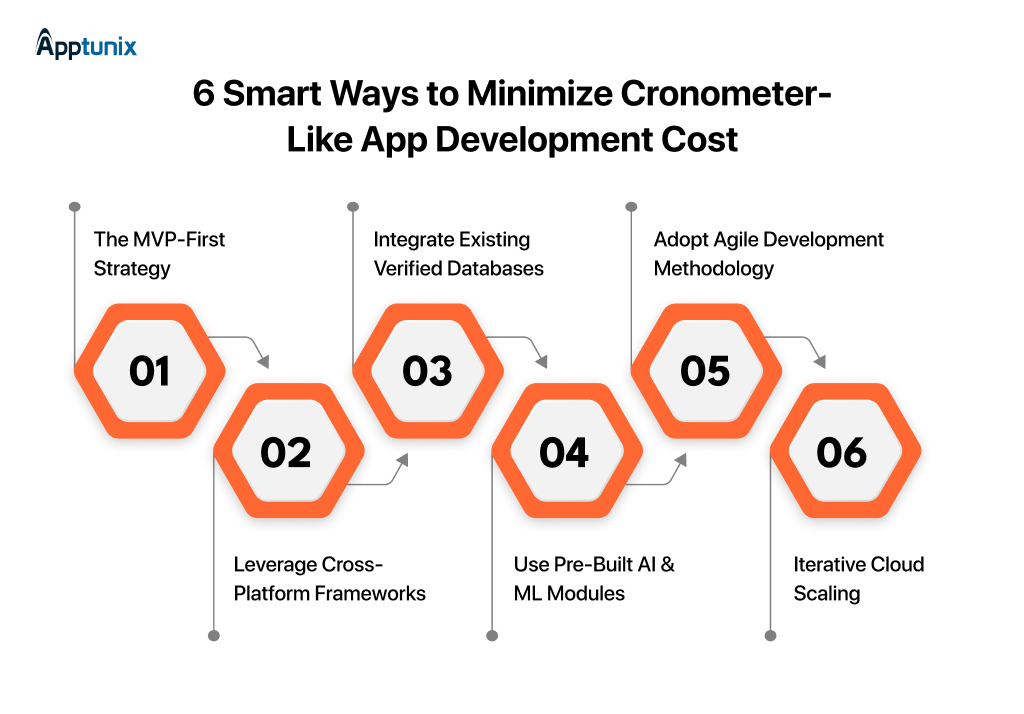
1. The MVP-First StrategyStart with a Minimum Viable Product. By focusing on core “Precision Nutrition” features like accurate logging and basic micronutrient data, you can launch faster. This approach lowers the initial cost to build a calorie counting app like Cronometer while gathering real-world user data.
2. Leverage Cross-Platform FrameworksInstead of building separate apps for iOS and Android, use Flutter or React Native. This “write once, run anywhere” philosophy can reduce your mobile app development cost Australia by up to 30%. Also, without compromising on the native feel.
3. Integrate Existing Verified DatabasesBuilding a proprietary food database from scratch is expensive and time-consuming. Instead, integrate proven APIs like Nutritionix, Open Food Facts, or AUSNUT from day one. You get verified, comprehensive nutrition data without the six-figure database build cost.
4. Use Pre-Built AI & ML ModulesCustom AI from scratch is brilliant and brutal on budgets. Pre-built machine learning modules for meal recommendations and deficiency alerts can be integrated and customised at a fraction of custom-built costs. Your AI fitness app gets intelligent features without the enterprise price tag.
5. Adopt Agile Development MethodologyWaterfall development locks your scope and inflates your budget. Agile software development builds in short sprints, meaning you review, adjust, and reprioritise every two weeks. You only build what matters. Wasted development hours drop significantly.
6. Iterative Cloud ScalingDon’t overpay for massive server capacity upfront. We architect your calorie counting app like Cronometer app on AWS or Azure with auto-scaling. This ensures you only pay for the infrastructure your current user base actually consumes.
Smart cost management is only half the equation. The other half? Making sure your app generates serious revenue. Let’s talk about monetisation.
Beyond the initial cost to build a calorie counting app like Cronometer, your primary focus should be the Average Revenue Per User (ARPU). Nutrition apps have multiple proven monetisation levers. Here are the five most powerful ones:
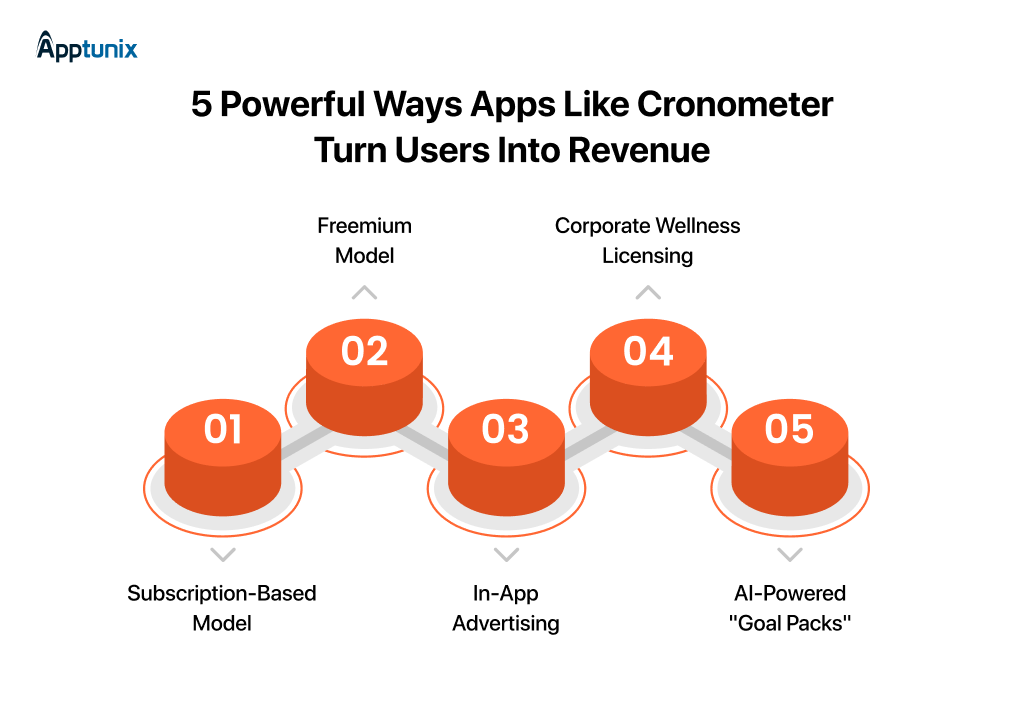
1. Subscription-Based ModelMost successful apps charge monthly or yearly fees for premium access. Users pay for advanced insights, micronutrient tracking, and personalised plans. This model works best for calorie counting app in Australia, where users are willing to pay for quality health tools.
2. Freemium ModelOffer basic features for free and charge for advanced ones. This lowers entry barriers and builds a large user base. Many calorie counting app like Cronometer platforms use this to convert free users into paying customers over time.
3. In-App AdvertisingFree users can be monetized through ads. Fitness brands, supplement companies, and health services pay for visibility. In food tracking app development, ads work best when placed carefully without affecting user experience.
4. Corporate Wellness LicensingPartner with Australian enterprises or private health insurers. By providing bulk access to your calorie counting app in Australia, companies can incentivize healthy employee habits, giving you a stable, B2B revenue stream that scales without individual acquisition costs.
5. AI-Powered “Goal Packs.”Use AI-driven personalization to offer one-time purchases for hyper-specific needs. Whether it’s an “8-Week Gut Health Reset” or a “Vegan Performance Blueprint,” these modular, high-value digital products cater to users looking for immediate, guided results.
Now comes the most important decision of your entire project: choosing the right development partner. Let’s talk about why that choice makes or breaks everything.
The cost to build a calorie counting app like Cronometer is only one part of the equation. The bigger question is, who can actually deliver it right?
Building a precision nutrition platform demands
✓Deep understanding of health data compliance,
✓Australian market nuances,
✓AI integration,
✓Long-term product scalability.
At Apptunix, we bring all of that under one roof.
Here’s what sets us apart
1. Proven Expertise in Health & Fitness AppsWe understand the complexity behind calorie tracking app development. From accurate data handling to intuitive dashboards, we build platforms that users trust daily.
2. Cost-Optimized Development ApproachWe help you control the calorie counting app development cost Australia without compromising quality. Our MVP-first strategy ensures faster launches and smarter investments.
3. End-to-End Development CapabilitiesFrom idea validation to post-launch scaling, we cover everything. Whether you want to develop a calorie counting app like Cronometer or a full-scale platform, we deliver seamlessly.
4. AI-Driven & Future-Ready SolutionsWe embed intelligent features such as behavior-based recommendations and advanced analytics. These capabilities help users make informed decisions while increasing long-term engagement.
The result is a scalable product designed for future growth and innovation.
5. Global Delivery with Local Market UnderstandingWe combine global experience with insights into healthcare app development Australia standards. This ensures compliance, performance, and user trust from day one.
6. Dedicated Team & Transparent CommunicationWhen you hire mobile app developers Australia through us, you get clarity at every step. No hidden surprises. No missed deadlines. Just consistent execution.

Q 1.How much does it cost to build a calorie counting app like Cronometer in Australia?
In Australia the cost to build a calorie counting app like Cronometer is between AUD 30,000 to AUD 300,000 or more. Advanced apps with AI and integrations are priced at the top end, while a simple version is less expensive.
Q 2.What features are essential in a calorie counting app like Cronometer?
Apps that count calories successfully, like Cronometer, are capable of much more than simple tracking. Their main features include:
Q 3.How long does it take to develop a calorie tracking app like Cronometer?
A calorie-tracking app typically takes between 3 and 9 months to develop. It is possible to create a simple app that has a few features within 3-4 months. A complete platform could take 6 or more months. It is possible to avoid delays and keep development on track with effective planning and a well-defined roadmap.
Q 4.Should I build a native or cross-platform calorie counting app?
For most business owners, cross-platform development is the smartest move. It saves upto 30% of your mobile app development cost Australia by using a single codebase for both iOS and Android. On the other hand, if a lot of real-time processing or complex background sync with medical devices is required, then native development might be the better way to go.
Q 5.How do calorie counting apps like Cronometer make money?
Apps like Cronometer use multiple revenue streams to scale profitably:
Q 6.What technologies are used in Cronometer like app development?
Cronometer like app development typically uses modern, scalable technologies. React Native or Flutter are used on the frontend, with AWS or Firebase and Node.js on the backend. More advanced features are achieved through the use of AI, machine learning, and other sophisticated tools.
(5 ratings, average: 4.80 out of 5)
Get the weekly updates on the newest brand stories, business models and technology right in your inbox.
Reena Bhagat, the CTO and Head of AI at Apptunix, is a seasoned technology strategist with a deep-rooted expertise in emerging technologies. With a focus on AI/ML integration, product engineering, cloud management, she leads the technical vision for high-performance SaaS infrastructures. Reena is recognized for building secure, scalable, and decentralized systems that solve real-world complexities. Her passion lies in leveraging data science and future-tech to create resilient digital products, making her a trusted authority for organizations looking to lead in the age of intelligent automation.
12 Views 10 min September 16, 2026

5 Views 10 min September 14, 2026

15 Views 10 min September 8, 2026
Book your consultation with us.
Book your consultation with us.


One Central, The offices 3, Level 3, DWTC, Sheikh Zayed Road, Dubai
+971 50 782 1690