Cost to Build an App Like Eventbrite: Complete Development & Pricing Guide (2026)
16 Views 14 min September 16, 2026

Reena Bhagat, the CTO and Head of AI at Apptunix, is a seasoned technology strategist with a deep-rooted expertise in emerging technologies. With a focus on AI/ML integration, product engineering, cloud management, she leads the technical vision for high-performance SaaS infrastructures. Reena is recognized for building secure, scalable, and decentralized systems that solve real-world complexities. Her passion lies in leveraging data science and future-tech to create resilient digital products, making her a trusted authority for organizations looking to lead in the age of intelligent automation.

Not long ago, visiting a doctor meant waiting in crowded clinics, filling out forms, and making endless phone calls to confirm an appointment. That experience has now been replaced by something faster, more innovative, and much more convenient. With just a few taps, patients can find a specialist, book an appointment, and even consult via video. Global telemedicine adoption is growing by more than 20% annually, and in several major cities, almost half of all consultations now take place online. Apps like Practo, Zocdoc, and Lybrate have changed how healthcare operates.
They have made doctor access quicker, simpler, and far more reliable.
Digital healthcare is not optional anymore. People now expect it as part of their care journey. Providers who act early gain stronger patient loyalty and better operational control. The demand for on-demand healthcare app development continues to rise each year.
For healthcare startups and private hospitals, building an app like Practo has become a business priority. A well-designed booking system attracts new patients, automates scheduling, and keeps doctors, staff, and patients connected on a single platform.
To make that happen effectively, let’s understand how these apps actually work and what makes them succeed in real-world healthcare environments.
The real success of Practo comes from how easily it connects three sides of healthcare: patients, doctors, and hospitals. Everything from appointment booking to payments works inside a single connected system that feels natural to use.
Here’s how it works when you develop a medical booking app like Practo:
That is what doctor booking system development aims to achieve: a smooth network where every interaction happens without confusion or delay.
If your goal is to launch an appointment booking app like Practo, the focus should be on making the process effortless for everyone involved. When you build an app like Practo, your objective is simple. Make it easy for patients to find the right doctor and easy for doctors to manage their appointments.
Understanding this structure will help you make better decisions when planning your Practo app cost estimation and choosing the right technology stack for development.
Access to healthcare has always been a challenge, but technology is finally closing that gap. The shift toward digital healthcare is no longer a test or a trend; it has become an essential part of how the medical industry operates.
Appointment booking apps are now the center of how patients and doctors connect. The global telemedicine and digital healthcare app market is expected to exceed $240 billion by 2028, growing at more than 18 percent annually. The increasing need for remote consultations, e-prescriptions, and quick appointment scheduling drives this growth.
What was once considered a luxury is now a necessity. In countries like India, the UAE, and Saudi Arabia, people are using healthcare apps faster than ever. Hospitals and clinics are investing in mobile app development to digitize their systems, while startups are looking to build an app like Practo that brings healthcare within reach for everyone.
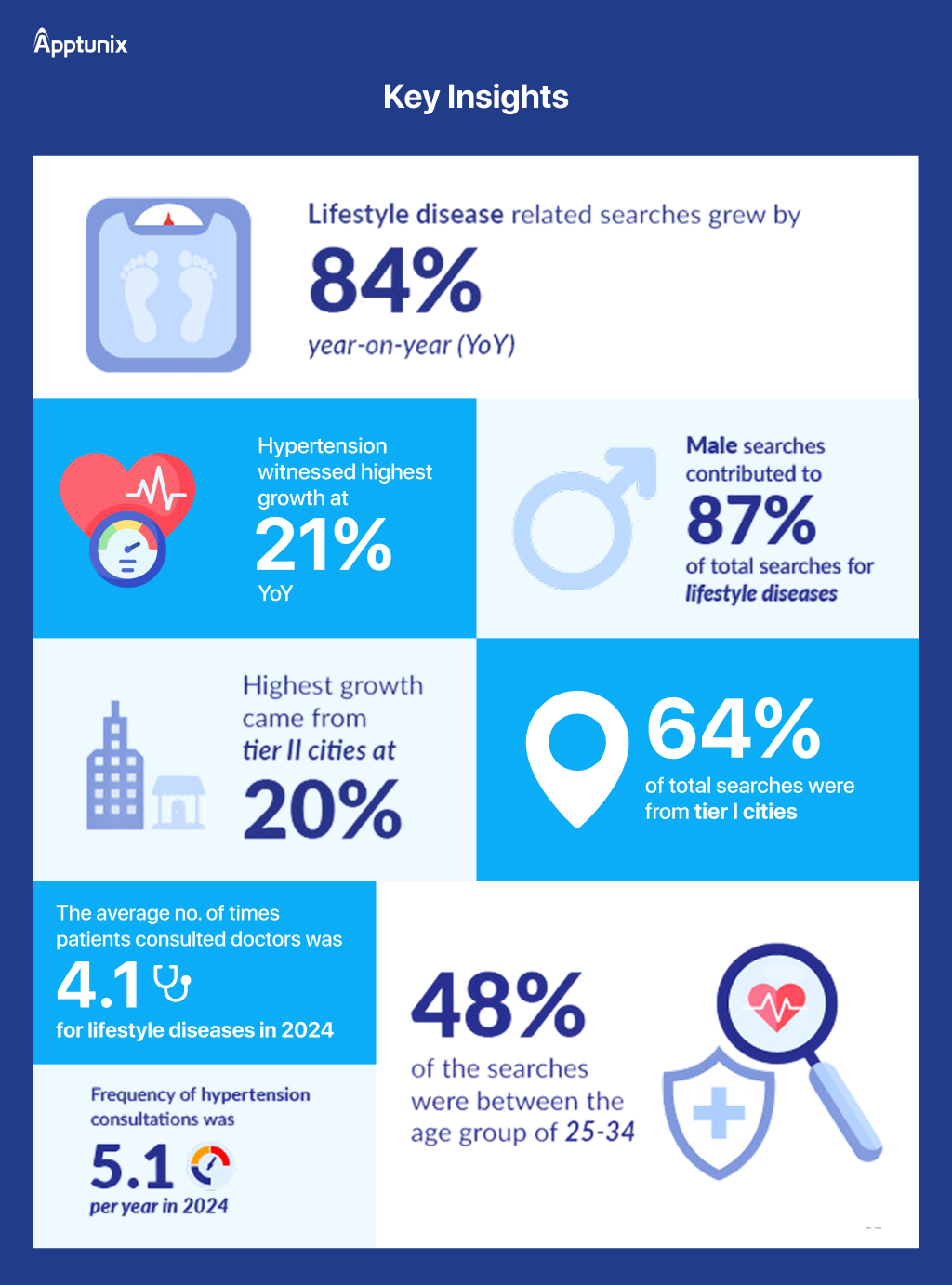
Every day, millions of people search online for trusted doctors, available appointment slots, and easy ways to connect for consultations. This growing demand has created a huge opportunity for digital healthcare tracking platforms. When you develop a medical booking app like Practo, you are building a system that solves real healthcare challenges while generating strong business results.
Here are some of the key factors driving growth in on-demand healthcare app development:
The digital healthcare industry is expanding fast, but it is not overcrowded. Established platforms like Practo and Zocdoc have already proven the potential of this model. The real opportunity now lies in creating localized and more patient-focused solutions.
If you are planning to launch an appointment booking app like Practo, this is the right time. The audience is ready, the technology is affordable, and the market is still open for innovation.
If you want to build an app like Practo that actually delivers value, focus on more than just scheduling appointments. The best healthcare apps make communication simple, reduce paperwork, and give doctors and patients the clarity they need.
Below is a breakdown of the most important features every medical appointment booking app should include, divided by user type.
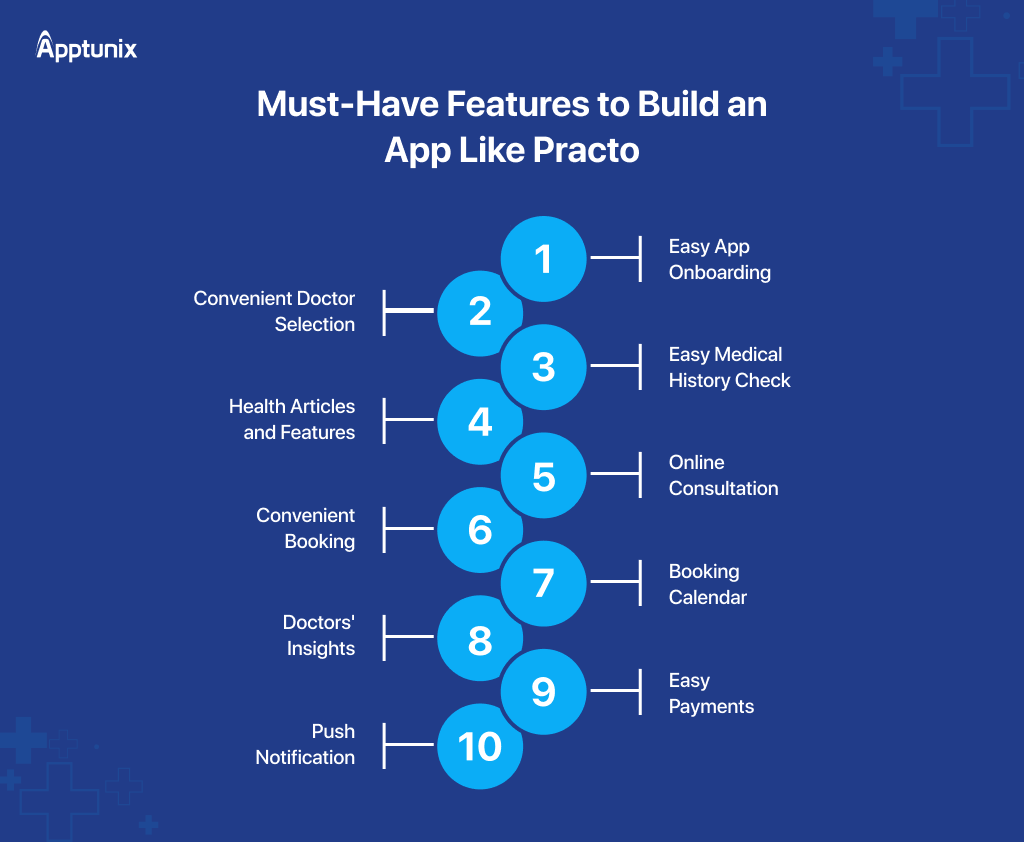
A. Patient-Centric FeaturesPatients are at the heart of your app. Their experience should be smooth, quick, and reliable. The goal is to take them from search to consultation in just a few easy steps. Small design choices, such as an intuitive booking flow or one-tap consultation access, can make a huge difference in how well your app retains users.
B. Doctor-Oriented FeaturesFor doctors, the app is more than just a listing. It is a complete digital tool for managing their clinic and patients. These tools help doctors save time, stay organized, and deliver better care, which increases engagement and long-term use.
C. Admin and Platform Management FeaturesAdmins ensure the platform runs smoothly. Their tools must support complete control and transparency. A strong admin panel ensures stability and scalability as your app grows.
D. Advanced Features That Give You an EdgeCompetition in healthcare tech is increasing. These advanced features can help your doctor booking system development stand out and deliver real value. They help you deliver better patient experiences while strengthening your brand in a growing market.
You don’t have to be a developer to understand what powers an app like Practo. Think of the tech stack as the engine that keeps everything running behind the scenes. It’s what ensures your app stays fast, secure, and smooth when users book appointments, make payments, or join consultations.
If you plan to build an app like Practo, choosing the right technology early on helps your platform scale easily as your business grows. Using this kind of stack enables you to build faster while keeping costs lower.
1. The Basics: What Makes the App WorkWhen you search for a doctor or schedule an appointment, several systems work together in the background. Here’s a simple breakdown:
Choosing a cross-platform framework can even cut your appointment booking app development cost by up to 40%. So here’s-
2. Security Matters More Than EverWhen you develop a medical booking app like Practo, you handle sensitive patient data. That means security isn’t just a feature, it’s a must-have.
Your app should comply with data protection laws such as:
These ensure patient data is encrypted and protected at all times. Adding features like two-factor authentication and secure login builds more trust among users and healthcare partners.
3. Think Long-Term: Build for GrowthStart small, but plan for the future. A strong tech stack allows you to add new features and users without breaking your system later. Many startups fail because they build quick prototypes that don’t scale well. Investing in the right technology from the start helps you grow smoothly and avoid costly rebuilds. Whether you hire your own developers or partner with a healthcare app development company, focus on building a solid foundation that can support your growth for years to come.

Building your app is one step. Getting it live, tested, and in the hands of real users is the real challenge. Here’s a simple and structured way to launch an appointment booking app like Practo, even if you’re starting from scratch.
Step 1: Research and PlanStart with understanding who your users are. Are you targeting patients looking for specialists or hospitals managing multiple doctors? Study existing apps like Practo, Zocdoc, and Lybrate to see what works and what can be improved.
This research helps you decide your features, pricing model, and target audience before development starts.
Step 2: Design the User ExperienceOnce your concept is clear, focus on the design. A doctor booking system should be simple and intuitive. Patients should be able to search, book, or consult online within seconds.
At this stage, your design team creates wireframes and prototypes. These act like digital blueprints that show how the app will look and work.
Step 3: Build an MVP FirstIt’s tempting to build everything at once, but the smarter approach is to start with an MVP (Minimum Viable Product). This is a basic version of your app that includes only essential features like doctor search, appointment booking, and payment options.
An MVP helps you test your idea quickly, collect feedback from real users, and make improvements before scaling. It also helps reduce your appointment booking app development cost and time to market.
Step 4: Connect the Backend and APIsOnce your core features are ready, developers integrate APIs that connect different parts of the app. APIs handle everything from video calls and chat to payments and notifications.
When you create an appointment booking app like Practo, reliable API integration ensures that users experience smooth booking, instant updates, and secure transactions.
Step 5: Test EverythingBefore launching, your app goes through multiple rounds of testing. Quality assurance teams test every flow, button, and feature to make sure it all works as expected. They also perform security testing to confirm that patient data is completely safe.
Step 6: Launch and GrowWhen your app is stable and ready, launch it in stages. Start small by targeting local doctors, clinics, and hospitals. Use digital marketing, SEO, and social media to reach early users.
Keep tracking feedback and improving your app based on what users want. As you grow, you can add features like e-prescriptions, doctor reviews, and AI-based recommendations.
Pro Tip: Start Local and Then Scale
Apps like Practo didn’t become global overnight. They started city by city, building user trust along the way. Begin with one market, perfect your operations, and expand when your system is running smoothly. If your goal is to develop a medical booking app like Practo, focus on earning user trust first. Once patients and doctors rely on your app, scaling across cities or even countries becomes much easier. A small working demo or pilot version can also help attract early investors or partners before your full rollout.
Don’t waste time guessing. Check out the Top Rated Healthcare App Development Companies trusted by startups and enterprises.
Every healthcare founder, clinic owner, or tech entrepreneur planning to build an app like Practo eventually asks the same question: What will it really cost to develop something like this?
There isn’t a single answer that fits everyone. Your appointment booking app development cost depends on the type of product you want to create, the platforms you’re targeting, and the complexity of your features. But understanding the range helps you plan your budget strategically and avoid surprises later.
Below is a realistic Practo app cost estimation based on real healthcare projects and development industry benchmarks.
These numbers give you a direction, but the actual cost will vary depending on your goals and development approach. Here are the main factors that influence your total investment.
1. Features and ComplexityThe more advanced your custom healthcare app, the more development time it requires. Simple booking and scheduling modules are quick to build. But if you want features like video consultations, AI-based doctor matching, and digital health records, the effort and cost increase accordingly.
2. Design and User ExperienceGood design is not just aesthetics; it builds trust. A well-planned interface helps patients find what they need quickly and gives doctors an easy way to manage appointments. Investing in user experience early on increases retention and satisfaction later.
3. Platform ChoiceIf you want to reach both iOS and Android users, development time and cost increase. Choosing cross-platform frameworks like Flutter or React Native can help save up to 40 percent of your total budget while maintaining consistent performance across devices.
4. Integrations and APIsMost healthcare apps rely on integrations — payment gateways, telemedicine APIs, or hospital ERP systems. These connections improve functionality but add to the total development time and budget. However, they’re crucial for long-term scalability.
5. Developer LocationDevelopment cost varies significantly by region. Hiring a healthcare app development company in the US or UAE can cost up to 4–5 times more than working with an expert team in India. That’s why many businesses choose budget-friendly healthcare app development partners who deliver quality at a lower cost.
6. Maintenance and UpgradesDevelopment doesn’t end at launch. You’ll need continuous support for performance improvements, security updates, and new feature rollouts. A good rule of thumb is to allocate 15–20 percent of your annual budget for maintenance.
The Smarter Way: Start with an MVP
If you’re building your first healthcare product, start small. An MVP (Minimum Viable Product) helps you validate your idea with real users before committing to full-scale development. Many successful healthcare startups first test their doctor booking system development with core features like doctor search, booking, and payments. Once they gain traction, they expand into teleconsultations, AI-powered recommendations, and integrations with pharmacies or labs.
Want to Build an Ambulance Booking App? Tap To Explore Cost, Features, and Tech Stack
An appointment booking app is more than just a tool for convenience. When planned well, it becomes a reliable source of recurring revenue. If you’re looking to build an app like Practo, here are some of the most practical and proven healthcare app monetization strategies you can consider.
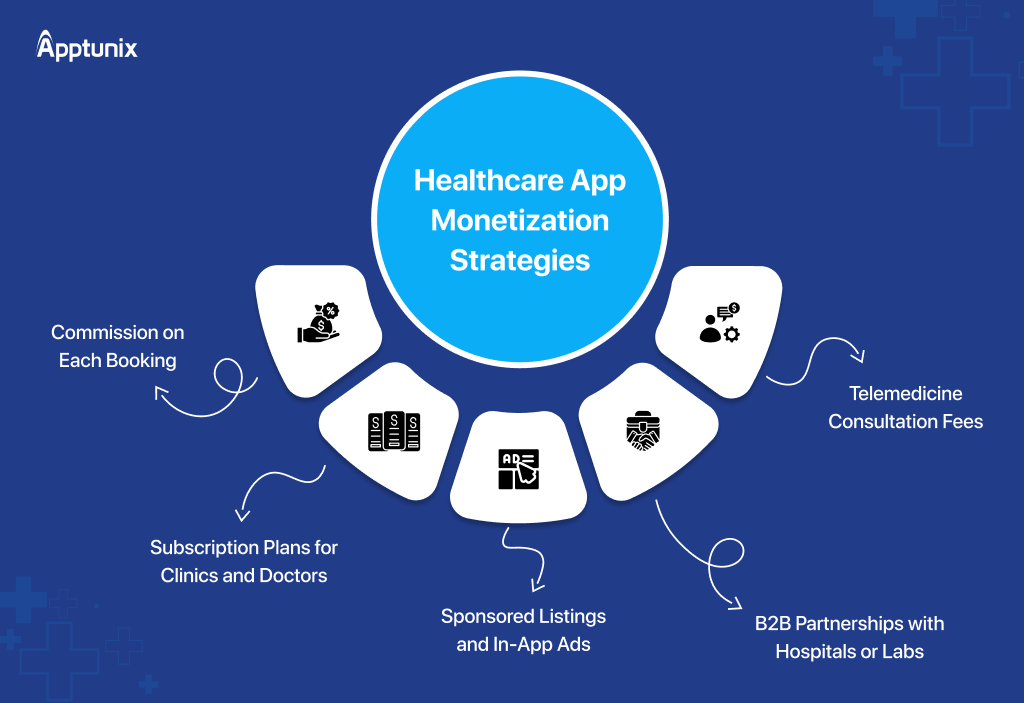
This is the simplest and most scalable model. The app earns a small percentage from every confirmed booking between a doctor and patient. As the number of bookings grows, your revenue increases automatically without additional effort.
Clinics, hospitals, or individual practitioners can pay a monthly or yearly subscription to unlock premium features. These may include teleconsultation tools, appointment reminders, patient analytics, and data reports. Subscription models provide predictable recurring income and strong retention.
Once your app attracts steady traffic, you can let doctors or clinics promote their profiles through sponsored listings or advertisements. This works especially well for platforms with strong local user engagement, helping providers stand out while generating revenue for you.
Many successful healthcare startups partner with hospitals, diagnostic centers, or wellness programs. These partnerships bring in consistent, high-value contracts and also expand the platform’s credibility in the market.
If your platform supports video calls or chat consultations, a small fee per session can be charged. It benefits both the doctor and the app owner while giving patients convenient access to virtual care.
The Return on Investment
Building a healthcare app is not just a digital move. It’s a long-term business strategy. Clinics and startups that invest in apps like Practo often recover development costs within 10 to 12 months. As your user base grows, you can expand into new areas such as online pharmacy tie-ups, health insurance integrations, or lab appointment bookings. These add-on services create multiple income streams and increase customer lifetime value.
Healthcare is moving quickly toward digital-first solutions. Patients now expect to book appointments online just as easily as they order food or shop for groceries. For hospitals, clinics, and startups, appointment booking system development is becoming a must-have rather than an option.
Here’s why many healthcare providers are already investing in it—and seeing real results.
A. Growing Demand for Telehealth and Remote CareThe global telemedicine market has grown more than 240 percent since 2020 and is expected to surpass $450 billion by 2033. Patients prefer digital consultations that save time and eliminate waiting rooms. By building an app like Practo, you meet this demand while creating a new channel for revenue and patient engagement.
B. Improved Patient Experience and Operational EfficiencyA digital booking system simplifies scheduling, reduces no-shows, and allows staff to manage appointments in real time. Clinics that use a custom-built doctor booking app report up to 35 percent higher patient retention within the first six months. For doctors, it means less paperwork and more focus on patient care. For patients, it means faster access to the right specialist without the usual frustration of manual booking.
C. Strong Competitive AdvantageLaunching your own app positions your hospital or clinic as forward-thinking and tech-enabled. It builds trust with patients and helps you reach younger, mobile-first audiences. For startups, investing in on-demand doctor appointment app development is one of the smartest ways to enter the market. A simple MVP can validate your idea, attract early users, and create investor interest before you scale further.
D. Long-Term Business GrowthHealthcare apps generate more than patient engagement—they build lasting revenue streams. Whether through consultation fees, partnerships, or premium subscriptions, your platform can continue to grow in value over time.
On average, businesses that invest in mobile app development for hospitals and clinics see up to a 3.5x return on investment within 18 months of launch.
E. Because You Have a Partner That Does It All for YouBuilding a healthcare app that grows and performs well takes more than just coding. It takes a partner who understands your goals and can turn your idea into a real product that delivers value. That’s what Apptunix does best. We help healthcare startups, clinics, and hospitals build digital products that patients actually use and trust.
Our process begins with understanding what you want to achieve. Then we plan the features, design the user flow, and build an MVP that brings your vision to life. Every step is focused on real outcomes, not just development timelines.
One of our healthcare clients started with a small idea for teleconsultations. Within a year, the app was serving more than 100,000 active users and handling thousands of bookings every day. We built the system to manage secure payments, real-time consultations, and doctor dashboards, making daily operations smoother.
Whether you want to create an appointment-booking app like Practo or develop a telemedicine platform for your hospital, we make it easy to get started and scale. From budget-friendly healthcare app development for small clinics to enterprise-grade solutions for large hospitals, our team handles the entire journey.
You focus on your business, and we handle the tech that powers it.
Healthcare is moving online faster every year. The clinics and hospitals that act now will set the standard for how modern patient care works. Building your own appointment booking app is not just about technology. It’s about giving your patients a better way to connect with you and creating new revenue opportunities for your business.
At Apptunix, we combine technical expertise with a real understanding of healthcare app development. Our team has helped startups launch MVP healthcare apps and guided hospitals in creating digital systems that scale as they grow.
If you want to build an app like Practo or launch a new digital platform for your clinic, we’re ready to help you make it happen. We’ll plan it, build it, and support it long after launch.
Now is the best time to move. The demand for digital healthcare is rising every day, and waiting means giving space to your competitors. Let’s build your appointment booking app today.

Get the weekly updates on the newest brand stories, business models and technology right in your inbox.
Reena Bhagat, the CTO and Head of AI at Apptunix, is a seasoned technology strategist with a deep-rooted expertise in emerging technologies. With a focus on AI/ML integration, product engineering, cloud management, she leads the technical vision for high-performance SaaS infrastructures. Reena is recognized for building secure, scalable, and decentralized systems that solve real-world complexities. Her passion lies in leveraging data science and future-tech to create resilient digital products, making her a trusted authority for organizations looking to lead in the age of intelligent automation.
16 Views 14 min September 16, 2026

5 Views 14 min September 14, 2026

23 Views 14 min September 8, 2026
Book your consultation with us.
Book your consultation with us.


One Central, The offices 3, Level 3, DWTC, Sheikh Zayed Road, Dubai
+971 50 782 1690