AI in Banking: The New Competitive Edge in Banking Services
4 Views 11 min September 29, 2026

Reena Bhagat, the CTO and Head of AI at Apptunix, is a seasoned technology strategist with a deep-rooted expertise in emerging technologies. With a focus on AI/ML integration, product engineering, cloud management, she leads the technical vision for high-performance SaaS infrastructures. Reena is recognized for building secure, scalable, and decentralized systems that solve real-world complexities. Her passion lies in leveraging data science and future-tech to create resilient digital products, making her a trusted authority for organizations looking to lead in the age of intelligent automation.
What if one platform could run your entire learning business without daily chaos?
Admissions, live classes, tutor schedules, parent updates, student progress, payments, subscriptions, all in one place.
That is exactly why the race to build a SaaS Learning Management System is accelerating.
Tutoring businesses are under pressure to deliver smoother digital experiences while keeping operations simple behind the scenes. They do not just need software anymore. They need a system that grows with them, automates repetitive work, and creates better learning outcomes.
And the market opportunity is massive.
According to Fortune Business Insights, the global Learning Management System market is projected to reach $82.00 billion by 2032. That number tells a clear story: demand for modern LMS platforms is only getting bigger.
But here is where many institutions get stuck. Ready-made tools often look good at first, yet they struggle when you need custom branding. This is where custom learning management system development becomes the smarter long-term move.
A well-planned LMS can become the backbone of your education business. It can support students, parents, tutors, admins, and counselors from one dashboard while opening multiple revenue streams.
As a trusted mobile app development company, we have helped businesses turn complex learning ideas into scalable digital products. In this article, we will show how we built a SaaS LMS that users love and that businesses can grow with.
Let’s get into it.
At Apptunix, our approach to custom LMS development starts with a structured pre-development phase. Here is how we nail the preparation phase:
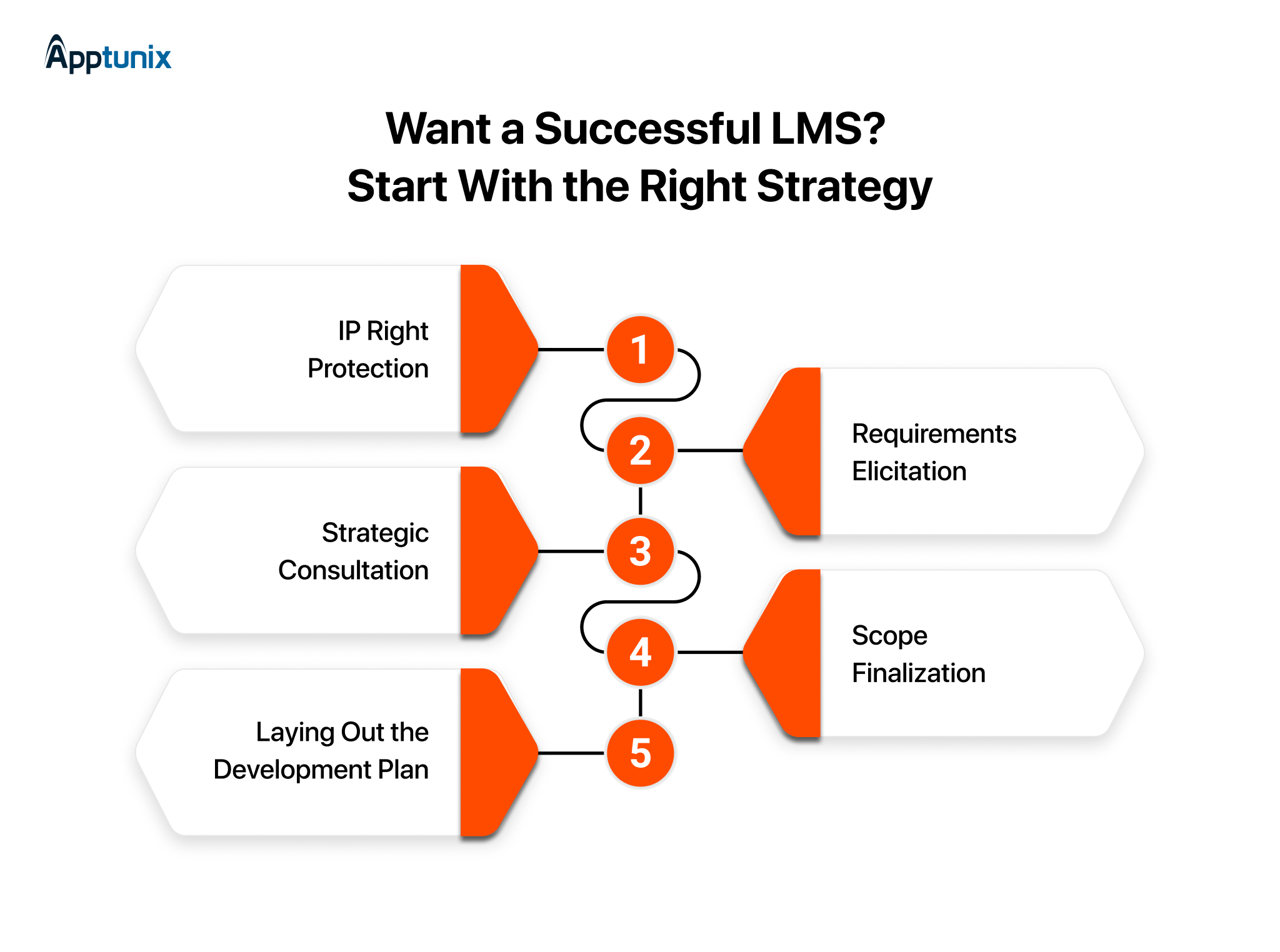
Your idea is your biggest asset. Before we dive into the details of your custom LMS development, we ensure all Intellectual Property (IP) rights and NDAs are strictly handled. This ensures that the innovation we build together remains 100% yours.
We don’t just ask what features you want; we ask what problems you’re trying to solve. This deep dive helps us understand the nuances of an LMS for schools versus a private tutoring hub.
Many businesses know they need an LMS, but not the smartest way to structure it.
Our consultation process helps identify what should be included in the MVP, what can come later, and what creates the highest return on investment.
This keeps learning management system development practical, focused, and cost-efficient.
Before development started, we produced a clear scope document covering:
A clear scope helps avoid confusion during LMS software development.
Finally, we create the roadmap. This isn’t a vague “we’ll be done in six months” promise; it’s a milestone-by-milestone breakdown of how your vision becomes a reality.
When the planning phase is handled correctly, the next stage of development becomes faster, smarter, and more efficient.

Our SaaS Learning Management System Development followed a precise 8-step roadmap. This structured process ensures the platform was built with technical excellence, moving seamlessly from strategic research to final market delivery.
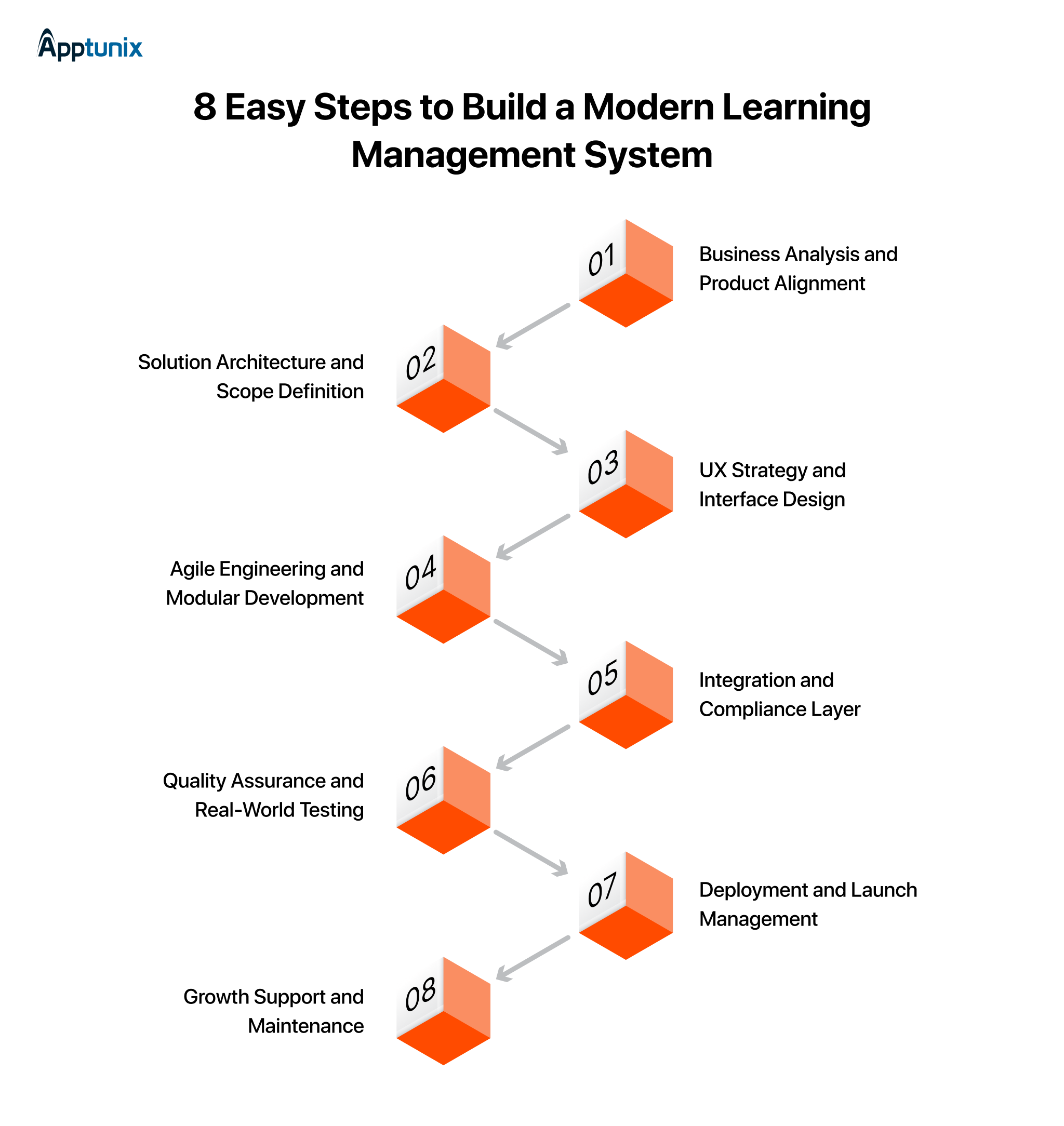
Step 1: Business Analysis and Product AlignmentEvery successful product starts with understanding the business behind it.
Before we discuss screens or features, we studied the goals of the organization, target users, operational challenges, and revenue model. This helped us build a SaaS LMS around outcomes, not assumptions.
During this phase, we defined:
This stage created a strategic foundation for accurate learning management system development.
Step 2: Solution Architecture and Scope DefinitionOnce the business vision was clear, we converted it into a practical product blueprint.
This was the stage where we defined how the system would function. We decided which modules were essential, how users would interact, and what should launch in Phase 1 versus later releases.
Key outputs include:
This protects budgets and prevents scope drift during SaaS Learning Management System development.
Step 3: UX Strategy and Interface DesignAn LMS can have powerful features, but if users struggle to navigate it, adoption suffers.
We designed role-specific experiences that feel intuitive for students, parents, tutors, counselors, and administrators. Every workflow was optimized for speed, clarity, and engagement.
Our design process covered:
This is a critical phase in modern online learning platform development.
Step 4: Agile Engineering and Modular DevelopmentAfter design approval, the product moved into engineering.
We built the platform in planned development sprints. This allowed the client to review progress regularly, provide feedback early, and maintain confidence throughout execution.
Development streams often include:
Frontend Engineering
Web portals, dashboards, responsive interfaces, and learner journeys.
Mobile App Engineering
Android and iOS applications using efficient cross-platform or native frameworks.
Backend Engineering
APIs, business logic, user permissions, subscriptions, scheduling engines, and reporting systems.
Database Engineering
Secure data models, multi-tenant structures, and performance optimization.
This phased model ensures controlled LMS software development rather than chaotic builds.
Step 5: Integration and Compliance LayerMost modern LMS platforms depend on external systems.
We securely integrated the platform with tools such as:
At the same time, we implemented enterprise-grade safeguards such as:
For education businesses, trust is as important as functionality.
Step 6: Quality Assurance and Real-World TestingBefore launch, every module was tested thoroughly.
We did not rely on visual checks alone. Our QA process validates how the LMS performs under real user scenarios across devices, browsers, and traffic conditions.
Testing includes:
This significantly reduced launch-day issues and protected brand reputation.
Step 7: Deployment and Launch ManagementLaunching a product should feel controlled, not stressful.
We managed deployment across production environments, app stores, and live domains with detailed release checklists.
Launch support can include:
This ensured a stable and professional go-live experience.
Step 8: Growth Support and MaintenanceThe most successful SaaS LMS platforms continued evolving after launch.
Once real users began using the system, we analyzed usage patterns, gathered feedback, and improved performance. We also helped clients plan future growth phases.
Common post-launch enhancements include:
This transformed an LMS from a product launch into a long-term digital asset.
Behind every smooth user click is a high-performance engine; let’s look at the tech powering the magic.
Below is the technical blueprint we used to build a SaaS LMS to ensure the e-learning platform development is built to last:
We’ve covered the “how” and the “what,” so let’s talk numbers: what does this investment actually look like?
One of the most frequent questions we get is: “What is the actual cost to build a SaaS learning management system?” In a market where you are competing with the best LMS systems, your investment needs to be strategic.
The budget for SaaS LMS development is never “one size fits all” because it depends on the depth of your vision. However, we believe in transparency. To help you plan, we’ve broken down the investment into two strategic tiers: the MVP and the Full Custom Solution.
Before looking at the numbers, it’s important to understand the variables that shift the needle in custom LMS development:
Feature Complexity: A simple course uploader is one thing; a multi-user ecosystem with automated scheduling, real-time analytics, and parent-tutor communication hubs is another.
Third-Party Integrations: Integrating tools like Zoom for live classes, Stripe for global payments, or Twilio for SMS alerts adds layers of technical complexity but significantly increases the platform’s value.
Security & Scalability: When you build a SaaS LMS for schools, data privacy (like GDPR or COPPA compliance) is non-negotiable. Building a “fortress” around student data requires specialized engineering.
Platform Versatility: Ensuring a seamless experience across web, iOS, and Android requires a synchronized backend, which influences both the timeline and the budget.
Investing in an LMS software development project is a marathon, not a sprint.
Starting with an MVP (Minimum Viable Product) allows you to enter the market quickly, gather user feedback, and generate ROI while you plan for future expansions. Alternatively, a full custom build SaaS LMS is designed for those ready to launch a comprehensive, market-leading enterprise solution from day one.
When you opt for SaaS LMS development, you are choosing a model that prioritizes long-term growth and user retention. Unlike legacy systems, a modern cloud-based LMS development approach offers specific business benefits that make it the preferred choice for global educational leaders.
Here are the five core advantages of choosing a SaaS model for your platform:
1. Unmatched Scalability and FlexibilityOne of the primary reasons founders choose SaaS LMS development is the ability to scale effortlessly. As your user base grows from hundreds to thousands, the infrastructure expands automatically. When you build a SaaS LMS, you ensure that performance remains snappy and consistent, regardless of the simultaneous traffic load.
2. Lower Total Cost of OwnershipA cloud-based LMS development approach reduces long-term costs. There is no need for heavy infrastructure or ongoing hardware maintenance.
You save on IT resources, manual processes, and third-party tools. Over time, this makes SaaS learning management system development a cost-efficient investment rather than an ongoing expense.
3. Automatic and Centralized UpdatesWith a SaaS learning management system, updates are managed centrally. You do not need to manually upgrade the platform.
New features, security patches, and improvements are rolled out seamlessly. This ensures your LMS stays modern, secure, and competitive without disrupting users.
4. Anywhere, Anytime AccessibilityModern learners expect flexibility. A well-built online learning platform development solution allows users to access courses from any device.
Students can learn on the go. Tutors can manage sessions remotely. This improves engagement, convenience, and overall user satisfaction across the platform.
5. Enhanced Security and ComplianceWhen you build a SaaS LMS, security is baked into the architecture. Managing a SaaS learning management system ensures that sensitive student data and intellectual property are protected by military-grade encryption and automated backups. This meets global data privacy standards (like GDPR or COPPA) with ease and reliability.
To justify a premium investment, we built a modular architecture that bridges the gap between administrative efficiency, tutor productivity, and an engaging student learning experience. These are the five modules that define this SaaS LMS product.
The nerve center of the platform. From here, the platform owner can view the total number of subscribed institutions, active users, monthly revenue trends, subscription renewal rates, and pending payments in one unified view. Every transaction, every login, every plan change is visible and auditable.
The challenge here was not building the dashboard itself. It was making the data model flexible enough that the Super Admin could manage institutions with wildly different plan configurations without the interface breaking down. Custom plan logic, variable user limits, and tiered feature access all had to coexist cleanly in a single management layer.
Each subscribing institution gets its own configurable admin environment. They can add their logo, set their URL, manage sub-admins, adjust color themes, and control access levels for their own users. This is a white-label experience delivered without sharing the source code.
This was, without question, the most technically demanding module on the project. Sessions needed to be scheduled, tracked, rescheduled, and cancelled, all while respecting the timezone of the institution and the individual user. The dynamic session module also had to handle edge cases like last-minute reschedules and session conflicts across multiple users.
We built a dynamic session management system with auto-detect timezone functionality, manual override, and conflict resolution logic for overlapping bookings. It took two full iterations before it held up under edge case testing. This is the kind of module that looks simple in a feature list and accounts for weeks of actual engineering time.
Tutors and counsellors could upload materials, assign resources to students, and track engagement. Students could access content, attempt assessments, and review their progress history. Parents got visibility into their child’s activity without being able to interfere with the learning workflow.
Buzz, the multilingual communication layer, was integrated to allow real-time messaging between users. On the support side, institutions could raise tickets with the Super Admin, and a structured FAQ and guide system reduced the volume of repetitive queries.
Now let’s explore how to flip the switch and turn that investment into profit.
A well-planned SaaS learning management system can create multiple income streams from the same product.
Here are the most effective monetization strategies used by modern LMS for schools and tutoring platforms.
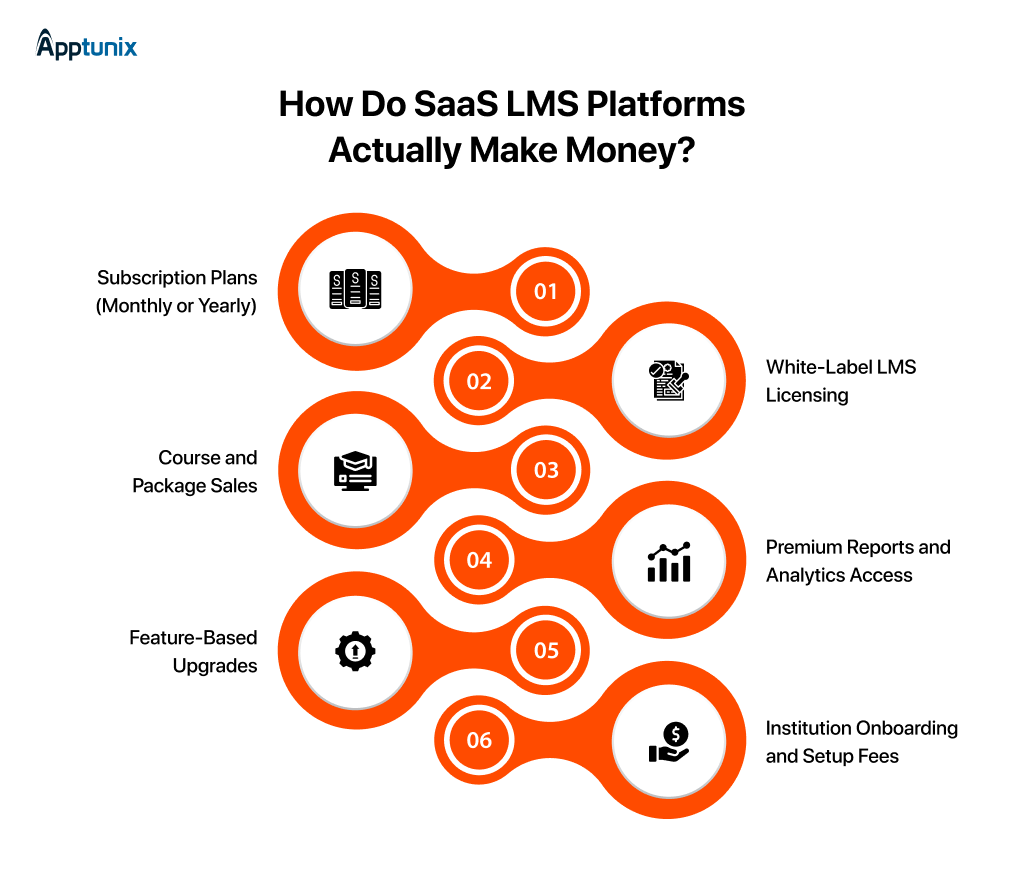
1. Subscription Plans (Monthly or Yearly)This is the most common and reliable model for any SaaS learning management system. Institutions, tutors, or businesses pay a recurring fee to access the platform.
Each plan can offer different limits based on:
Recurring subscriptions create stable monthly cash flow and predictable growth.
2. White-Label LMS LicensingMany businesses want their own branded platform without building from scratch.
This creates an opportunity to offer white-label licensing where institutions can use your LMS under their own name, colors, and domain. White-labeling is one of the strongest revenue models in custom LMS development because it combines high value with long-term contracts.
3. Course and Package SalesNot every user wants a subscription. Some prefer one-time purchases for specific learning needs.
Your LMS can generate direct revenue through:
This works especially well in LMS-based tutoring platforms, where users often buy outcome-based services.
4. Premium Reports and Analytics AccessParents, institutions, and businesses often pay for deeper insights that go beyond standard dashboards.
Premium reporting can include:
This is a smart upsell model in advanced LMS platform development.
5. Feature-Based UpgradesMany users start small, then upgrade later. You can offer paid add-ons such as:
This creates natural expansion revenue as customers grow.
6. Institution Onboarding and Setup FeesSome clients need help getting started.
Charging a one-time onboarding fee can cover:
This model is common in enterprise learning management systems and B2B education platforms.
SaaS LMS platforms look deceptively straightforward on the surface. Underneath, they’re some of the most architecturally complex products in the ed-tech space. Because they have to serve multiple personas, multiple institutions, and multiple geographies simultaneously, all while keeping data isolated and secure.
What made this project especially valuable was how the platform evolved over time. It began as an internal solution. Later, it expanded into a commercial SaaS product ready for external institutions. Midway through development, new communication features, integrations, and advanced workflows were also introduced.
That is common in real product journeys.
Business needs change because markets shift when user expectations grow. The right technology partner prepares for that from day one.
If you are planning to build a SaaS LMS, your early technical decisions matter more than most people realize. The architecture chosen today will decide how smoothly you scale tomorrow.
That is why businesses trust experienced product teams instead of taking shortcuts.
At Apptunix, we combine strategy, product thinking, and execution for future-ready education app development services. From custom web portals to mobile app development services, our focus stays the same: build products that users love and that businesses can grow with.
The LMS market is expanding fast. The real question is not whether demand exists. It is whether your platform will be ready to capture it.

Q 1.What is a SaaS LMS?
A SaaS LMS (Software as a Service Learning Management System) is a cloud-hosted platform. This allows schools, tutoring businesses, and education companies to manage courses, students, tutors, schedules, payments, and communications: all from a single dashboard. Also without installing or maintaining software locally.
Q 2.How much does it cost to build a SaaS LMS from scratch?
The cost to build a SaaS LMS from scratch entirely depends on complexity, integrations, security needs, and future growth plans. A basic MVP with core modules usually starts around $40,000 to $80,000. A fully custom learning management system with mobile apps, subscriptions, analytics, and multi-tenant architecture can range from $80,000 to $120,000+.
Q 3.What features are required in a SaaS LMS platform?
A successful SaaS LMS platform needs features that improve learning and simplify management. Core requirements usually include:
Q 4.What is the difference between a single-tenant and multi-tenant LMS?
A single-tenant LMS runs on a separate database and server instance for each client, more isolated but expensive to scale. A multi-tenant SaaS LMS shares infrastructure across clients while keeping each institution’s data logically separate in isolated databases. Most commercial SaaS LMS platforms are multi-tenant because they are significantly cheaper to operate and easier to update across all customers simultaneously.
Q 5.How long does it take to build a custom learning management system?
For a focused MVP covering core modules development takes approximately 5 to 6 months. A fully featured platform with subscription billing, white-label branding, real-time communication, analytics, and mobile apps typically takes 8 to 12 months.
Q 6.Can a SaaS LMS support multiple institutions on the same platform?
Yes — this is the foundation of multi-tenant LMS architecture. Each institution gets its own isolated data environment, custom branding configuration, and user management structure. However, the platform owner manages everything from a centralised Super Admin panel.
Q 7.How do SaaS LMS platforms generate revenue?
A learning management system can create recurring revenue through subscription-based pricing. Users or institutions pay monthly or yearly to access the platform. Other revenue streams may include:
(5 ratings, average: 5.00 out of 5)
Get the weekly updates on the newest brand stories, business models and technology right in your inbox.
Reena Bhagat, the CTO and Head of AI at Apptunix, is a seasoned technology strategist with a deep-rooted expertise in emerging technologies. With a focus on AI/ML integration, product engineering, cloud management, she leads the technical vision for high-performance SaaS infrastructures. Reena is recognized for building secure, scalable, and decentralized systems that solve real-world complexities. Her passion lies in leveraging data science and future-tech to create resilient digital products, making her a trusted authority for organizations looking to lead in the age of intelligent automation.
4 Views 11 min September 29, 2026
40 Views 11 min August 27, 2026
192 Views 11 min June 24, 2026
Book your consultation with us.
Book your consultation with us.


One Central, The offices 3, Level 3, DWTC, Sheikh Zayed Road, Dubai
+971 50 782 1690