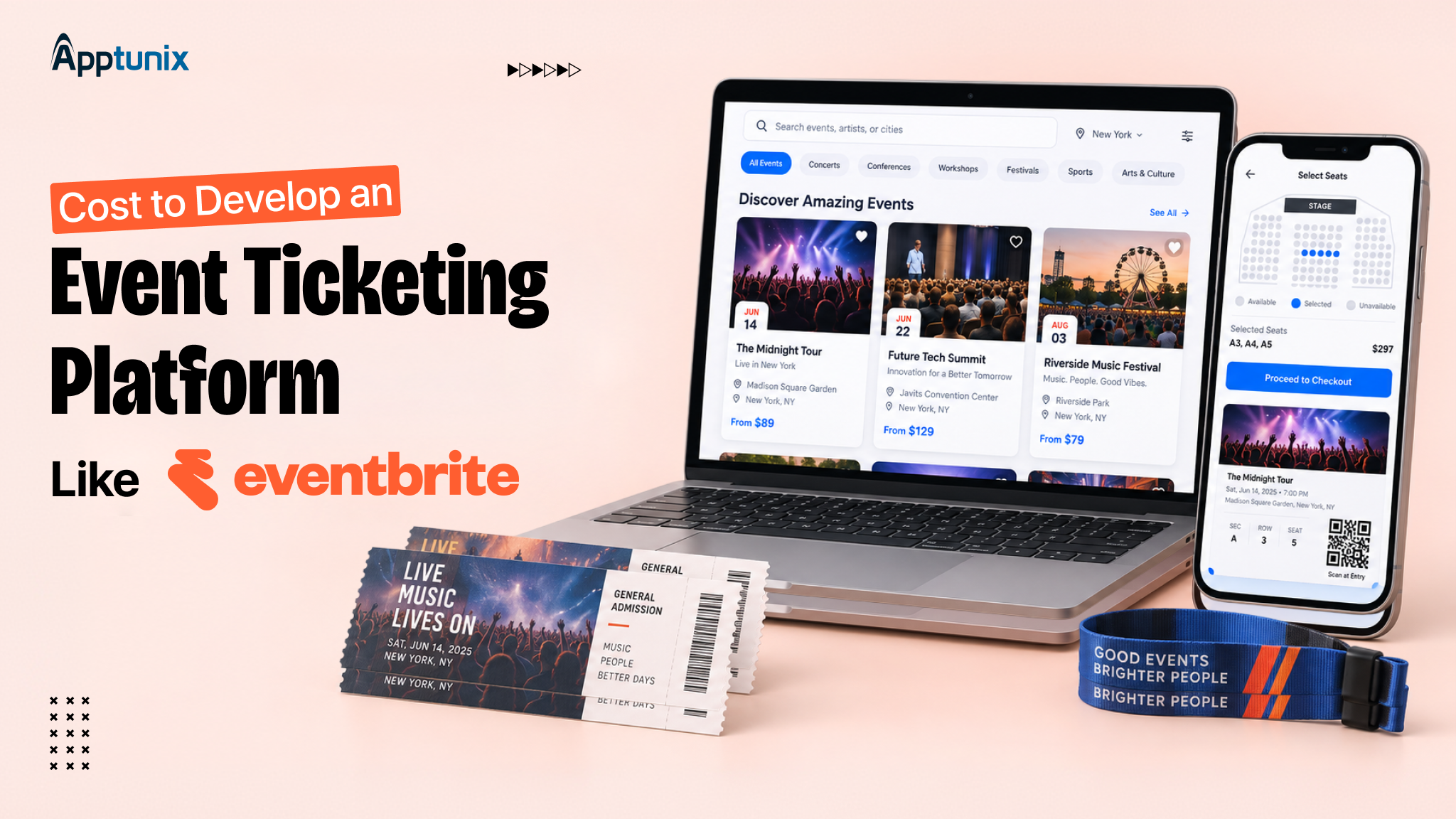
Cost to Build an App Like Eventbrite: Complete Development & Pricing Guide (2026)
16 Views 11 min September 16, 2026

With over 20+ years of experience in driving global digital initiatives, Nikhil Bansal is the CEO & Director of Apptunix. He specializes in orchestrating large-scale digital transformations, enterprise-grade software solutions, and high-level business strategies that redefine industry standards. Nikhil is known for his ability to bridge the gap between complex business challenges and innovative technology, helping Fortune 500 companies and startups alike achieve sustainable growth. A visionary leader, he empowers enterprises to navigate the digital landscape with agile, ROI-focused models and future-ready business strategies.
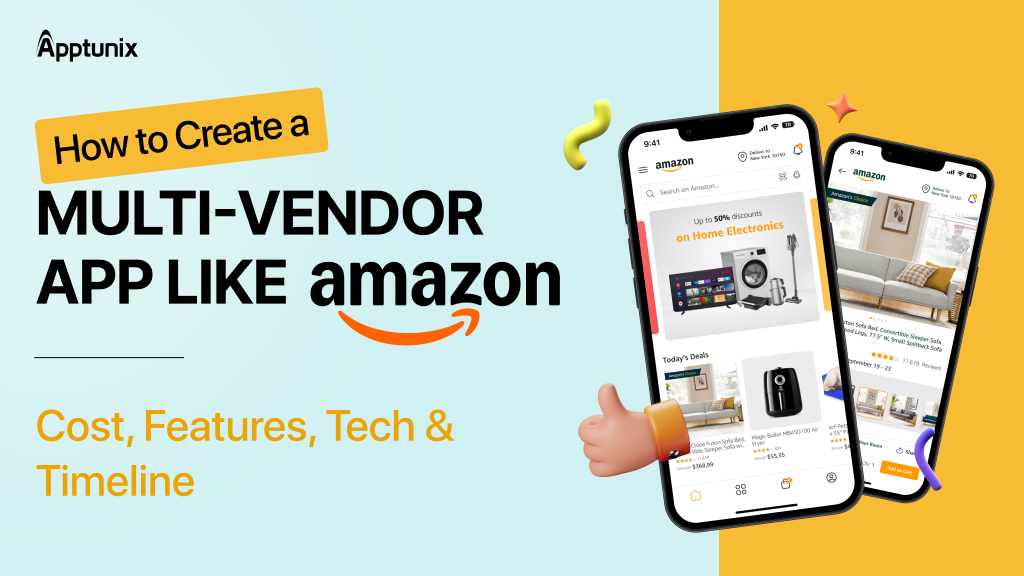
Multi-vendor marketplaces continue to dominate global commerce as buyers seek choice, competitive pricing, and convenience in one platform.
With global marketplace sales projected to exceed $9 trillion by 2027, founders and enterprises are increasingly investing in Amazon-like marketplace models.
The blog explains how to create a multi-vendor app like Amazon create value for both buyers and sellers by combining demand aggregation, trust signals, and scalable logistics.
It breaks down the strategic opportunity between building a broad marketplace and launching a niche-focused platform first.
A step-by-step roadmap outlines positioning, seller onboarding, buyer acquisition, vendor rules, UX design, and MVP-led scaling.
Detailed feature requirements are covered for buyers, sellers, admins, and advanced AI-driven capabilities that improve conversion and retention.
The content highlights recommended tech stacks, integrations, and security layers required to support scalable marketplace infrastructure.
Realistic cost ranges and development timelines are provided to help founders plan budgets and execution phases.
The role of experienced marketplace development partners in aligning business logic with technical architecture is emphasized.
The blog concludes with practical guidance on building marketplaces as ecosystems rather than standalone software products.
Consumer behavior is proving this shift. Global marketplace sales are projected to cross $9 trillion by 2027, and studies show that over 60% of online transactions today happen on marketplace platforms, not standalone stores. There’s a reason founders and enterprise leaders are racing to create a multi-vendor app like Amazon.
Buyers prefer marketplaces because they get more selection, better pricing, trusted reviews, and faster delivery options. Sellers love them because they instantly tap into demand without spending huge budgets on ads, warehouses, or delivery fleets. That is the true secret of marketplace success: it creates value for both sides.
This guide breaks down what makes Amazon successful, how you can use similar strategies, and what it takes to develop an app like Amazon the right way. The goal is simple. Give you a clear roadmap to launch a scalable, profitable, and future-ready marketplace from day one.
Let’s decode the advantage that marketplace leaders enjoy and how you can build your own success story with the right marketplace app development services.
Every year, more buyers shift from single-brand shopping to marketplace platforms. Why? Choice wins. Competitive pricing wins. Convenience wins. When users compare 10 sellers rather than just one, the platform becomes the first stop for purchase decisions.
That explains why global online marketplace sales continue to grow faster than first-party eCommerce. Whether we talk retail, B2B supply chains, grocery delivery, rental marketplaces, or hyperlocal services, multi-vendor aggregator models consistently outperform. Entrepreneurs see this and want to create an app like Amazon not to compete head-to-head, but to win in the segment they understand best.
There are two clear opportunities here:
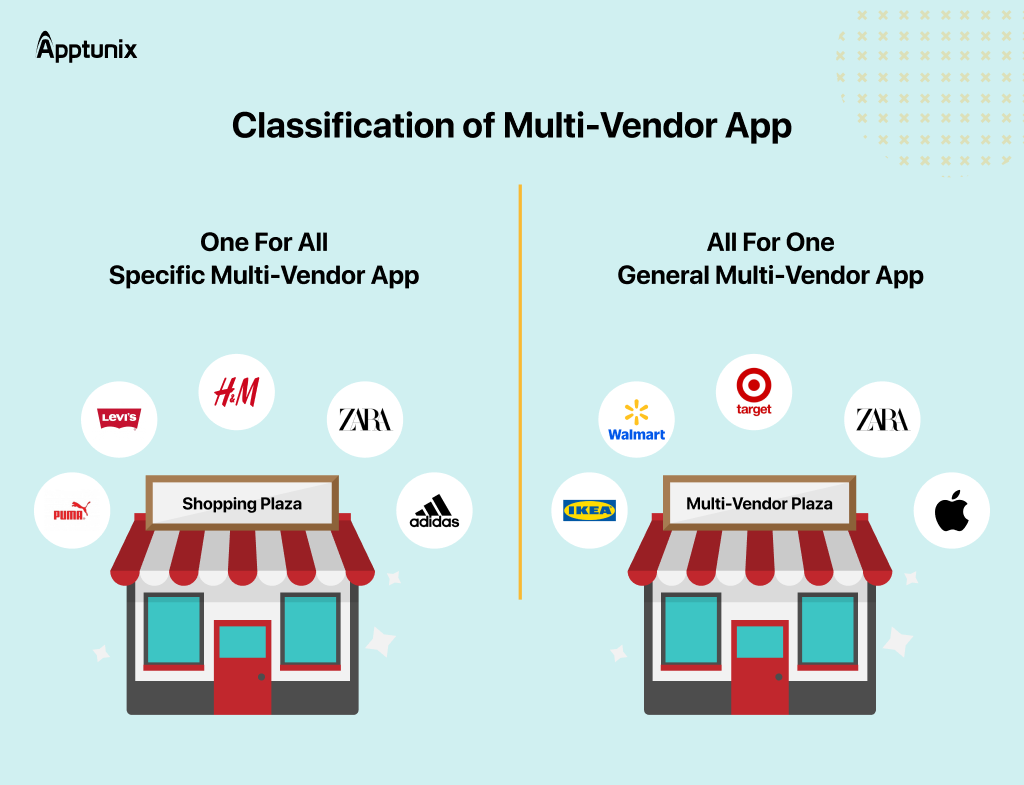
Specific marketplaces
Think Amazon style. Sell everything. Serve everyone. This requires scale and logistics muscle, but it offers massive upside if executed well.
General marketplaces
A focused marketplace for fashion, electronics, beauty, automotive parts, healthcare products, food and grocery, or handyman services. These models grow fast because they master a niche before expanding.
Right now is the perfect time to build a multi-vendor app like Amazon because user expectations are aligned with marketplace behavior. Customers want all options in one place. Sellers want reliable platforms with high buyer intent. Investors prefer scalable business models. And with modern multi-vendor mobile app development frameworks, launching a marketplace has become far more achievable without burning a fortune.
If your vision is clear, your niche is strong, and you hire eCommerce app developers who understand both tech and business layers, you can launch a marketplace that competes on experience and trust, not brute force.
Winning in the marketplace business is not about copying Amazon screen-by-screen. It is about understanding the core engine behind the model.
Business logic first. User trust second. Technology comes third.
Here’s the practical path if you plan to launch a multi-vendor ecommerce app with long-term potential.
Step 1: Start With Clear PositioningEvery strong marketplace begins with a niche and a purpose. Amazon started with books and scaled once it had earned trust and traction. Before thinking about features, define the space you will own first. Establish your core category, understand who struggling sellers are, and identify the buyer frustration you solve. A platform that tries to be everything from day one usually ends up being nothing memorable. You can create a multi-vendor app like Amazon, but the more brilliant move is to specialise early unless you have Amazon-level capital.
Step 2: Secure the Seller SideA marketplace lives or dies based on supplier strength. If sellers do not trust your platform or find value in joining, buyers will have no reason to come. Start with verified sellers, make onboarding simple, and offer early incentives so vendors feel supported, not just listed. Clear payout terms, onboarding help, and fair commission plans build confidence fast. Sellers will stay when they see growth and transparency, not just traffic promises.
Step 3: Build Buyer Demand and RetentionCustomers will not magically appear. You must plan how people will discover your platform, try it, return, and recommend it. Start with paid ads for traction, influencer collaborations for credibility, and SEO for long-tail traffic. Make referrals rewarding and ensure your buying experience is frictionless from browsing to delivery. Competitive pricing, fast support, and honest reviews create trust. A buyer who has a good first experience becomes a repeat user. That repeat user becomes your organic growth engine.
Step 4: Set Vendor Rules and Payment Framework EarlyMarketplace trust depends on predictable rules and clear money flow. Vendors want to know when they get paid, how returns are handled, and what quality standards they must follow. Build structured policies for commission, payout timelines, refunds, and dispute resolution from day one. Automate these workflows as much as possible. Manual handling works for ten sellers, not for hundreds. Transparent rules show you run a professional marketplace, not an experiment.
Step 5: Design UX That Removes FrictionGood tech builds loyalty. Great UX builds scale. Buyers should find products quickly, trust reviews, and check out without friction. Sellers should be able to upload products, manage stock, track orders, and withdraw earnings without guessing what to do next. When design feels intuitive, support requests drop, and user satisfaction rises. Good UX is a silent profit engine in Amazon-like marketplace app development.
Step 6: Launch MVP, Then ScaleTrying to build a full Amazon clone in one shot drains the budget and delays the launch. Release a strong core version first: seller onboarding, product listing, checkout system, delivery tracking, and admin toolkit. This lets you learn from real users and refine features based on feedback, not assumptions. Scale logistics automation, loyalty programs, and advanced recommendation engines once you prove demand. If your goal is to create a multi-vendor app like Amazon, this phased approach gives you speed, learning, and control over budget.
A multi-vendor marketplace lives or dies by how well it serves buyers, sellers, and admins. If one side struggles, the whole system loses momentum. So let’s break down must-have features for each group.
A:Buyer Features
B:Seller FeaturesC:Admin FeaturesD:Advanced FeaturesYou cannot make an ecommerce app like Amazon on guesswork. A marketplace depends on speed, security, and the ability to handle thousands of users and products without slowing down. The right tech stack creates the foundation for scale, even when your user base is small in the beginning.
Focus on scalable infrastructure from day one. Amazon did not start massive. It started scalable, and performance became its weapon. If your goal is to create a multi-vendor app like Amazon, choose a stack that balances reliability, performance, and growth capacity.
1. Front-End AppsYour platform should work smoothly across devices, since buyers and sellers often switch between mobile and web.
2. Back-End and ArchitectureYour backend defines how well your marketplace handles traffic, orders, payments, and vendor activity. If you plan to scale globally, microservices make upgrades and maintenance easier.
3. Database and CloudChoose cloud systems that grow as your traffic grows. High uptime is non-negotiable in Amazon-like marketplace app development. Think long term. Starting with reliable cloud saves expensive migrations later.
4. Integrations That MatterA marketplace works only when everything is connected seamlessly in the background. These integrations give your marketplace the commercial muscle to operate smoothly.
5. Security & Compliance LayerTrust is your currency. Without it, no one buys, no one sells.
Let’s be honest, costs vary based on your ambition. A small MVP marketplace and an enterprise-level marketplace software development do not share the same budget or timeline. But having clarity helps you plan better. Below is a real-world estimate for Multi-vendor eCommerce app development cost based on scope and functionality.
If you want to create a multi-vendor app, timing is just as important as budget. A marketplace is a layered product. You are not only building a buying experience, you are building vendor dashboards, order systems, logistics workflows, payment flows, and support layers. Rushing this process means compromising trust and scalability.
Here is a realistic timeline founders and product teams use when planning Amazon-like marketplace app development.
The more complex your marketplace vision, the longer the development stretch. If you plan to build an app like Amazon with cross-border logistics, automated vendor payouts, warehousing tools, and AI recommendations, expect the upper range of this timeline.
If your plan is to release a lean version and iterate fast, the timeline tightens. Many founders start lean, validate with real vendors and users, then scale feature by feature. Smart approach: treat launch as phase one, not the finish line. Mature marketplaces evolve month after month.
Building an Amazon-style marketplace takes more than code. It takes product thinking, eCommerce logic, infrastructure strategy, vendor psychology, and a long-term scale plan. That is where Apptunix stands out.
Brands partner with us when they want to create a multi-vendor app like Amazon with confidence, not guesswork. Every project starts with business logic, not wireframes. We ask hard questions early, refine your monetization model, define the workflow engine, then build tech that supports your idea at scale.
We have delivered high-performing marketplace platforms across retail, food delivery, B2B supply networks, and service marketplaces. That experience taught us what truly matters in Amazon-like marketplace app development:
Great marketplaces don’t happen by accident. They are designed with intent, validated smartly, and scaled with discipline. If you want to launch a multi-vendor eCommerce app that actually generates traction and revenue, treat the product like an ecosystem, not just software. Take time to refine your niche, seller strategy, monetisation model, logistics network, and customer experience. Build an MVP, learn from real users, and expand with momentum.
The truth is simple: anyone can create a multi-vendor app like Amazon, but only those who plan right and execute smartly become category leaders.
If you are exploring a marketplace app development company, let’s talk. We help founders, enterprises, and retailers turn marketplace ideas into sustainable platforms.
When you are ready to build or scale your marketplace app like Amazon, our team can help you shape the roadmap, pick the right architecture, estimate the true budget, and deliver a product that can stand in the market and win.

Q 1.How much does it cost to build a marketplace like Amazon?
The cost to build a marketplace like Amazon varies based on scope and technology choices. On average, the cost to build an app like Amazon ranges from $10,000 to $100,000+, depending on features, platforms, and automation level. A basic MVP for multi-vendor eCommerce app development costs less than a full-scale marketplace with logistics automation, AI search, and membership programs.
Q 2.What tech stack is best for marketplace apps?
To create a multi-vendor app like Amazon, modern tech stacks like React or Next.js for web, Flutter or React Native for mobile, Node.js or Python for backend, and AWS or Google Cloud for hosting are preferred. High-performance databases like PostgreSQL, MongoDB, and Redis are typically used.
Q 3.How long does marketplace app development take?
The timeline to build an app like Amazon depends on complexity and team expertise. Most projects take 1 to 6 months, including product strategy, UI/UX, development, integrations, and testing. An MVP for marketplace app development services might take 8 to 16 weeks, while a fully-loaded global marketplace requires more time for logistics automation, seller tools, and performance tuning.
Q 4.Is it better to build custom or use marketplace scripts?
Marketplace scripts help founders launch quickly, but they limit customization and scalability. If your goal is long-term growth or advanced vendor workflows, custom marketplace app development is the better choice. Amazon never ran on a script; it scaled with custom architecture. For founders who want to build a multi-vendor app like Amazon with strong performance and future-ready features, custom development wins.
Q 5.How do you attract sellers to a new marketplace?
Sellers join platforms that help them earn more, not just list products. Start with low commissions, simple onboarding, marketing support, and fast payouts. Offer vendor dashboards, training, catalog support, and logistics help. A well-structured seller acquisition strategy is essential to create a multi-vendor app like Amazon with meaningful vendor participation.
Q 6.How do marketplaces like Amazon make money?
Multi-vendor marketplaces earn through commissions, seller subscriptions, warehouse fees, ads, delivery fees, affiliate programs, and memberships. When you develop an app like Amazon, model these revenue streams from day one to ensure profitability.
Q 7.Why should I choose Apptunix for marketplace app development?
Apptunix has proven experience delivering global multi-vendor platforms. We don’t just provide coding; we architect scalable marketplaces, optimize conversion flows, and support growth after launch. Brands choose us to build an app like Amazon intelligently, not experimentally.
Q 8.Does Apptunix support MVP development for marketplace startups?
Yes. We help founders launch a lean, smart MVP that validates the idea quickly. If you’re planning Amazon clone app development on a budget or timeline, we tailor the MVP to fit your goals and market.
Q 9.Do you provide post-launch support and maintenance?
We stay with you after launch and help with improvements, tech support, performance optimization, analytics, and scaling. A marketplace grows constantly, and we grow it with you.
Q 10.Can Apptunix work within a startup budget?
We routinely work with founders looking to hire marketplace app developers in a realistic budget. We break the journey into phases, so you build smart, validate early, and scale responsibly.
Q 11.Do you build both web and mobile marketplace apps?
Yes. We develop marketplace apps for iOS, Android, and web using scalable, modern technology stacks. Whether you’re building from scratch or upgrading an existing product, our developers deliver high-performance marketplace platforms.
Get the weekly updates on the newest brand stories, business models and technology right in your inbox.
With over 20+ years of experience in driving global digital initiatives, Nikhil Bansal is the CEO & Director of Apptunix. He specializes in orchestrating large-scale digital transformations, enterprise-grade software solutions, and high-level business strategies that redefine industry standards. Nikhil is known for his ability to bridge the gap between complex business challenges and innovative technology, helping Fortune 500 companies and startups alike achieve sustainable growth. A visionary leader, he empowers enterprises to navigate the digital landscape with agile, ROI-focused models and future-ready business strategies.
16 Views 11 min September 16, 2026

5 Views 11 min September 14, 2026

23 Views 11 min September 8, 2026
Book your consultation with us.
Book your consultation with us.


One Central, The offices 3, Level 3, DWTC, Sheikh Zayed Road, Dubai
+971 50 782 1690