FSM App Development: What Companies Replacing Legacy FSM Tools Are Actually Building
89 Views 13 min May 25, 2026

If you’ve been watching the health-tech space closely, you’ve probably noticed a big shift. People aren’t just tracking their steps anymore; they want their effort to mean something. That’s where platforms like Sweatcoin stepped in and completely changed the game. What began as a humble experiment soon ballooned into one of the most successful move-to-earn app development narratives.
Last year, Sweatcoin had over 120 million registered users worldwide, ranking among the leading health & fitness apps on the App Store and Google Play. And here’s the clincher: collectively, users generated billions of steps daily, demonstrating that linking fitness to real rewards significantly boosts engagement.
It was about creating value from everyday activities. Discounts, gift cards, crypto tokens, wellness products—users suddenly saw their steps turn into a form of currency. But if you’re asking yourself, “How much does it cost to build a fitness app like Sweatcoin?”. It depends on features, scale, tech stack, and where your developers are based.
In this blog, we’ll break down Sweatcoin’s business model, the must-have features of a step counter app with rewards, and what goes into the actual cost to build a fitness app like Sweatcoin.
Sweatcoin might appear to be just another pedometer app with rewards—but its success lies in how it has transformed step counting into a comprehensive ecosystem of incentives. Instead of simply tracking activity, it gave every step real-world value.
Here’s how it works:
But the best part about Sweatcoin’s business model is not merely the step-to-reward translation—it’s the several layers of monetization all working together:
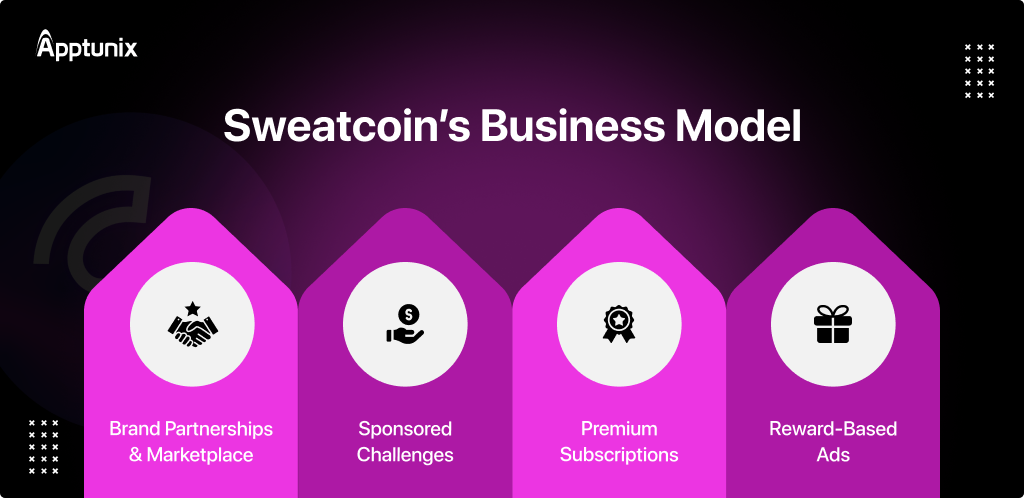
Sweatcoin built its own marketplace where lifestyle, wellness, and fitness brands sell products, promotions, and special deals. The app receives a commission for every time a redemption occurs. For companies, it’s a double win since they are exposed directly to millions of health-aware users. For users, it keeps the motivation going because their steps now have shopping power.
Large brands and even corporates sponsor activity challenges, giving participants additional coins as rewards. For instance, a sportswear brand can design a “10K Steps in a Week” challenge, and any user who succeeds receives reward bonuses. This fosters richer engagement while enabling businesses to engage with a hyper-relevant audience.
Not everybody is willing to spend months earning enough coins. Sweatcoin came up with premium subscription plans that offer users accelerated earning rates, additional benefits, or access to rewards ahead of time. Freemium + premium is a model that offers accessibility versus consistent income.
In contrast to the usual banner ads that break the user experience, Sweatcoin embeds adverts as part of its reward structure. They can be thought of as “sponsored opportunities” rather than interruptions—users interact with them in order to gain coins, and brands receive authentic attention.
What truly sets Sweatcoin apart is its daily engagement cycle. Users don’t just log in to count steps; they come back to:
That constant cycle of activity → rewards → repeat keeps engagement rates high and churn rates low.

Being healthy these days is as much about online participation as it is about pumping iron. Folks don’t simply wish to record their runs or steps anymore—they want motivation, incentives, and a sense of belonging. That’s precisely the reason why entrepreneurs are looking to create a fitness app like Sweatcoin in 2025 in such large numbers.
The evidence is right before us. One of the largest move-to-earn apps, Sweatcoin, has been downloaded more than 100 million times and is gaining millions of active users every day. Their approach to turning steps into rewards has not only encouraged people to move but also created opportunities for hundreds of partnerships with wellness, lifestyle, and even cryptocurrency brands. That type of momentum indicates the true scalability.
And the chance isn’t letting up. As more users seek crypto rewards, fitness apps, and innovative ways to stay active, the market is expanding. Brands are also keen to reach this health-focused audience through partnerships, challenges, and marketplaces.
Here’s the larger transition: fitness apps are no longer “just apps.” They’re becoming ecosystems—merging loyalty rewards, social interaction, and even blockchain tokens. That is, if you’re going to create an app like Sweatcoin today, you can put your own twist with special features such as regional marketplaces, wearable integrations, or partnerships that target corporate wellness.
If you’ve ever thought about step counter app development, pedometer apps with rewards, or even launching your own Sweatcoin clone app, 2025 is the perfect time. The user base is already engaged, the demand is proven, and the monetization models are well-tested. All that’s left is carving out your own niche in this booming fitness rewards app market.
Creating a Sweatcoin clone app is about building an engaging ecosystem that motivates users to stay active while keeping them coming back daily. When planning how to create a fitness app like Sweatcoin, think of these features not as a checklist but as the foundation of your retention and monetization strategy. The features you choose will decide whether your app feels like a simple tracker or a full-fledged move-to-earn fitness platform.
Here are the essential features every entrepreneur should consider when planning activity tracking app development:
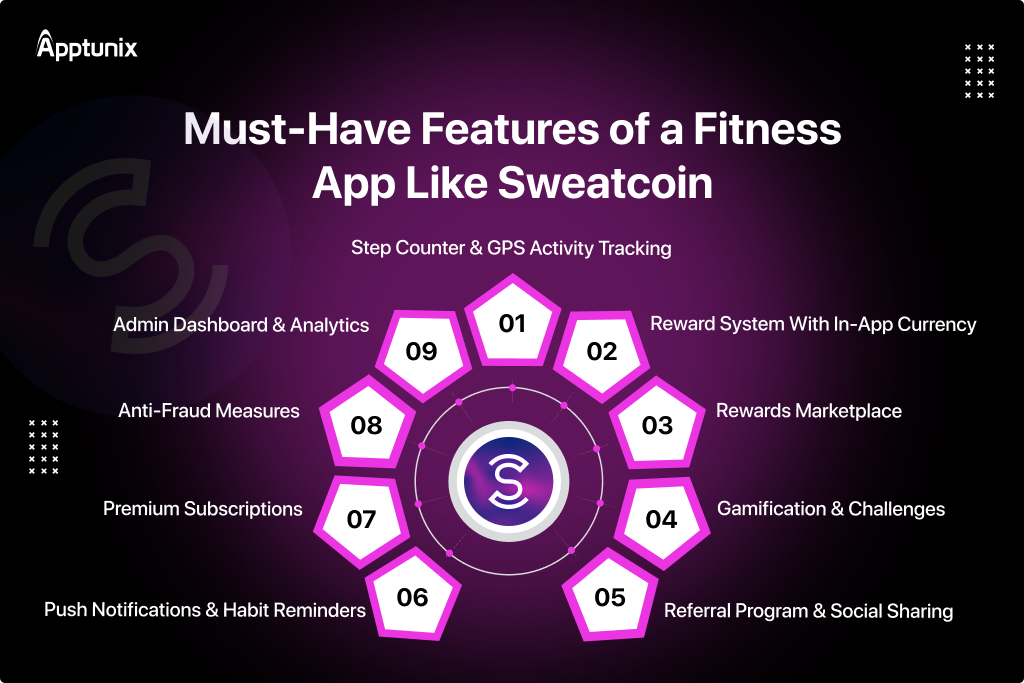
At its core, you need accurate step detection using sensors and GPS. A GPS step-tracking app ensures that every step is legitimate and builds trust with users.
The core hook of a pedometer app with rewards is turning movement into value. Users earn coins or tokens for steps, forming the backbone of the entire experience.
Users enjoy spending the money they make. Whether it’s discounts, fitness equipment, gift cards, or even cryptocurrency tokens, the market is both a driver of user motivation and a revenue source.
Leaderboards, streaks, and challenges for activities keep users engaged and active. The features turn exercise into a social, enjoyable experience rather than an isolating one.
Growth is faster when users invite friends. Offering rewards for referrals helps your fitness rewards app scale organically while reducing marketing costs.
Beyond free users, premium tiers offer faster coin earnings, exclusive offers, or advanced analytics. This creates recurring revenue, making your move-to-earn app development investment sustainable.
Smart nudges like “You’re only 500 steps away from your goal” boost engagement and retention.
To prevent cheating (fake steps or GPS spoofing), your app must include fraud-detection mechanisms. This protects your rewards system and marketplace credibility.
On the backend, you’ll need detailed insights into user activity, redemptions, and performance metrics. This helps in optimizing rewards, partnerships, and monetization.
The success of crypto rewards fitness apps has proven that individuals enjoy receiving tokens with real-world value. With the use of blockchain, you can create digital tokens that users can store, exchange, or redeem anywhere in the world, which makes your platform borderless. This is an upgrade that converts your app from a basic pedometer app with rewards to a full-fledged financial ecosystem based on wellness.
Generic step counting won’t engage users. AI-based algorithms can analyze activity patterns and provide insights for personalized health, fitness tips, and progress tracking. This transforms your activity tracking app development project into one about long-term wellness rather than simply counting steps.
Contemporary users have devices such as Apple Watch, Fitbit, and Garmin for precise fitness information. A step counter app development approach that synchronizes perfectly with wearables ensures accuracy and expands your target market, particularly among health-oriented professionals.
Fitness fun exists, and engaging experiences make it happen. Consider having virtual marathons, AR treasure hunts, or VR-based fitness challenges. The interactive options enhance retention, making your app a M2E fitness rewards app that individuals will want to use regularly.
Companies globally are investing in the health of their employees. Providing a pedometer app with corporate wellness incentives makes for a lucrative B2B revenue stream. Companies may sponsor challenges, incentivize employees for their activities, and integrate these initiatives into HR wellness platforms.
Pro Tip: Advanced features increase the cost to build a fitness app like Sweatcoin, but they also dramatically increase its market value, scalability, and investor appeal. Apps that deliver richer experiences and multiple use cases often see faster adoption and stronger retention rates.
One of the first questions entrepreneurs ask is: “What’s the actual cost to build a fitness app like Sweatcoin?” The truth is, there’s no one-size-fits-all price. Your budget depends on the scale of your project, the features you want, and the region where you hire developers.
Let’s break it down into practical stages:
If you’re starting lean, an MVP with basic step counter app development and a simple rewards system can be built for around $25,000–$40,000. This is the fastest way to validate your idea and attract early adopters.
Introducing a marketplace, gamification elements, and paid subscription tiers puts the range at $50,000–$100,000. This level encompasses the majority of the features that current users of fitness apps like Sweatcoin are now accustomed to, making it a solid jumping-off point for growth.
If you are looking for a comprehensive crypto rewards fitness app with blockchain integration, AI personalization, and wearable device compatibility, expect to spend $ 120,000 or more. This level of development offers the most significant potential for monetization and user retention.
Remember, annual upkeep and modifications comprise approximately 15–25% of the initial development expense. That includes bug repairs, scaling, new functionalities, and keeping up in the marketplace. For an app that costs $50,000, budget a minimum of $7,500 to $12,500 annually.
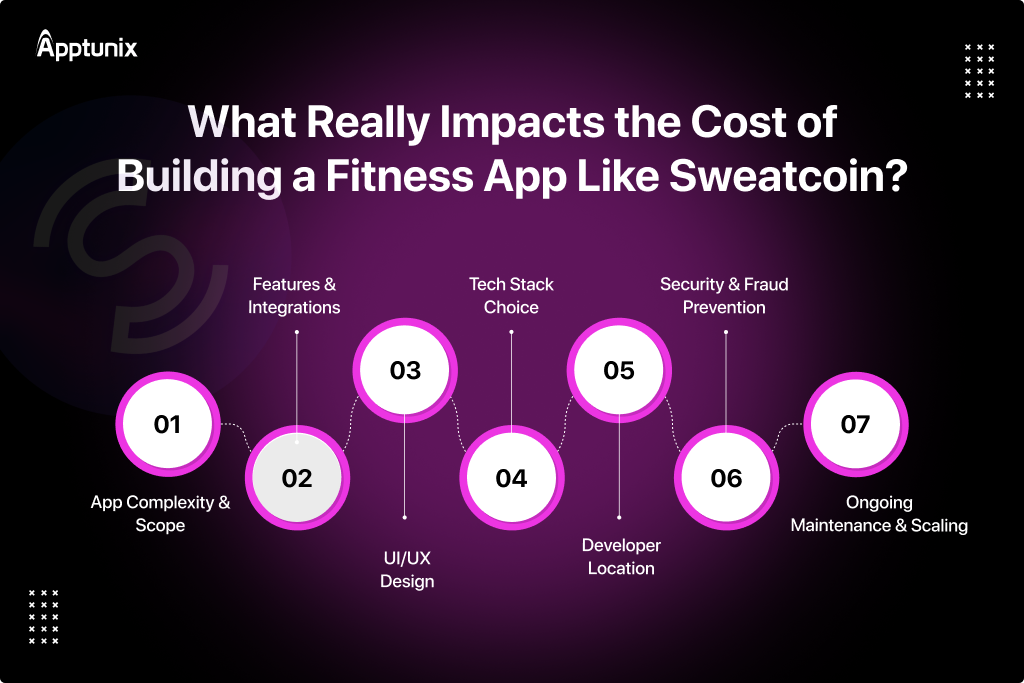
A minimum viable product (MVP) with basic step counting and rewards might cost $25,000–$40,000. But a full-scale Sweatcoin-like app with blockchain, wearables, and AI can easily climb above $100,000.
The more advanced features you add like marketplaces, crypto wallets, or gamification layers—the more time and expertise your project demands.
A simple interface costs less, but investing in custom, engaging, and gamified design boosts user retention and brand perception. In fitness apps, design is as important as functionality.
Frameworks like React Native or Flutter are cost-effective for cross-platform builds, while native development (Swift, Kotlin) offers smoother performance at higher costs. The right choice defines your scalability and maintenance expense.
Hiring rates vary widely. US or European developers may charge $80–$120 per hour, while teams in India or Southeast Asia can deliver high-quality activity tracking app development at $25–$50 per hour.
A pedometer app with rewards is prone to GPS spoofing and fake steps. Building fraud detection systems and secure token management is essential, though it adds to development cost.
The launch is only the beginning. Regular feature updates, bug fixes, and server scaling are recurring expenses—usually 15–20% of initial development costs per year.

When planning to build a fitness app like Sweatcoin, the tech stack you choose plays a crucial role. It directly impacts scalability, user experience, security, and long-term development costs. Here’s what a reliable stack should include:
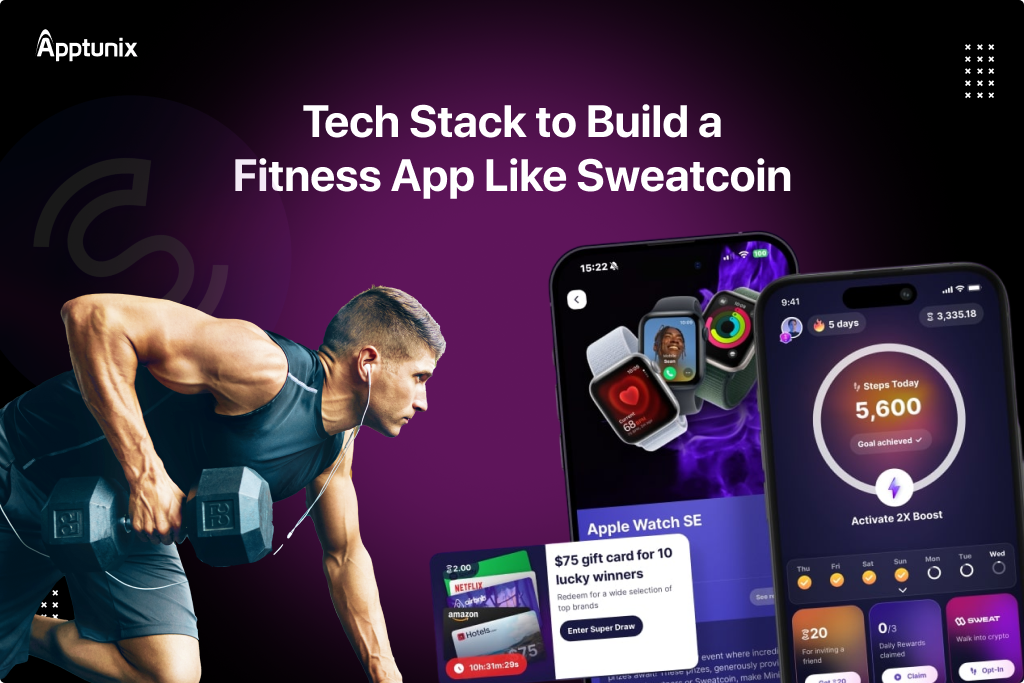
Use React Native or Flutter for cross-platform step counter app development. These frameworks allow you to launch on iOS and Android simultaneously, saving time and cost while ensuring consistent performance.
Choose Node.js, Django, or Ruby on Rails to power real-time activity logs, rewards, and marketplace features. A strong backend ensures smooth synchronization of user steps, coins, and transactions in your fitness rewards app.
Opt for PostgreSQL or MongoDB to manage fitness logs, user profiles, in-app coins, and marketplace data. A scalable database is essential for supporting millions of daily activity tracking records.
Integrate Google Fit, Apple HealthKit, and Strava API to ensure accurate activity tracking and reliable health data sync. This is a must-have for credibility in any activity tracking app development project.
For fiat transactions, use Stripe and PayPal. For a crypto rewards fitness app, integrate crypto wallets like MetaMask or Coinbase to allow tokenized payments and rewards.
Leverage AWS, Firebase, or Azure to host your app with scalable infrastructure. These platforms support global traffic, fast load times, and strong uptime—key for retaining users.
Implement anti-fraud systems and GPS spoofing detection to prevent fake step counts and fraudulent coin earnings. Security builds trust, which is vital when you create a fitness app like Sweatcoin where real rewards are tied to physical activity.
When you set out to build a fitness app like Sweatcoin, the tech stack is not just about coding—it’s the foundation of your entire business model. A well-chosen stack ensures scalability, meaning your app can handle thousands or even millions of users without needing expensive rebuilds or downtime. This is especially important for step counter app development, where real-time activity tracking generates massive amounts of data daily.
Finally, your monetization strategy depends heavily on the robustness of your backend. Features like premium subscriptions, branded fitness challenges, reward-based ads, and crypto token rewards can only run effectively if your architecture is built to support them. A weak stack will lead to glitches, frustrated users, and lost revenue opportunities.
If you’re planning to create a crypto rewards fitness app, integrate blockchain technologies from the very beginning. Retrofitting blockchain later can be both costly and technically complex, potentially disrupting your app’s stability and user trust.
One of the biggest questions every founder asks is simple: how do fitness apps like Sweatcoin make money? The secret lies in diversifying revenue streams and building models that not only generate income but also keep users motivated and engaged daily. If you’re planning to build a fitness app like Sweatcoin, here are the most effective monetization strategies you can leverage:
The freemium model is a staple in step counter app development. You can offer a free version with limited features while reserving advanced perks such as unlimited rewards, exclusive challenges, or ad-free usage for paying subscribers. This model creates a steady recurring revenue stream while giving users a taste of the app before they commit.
Selling virtual coins, premium badges, or gated challenges works especially well for any Sweatcoin clone app or pedometer app with rewards. Users who are motivated by gamification are often willing to invest small amounts to boost their progress or unlock exclusive experiences.
Partnerships with fitness brands, gyms, and corporate wellness programs can transform your app into a high-value marketing channel. Businesses pay to sponsor challenges, and in return, your users get bonus rewards. This strategy is particularly lucrative in move-to-earn app development, as it drives engagement while providing measurable ROI for brands.
If your fitness rewards app includes a marketplace, you can generate revenue through commissions on redeemed products, affiliate sales, or third-party offers. It’s a win-win: users feel rewarded with discounts and offers, while you earn from every transaction.
Instead of disruptive banners, reward-based advertising lets users watch short videos or interact with branded content in exchange for extra coins. This is a proven strategy in crypto rewards fitness apps, ensuring ad revenue without compromising the user experience.
Note: When combined, these monetization strategies make your fitness app like Sweatcoin both profitable and sticky. The key is to strike a balance between revenue generation and user motivation, so people feel incentivized to keep walking, tracking, and spending.
If you’re wondering how long it takes to build an app like Sweatcoin, the timeline depends on your feature set, complexity, and the number of integrations. Every stage of activity tracking app development has its own milestones:
Perfect for startups that need to test their idea in the shortest possible time, an MVP focuses on a minimal step counter app development, habit tracking, and a basic rewards system. This version enables you to go live sooner, collect user feedback, and acquire early adopters with minimal risk.
This. The phase makes your app closer to a fitness app like Sweatcoin, with all the essential features. Look for gamification mechanics, marketplace integration, premium subscription plans, and GPS-based step tracking app functionality. It’s the ideal launchpad for scaling and retaining users.
For market-disrupting startups, the enterprise segment features blockchain implementations for token rewards, AI-powered personalization, corporate wellness integrations, and wearability. This stage of move-to-earn app development needs thorough QA, data protection, compliance audits, and scalability testing to ready the app for global use.
Always leave a buffer of 4–6 weeks for QA testing, security tests, and app store approval. Hurrying through this process can push back your launch and harm user trust if bugs or performance issues are not identified and addressed.
Building a fitness app like Sweatcoin requires a profound understanding of human behavior, seamless technical execution, and a strategic growth approach. That’s where Apptunix, a trusted fitness app development company, makes the difference. With over a decade of experience in custom app development, we’ve helped startups and enterprises turn bold fitness ideas into thriving platforms that users love.
We specialize in step counter apps, Sweatcoin-like solutions, and activity tracking platforms that not only function flawlessly but also keep users motivated to come back every day.
Our developers work with React Native, Swift, Kotlin, and native stacks. Choosing the right tools to balance performance, scalability, and cost efficiency for your app.
At Apptunix, we don’t just execute—we guide. From helping you estimate the cost of building a fitness app like Sweatcoin to shaping monetization strategies with subscriptions, token rewards, or branded challenges, we ensure your app has a clear path to ROI.
We cover the entire journey: UI/UX design, core development, GPS & blockchain integrations, testing, launch, and post-launch support. With us, you get a partner who’s there from idea to global scale.
Our portfolio includes GPS step-tracking apps and wellness platforms that have successfully scaled to large user bases. These results prove we know how to combine innovation, stability, and user engagement.
The rise of fitness rewards apps proves that people are eager for digital products that merge health, gamification, and real-world value. Whether your vision is to launch a niche wellness app for a community or build the next global move-to-earn fitness platform, success depends on making the right technical and strategic choices. What’s certain is that Sweatcoin’s story shows the massive potential of fitness apps that reward movement and engagement.
At Apptunix, we build growth-ready businesses. With 12+ years of expertise, proven success in activity tracking apps, and mastery of the latest tech stacks, we know exactly how to turn your concept into a product that attracts users and keeps them hooked.
Apptunix has a proven track record of delivering step counter apps, Sweatcoin clone app solutions, and GPS tracking platforms that scale seamlessly to global audiences. Our expertise extends beyond coding—we help you tackle critical challenges, such as fraud prevention, monetization strategies, and user engagement techniques, that keep your app competitive.
Ready to take the first step? Get a free consultation with our fitness app experts, discuss your idea, and receive a tailored cost estimate to bring your move-to-earn vision to life.
Q 1.How much does it cost to build a fitness app like Sweatcoin?
The cost to build a fitness app like Sweatcoin typically ranges between $25,000 and $120,000+. It depends on features such as step tracking, a rewards system, and blockchain integration, as well as the chosen development company.
Q 2.How long does it take to develop a Sweatcoin-like app?
A basic Sweatcoin clone app can be built in 3–4 months, while a full-featured move-to-earn app development project with crypto, social features, and advanced gamification may take 6–8 months.
Q 3.Which tech stack is best for building a fitness rewards app?
For fitness app development, React Native is ideal for cross-platform builds, Node.js is suitable for the backend, MongoDB is a great choice for databases, and APIs like Google Fit or Apple Health are useful for step tracking. Blockchain can be added for reward tokenization.
Q 4.Can I integrate blockchain or crypto tokens in my fitness app?
Yes. You can integrate blockchain, NFTs, or cryptocurrency tokens to create a more engaging pedometer app with rewards. However, it adds complexity, higher cost, and requires compliance with financial regulations.
Q 5.How do fitness apps like Sweatcoin make money?
Common monetization strategies for fitness apps like Sweatcoin include subscriptions, in-app ads, partnerships with fitness brands, affiliate sales, and creating marketplaces for reward coins or tokens.
Q 6.What is the average maintenance cost of a fitness app?
On average, the maintenance cost of a fitness rewards app is approximately 15–20% of the initial app development cost per year, covering updates, servers, bug fixes, and the rollout of new features.
Q 7.Why choose React Native for fitness mobile app development?
React Native enables faster builds with a single codebase for iOS and Android, thereby reducing the average cost of developing a step counter app. It’s also efficient for updates and supports smooth performance.
Q 8.What are the must-have features of a fitness app like Sweatcoin?
The key features of a fitness app like Sweatcoin include step tracking, activity rewards, leaderboards, gamification, wallet integration, social sharing, and personalized fitness challenges.
(1 ratings, average: 4.00 out of 5)
Get the weekly updates on the newest brand stories, business models and technology right in your inbox.
89 Views 13 min May 25, 2026
138 Views 13 min May 14, 2026

362 Views 13 min May 6, 2026
Book your consultation with us.
Book your consultation with us.


One Central, The offices 3, Level 3, DWTC, Sheikh Zayed Road, Dubai
+971 50 782 1690