Smart City App Development: Connecting Citizens, Infrastructure, and Data
26 Views 12 min July 24, 2026

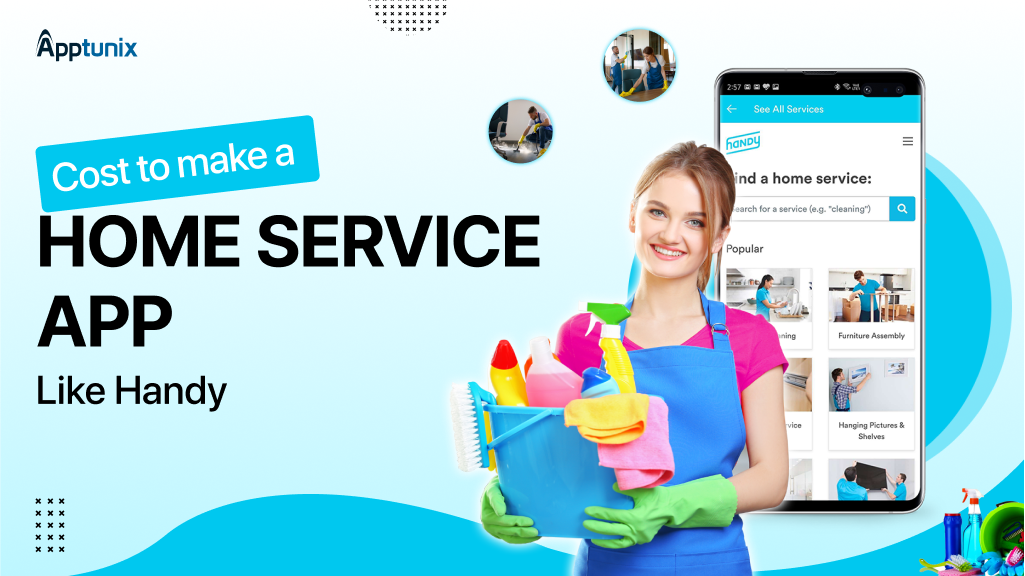
Finding trusted home service providers used to be time-consuming and frustrating. Booking repairs, cleaning, or handyman work often meant long phone calls, waiting for confirmations, and coordinating multiple providers. Now platforms like Handy make it easy to book professional services instantly from your phone. Today, the app generates an estimated $204.4 million in annual revenue, showing the massive potential of building a home services app like Handy.
Businesses are noticing this shift and exploring ways to build an app like Handy. A well-executed app can not only solve real customer problems but also generate a scalable revenue stream through commissions, subscriptions, or premium services. Understanding the home services app development cost is critical for planning a project that balances budget, features, and scalability.
Investing in a home service app development platform positions your business as a reliable player in a competitive market. Whether you’re a startup or an established service company, the opportunity to make a home services app like Handy is now more tangible than ever.
The on-demand home services industry is experiencing unprecedented growth. Factors such as urbanisation, increasing disposable incomes, and a heightened demand for convenience are propelling this surge. Consumers now expect immediate access to trusted service providers, eliminating the need to call multiple vendors or wait days for appointments. The global home services market is projected to grow by USD 1.03 trillion from 2025 to 2029, with a CAGR of 10.5%
Handy, a leading platform in the U.S., has an estimated annual revenue of $204.4 million. Urban Company, operating in India, reported a 38% increase in operating revenue for FY25, totalling ₹1,144 crore (approximately $137 million USD), and achieved a net profit of $29 million USD.
For businesses aiming to enter this space, investing in on-demand home services app development services is a strategic move. A well-designed app can manage multiple categories such as cleaning, plumbing, repairs, or personal care, offering customers a single platform to book all their home services efficiently. Beyond generating revenue, these apps provide valuable insights into user behavior, service demand patterns, and peak usage times.

Choosing the right type of app directly impacts your home services app development cost, the features required, and the timeline to build a home services app like TaskRabbit or Handy. Selecting the right model ensures your on-demand app development company can deliver a platform that aligns with your business goals and market needs.
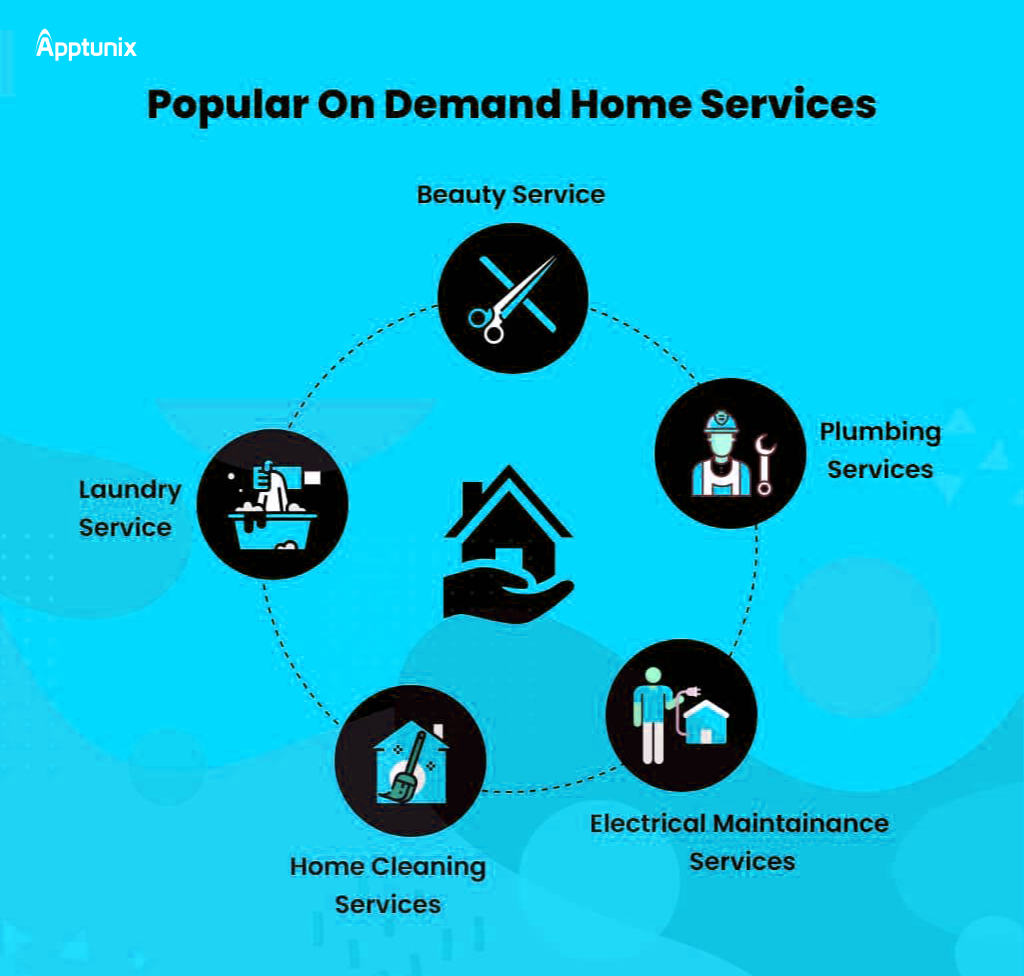
1. Plumbing Apps:These apps focus on a single service category such as plumbing, cleaning, or repairs. They are simpler to develop, require fewer integrations, and are ideal for businesses testing the market. If you want to create an app like Handy in one niche first, this is the best starting point.
Even in an MVP, plumbing platforms should prioritize structured scheduling, technician coordination, estimates and invoicing, mobile job tracking, and payment integration. Established tools such as Service Fusion provide examples of how plumbing software organizes these workflows into a unified system, offering useful context when defining feature scope for a first release.
2. Home Cleaning Apps:These platforms include multiple service categories under one roof, allowing users to book cleaners, handymen, tutors, wellness services, or even pet care. Most Handy clone app development projects fall into this category because they combine convenience, variety, and scalability.
3. Laundry Apps:Some businesses provide recurring services like weekly cleaning, monthly maintenance, or landscaping. A laundy home services booking app development platform with subscription options ensures predictable revenue and stronger customer loyalty.
4. Electrical Apps:Target niche industries such as electricians, interior designers, or personal trainers. These apps offer specialized booking, scheduling, and payment features, making them ideal for custom home services app development company projects.
5. AI-Integrated Apps:The future of on-demand home services app development services is smart automation. AI can optimize scheduling, match users with the best service providers, send reminders, and analyze demand trends. These scalable home services booking app development solutions enhance efficiency while improving the customer experience.
6. B2B Platforms:Designed for enterprises or property managers, these apps allow bulk bookings, team management, and detailed analytics. Building an enterprise solution with enterprise mobile app development for home service businesses ensures efficiency and better decision-making for large-scale operations.
A home services mobile app development platform succeeds when every feature directly solves a real problem. A Handy clone app development must balance simplicity for users, efficiency for service providers, and control for admins. Let’s break down the essentials.
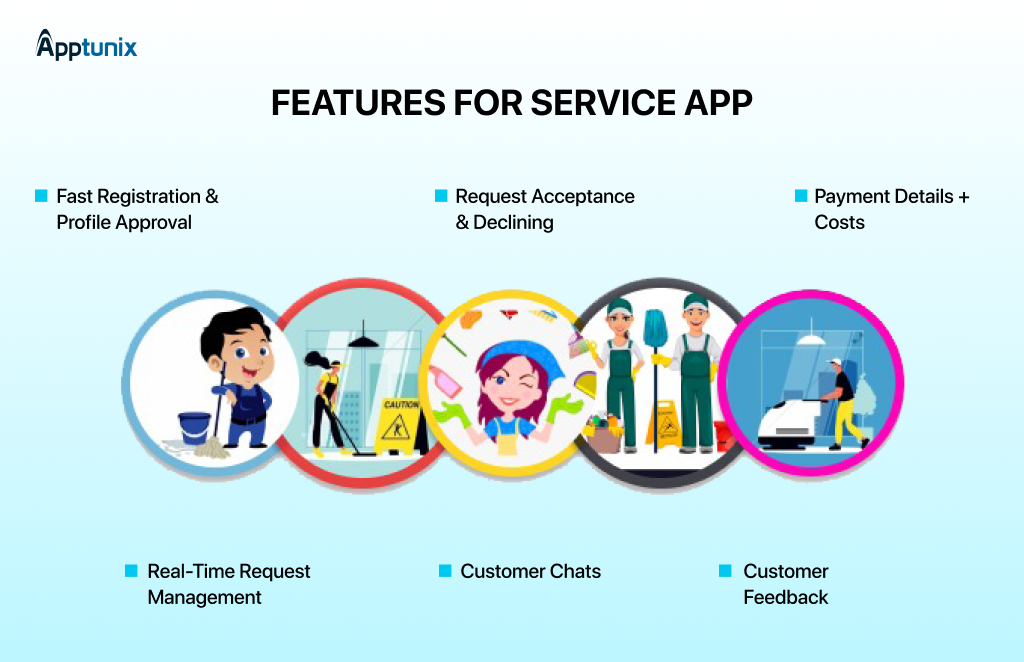
A. Customer App FeaturesCustomers expect convenience and clarity. Here are seven features that make your app irresistible:
B. Service Provider App FeaturesFor providers, the app must simplify daily operations while improving earnings:
C. Admin Panel FeaturesThe backbone of any on-demand home services booking app development is the admin panel. It allows you to oversee operations, optimize performance, and make data-driven decisions:
Knowing the cost to develop a home services app is essential before investing. It’s not just a figure—it’s a combination of features, platforms, and geography.
Cost Breakdown by Platform and Feature
Starting with an MVP is a smart approach. You can validate your business idea, gather feedback, and expand gradually without overspending.
Several elements directly impact Handy clone app cost:

Creating a home services app like Handy is a strategic process. A structured roadmap ensures the app is scalable, reliable, and cost-effective, while also delivering a top-notch user experience. Here’s a detailed seven-step process:
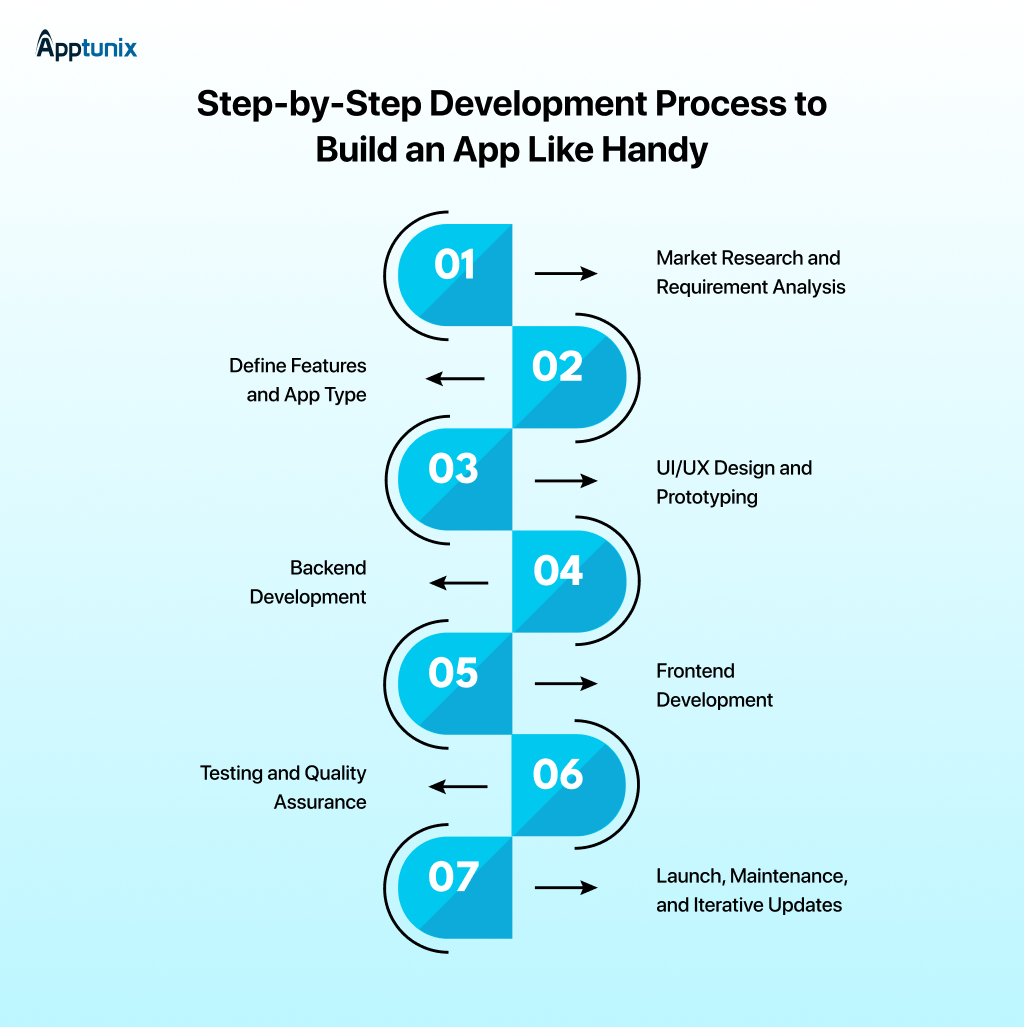
Step 1: Market Research and Requirement AnalysisThe first step in building a home services app like Handy is conducting thorough market research. You need to understand your target audience, their pain points, and what services they are actively looking for. Studying competitors like Handy, TaskRabbit, and Thumbtack will help identify gaps in the market and opportunities to offer something better. This research also helps define the core features and scope of your app, ensuring your home service marketplace app development stands out and meets real customer needs.
Step 2: Define Features and App TypeOnce you understand the market, the next step is to define the features and the type of app you want to create. Decide whether your platform will focus on a single service, such as cleaning or repairs, or a multi-service marketplace that covers several categories. You may also consider a subscription-based model for recurring services. This decision directly impacts the Handy app development cost, the complexity of the backend, and your long-term strategy for monetization and scaling the app.
Step 3: UI/UX Design and PrototypingDesigning the user interface and user experience is a critical step in on-demand home services app development services. Your app should be easy to navigate, visually appealing, and encourage users to book services repeatedly. Creating prototypes helps visualize the app’s flow and functionality, allowing you to spot potential usability issues early. This step reduces development mistakes and lowers costs in mobile app development services, while ensuring a smooth experience for customers and service providers.
Step 4: Backend DevelopmentThe backend is the engine that powers your Handy clone app development. It handles service listings, bookings, payments, notifications, and analytics. A strong, scalable backend ensures the app can handle a growing user base and integrate advanced features in the future. Security and reliability are crucial, as users will trust your platform with personal information and payments. Choosing the right architecture ensures your custom home services app development company can maintain and expand the app efficiently.
Step 5:Frontend DevelopmentFrontend development focuses on the parts of the app users interact with directly. The customer and service provider apps must be responsive, smooth, and intuitive. Real-time updates, notifications, and interactive elements like tracking service providers make the app engaging and reliable. A polished frontend improves adoption rates and keeps users returning, which is essential in on-demand home service app development.
Step 6: Testing and Quality AssuranceTesting ensures your app functions properly and provides a seamless experience. This includes checking all features, navigation, payment processing, and overall performance. Rigorous testing identifies bugs, security issues, and usability problems before launch. Thorough quality assurance guarantees that your app is reliable and robust, which is especially important for businesses looking for affordable home services app development services without compromising quality.
Step 7: Launch, Maintenance, and Iterative UpdatesLaunching the app is only the beginning. After release, continuous monitoring and maintenance are essential. Gathering feedback from users and service providers helps improve features and fix issues quickly. Regular updates keep the app relevant, secure, and engaging. By investing in long-term maintenance, your make a home services app like Handy remains competitive and continues to generate revenue.
When you partner with an on-demand app development company, you get guidance to optimize features, reduce unnecessary expenses, and ensure your mobile app development services deliver maximum ROI.
Selecting the right technology stack is critical for building a Handy clone app development platform that is fast, secure, and scalable. Choosing the right stack ensures your on-demand home service app development remains cost-efficient while offering a seamless experience for users and providers. Here’s a recommended stack for on-demand home services app development services:
Building a home services app like Handy isn’t just about offering convenience—it’s about creating a platform that generates sustainable revenue. The smartest businesses don’t rely on a single income source; they build multiple streams that work together to fuel growth. When you create an app like Handy with the right monetization strategy, it becomes a long-term business asset, not just a tech product.
1:Commission-Based ModelThis is one of the most popular and effective models in home service marketplace app development. Every time a customer books a service through your platform, you earn a percentage of the transaction. Handy, Urban Company, and TaskRabbit all use some form of this model. Start with a competitive commission rate to onboard more providers, then scale gradually as your platform gains traction.
2:Subscription ModelA subscription model works perfectly if you want consistent and predictable revenue. Here, service providers pay monthly or annually to get premium visibility, advanced tools, or exclusive access to high-value customers. Offer tiered subscription plans so both small providers and large agencies can find a package that fits their budget.
3:Delivery or Booking FeesAdding a small fixed or dynamic fee per booking can generate a steady revenue stream without overcomplicating pricing. Many customers don’t mind a convenience fee if they trust the platform and the service quality is reliable. Be transparent with fees—hidden charges can hurt retention and app ratings.
4:Ads and PromotionsAllowing targeted ads, featured listings, and sponsored placements can become a powerful secondary income source. This is especially effective once your platform reaches a large user base. Use AI-driven recommendations to match promotions with the right audience for higher conversion rates.
Pro tip: Don’t lock into one model early. Test and analyze what works best for your audience, then scale the most profitable channels.
Building a home services app like Handy goes far beyond writing code. It requires a well-thought-out strategy, deep technical expertise, and proven experience in scalable home services booking app development. The right development partner can help you build a platform that’s not just functional but also fast, secure, and designed to grow with your business.
At Apptunix, we specialize in Handy clone app development and create custom home services app development solutions tailored for both startups and enterprises. Whether you want to launch a simple MVP or plan full-scale enterprise mobile app development for home service businesses, we guide you through every step—from concept and wireframes to a market-ready platform.
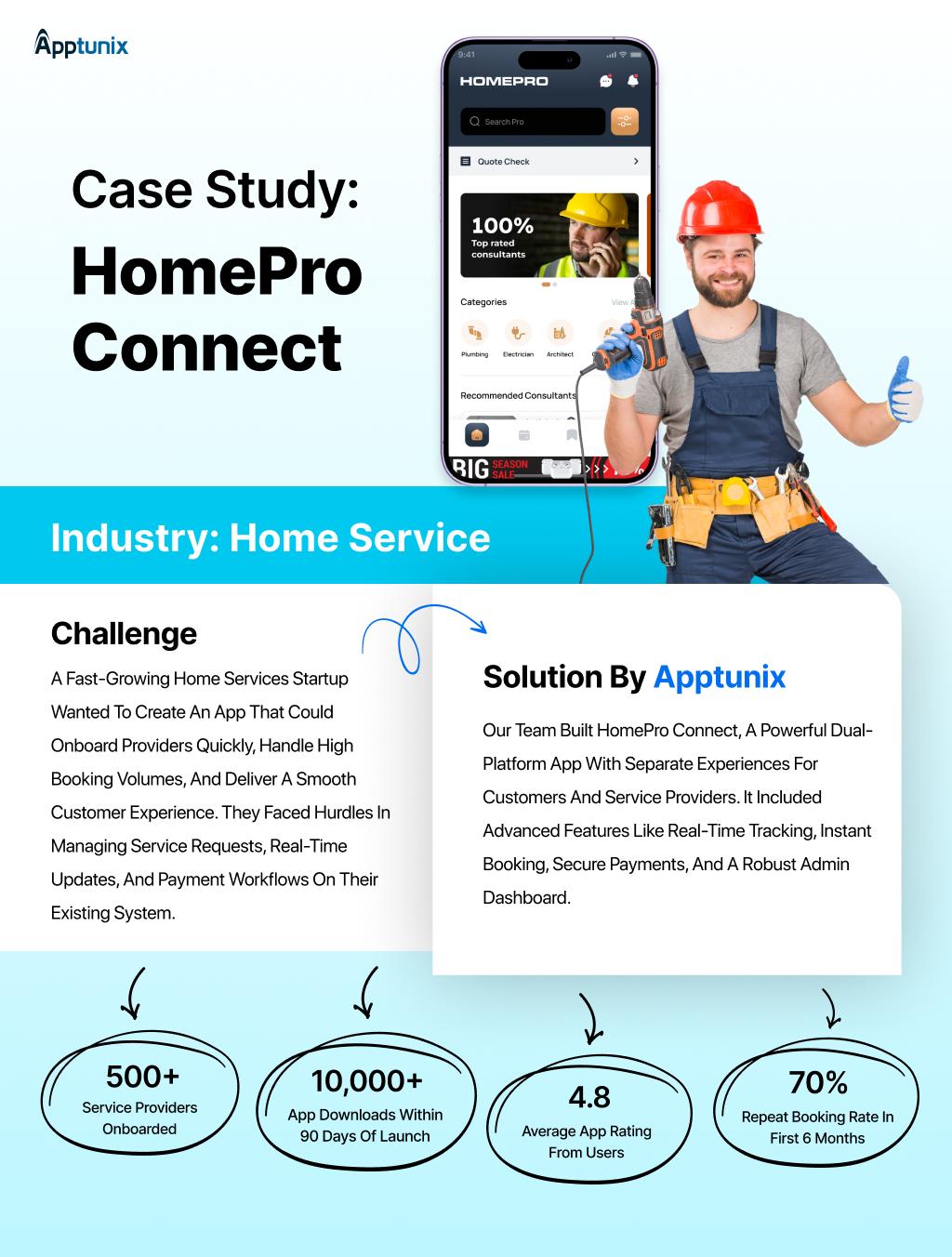
Our mission is simple: help businesses build an app like Handy that connects users and service providers effortlessly, boosts engagement, and drives real revenue. This project is a great example of how partnering with a custom home services app development company like Apptunix can turn an idea into a high-performing, revenue-generating platform.
Partnering with Apptunix means working with a team that understands both the tech and the business side of your app. We help you launch platforms that simplify daily operations, enhance user experience, and generate consistent revenue. If you’re ready to make a home services app like Handy, let’s turn your vision into a product that stands out in a competitive market. Book your free consultation today and take the first step toward building your own success story.
Users are shifting to apps. Every day you wait is a lost opportunity.
The home services industry is growing faster than ever. Global revenues for on-demand services are projected to reach billions in the coming years, and users increasingly expect fast, reliable, and convenient solutions. Businesses that build a home services app like Handy now can capture early market share, increase customer loyalty, and maximize lifetime value.
Investing in a Handy clone app development with Apptunix ensures your platform is built for scalability, efficiency, and profitability. With a proven track record in enterprise mobile app development for home service businesses, we help you not just launch an app, but establish a sustainable, revenue-generating ecosystem.
Don’t let competitors take the lead. Every day without a digital platform is a lost opportunity in a market where convenience is king. Apps that simplify bookings, improve transparency, and enhance user experience are already dominating the space. Early movers gain the advantage, and Apptunix makes sure you are one of them.
Take action today. Get a free consultation or cost estimate to build an app like Handy and partner with a custom home services app development company that delivers results. Your app could be the next success story, connecting thousands of users with trusted service providers while generating consistent revenue and growth.
Q 1.How much does it cost to make a Handy-like app?
The cost to develop a home services app depends on features, platform, and complexity. An MVP can start from $10,000, while a full-featured Handy clone app development may range from $50,000 to $100,000 or more. Partnering with a reliable on-demand app development company can help optimize costs.
Q 2.What features should a home services app have?
A home services app like Handy should include instant booking, real-time tracking, secure payments, ratings and reviews, service history, provider availability, and in-app chat. An admin panel with analytics, service management, and reporting is also essential for scalability.
Q 3.How long does it take to develop a home service marketplace app?
The timeline depends on the app’s complexity. An MVP typically takes 1–3 months, a mid-level app can take 3–5 months, and a fully-featured home service marketplace app development platform may take 6–12 months.
Q 4.What tech stack is best for a home services app?
For home services app development, a popular stack includes React Native or Flutter for frontend, Node.js or Python for backend, PostgreSQL or MongoDB for database, AWS or Google Cloud for hosting, and Stripe/PayPal for payments.
Q 5.Can a home services app handle multiple service categories?
Yes, on-demand home services app development services can be designed to support multiple categories like cleaning, plumbing, repairs, and more, making your platform a versatile home service marketplace app.
Q 6.How do I ensure my app is scalable?
Choosing the right architecture and a custom home services app development company ensures your platform is scalable. Features like modular backend, cloud hosting, and API integrations support growth without performance issues.
Q 7.Can I integrate payment gateways easily?
Yes, modern home services mobile app development platforms allow integration with Stripe, PayPal, Razorpay, and other payment gateways for secure, seamless transactions.
Q 8.How do I ensure user engagement in my app?
Features like push notifications, loyalty programs, ratings, reviews, easy rebooking, and real-time tracking help retain users and improve engagement in your home services app like Handy.
Q 9.Why should I choose Apptunix for Handy clone app development?
Apptunix specializes in Handy clone app development and on-demand home services app development services, delivering scalable, user-friendly, and revenue-generating platforms for startups and enterprises.
Q 10.Can Apptunix build both MVP and full-scale apps?
Yes, we provide end-to-end home services app development, from MVP to enterprise mobile app development for home service businesses, ensuring your app grows with your business.
Q 11.Does Apptunix provide post-launch support?
Absolutely. We offer maintenance, updates, and continuous improvements for Scalable home services booking app development, ensuring your platform remains competitive and secure.
Q 12.How long does it take Apptunix to develop a Handy clone app?
Depending on features and complexity, Apptunix can launch an MVP in 1–3 months, a mid-level app in 3–5 months, and a full-feature Handy clone app development in 6–12 months, tailored to your business goals.
(1 ratings, average: 1.00 out of 5)
Get the weekly updates on the newest brand stories, business models and technology right in your inbox.
26 Views 12 min July 24, 2026

21 Views 12 min July 17, 2026

121 Views 12 min June 25, 2026
Book your consultation with us.
Book your consultation with us.


One Central, The offices 3, Level 3, DWTC, Sheikh Zayed Road, Dubai
+971 50 782 1690


Offer Ends Soon
Get a quick expert response in under 5 minutes.