
Cost to Build an App Like Poshmark: The Complete Guide for Founders & E-commerce Businesses
624 Views 9 min March 25, 2026

Hardeep Singh is a seasoned B2B technical writer at Apptunix with a sharp eye for strategy and a mind wired for innovation. With over a decade of experience in technical and SEO writing, and a Master’s degree in Wireless Communication, he’s written across domains including AI, Blockchain, IoT, Cybersecurity, and beyond. At Apptunix, Hardeep drives content that bridges business goals with future-ready mobile and web solutions, thus helping startups and enterprises make smarter digital decisions.
Ever wondered why healthcare apps are suddenly everywhere – from remote clinics in Riyadh to urban hospitals in Dubai?
It’s because the way we access healthcare is transforming faster than ever, and the Middle East is right at the center of it.
The global appetite for digital health solutions is skyrocketing. According to Grand View Research, the global healthcare mobile application market was valued at USD 114.18 billion in 2024, and it’s projected to hit USD 165.61 billion by 2025. That number is expected to soar to USD 1,070.58 billion by 2030, growing at a CAGR of 45.2% from 2025 to 2030.
The momentum doesn’t stop there. A separate study by Research and Markets highlights that the mHealth app market will jump from $67.4 billion in 2024 to $82.98 billion in 2025, reaching $211.62 billion by 2029, growing steadily at 26.4% CAGR from 2025 onward.
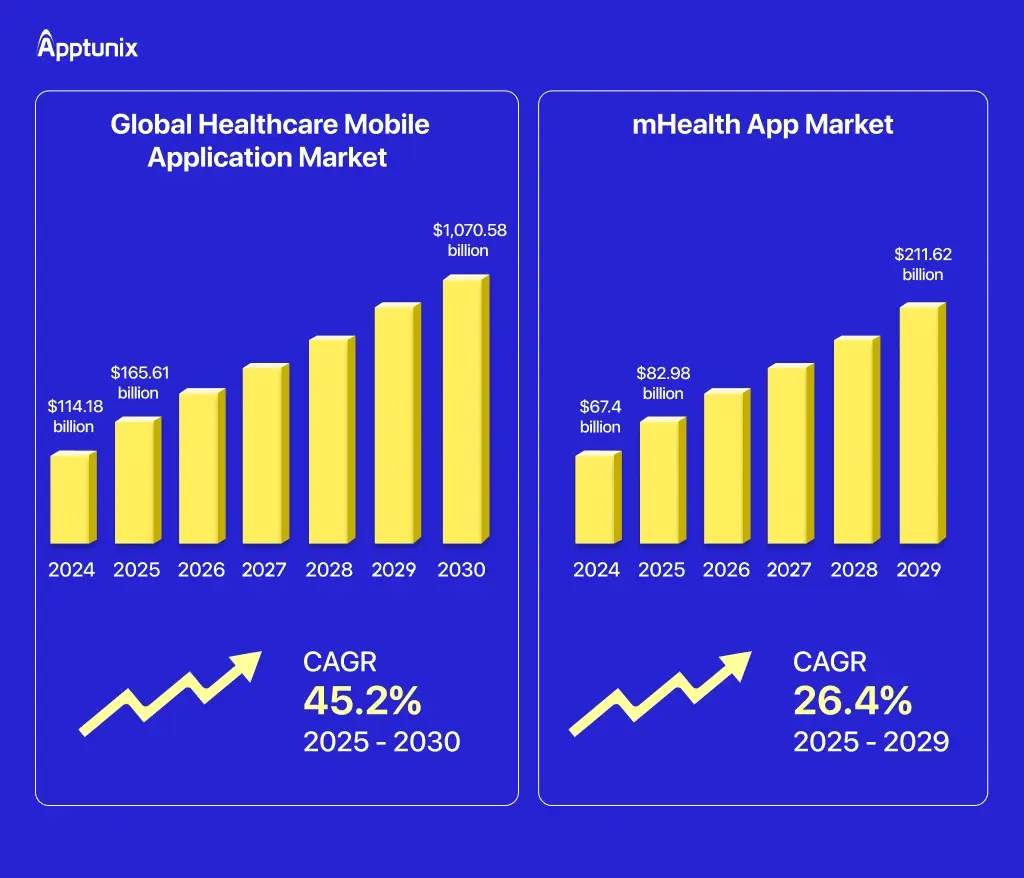
This exponential rise reflects a clear global shift, but what’s even more exciting is how fast MENA is catching up. From AI-driven diagnostics in the UAE to mobile-first patient portals in Saudi Arabia, the region is building smarter, faster, and more accessible digital healthcare ecosystems.
As adoption scales up, entrepreneurs, clinics, hospitals, and even insurance providers are actively exploring their options. And the question that now dominates boardrooms is: What will the healthcare app development cost in Middle East in 2026?
Well, understanding the healthcare mobile app development cost and the broader healthcare app development cost is not just about budgeting but about planning for long-term impact and innovation.
So, whether you want to launch a basic telehealth solution or an AI-powered diagnostic tool, knowing the mobile app development cost in Middle East helps you move smarter, not slower.
Let’s break it all down.
Estimating the exact cost to build a healthcare app isn’t as simple as naming a number. Every feature, platform, and decision adds a layer of complexity and cost. So, before jumping into numbers, it’s important to understand the factors that drive the final price tag.
Let’s look at the main elements that influence the cost of developing a health app in the Middle East.
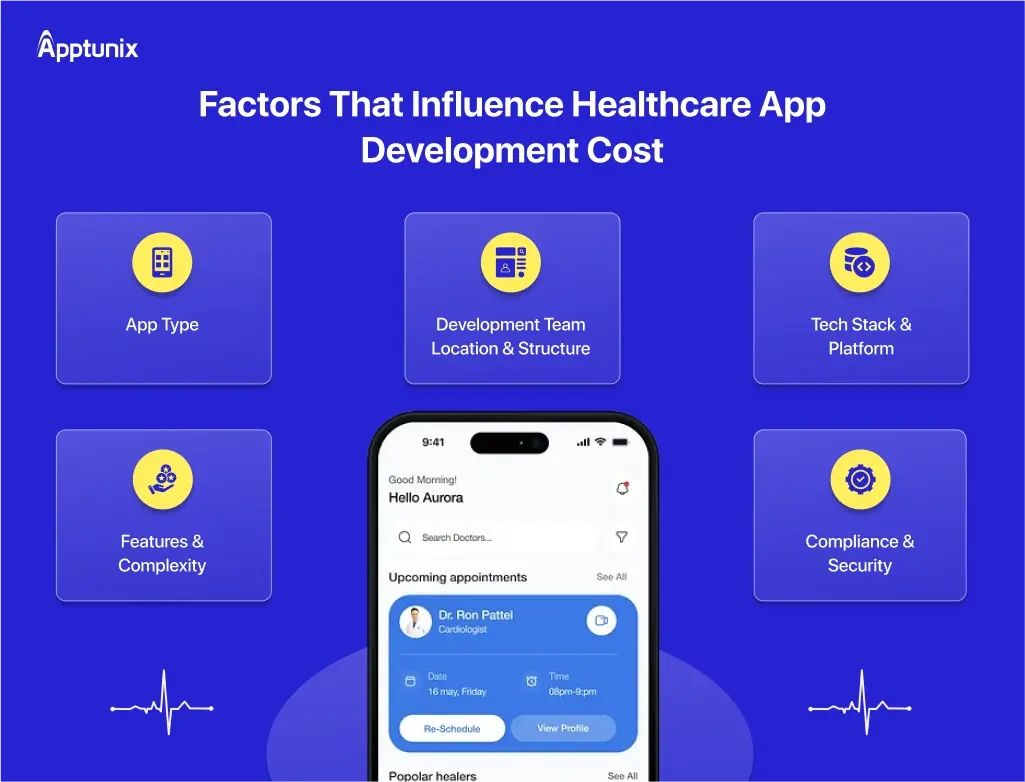
1.App Type: Who Will Use the App?The first thing that affects the budget is the type of app you are building. A patient-facing app focuses on appointments, medical records, and consultations. Doctor-side apps need diagnostic tools, EMR access, and prescription modules. Admin panels handle scheduling, analytics, and backend management.
Each of these adds unique functionalities, and the app development cost breakdown changes accordingly.
A single-role app (e.g., only patient-side) will always cost less than a multi-role ecosystem that includes doctor and admin access.
2.Features & Complexity: The Bigger the Scope, the Bigger the InvestmentBasic healthcare apps often include appointment booking, reminders, and chat support. More advanced healthcare development solutions offer video consultations, AI-based triage, electronic medical record (EMR) integration, and even wearable data tracking.
If you are looking to add features like:
expect a higher app development cost estimation due to extended planning, testing, and security implementations.
3.Development Team Location & StructureHiring locally in Dubai or Riyadh comes with higher hourly rates, but it can offer better compliance and easier collaboration. Offshore or hybrid teams reduce upfront cost but may involve extra coordination.
A Middle East-based team ensures:
Choosing between a local, offshore, or hybrid team plays a big role in your cost to create a healthcare app.
Also Read: Top AI Development Companies in Dubai, UAE
4.Tech Stack & Platform: iOS, Android, or Cross-Platform?Developing separate apps for Android and iOS increases the budget. Many businesses now choose cross-platform tools like Flutter or React Native to save time and money.
However, advanced apps that use native capabilities (like health tracking, push notifications, and offline access) might benefit more from platform-specific development.
Choosing the right tech stack directly impacts speed, performance, and your final price tag.
5.Compliance & Security: No Shortcuts AllowedHealthcare data is sensitive. You can’t launch a medical app without strict data protection and privacy measures.
If we consider the Middle East, you must follow standards like:
Implementing these protocols adds extra layers of encryption, secure login, audit trails, and consent mechanisms. All these increases the cost of developing a healthcare mobile app, but it is absolutely essential.
So, understanding all these moving parts gives you a clear app development cost breakdown, not just for budgeting, but for planning smarter.
Now that we have broken down the core factors influencing pricing, it’s time to look at what these variables translate to on the ground. The healthcare application development cost can differ significantly from one Middle Eastern country to another, based on local regulations, tech talent availability, and project timelines.
So, whether you are building a basic patient portal or an advanced AI-powered app, understanding the cost to make a healthcare app in each region helps you plan smarter and reduce risk. Let’s dive into the real-world numbers.
Healthcare App Development Cost in Middle East (UAE Vs Saudi Arabia Vs Qatar Vs Bahrain Vs Kuwait)
| Country | Estimated Cost (USD) | Estimated Cost (Local) | Time Frame | Notable Regulations |
|---|---|---|---|---|
| UAE (Dubai, Abu Dhabi) | USD 50,000 – 200,000 | AED 183,648 – 734,594 | 4 – 9 months | DHA, GDPR |
| Saudi Arabia | USD 45,000 – 180,000 | SAR 168,801 – 675,175 | 4 – 8 months | MOH, NHIC |
| Qatar | USD 40,000 – 150,000 | QAR 145,623 – 546,089 | 4 – 8 months | QCHP |
| Bahrain | USD 35,000 – 140,000 | BHD 13,193 – 52,777 | 4 – 7 months | NHRA |
| Kuwait | USD 35,000 – 130,000 | KWD 10,693 – 39,720 | 4 – 6 months | MOH |
Note: This table only presents a general overview, prepared using reliable sources. You can reach us for our competitive app development pricing in the Middle East.
Bonus Read: How Much Does it Cost to Build a Mobile App in Dubai?
Healthcare apps and telemedicine platforms might seem similar, but telehealth tools demand more advanced features, especially video, e-prescriptions, and instant scheduling. These additional capabilities mean a higher Telemedicine app development cost.
Basic healthcare apps focus on booking and records. Telemedicine apps, however, require real-time consults via secure video, integration with pharmacy systems (eRx), and even AI-driven diagnostics. Medical teams often expect tools like scheduling algorithms, doctor availability sync, and automated reminders.
So, it’s obvious that adding these raises the cost of developing a Telemedicine app, but offers far greater value to providers and patients.
Let’s look at how costs break down by type:
Telemedicine App Development Cost in ME
| Type | Average Cost Range (USD) |
|---|---|
| Basic Telemedicine App | USD 35,000 – USD 80,000 |
| AI‑based Telemedicine App | USD 80,000 – USD 200,000 |
Regional Cost Conversion (Approximate):
One thing you must know is that smart investors and healthcare leaders in the Middle East view telemedicine as a long-term asset, and not just a project.
Also Read: Software Development Cost in Middle East (UAE vs Saudi Arabia Vs Kuwait)
Artificial Intelligence is transforming the healthcare sector across the Middle East, but innovation often comes at a premium. When evaluating the AI healthcare app development cost, startups and healthcare institutions must weigh long-term benefits against upfront investments.
AI use cases in healthcare apps are expanding rapidly:
While the cost to create a healthcare app with AI capabilities is significantly higher (typically 40 – 60% more than standard apps), the long-term ROI justifies the spend. AI reduces manual workload, increases diagnostic accuracy, and enhances patient satisfaction, thus leading to cost savings in operations and care delivery.
Also Read: Top Business Opportunities in Saudi Arabia (Vision 2030)
If you are estimating AI app development cost in Middle East, expect a range between $80,000 and $200,000+, depending on the use of models, real-time data analytics, and compliance integrations.
One thing you must know is, AI is no longer optional; it’s the future of healthcare. But planning the right features and rollout strategy is key to balancing innovation with cost.
When planning the cost to develop a healthcare app, one critical factor that directly impacts your budget is how much developers charge per hour. Understanding hourly rates is essential for accurate cost estimation and smart decision-making, especially in the Middle East, where development pricing varies significantly across countries.
Whether you want to build a telemedicine solution, a patient management tool, or an AI-driven diagnostics platform, the app developer per hour cost shapes your project’s total spend. Developers in the region typically charge based on their location, expertise, and whether you are hiring freelance, in-house, or through a healthcare-focused development agency.
Here’s a country-wise breakdown of average hourly rates in 2026:
| Country | Avg. Hourly Rate (USD) |
|---|---|
| UAE | $40 – $90 |
| Saudi Arabia | $35 – $80 |
| Kuwait | $30 – $68 |
| Qatar | $30 – $70 |
| Bahrain | $28 – $65 |
While the UAE remains the premium destination for high-end, DHA/MOH-compliant app development, Saudi Arabia and Qatar offer competitive pricing with experienced regional talent. These rates are crucial for estimating the App development cost in Middle East, 2026, especially for projects with longer timelines or agile development cycles.
“If you’re planning a project, here’s a curated list of the top healthcare app development companies to watch this year.”

If you are concerned about rising medical app development costs, smart optimization strategies can help you with high-quality healthcare apps without breaking your budget. Here are proven ways to reduce your custom app development cost in Middle East – without sacrificing performance, compliance, or user trust.
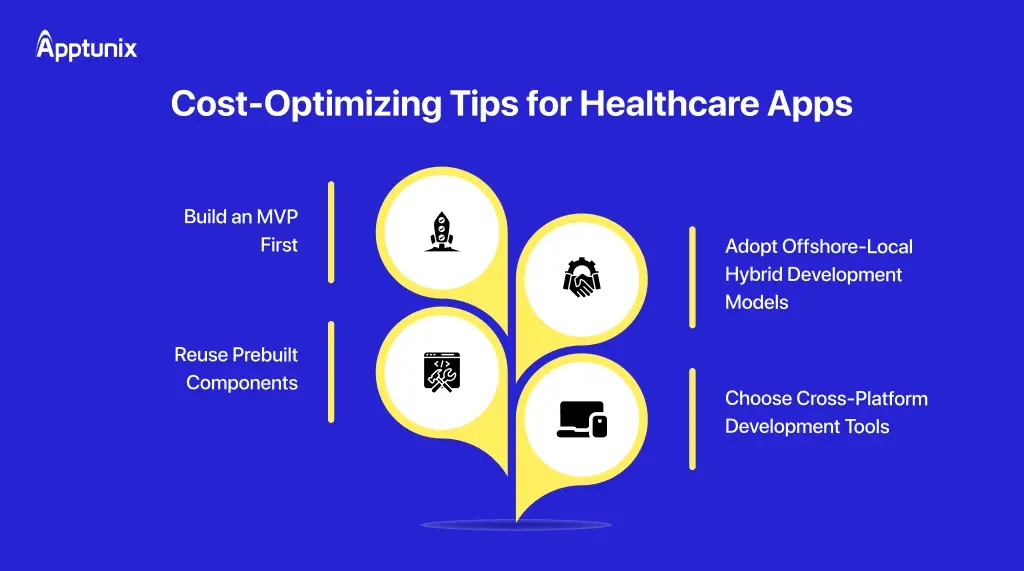
1.Build an MVP FirstStart with a Minimum Viable Product (MVP) that includes only the core features, such as patient registration, appointment booking, and e-prescriptions. This reduces upfront costs and allows real user feedback before scaling further.
2.Adopt Offshore-Local Hybrid Development ModelsCombine the cost-effectiveness of offshore development (e.g., tech teams in South Asia) with the regulatory oversight and regional knowledge of local Middle East developers. This hybrid model provides both savings and compliance.
3.Reuse Prebuilt ComponentsUse pre-developed modules like secure login, chat systems, or HL7/FHIR integration in order to cut down development time. This lowers the app development cost while maintaining security and scalability.
4.Choose Cross-Platform Development ToolsInstead of building separate native apps for iOS and Android, go for frameworks like Flutter or React Native. This strategy ensures code reusability, consistency, and a 30 – 40% cost reduction.
These approaches offer a strategic app development cost analysis, ensuring your healthcare platform remains cost-efficient, scalable, and compliant with regional standards.
Also Read: iOS App Development Cost: Full Guide
Partnering with the right team makes every dirham count. Apptunix stands out as the leading healthcare app development company in Dubai, UAE, trusted by hospitals, clinics, and healthtech startups across the Middle East.
Here’s why decision‑makers keep coming back:
DHA, MOH, HIPAA, GDPR – our engineers know the rulebook inside out, so apps sail through approvals.
Patients feel at home the moment they open the app. Multilingual screens, right‑to‑left layouts, local cultural cues – nothing lost in translation.
End‑to‑end encryption, zero‑trust architecture, and audited code keep medical data safe and compliant.
Live platforms for regional hospitals and fast‑growing clinics show measurable gains in patient engagement and operational efficiency.
Recommended Read: Healthcare ERP Software Development
Q 1.How much does it cost to develop a healthcare app in Dubai?
The healthcare app development cost in Dubai typically ranges from AED 100,000 to AED 280,000, depending on app type, features, and regulatory compliance (e.g., DHA, HIPAA). AI-enabled or telemedicine features may increase the investment further.
Q 2.What affects healthcare mobile app development cost the most?
Key factors include:
Q 3.What is the mobile app development cost in Middle East?
Mobile app development cost in the Middle East varies by app type, platform, features, and country-specific regulations.
Average Mobile App Development Cost by Country (2026):
Q 4.What is the cost of AI-based healthcare apps in the Middle East?
AI-driven apps (chatbots, predictive health insights, etc.) demand bigger initial budgets but offer long-term automation savings.
Average AI App Development Cost by Country (2026):
Q 5.What’s the hourly rate of app developers in UAE for medical apps?
On average, medical app developers in Dubai, UAE charge between $40 to $90 per hour, based on experience, tech stack, and compliance expertise.
Q 6.How to reduce healthcare app development cost in 2026?
Smart strategies include:
Q 7.Which is the most cost-effective country in the Middle East for healthcare app development?
Qatar and Kuwait generally offer lower base development costs compared to UAE and Saudi Arabia, but you may sacrifice regulatory familiarity or advanced tech capabilities. Strategic outsourcing still delivers top-tier apps affordably.
Q 8.What’s the ideal tech stack for healthcare app development in the Middle East?
A regionally optimized stack includes:
(9 ratings, average: 5.00 out of 5)
Get the weekly updates on the newest brand stories, business models and technology right in your inbox.
Hardeep Singh is a seasoned B2B technical writer at Apptunix with a sharp eye for strategy and a mind wired for innovation. With over a decade of experience in technical and SEO writing, and a Master’s degree in Wireless Communication, he’s written across domains including AI, Blockchain, IoT, Cybersecurity, and beyond. At Apptunix, Hardeep drives content that bridges business goals with future-ready mobile and web solutions, thus helping startups and enterprises make smarter digital decisions.
624 Views 9 min March 25, 2026
1904 Views 9 min January 12, 2026

828 Views 9 min December 26, 2025
Book your consultation with us.
Book your consultation with us.


One Central, The offices 3, Level 3, DWTC, Sheikh Zayed Road, Dubai
+971 50 782 1690