Smart City App Development: Connecting Citizens, Infrastructure, and Data
18 Views 12 min July 24, 2026

Arohi Singh is a technology content strategist at Apptunix, where she writes about software and app development across industries, from on-demand and logistics to fintech, healthcare, and applied AI. With over 5 years of experience, she works closely with Apptunix’s engineers, product managers, and solution architects to turn real project insights into clear, decision-ready guidance for founders and business leaders. Her writing focuses on what matters before you build: market context, feature trade-offs, realistic costs, and compliance considerations
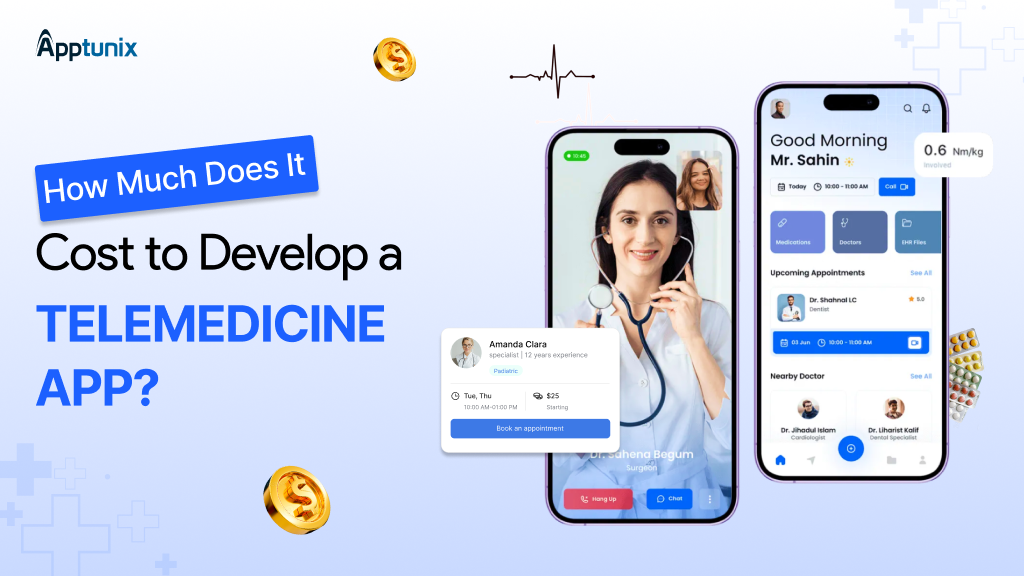
Healthcare is no longer confined to clinics and waiting rooms; it’s becoming an always-on, borderless service.
What started out as a futuristic concept is now becoming a booming reality. Patients consulting specialists across continents, prescriptions delivered within hours, and chronic conditions handled remotely with real-time data.
Telemedicine apps are at the forefront of this disruption, not evolution.
The numbers make the case impossible to ignore. According to research, the telemedicine market is valued at $113.04 billion currently. It is on track to soar past $441.35 billion by 2034, growing at an impressive 17.27% CAGR.
Investors, healthcare providers, and startups are all vying for a share of this rapidly escalating space. The reason is clear: telemedicine isn’t just transforming patient care, it’s unlocking new, scalable revenue models.
Although the opportunity is humongous, market penetration without a clear financial roadmap can be dicey. The telemedicine app development cost can range anywhere from $15,000 to $150,000+. These figures may vary greatly depending on your platform type, compliance requirements, target region, and feature set.
Are you considering launching a basic video consultation app or a full-scale, HIPAA-compliant telehealth platform with EMR and e-prescriptions? The features, platform, and region all affect the total price of telemedicine app development.
In this blog, we’ll walk you through everything you need to know about the cost to develop a telemedicine app. From core features and regional pricing to cost-saving strategies, you can get all the essential info here.

Let’s look at four powerful reasons why investing in telemedicine app development now can yield real impact and profit.
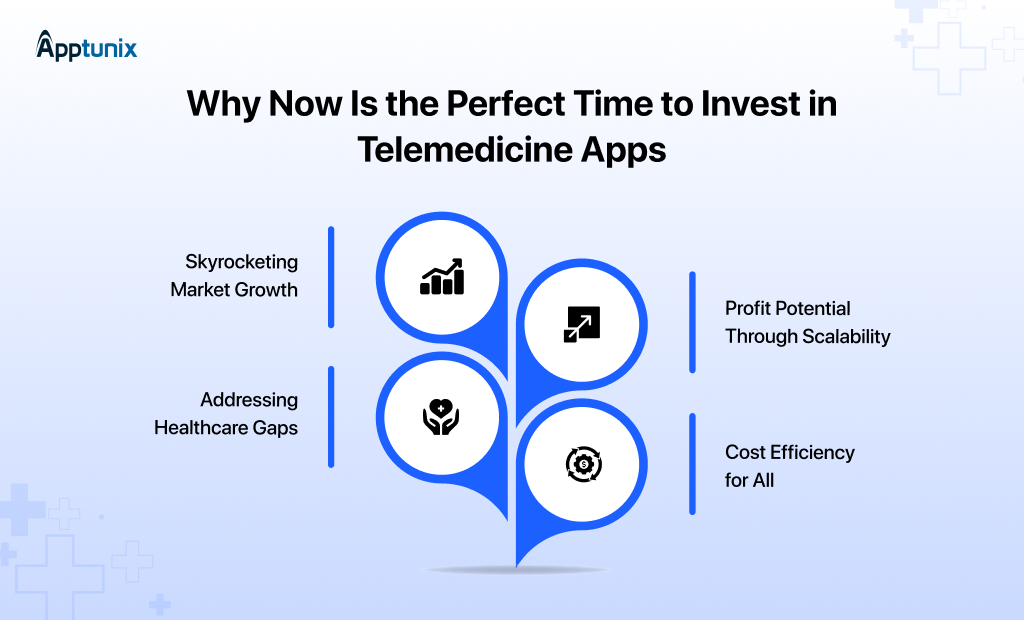
1. Skyrocketing Market GrowthThe digital health space is growing faster than most industries.
Currently, more than 116 million individuals worldwide make use of online doctor consultations. Patients demand convenience, and 85% are willing to use telemedicine for its accessibility. This demand drives the cost to develop a telemedicine app, but the ROI is undeniable. Early movers will capture massive market share.
2. Profit Potential Through ScalabilityTelemedicine apps provide various income sources like subscriptions, per-consultation fees, or in-app purchases. Doctor on Demand reportedly earned $12 million in revenue in a single year by charging 25% per appointment. With 70% of users satisfied with telehealth services, retention is high, ensuring steady profits.
Scalable models make healthcare app development a smart investment for long-term gains.
3. Addressing Healthcare GapsTelemedicine bridges access gaps, especially in rural areas.
Nearly one-third of American adults lack nearby primary healthcare facilities, but telehealth apps provide top-tier specialists virtually. This solves a critical pain point, boosting adoption and justifying the telehealth app development cost.
Apps like Teladoc thrive by serving underserved populations, creating loyal user bases.
4. Cost Efficiency for AllTelemedicine slashes costs for patients and providers. Virtual visits save patients 56% on time and travel expenses, while providers reduce operational costs by avoiding physical facilities. 69% of doctors are eager to adopt telemedicine for a better work-life balance. These streamline operations, making the on-demand doctor app development cost a strategic play for efficiency-driven profits.
These reasons highlight why telemedicine apps are a turning point. But how much does a telemedicine app cost to build? Let’s break it down.
“Looking for fresh concepts before you invest? Explore these 26 innovative healthcare startup ideas to inspire your next big move.”
The process of developing a telemedicine app in 2026 is not a ready-made task. Depending on what you’re creating, where you’re building it, and how much you’re willing to scale, the cost can vary significantly.
And, if you wonder a concrete figure for ‘How much does a telemedicine app cost’, the straightforward answer is, it depends.
But here’s what we do know: the cost to develop a telemedicine app in 2026 can start as low as $15,000 for a basic MVP. And go beyond $150,000+ for a fully integrated, HIPAA-compliant solution with advanced features, and cross-platform functionality.
And it’s not just about writing code. You’re building a digital healthcare product that must balance performance, user experience, data security, and compliance, all at once.
It’s an investment, but one with high long-term returns if done right.
Now, let’s look at how telemedicine app costs typically break down by scope and complexity.
Let’s now break down what actually affects these numbers.

There is no one-size-fits-all answer for How much does it cost to build a telemedicine app? Various considerations are at play that intersect directly with your budget, timeframe, and future value.
Now, it is time to take a closer look at the most significant factors that impact the cost of developing telemedicine apps. And how each of them affects the final investment.
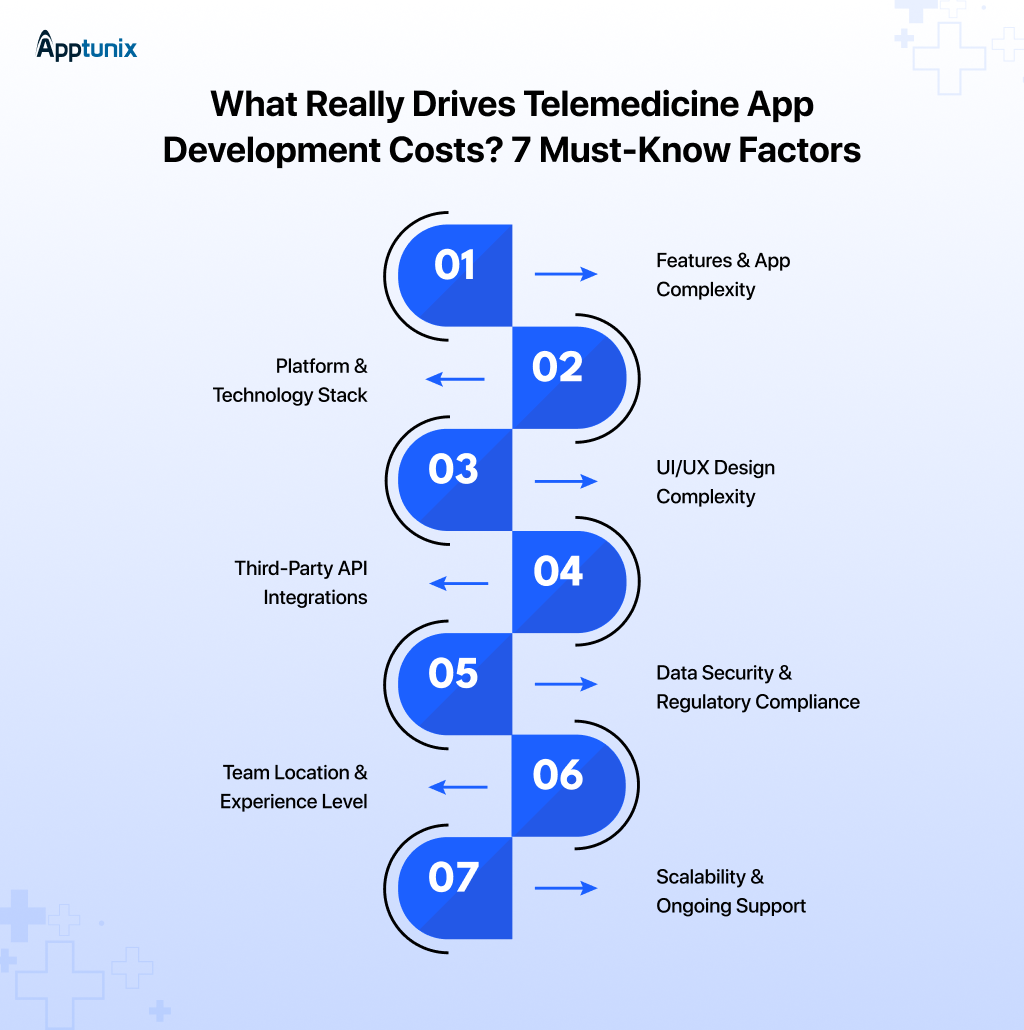
1. Features & App ComplexityThis is the single biggest driver of development cost. The higher the number of features embedded in the app, the higher the cost.
A basic version with login and video calls is less expensive, while incorporating AI diagnosis, health monitoring, or e-prescriptions amplifies complexity and pricing. Every new functionality increases development time and backend requirements.
For accurate telemedicine app pricing, always define the feature list upfront.
2. Platform & Technology StackDoes your app only support iOS, Android, web, or all three?
Native apps can perform better, but they are costlier compared to their cross-platform counterparts. Cross-platform development is cost-efficient but potentially restricted to platform-specific experiences. Your platform decision plays a big role in shaping the total cost to develop a telemedicine app.
3. UI/UX Design ComplexityA healthcare app isn’t merely functional; it should be intuitive, reliable, and efficient. A custom UI/UX tailored to patients and doctors guarantees trust, ease of use, and better engagement.
However, such polished experiences require more design hours, raising your telemedicine app pricing. Investing in UI/UX design boosts retention and justifies its cost long-term.
4. Third-Party API IntegrationsYour app doesn’t exist in a bubble. It needs to communicate with external systems.
Payments, video calls, EHRs, and pharmacy networks are external APIs needed in most telemedicine apps. Each integration adds configuration, compliance checks, and maintenance requirements. These additions can notably influence the telemedicine software cost based on their number and complexity.
The more connected your app is, the greater the cost to build and maintain.
5. Data Security & Regulatory CompliancePersonal health information is a serious matter, and it should be confidential.
Meeting HIPAA, GDPR, or DHA standards requires encryption, access control, secure servers, and regular audits. These aspects add to the cost of developing telemedicine apps but protect you from penalties and data breaches.
6. Team Location & Experience LevelThe cost to develop a telemedicine app varies based on your development team’s region.
Developers based in the US or UK charge more than equally skilled teams in India or Eastern Europe. Senior developers or healthcare-focused agencies may cost more upfront, but minimize the likelihood of critical mistakes or rework. Your team’s expertise directly impacts both cost and outcome.
“Want to ensure your telemedicine app is built right? Check out the key factors to consider before hiring a healthcare software development company.”
7. Scalability & Ongoing SupportA one-time build isn’t enough; apps require frequent updates, bug fixes, and scaling to handle more users. Cloud hosting, monitoring tools, and support resources all raise the overall telemedicine app development cost. Planning for post-launch support early guarantees a smooth user experience and helps manage long-term costs.
Now that you know what determines telemedicine app development cost, it’s time to check how geography affects the game.
🔹Hourly Rates: In India, telemedicine app development starts as low as $25–$40 per hour. In contrast, North America ranges between $100–$200/hour. These differences scale significantly in total budgets.
🔹Expertise & Compliance: Western developers bring higher compliance knowledge and polished execution. However, you can get equally skilled teams in Eastern Europe or India at a fraction of the cost.
🔹Operational Overhead: Working with teams in your time zone or cultural familiarity, even at a higher rate, often reduces missteps and accelerates development cycles.
🔹Regulatory Landscape: Selecting a region that is familiar with HIPAA, GDPR, or local health standards can help you avoid expensive redos if you’re targeting international markets.
“Want to explore region-specific insights? Check out our detailed guide on healthcare app development cost in the Middle East.”
Since you have an idea of regional cost variations, let’s break down how specific features directly impact the telemedicine app development cost.
Remember that every added functionality can either elevate the user experience or inflate your budget.
These features shape the user experience and budget. Can you reduce costs without compromising quality? Let’s explore strategies.
A telemedicine application does not need to cost a fortune. Smart planning will reduce the cost to build a medical app without compromising quality. These are the tested methods of making the most of your budget:
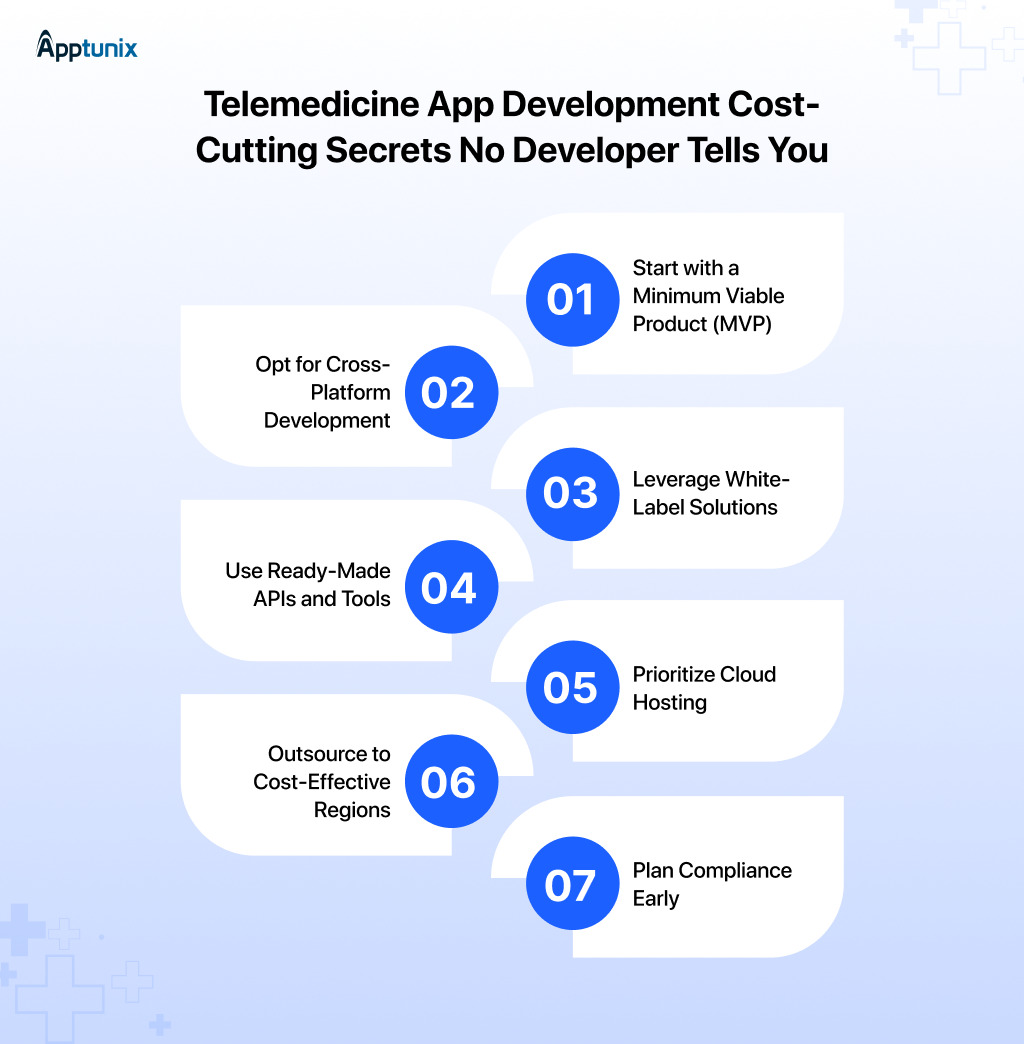
Introduce a basic version of an app with essential functions such as video calls and booking. The cost of an MVP is usually between 20K-50K, as opposed to 150K+ on a feature-rich app. This strategy will help you experiment with the market and collect user feedback, and then scale.
For example, apps like Doctor on Demand began with MVPs and saved up to 40-60 percent in initial telehealth app development cost. Add advanced features like AI diagnostics later, based on demand.
Cross-platform frameworks like React Native or Flutter may cut 30%-50% of development cost compared to developing an app for iOS and Android. It smartly balances time, cost, and future scalability.
You get a broad reach without doubling the work.
Pre-built telemedicine platforms offer a head start. White-label apps, customizable for branding and HIPAA compliance, start at just $4,000–$7,000. They incorporate necessities such as secure messaging and video calls, with development time lowered to 4-6 weeks.
This reduces the cost of developing a HIPAA-compliant app by nearly half. It also provides a market-ready app, which suits startups that need to launch fast.
Use already existing technologies, such as Twilio video, Stripe payment, or Auth0 authentication. The solutions provide a strong performance and help to save the development time and cost of telemedicine software, allowing you to concentrate on unique features.
Using cloud services such as AWS or Google Cloud, your system will instantly be in a state where it can be scaled and be cost-efficient. In addition, initial investment in automation of testing can cut down the cost of bugs by half on a long-term basis.
Developer rates vary globally. Hiring in India ($20–$50/hour) or Eastern Europe ($30–$80/hour) can save 40–60% compared to U.S. rates ($50–$150/hour). For instance, a medium-complexity app costing $100,000 in the U.S. could drop to $50,000 in India without compromising expertise.
This will streamline the on-demand doctor development apps into a low-cost option while obtaining experienced teams who understand healthcare.
HIPAA and GDPR compliance cannot be treated as a last-minute exercise. Investing $10,000–$30,000 upfront in secure data protocols avoids fines up to $1.5 million per violation. Early compliance planning streamlines development and saves the cost of rework.
This ensures your app meets global standards, lowering the long-term HIPAA-compliant app development cost.
Reducing telemedicine app development costs is only one step. Knowing how to develop a telemedicine app the right way will guarantee that your invested funds provide the highest ROI.
Building a telemedicine app is the process of developing an excellent healthcare platform. The app must be secure, intuitive, scalable, compliant with regulatory requirements, and meet client demands. Here’s how you can do it right:
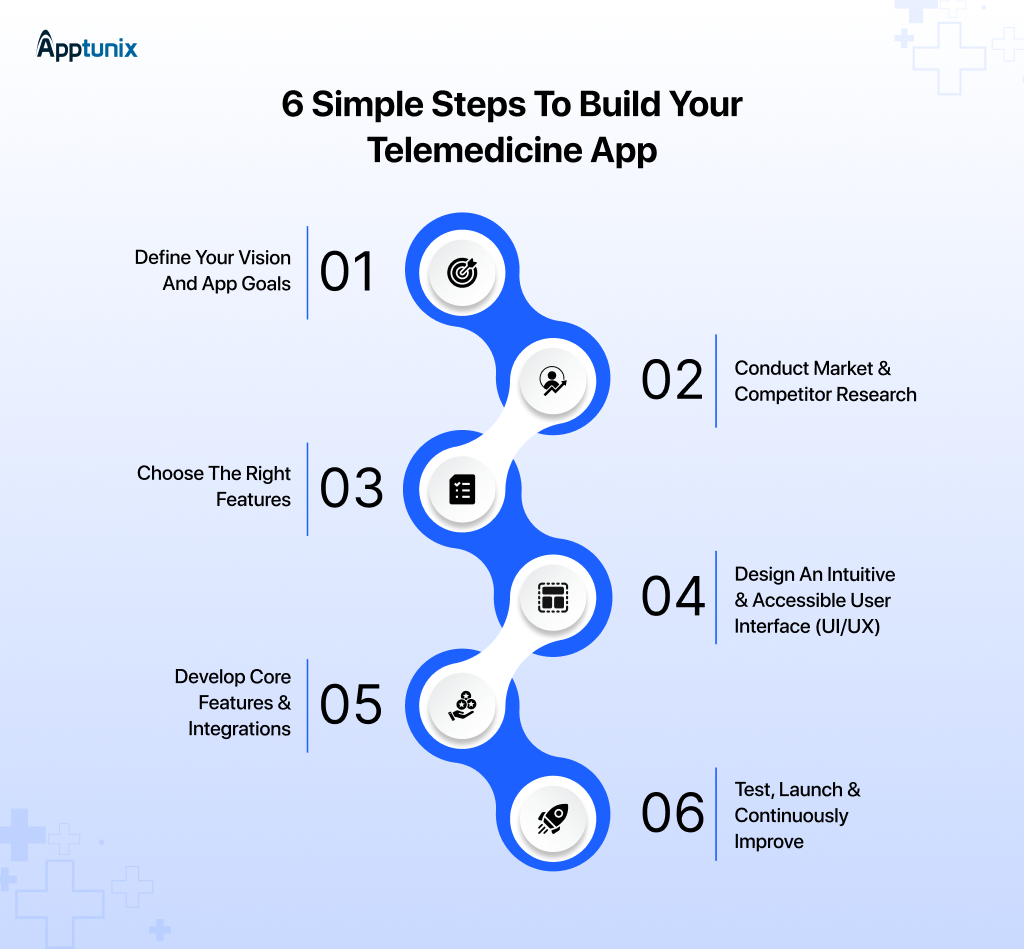
1. Define Your Vision and App GoalsClarify your motives to make a telemedicine app and what kind of people you will serve before you jump into design or development.
Choose between a general practitioner, mental health services, dermatology, or multi-specialty care. This kind of transparency will support your budget, features, and development schedule to align.
2. Conduct Market & Competitor ResearchThe knowledge of the market is essential to stay on the frontline.
Analyze successful telemedicine apps in your target region, study user reviews, and identify gaps you can fill. This research assists you in building a unique value proposition and avoiding wasting money on unnecessary features.
3. Choose the Right FeaturesList the core features you’ll need, such as video consultations, e-prescriptions, patient records, appointment scheduling, and secure payments. Then, decide on advanced features like AI-based symptom checkers or wearable device integration.
Make sure whatever features you decide are based on your budget and audience requirements.
4. Design an Intuitive & Accessible User Interface (UI/UX)The app must be easily navigated by a patient and a doctor. Invest in intuitiveness by allowing straightforward appointment making, secure messaging, and access to medical history.
Accessibility features like large text, voice commands, and multilingual options can widen your user base and magnify patient satisfaction.
5. Develop Core Features & IntegrationsPrioritize essential telemedicine features like video consultations, appointment scheduling, e-prescriptions, secure payment processing, and AI-powered symptom checkers. Integrate trusted APIs for real-time video calls, health monitoring devices, and electronic medical records (EMR) to enhance app functionality.
This approach optimizes telemedicine app development costs by utilizing existing solutions, avoiding overspending on custom development.
“Want to see how AI is revamping virtual care? Explore our guide on AI in healthcare for benefits, applications, and real-world cases.”
6. Test, Launch & Continuously ImproveBefore going live, conduct thorough testing for security, performance, and compliance.
Test an idea with a Minimum Viable Product first to collect user feedback and validate your concept. Continue with updates, bug fixes, and new features based on patient and doctor input after launch.
This is a lean technique that is affordable and that maintains your app to be competitive.
Recommended Read: ERP in Healthcare: Benefits, Cost, Features & Development
Here are four powerful ways to monetize your telemedicine app and generate steady revenue while delivering exceptional value.
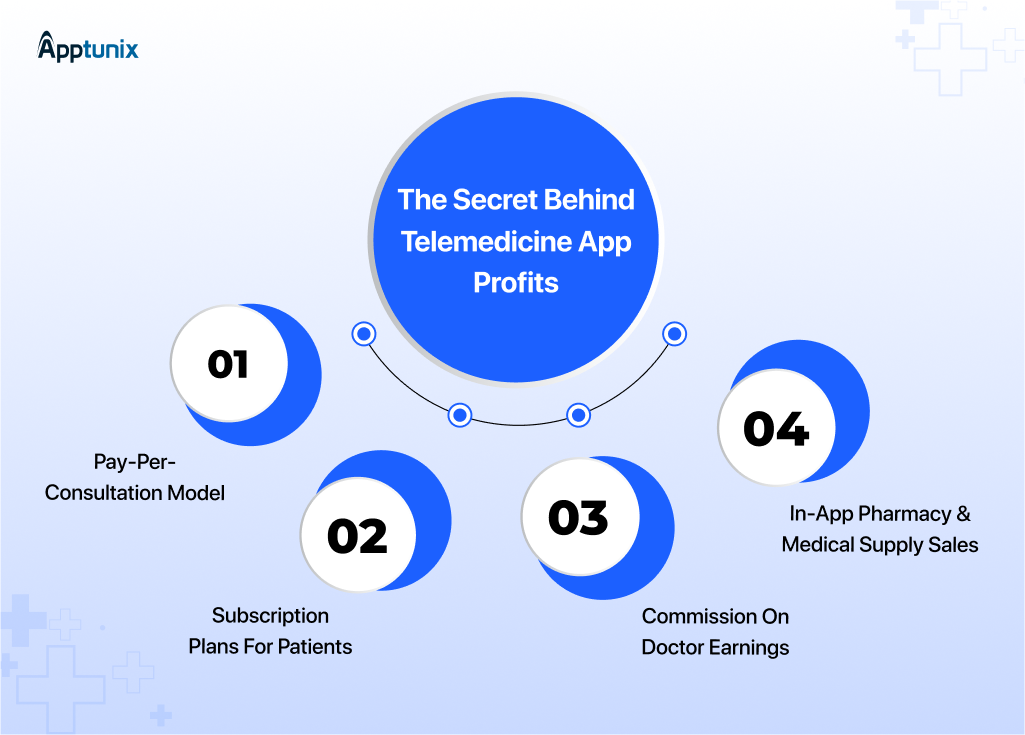
1. Pay-Per-Consultation ModelUnder this model, patients only pay whenever they make a consultation with a doctor, either through video, audio, or chat. It’s straightforward, easy for users to understand, and gives them the flexibility to pay only when they need medical help.
This approach works well for both general practitioners and specialists, ensuring a predictable cash flow for your app.
2. Subscription Plans for PatientsOffer tiered subscription packages where users pay a monthly or yearly fee for unlimited or discounted consultations.
This not only creates recurring revenue but also builds user loyalty, as patients feel more comfortable accessing care without worrying about per-visit costs. Premium tiers can include faster response times, priority doctor access, or wellness tracking features.
3. Commission on Doctor EarningsYour platform can take a small percentage of every consultation fee paid to healthcare providers. It’s a low-risk model for doctors, as they pay only when they earn.
This strategy keeps your app’s interests aligned with the practitioners’ success, encouraging more doctors to join and stay active on the platform.
4. In-App Pharmacy & Medical Supply SalesIntegrating an online pharmacy within your app can open another revenue stream.
Your platform allows patients to order prescribed medicines, health supplements, and even medical equipment. By collaborating with local or global suppliers, one will be able to guarantee rapid delivery, competitive pricing, and additional trust in your brand.
Now, let’s see why Apptunix is the perfect partner to bring these monetization strategies and your telemedicine vision to life.
In the fast-growing digital healthcare market, you can’t afford trial and error. You need a partner who understands both technology and the healthcare industry inside out.
That’s where Apptunix stands apart as an excellent Healthcare App Development Company. For over a decade, we’ve been building secure, high-performing, and scalable telemedicine apps. Our solutions deliver real results for healthcare providers, startups, and enterprises worldwide.
When you work with us, you get:
🔹Proven Expertise – 1,500+ completed projects in over 30 industries, especially in the field of healthcare.
🔹Compliance First – HIPAA, GDPR, and other healthcare regulations are incorporated into each stage.
🔹Custom Solutions – Features tailored to your goals: video consultations, AI symptom checkers, EHR integrations, and more.
🔹End-to-End Support – From ideation to launch and ever after.
🔹Agile Delivery – Transparent, collaborative, and always on time.
We are on a mission: to create telemedicine applications that will make patients trust them, deliver better care, and make your business prosper.
Want a secure, feature-complete, and future-proof Telemedicine application? Apptunix is the firm that can provide you with everything you seek and more. Let’s create something extraordinary.
Q 1.What is the average telemedicine app development cost?
The cost to create a telemedicine app typically falls between $15,000 and $150,000. Simple apps with essential features begin on the low end, and complex ones with AI and integrations drive costs higher. The location of the team and complexity are significant factors, so expenses can fluctuate depending on your particular requirements.
Q 2.How long does it generally take to build a business-ready telemedicine app?
A fully functional telemedicine app typically takes 3 to 9 months to develop. The timeline depends on the scope:
Agile methods help speed things up without cutting corners.
Q 3.How do app features influence the cost to develop a telemedicine app?
More features mean higher costs. For example:
Q 4.How do development team location and expertise affect telemedicine app development cost?
Location affects hourly rates: U.S. teams charge $50-$150/hour, leading to higher costs ($100,000+), whereas India or Eastern Europe offers $20-$80/hour, reducing expenses by 40-60%. Expertise counts as well: seasoned developers ensure compliance and quality but add 20-30% to the bill.
Q 5.What are the primary features of telemedicine apps?
Telemedicine apps succeed based on user-friendly tools that connect patients and doctors effortlessly. Key features include:
Q 6.What is the easiest way to develop a telemedicine app?
Q 7.What are the compliance requirements for telemedicine app development?
A telemedicine app has to adhere to health regulations such as HIPAA (US), GDPR (EU), or regional health data legislation. Adherence maintains patient data confidentiality and security. Working with developers experienced in healthcare standards can save time, avoid legal risks, and enhance trust with users.
Q 8.How can startups reduce telemedicine app development costs without compromising quality?
Q 9.How do telemedicine apps make money?
Common monetization strategies are:
(5 ratings, average: 5.00 out of 5)
Get the weekly updates on the newest brand stories, business models and technology right in your inbox.
Arohi Singh is a technology content strategist at Apptunix, where she writes about software and app development across industries, from on-demand and logistics to fintech, healthcare, and applied AI. With over 5 years of experience, she works closely with Apptunix’s engineers, product managers, and solution architects to turn real project insights into clear, decision-ready guidance for founders and business leaders. Her writing focuses on what matters before you build: market context, feature trade-offs, realistic costs, and compliance considerations
18 Views 12 min July 24, 2026

17 Views 12 min July 17, 2026

115 Views 12 min June 25, 2026
Book your consultation with us.
Book your consultation with us.


One Central, The offices 3, Level 3, DWTC, Sheikh Zayed Road, Dubai
+971 50 782 1690


Offer Ends Soon
Get a quick expert response in under 5 minutes.