So if you’re planning to build an on-demand marketplace, you’re entering a market that’s already validated. The real challenge is to delivers a platform feeling modern: fast, trustworthy, automated, and scalable from Day 1.
How to Build an On-Demand Marketplace in 2026?

952 Views|
16 mins |
February 24, 2026
Read Time: 16 mins |
February 24, 2026
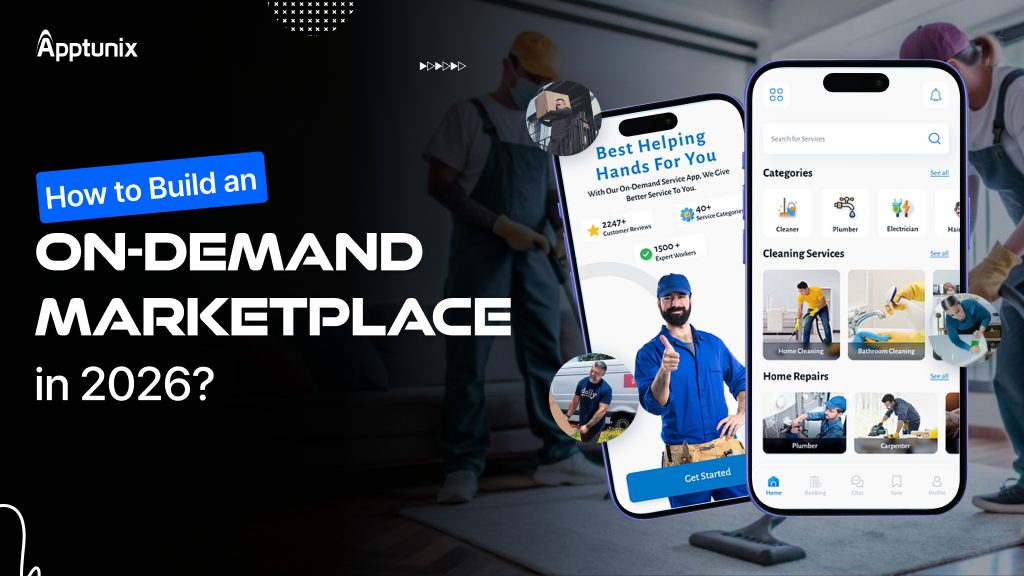
Users do not wake up wanting access to providers. They want results. A fixed leak. A clean apartment. A repaired laptop by 6 PM. The shift is subtle but powerful. Access has become a commodity. Guaranteed outcomes are the new premium.
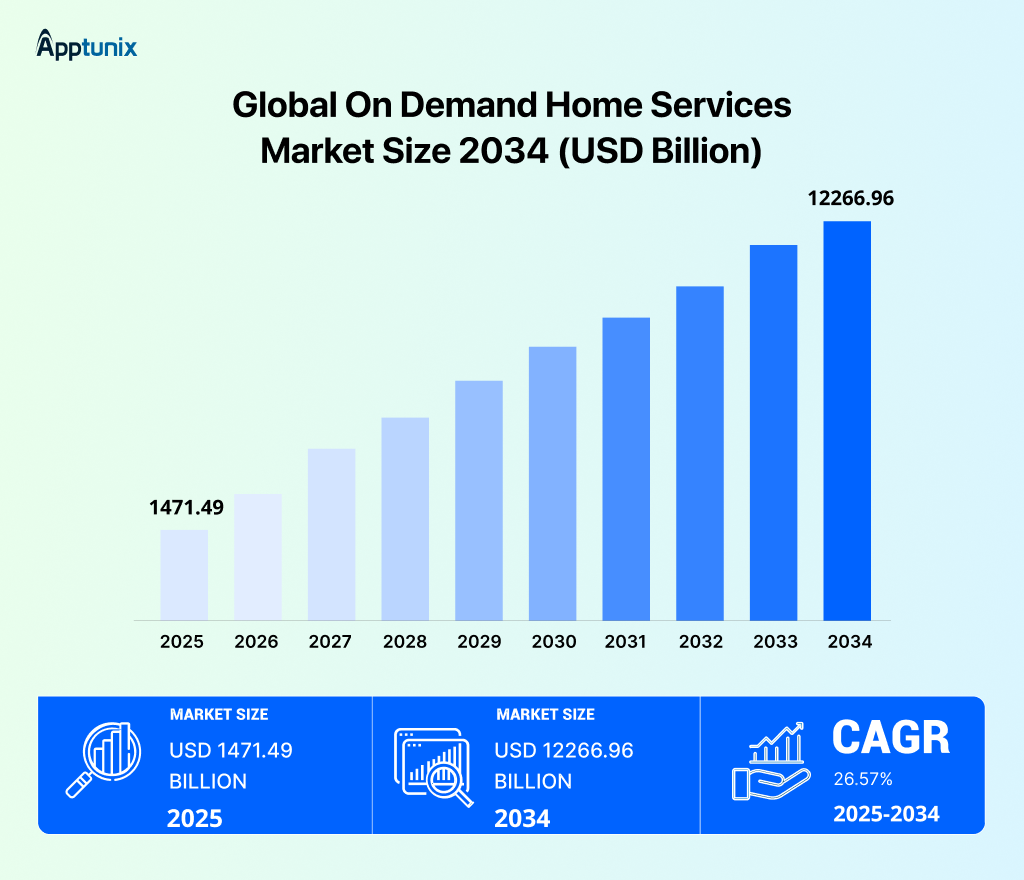
Hyperlocal service platforms continue to expand steadily. Industry projections from firms such as Statista and Grand View Research show strong CAGR forecasts for home services, quick commerce, and gig-enabled logistics through 2030. In several urban markets, annual growth rates range between 18% -25% depending on the category.
At the same time, the 15-minute economy is reshaping expectations. Consumers in major cities now assume same-hour service for essentials. That expectation changes how you approach on-demand marketplace app development.
The Reality Check: Why Most Marketplaces Fail?
The uncomfortable truth is this. Most marketplaces do not fail because of poor UI or missing features of on-demand service apps. They fail because of liquidity.
Liquidity means the right supply meets the right demand at the right time. When that balance breaks, everything feels slow and unreliable. You cannot solve a liquidity problem with more filters or better animations. You solve it with focus and disciplined rollout.
Every founder who wants to launch an on-demand marketplace eventually faces the same question. Do you acquire supply first or demand first? The answer depends on geography and service frequency.

If you operate in freelance design or remote consulting, global supply works. Geography does not limit fulfillment. But in hyperlocal services like plumbing, cleaning, or repair, density wins. You need enough providers within a 3 to 5 km radius to guarantee fast fulfillment.
A density-first strategy looks like this: Pick one city. Narrow it to 2 or 3 neighborhoods. Achieve reliable fulfillment rates above 85 percent. Expand gradually.
Many founders attempt multi-city expansion too early. They dilute liquidity and burn acquisition budgets without achieving strong local dominance.
There are two practical ways to break the chicken and egg loop. Instead of immediately launching a two-sided platform, build tools for providers first.
Offer:
- CRM
- Invoicing
- Scheduling
- Earnings analytics
You create value even before large demand arrives. Over time, you aggregate supply in a structured way. When demand enters, onboarding friction drops. This approach also improves your on-demand marketplace business model because subscription revenue stabilizes cash flow.
How to Get Marketplace Edge: From Transaction Fees to Outcome-as-a-Service
If you are studying how to build an on-demand marketplace in 2026, you have probably noticed something subtle but important. The old formula of match supply with demand and take 20 percent no longer creates a durable advantage.
The on-demand marketplace business model has matured. Founders now compete on reliability, operational control, and financial infrastructure. Monetization sits at the center, but it connects tightly with user experience and fulfillment logic.
Let us break down what is actually changing and why it matters.
1. Rethinking the On-Demand Marketplace Business Model
Most early marketplaces relied on a flat transaction fee. It was simple. It was predictable. It also left money on the table. Today, serious operators design layered revenue systems.
Instead of charging every provider the same commission, platforms reward scale.
For example:
- 20 percent commission on the first 500 dollars per month
- 15 percent from 500 to 2,000 dollars
- 10 percent beyond that
This structure does two things. First, it protects margins in the early stage when providers are experimenting. Second, it gives high-performing providers a reason to stay.
It also aligns incentives. The platform wants providers to earn more because their commission percentage improves as volume increases. That psychological shift builds loyalty.
2. SaaS Plus Marketplace Hybrid
Another strong trend in on-demand marketplace app development is combining subscription revenue with transaction fees. Instead of earning only from bookings, platforms charge providers a monthly fee for advanced tools such as:
- CRM dashboards
- Automated invoicing
- Priority job allocation
- Advanced analytics
In return, subscribers receive a lower commission per transaction. This hybrid model smooths revenue volatility. Even if booking volume dips temporarily, subscription income continues. For founders calculating the cost to develop an on-demand platform, this predictable revenue layer improves long-term sustainability.
3. Outcome-as-a-Service
The most important transformation in 2026 is not in pricing. It is in positioning. Users no longer want to scroll through dozens of profiles. They want the job done.
Traditional platforms show 50 providers and let the user choose. Managed marketplaces take responsibility. They offer:
- Fixed pricing
- Guaranteed arrival windows
- Defined service scope
- Service completion assurance
Instead of asking the customer to evaluate ratings and negotiate details, the platform standardizes the service. Imagine booking a leak repair. Instead of comparing plumbers, you select a 90-minute guaranteed fix at a fixed price. If something goes wrong, the platform resolves it directly.
That model increases conversion rates because it reduces cognitive load.
4. Reliability as a Competitive Moat
Reliability creates trust. Trust drives repeat usage.
When users know that:
- Arrival times are predictable
- Pricing does not fluctuate unexpectedly
- Disputes are resolved quickly
- They stop shopping around.
Platforms that own the outcome often report 20 to 40 percent higher repeat rates compared to pure listing models.
If you are defining the features required for an on-demand marketplace, outcome ownership changes priorities. You invest more in dispatch logic, quality control, and standardized workflows, and less in endless filtering options.
5. Predictive Dispatch and Geo Intelligence
Guaranteeing outcomes requires strong infrastructure.
Modern platforms use:
- Location-based optimization
- Real-time availability tracking
- Demand forecasting
- Automated provider allocation
Instead of waiting for providers to accept a job, the system assigns the best-fit provider instantly based on proximity, rating, and historical performance.

How To Build an On-Demand Marketplace in 2026?
Before you hire an on-demand app development company, compare quotes, or estimate the cost to develop an on-demand platform, pause for a moment. The biggest risk in marketplace ventures is not technical execution. It is building something nobody urgently needs.
If you truly want to understand how to build an on-demand marketplace that survives beyond launch week, demand validation must come first.
Step-1Identify the Real Problem
Many founders start with a solution. Few start with a painful, frequent problem.
Ask yourself:
- Is this issue recurring?
- Are users currently solving it inefficiently?
- Are they already spending money to fix it?
For example, finding a graphic designer is not a painful problem anymore. Platforms already exist. But finding a reliable electrician within two hours in a mid-sized city might still be frustrating.
You are not just launching an app. You are inserting yourself into an existing workflow. If that workflow is already smooth, your chances shrink.
Step-2Map the Supply-Demand Imbalance
Marketplaces fail when supply and demand grow at different speeds.
You need to answer three quantitative questions:
- How many active service providers operate in your target area?
- What is their average job frequency per week?
- How often do customers seek that service?
If 200 plumbers serve a city but each receives only two jobs per week, adding another aggregator will not fix the imbalance. You will simply divide the same demand further.
Smart founders map neighborhoods, not just cities. Density matters more than geographic coverage.
Step-3 Analyze the Competitive Landscape
Competitive analysis is not about copying features of on-demand service apps. It is about identifying gaps.
Look at:
- Pricing transparency
- Response times
- Provider quality consistency
- Customer complaint patterns
Read reviews carefully. Users often reveal exactly where friction exists. If repeated complaints mention delayed arrivals or hidden fees, you have found an opportunity.
This stage also clarifies your future on-demand marketplace business model. Are competitors commission-heavy? Do they ignore subscription models? Is there space for managed services?
Step-4Validate with a Landing Page
You do not need a full product to test demand.
Create a simple landing page explaining:
- The problem
- Your proposed solution
- Expected pricing
- Service area
Run targeted ads. Measure sign-ups and intent. If 500 visitors produce 5 sign-ups, something is wrong. If 500 visitors produce 80 pre-registrations, you are onto something.
This small experiment often costs less than 2 percent of the eventual cost to build an on-demand marketplace. Yet it saves months of misguided development.
Step-5Test with a Concierge MVP
A concierge MVP feels unscalable. That is precisely why it works.
Instead of immediately investing in full-scale on-demand marketplace development, manually fulfill requests.
When a user signs up:
- Call them.
- Assign a provider manually.
- Coordinate the job through phone or messaging.
- Collect feedback personally.
This process reveals operational friction that no wireframe can show. You will learn which features required for an on-demand marketplace are truly essential and which are nice to have.
Once you validate consistent demand and healthy margins, then and only then should you move toward structured on-demand marketplace app development.
Comparing Top On-Demand Marketplace Business Models
Before you build an on-demand marketplace, you need structural clarity. Are you operating a technology layer, an operations-heavy service company, or a hybrid of both?
This decision shapes your execution roadmap, the cost to build an on-demand marketplace, operational overhead, and long-term margins. Below is a structured comparison to simplify the core choices.
1. Single-Vendor vs Multi-Vendor
Single-vendor models behave more like tech-enabled service companies. Multi-vendor marketplaces behave like scalable digital ecosystems. During early on-demand marketplace development, many founders start controlled and later transition into multi-vendor structures once processes mature.
2. Aggregator vs Inventory-Led
Aggregator models scale efficiently because they remain asset-light. Inventory-led models increase margin control but raise the cost to build an on-demand marketplace due to combined technology and operational infrastructure.
Capital discipline should guide this choice.
3. Hyperlocal vs Regional Expansion
Hyperlocal dominance often creates stronger unit economics. Many successful platforms scaled city by city rather than launching wide and thin. Geography during on-demand marketplace development is a liquidity decision, not just branding.
4. Subscription vs Commission-First Models
Commission-only models are simple and widely adopted. Subscription layers introduce revenue predictability. Hybrid systems often create stronger retention because providers gain access to premium tools, analytics, and better visibility.
Technology Stack for On-Demand Marketplace App Development
If you are serious about learning how to build an on-demand marketplace, you cannot treat technology as an afterthought. The tech stack determines whether your platform survives early traction or collapses the moment demand spikes.
Most founders think in terms of features first. Engineers think in terms of architecture. The smart approach combines both.
Let’s break it down practically.
◼️Architecture Decisions
Architecture is not a technical vanity choice. It directly affects scalability, deployment speed, and long-term maintenance cost. In early-stage on-demand marketplace app development, a modular monolith often makes more sense.
Why?
• Faster development
• Lower DevOps complexity
• Easier debugging
However, once you scale to thousands of concurrent users, microservices offer advantages such as independent scaling and better fault isolation.
Example:
If payments, search, and booking are separate services, a failure in search does not crash the payment system.
A practical rule:
Start modular. Move to microservices when traffic and complexity justify it.
◼️Cloud-Native Deployment
Modern marketplaces are rarely hosted on a single server anymore. Cloud-native deployment using AWS, Azure, or GCP allows dynamic scaling based on user load.
For example, during peak booking hours, your infrastructure can automatically provision additional compute resources. During low traffic, it scales down to control infrastructure spend.
This flexibility directly influences the cost to develop an on-demand platform, especially in high-growth phases.
Kubernetes Auto-Scaling has become the standard for container orchestration. It enables horizontal auto-scaling, rolling updates, and better system resilience.
In simple terms, if your marketplace suddenly receives 5x traffic, Kubernetes spins up additional containers without downtime.
If you plan to build an on-demand marketplace targeting multiple cities or countries, auto-scaling becomes non-negotiable.
◼️Real-Time Infrastructure
An on-demand platform lives or dies on speed. Users expect immediate confirmation. Providers expect instant job notifications.
Secure and reliable payment infrastructure is critical. Platforms often integrate with providers like Stripe or Adyen to support cards, wallets, and region-specific payment methods.
A seamless checkout flow increases conversion rates significantly. Studies show that complicated payment flows can drop conversions by up to 20 percent.
Map integration powers real-time tracking, distance estimation, and route optimization.
Without accurate geo-services, features like instant matching and ETA calculation simply do not work. Uber’s success, for example, is deeply tied to its geo-intelligence layer.
Push notifications drive re-engagement and operational flow.
- Provider accepts a job
- Customer receives confirmation
- Admin gets system alerts
Reliable messaging infrastructure ensures near-zero delay. Firebase Cloud Messaging and similar services are commonly used for this purpose.
◼️Fintech Layer: Trust and Automated Payouts
Trust is the foundation of every on-demand marketplace business model.
Money must move safely, predictably, and compliantly.
A standard escrow cycle works like this: Authorized → Held → Released
- Customer authorizes payment
- Funds are held securely
- Payment is released after service completion
This mechanism reduces disputes and builds platform credibility. Platforms that operate as intermediaries need split payments.
For example:
- Customer pays 100
- Platform commission 15
- Provider receives 85
Payment infrastructure like Stripe Connect or Adyen supports automated split payouts, reducing accounting complexity.
When operating across regions, tax compliance becomes complex. Automated tax calculation and reporting systems reduce regulatory risk.
Core Features Every On-Demand Marketplace Must Have
A high-performing on-demand platform succeeds when the experience feels effortless for users and powerful for providers. These are the foundational features that make platforms like TaskRabbit and Thumbtack run smoothly, scale predictably, and inspire long-term trust.
A.Customer-Facing Essentials
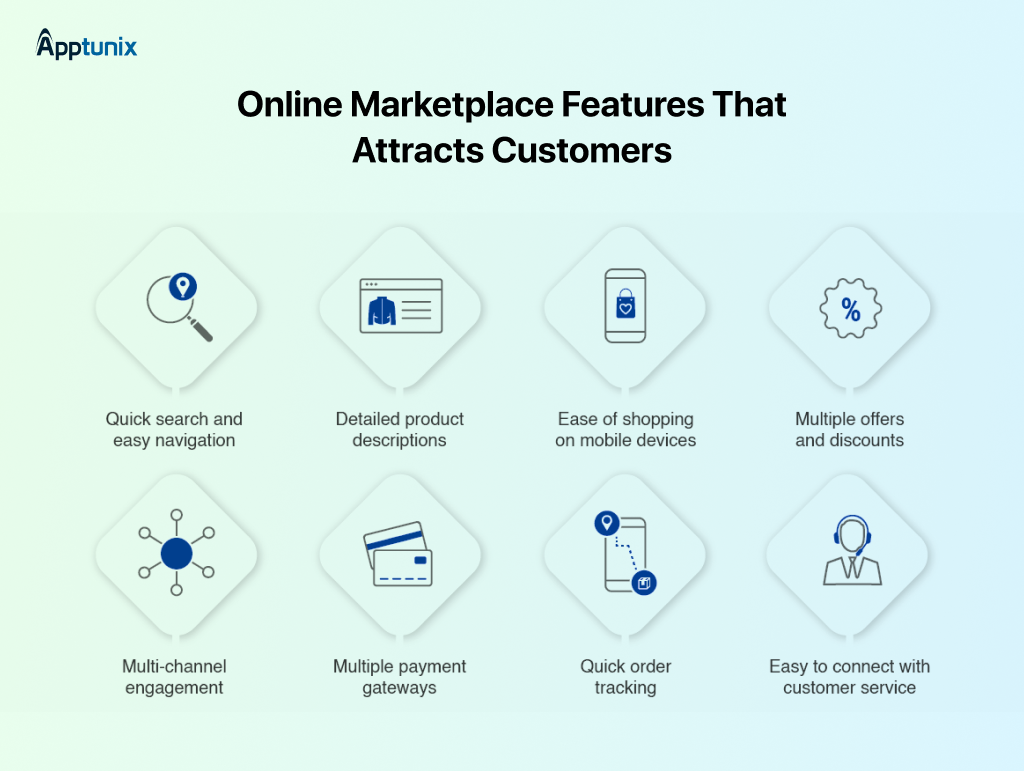
Your marketplace grows when customers can discover the right professional quickly and complete the entire journey without friction. These essentials align with the best Features of on-demand service apps and help you launch a marketplace like TaskRabbit with a user-first design. The features below set the standard for a modern service experience:
- Advanced service filters that let users refine results based on skills, reviews, pricing, and real-time availability
- Smart search that ranks professionals using performance, relevance, and response history
- Fast task posting for standard categories and custom job requests
- Instant pricing that removes confusion and reduces booking hesitation
- Integrated payments that finalize transactions inside the app within seconds
- Live task tracking for real-time updates and location visibility
- Transparent ratings and reviews to build confidence and drive repeat usage
B.Provider-Facing Essentials
Providers are the backbone of your marketplace. When they trust the platform, your supply stays strong and engaged. These capabilities support strong supply operations and reflect what’s needed to build an on-demand marketplace that professionals trust. These features give them control, clarity, and motivation:
- Instant job alerts for opportunities that match their skills and availability
- Automated matching that filters jobs based on experience and proximity
- Built-in availability management to avoid scheduling conflicts
- In-app communication tools for direct and secure chat with customers
- An earnings dashboard with clear summaries of daily, weekly, and monthly income
- Fast, secure payout processing with detailed transaction insights
- Performance analytics that highlight ratings, task completion rates, and repeat clients
C.Admin and Platform Controls
Behind the curtain, your marketplace needs a powerful control center. These are must-haves for on-demand service marketplace development, especially if your goal is to launch an app like TaskRabbit with enterprise-grade stability. These tools allow you to grow efficiently without losing visibility or quality:
- User and provider verification features to prevent fraud and protect trust
- Dynamic category and service management for easy expansion
- Streamlined dispute resolution workflows for fast issue handling
- Real-time analytics for tracking revenue, demand cycles, and user engagement
- Commission and fee control panels to optimize monetization
- Content and review moderation systems to maintain quality and authenticity
- Platform-wide notification and broadcast tools for updates and announcements

Best Monetization Strategies To Earn From Marketplace Apps
You can successfully launch an on-demand marketplace, attract users, and still fail if monetization is weak. Revenue models must align with user behavior, transaction frequency, and value perception.
Let’s examine proven approaches.
⭐Transaction Commissions
The platform takes a percentage from each transaction. Typically ranges between 10 to 30 percent depending on industry. Food delivery apps often operate at 15 to 25 percent commission. This model scales naturally as transaction volume increases.
⭐ Subscription Tiers
Some platforms charge vendors a monthly fee for premium access.
Benefits may include:
• Better visibility
• Lower commission rates
• Advanced analytics
⭐Featured Listings
Vendors can pay for higher ranking or promoted visibility within search results. Amazon uses this model extensively. Visibility becomes a revenue stream.
⭐Surge Pricing
Dynamic pricing increases platform revenue during high-demand periods. Ride-hailing and home services platforms commonly use surge pricing to balance supply and demand. It improves provider participation and increases margins during peak times.
⭐Embedded Finance Revenue
Advanced marketplaces integrate lending, insurance, or early payout services. For example, offering instant payout to providers for a small fee creates additional revenue channels. This transforms your platform from a simple intermediary into a financial ecosystem.
How Much Does It Cost to Build an On-Demand Marketplace?
Let’s address the question every founder eventually asks.
What is the real cost to build an on-demand marketplace in 2026?
The honest answer depends on scope, geography, architecture complexity, and how ambitious your roadmap is. A basic local services platform looks very different from a multi-country logistics marketplace with embedded finance.
Still, we can break this into practical ranges.
1. MVP Investment Range
If you want to build an on-demand marketplace with core functionality only, an MVP is the logical starting point.
An MVP typically includes:
• User app
• Provider app
• Admin dashboard
• Payment integration
• Basic analytics
• Core Features of on-demand service apps
This stage focuses on validating liquidity. Can you attract supply and demand simultaneously? Can you create repeat transactions?
Many founders overspend here. They try to perfect UI animations instead of validating core marketplace behavior. A focused MVP helps you test pricing, service categories, and early monetization.
2. Full-Scale Enterprise Platform Cost
When you move beyond validation and plan to scale across cities or countries, the economics change.
A full-scale platform often includes:
• Microservices architecture
• Advanced recommendation engines
• AI-based matching
• Fraud detection systems
• Multi-currency support
• Escrow and automated payouts
• Enterprise-grade DevOps
Enterprise-grade on-demand marketplace development also requires deeper QA cycles, compliance audits, and performance optimization.
3. Infrastructure and DevOps Budget
Infrastructure is a recurring cost, not a one-time expense.
Cloud hosting, database management, auto-scaling, monitoring tools, and security audits typically consume 8 to 15 percent of your annual tech budget.
For example:
• Early-stage platform: 1,000 to 3,000 USD per month
• Growth-stage platform: 5,000 to 20,000 USD per month
If you ignore DevOps in early planning, scaling becomes chaotic. Stable cloud-native architecture protects uptime and user trust.
4. Marketing and User Acquisition Cost
You can launch an on-demand marketplace technically, but without liquidity, it fails.
Marketplace businesses face the chicken-and-egg problem. You need both providers and customers simultaneously.
Paid acquisition costs vary widely by industry. In competitive verticals like food delivery or ride-hailing, customer acquisition cost can exceed 50 USD per user.
Ignoring this budget is one of the biggest strategic mistakes early founders make.

Unit Economics: The Golden Ratio To Get Funding
Many founders obsess over the cost to build an on-demand marketplace. They compare development quotes from every on-demand app development company they meet. But development cost is a one-time investment. Poor unit economics destroy you every single month.
✔The 3:1 LTV to CAC Benchmark
The minimum acceptable ratio between Lifetime Value and Customer Acquisition Cost is 3:1.
If you spend 100 dollars to acquire a customer, that customer should generate at least 300 dollars in gross contribution over time. Market leaders aim for 5:1. Why? Because churn, operational overhead, and unpredictable demand cycles always reduce theoretical margins.
Anything below 3:1 signals structural risk.
✔CAC Payback Period: The 12 to 18 Month Rule
If it takes 24 months to recover your CAC, your model leaks cash. In high-churn service categories, you must shorten payback to under 18 months. Ideally under 12.
You calculate this by modeling:
- Average order value
- Transaction frequency
- Contribution margin per order
For example, if your contribution margin is 20 dollars per transaction and the average user completes 10 transactions per year, you generate 200 dollars annually. If your CAC is 150 dollars, you recover in less than a year. That is healthy.
✔Calculating Fully-Loaded CAC
Founders often underestimate CAC.
Include:
- KYC and onboarding costs
- Provider vetting
- First-order discounts
- Referral incentives
- Performance marketing overhead
When you include these factors, CAC often increases by 20 to 40 percent compared to initial assumptions.
How Apptunix Helps in Scaling Beyond Version 1
Very few teams truly understand how to build an on-demand marketplace that compounds instead of collapsing under growth pressure. That transition from version one to version two is where Apptunix steps in as a long-term technology partner rather than just a delivery vendor.
Over the last 12+ years, Apptunix has worked with startups and enterprise brands across the globe delivering hundreds of digital products across mobility, hyperlocal services, logistics, healthcare, and fintech-driven marketplaces.
✔️AI-Powered Matching
In early stages, simple rule-based matching works. The nearest provider receives the request. The first available vendor gets assigned. Filters remain static.
Apptunix enhances matching engines using behavioral and performance signals collected from real transactions. Instead of matching purely on proximity, systems evaluate acceptance history, service ratings, cancellation ratios, time-of-day efficiency, and live traffic conditions. In mobility and logistics platforms we have built, even minor improvements in dispatch accuracy have increased fulfillment rates by measurable margins and reduced cancellation friction.
A five percent increase in intelligent match accuracy can materially improve contribution margins over thousands of monthly transactions.
✔️Predictive Pricing Models
Static pricing may work in a contained environment. It breaks during demand spikes.
Apptunix integrates predictive pricing frameworks that analyze historical booking data, peak-hour demand clusters, seasonal trends, and regional spending patterns. This capability becomes especially critical in industries like ride-hailing, home services, and food delivery, where supply elasticity directly affects platform health.
We have seen platforms struggle when they delay building dynamic pricing capabilities. Providers disengage during high-demand windows if compensation does not reflect real-time conditions. Predictive pricing corrects that imbalance while protecting user conversion rates. Apptunix builds with scalability in mind, ensuring predictive engines integrate seamlessly with transaction logic.
✔️Geographic Expansion
Expanding into a new city seems simple on paper. In practice, it introduces regulatory compliance differences, payment localization requirements, tax structure variations, and operational restructuring.
Apptunix approaches geographic scaling with modular infrastructure. Instead of cloning systems city by city, we build unified backends that support multi-region deployment through configuration rather than code rewrites. This approach reduces engineering redundancy and accelerates rollout timelines.
✔️Service Category Expansion
Once a platform stabilizes in one vertical, horizontal expansion often becomes the next growth lever. A home services app may extend from cleaning to plumbing. A mobility platform may introduce courier delivery. A wellness marketplace may expand from salon bookings to therapy sessions.
If the core system is rigid, each category becomes a redevelopment effort.
Apptunix designs marketplaces using configurable commission engines, flexible catalog systems, and dynamic service modules. This allows clients to introduce new categories through backend configuration instead of structural rewrites. In our portfolio, clients who adopted flexible architecture were able to introduce additional service verticals within weeks instead of months.
That structural foresight strengthens long-term viability and reduces incremental development cost as platforms evolve.
✔️Automation of Operations
Manual operations create linear growth pressure. As transactions increase, staffing demands rise proportionally.
Apptunix integrates operational automation into marketplace systems from early growth stages. Vendor onboarding workflows become partially automated through verification systems. Dispute resolution routes through structured logic instead of manual escalation. Refunds and payouts synchronize with payment gateways automatically. Fraud detection layers flag suspicious patterns using rule-based triggers and analytics signals.
In over a decade of delivering scalable digital platforms, Apptunix has learned that operational intelligence determines longevity. Technology alone does not guarantee success.
Final Perspective
The difference between a short-lived platform and a sustainable one lies in execution discipline. If you truly want to understand how to build an on-demand marketplace that survives beyond hype cycles, focus on fundamentals.
Understand the real cost to develop an on-demand platform, including infrastructure, marketing, and expansion overhead. Design the core features required for an on-demand marketplace carefully. Validate your liquidity before chasing valuation.
Markets reward platforms that solve real problems consistently, not those that chase trends.
Focus on density.Protect margins.Own outcomes.
That is how marketplaces survive.
Frequently Asked Questions(FAQs)
Q 1.How long does it take to build an on-demand marketplace?
An MVP typically takes 3 to 5 months depending on complexity. A full-scale enterprise marketplace with AI-based matching and multi-region infrastructure may take 6 to 9 months.
Q 2.What is the average cost to build an on-demand marketplace in 2026?
The cost to build an on-demand marketplace ranges from 20,000 to 70,000 USD for an MVP and can exceed 150,000 USD for scalable enterprise solutions.
Q 3.What features are required for an on-demand marketplace?
Core features include user and provider apps, real-time booking, secure payments, ratings and reviews, admin dashboards, analytics, and automated payout systems.
Q 4.Should I choose white label or custom on-demand marketplace development?
White label works for quick validation with limited customization. Custom development is better for scalability, IP ownership, and long-term investor readiness.
Q 5.What is the best on-demand marketplace business model?
The best model depends on your vertical. Multi-vendor aggregator models scale faster, while managed marketplaces allow higher control and premium pricing.
Q 6.How do marketplaces generate revenue?
Common monetization strategies for marketplace apps include transaction commissions, subscription tiers, featured listings, surge pricing, and embedded finance.
Q 7.How do I ensure liquidity when launching an on-demand marketplace?
Start hyperlocal, focus on dense supply-demand concentration, incentivize early providers, and invest strategically in customer acquisition to create repeat transactions.
Q 8.Why is Apptunix a top choice for marketplace app development?
Apptunix has 12+ years of experience and has built 2000+ digital products, including high-scale on-demand marketplace apps. Our marketplace-first engineering approach ensures your platform is fast, stable, and ready to scale.
Q 9.Can Apptunix build a fully customized marketplace like TaskRabbit or Thumbtack?
Yes. Whether you want to build a marketplace like TaskRabbit, launch a Thumbtack clone, or create a niche on-demand app, Apptunix delivers fully custom and scalable solutions tailored to your business model.
Rate this article!
Join 60,000+ Subscribers
Get the weekly updates on the newest brand stories, business models and technology right in your inbox.
Related Posts

Partner with tech catalysts who transform ideas into impact.
Book your consultation with us.
Let’s Talk!
Partner with tech catalysts who transform ideas into impact.
Book your consultation with us.
Let’s Talk!
Speak With Our Experts


UNITED ARAB EMIRATES
One Central, The offices 3, Level 3, DWTC, Sheikh Zayed Road, Dubai
+971 50 782 1690