How Much Does It Cost to Build a Money Transfer App Like Wise?
33 Views 11 min August 25, 2026

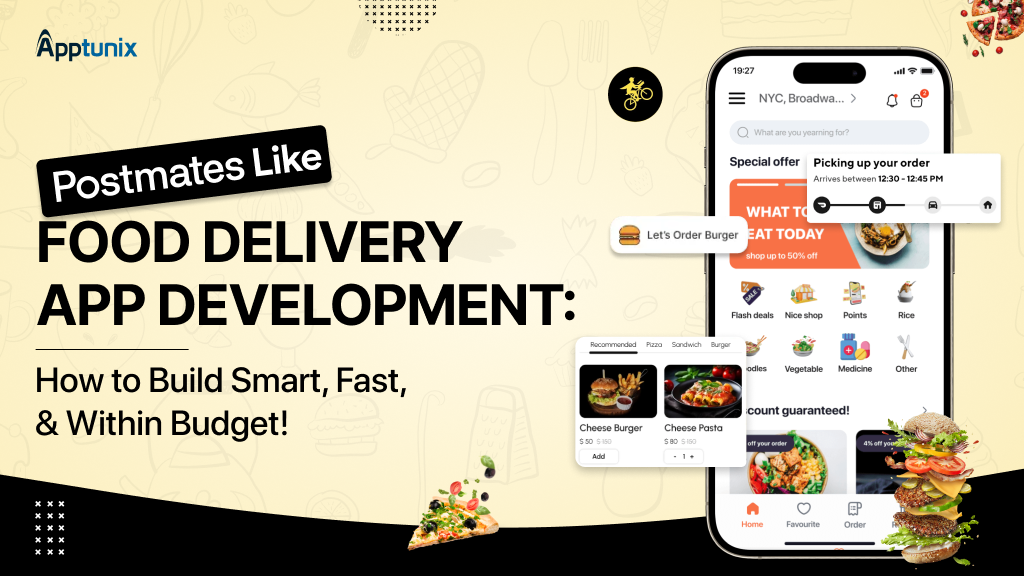
Food delivery has moved from a convenience category to a core consumer service. People want variety, predictable delivery times, accurate tracking, and a platform they can trust during peak hours. This shift is why Postmates-like food delivery app development continues to attract serious investment.
The U.S. food delivery sector is booming and projected to reach $114 billion by 2030, growing at a CAGR of 9.6%. Postmates remains a strong reference point because their model solves three major problems at once: reliable restaurant aggregation, efficient hyperlocal delivery, and a user experience that reduces friction at every step.
When a platform consistently gets these fundamentals right, users stay.
Restaurants stay.
Delivery partners stay.
And the business compounds.
The market is competitive, but it’s also expanding fast enough for new players to claim meaningful share. If you’re planning to build a Postmates like app, this guide walks you through how that model works, which core technologies power it, and where to invest your resources to build a platform for long-term growth.
The Postmates business model isn’t simply “order food and deliver it.” It’s a synchronized marketplace + logistics machine. Restaurants list menus, users place orders, and a flexible network of couriers handles delivery.
At its core, Postmates operates as a marketplace powered by a logistics engine. Restaurants provide the food, customers place orders, and a network of couriers fulfils them but success comes from how well the system optimises that flow.
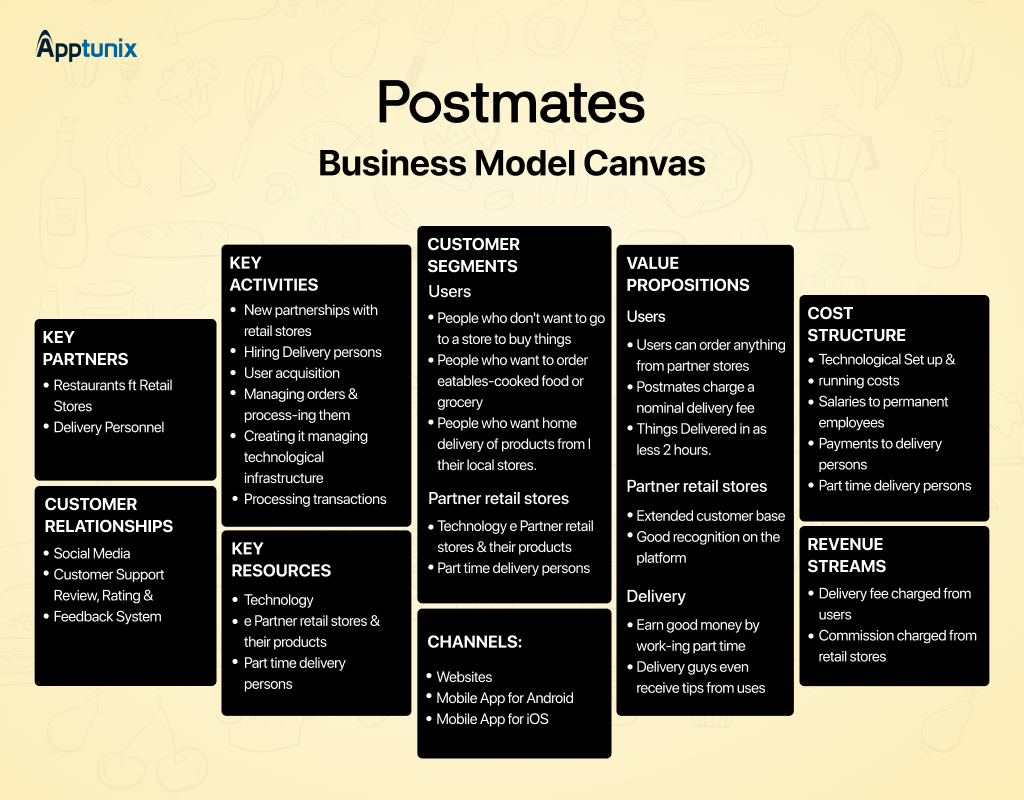
Here’s how they make it work at scale:
Dynamic courier assignment: Orders aren’t randomly given to the nearest courier. The system weighs restaurant preparation time, the courier’s current location, route efficiency, and expected delivery windows. This minimises couriers’ idle time and reduces delivery costs for the platform.
Efficient margins through multiple revenue streams: Postmates isn’t just charging commissions. It generates revenue through delivery fees, small-cart surcharges, priority delivery options, and merchant partnerships. That diversification ensures stability even when order volume fluctuates.
Scalable operations: Because the model is proven, it’s relatively straightforward to replicate in new geographies. Whether you want to build a restaurant aggregation app in a dense city or roll out a hyperlocal delivery app, the core structure holds. That’s why many entrepreneurs prefer the on-demand food delivery app business model of Postmates.
Long-term driver retention: Optimized logistics and fair earnings help couriers stay engaged. Lower turnover reduces recruitment and training costs, improving long-term unit economics.
To compete in the U.S. market, your On-demand food delivery app development feature list must be strategic, not bloated. The goal is to provide clarity, speed, and trust across every interaction.
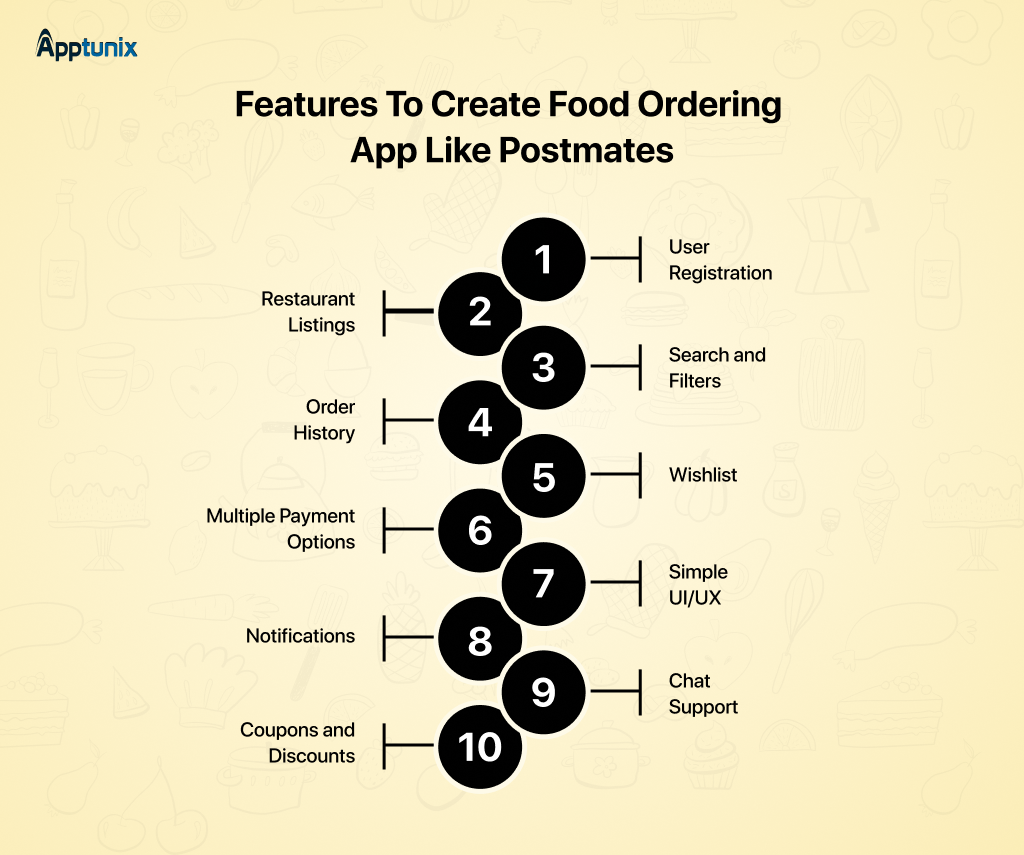
A. User-Side FeaturesA Postmates-like food delivery app development project always starts with the user experience. These features directly impact conversions, repeat orders, and overall platform stickiness.
1. Simple account creation
Log in using email, phone, or social accounts. Users value frictionless access.
2. Smart search and filters
Filters for cuisine, distance, delivery time, pricing, ratings, and dietary preferences. This level of precision consistently improves discovery.
3. Rich menu browsing
Clear menus, dish-level customizations, add-ons, and allergen visibility. These elements matter when you’re building an app like Postmates for high-volume ordering.
4. Advanced cart management
Modify items, add instructions, switch between multiple restaurants, and view fees transparently.
5. Smooth and fast checkout
Saved addresses, saved cards, and digital wallets. Reducing checkout steps directly increases order completion.
6. Real-time order tracking
Live map tracking, route visibility, ETA updates, and push alerts. This is now a baseline requirement for any food delivery platform development strategy.
7. Ratings, reviews, and customer support
Rate drivers and restaurants, raise complaints, and access chat-based support. These feedback loops help maintain quality across the platform.
B. Driver-Side FeaturesCouriers need tools that help them earn more while navigating fewer operational hurdles. Strong driver features are essential for any hyperlocal delivery app development initiative.
1. Driver onboarding and verification
Upload documents, complete background checks, and get approval quickly.
2. Real-time task notifications
Instant alerts for new delivery requests with restaurant distance, expected earnings, and estimated time.
3. In-app navigation with optimized routing
Integrated GPS with shortest-path routing. Reduces delays and increases hourly earnings.
4. Delivery queue and task management
Accept, reject, or batch multiple orders when assigned. Clear workflows help drivers avoid confusion during peak hours.
5. Earnings tracking and payout history
Daily, weekly, and monthly earning summaries with transparent fee breakdowns.
6. Status updates during delivery
Mark arrival at restaurant, order pickup, drop-off, and completion. This keeps the platform synchronized end-to-end.
7. Support access
Quick contact options for customer support during problematic deliveries.
C. Admin Panel FeaturesThis is where the actual business operations run. A food delivery app development company focuses heavily on this layer because it determines scalability, profitability, and compliance.
1. User, driver, and restaurant management
Approve new accounts, update details, suspend users, or manage compliance tasks.
2. Dynamic pricing and delivery fee controls
Set surge pricing, zone-based delivery fees, promotional discounts, and partner commissions.
3. Order and logistics oversight
Track all live orders, review delays, reassign deliveries, and monitor driver activity.
4. Restaurant onboarding and menu control
Add vendors, upload menus, adjust availability, and monitor performance.
5. Financial management dashboard
Commission payouts, refunds, incentives, marketing spend, revenue reports, and tax compliance.
6. Analytics and performance insights
Metrics for order volume, average delivery time, user behavior patterns, and market heatmaps.
7. Marketing and promotion tools
Set up coupons, loyalty programs, referral rewards, and targeted campaigns.
Founders who want meaningful differentiation must look beyond basic ordering. Advanced features reshape your value proposition and drive long-term loyalty in Postmates-like food delivery app development.
1. AI-Driven Personalization and Smart RecommendationsAI analyzes user behavior, cuisine preferences, past orders, and price sensitivity to recommend restaurants and dishes at the right moment. This increases repeat orders, lifts average order value, and strengthens retention — critical metrics when you plan to launch an app like Postmates.
2. Intelligent Routing and Real-Time ETA CalculationsA strong logistics engine predicts traffic patterns, kitchen preparation times, and driver distance before assigning orders. These hyperlocal delivery app development features reduce late deliveries and improve fulfillment speed, which directly impacts platform reliability.
3. Surge Pricing and Automated Delivery Fee AdjustmentsDynamic pricing helps the platform maintain balance during demand spikes. Automatic fee adjustments ensure couriers are compensated fairly while protecting platform margins. This is an essential component when considering long-term Postmates clone app development.
4. Loyalty Programs, Wallets, and Digital CouponsReward programs, in-app wallets, and targeted digital coupons keep customers engaged and reduce churn. These tools create predictable ordering cycles, stabilizing revenue for restaurants and couriers.
5. Smart Order Bundling for DriversOrders going to nearby locations are automatically grouped and assigned to a single courier. This increases delivery efficiency, driver earnings, and reduces operational costs — a key part of on-demand food delivery app development.
6. Multi-Restaurant CheckoutUsers can add dishes from different restaurants within the same delivery radius. This feature increases average cart size and improves customer satisfaction, enhancing the working of aggregation business model.
7. Kitchen Load ManagementRestaurants can dynamically update order acceptance, prep times, and menu availability during peak hours. This ensures orders are fulfilled accurately and on time, supporting features of Postmates-style delivery app.
8. Geo-Fencing and Service Zone ManagementAdmins define delivery zones based on demand density, traffic, and courier availability. This helps optimize delivery costs, order assignments, and reduces driver idle time — a critical hyperlocal delivery app development feature.
9. Safety Tools for Drivers and CustomersEmergency buttons, ID verification for high-value orders, and fraud detection rules improve operational safety. Safety is increasingly vital for user trust and platform credibility.
10. Automated Marketing EnginePush notifications, abandoned-cart reminders, reorder prompts, and personalized campaigns increase user retention without manual effort. This feature is essential for any scalable food delivery platform development.
Zomato Business and Revenue Model: Secrets Behind the $560 Million Company
Choosing the right technology stack is critical for developing a Postmates-like food delivery app. The tech stack determines app performance, scalability, and long-term maintenance costs. A reliable food delivery app development company will guide you through these choices. Using the right tech stack reduces technical debt, improves user experience, and directly impacts the food delivery app development cost.
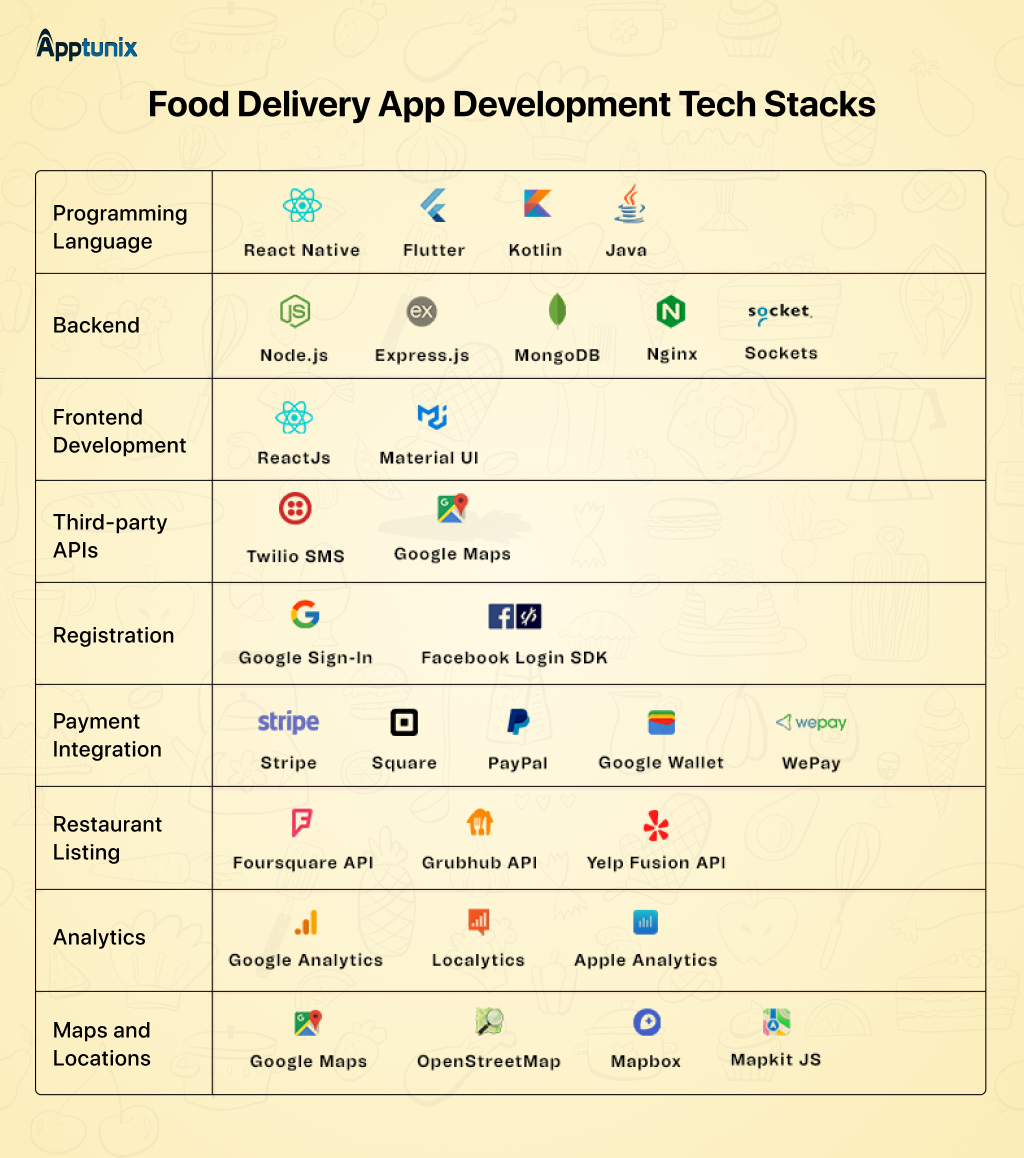
A. Mobile FrameworksNative Android (Kotlin/Java) and iOS (Swift) for maximum performance. Cross-platform frameworks like Flutter or React Native for faster development and consistent UI across devices.
B. Backend Technologies for ScalabilityNode.js, Python/Django, or Ruby on Rails for real-time order processing. Microservices architecture for modularity and faster updates.
C. Mapping & Navigation APIsGoogle Maps API, Mapbox, or HERE for route optimization, GPS tracking, and ETA calculation. Features like multi-stop routing and dynamic path recalculation reduce delivery delays.
D. Payment Gateway OptionsIntegration with Stripe, PayPal, or Braintree for secure online payments. Support for wallets, UPI, and in-app payment systems to improve conversion.
E. Databases Optimized for Real-Time OperationsMongoDB or PostgreSQL for high-performance, real-time data handling. Caching with Redis to speed up order status and live tracking updates.
F. Push Notifications & WebSocketsReal-time updates for order status, delivery tracking, and promotions. Ensures instant communication between users, drivers, and restaurants, which is critical for on-demand app development services.
The cost to build an app like Postmates depends on platform choice, feature complexity, integrations, and development resources. Building a Postmates-like food delivery app is a strategic investment. Understanding the cost to build an app like Postmates requires looking beyond simple development hours. Several critical factors influence the overall food delivery app development cost and determine whether your platform can scale efficiently.
Below is a general cost overview for the U.S. market.
The choice of platform has a direct impact on cost and reach. Developing for iOS only or Android only can reduce initial investment, but limits market coverage. Launching for both platforms simultaneously expands your user base but increases development time and cost. Many founders choose cross-platform frameworks like Flutter or React Native to balance quality, speed, and budget. The right choice also affects the long-term scalability of your food delivery platform development.
Not all apps are created equal. A basic food delivery app covers login, restaurant listing, ordering, and payments. But a true Postmates clone involves advanced features such as AI-based recommendations, intelligent routing, surge pricing, multi-restaurant checkout, and loyalty programs. Each additional feature increases development effort, testing requirements, and ultimately, Postmates app development cost. Prioritizing features strategically is key to optimizing your ROI.
User experience is a decisive factor for retention and repeat orders. Custom UI/UX designs, branded animations, and personalized user flows enhance engagement but require more design and development effort. Off-the-shelf templates save cost but may limit your differentiation. When planning Postmates-like food delivery app development, investing in polished, intuitive UI/UX upfront ensures your platform feels premium and reliable.
Modern food delivery platforms rely heavily on integrations. Payment gateways like Stripe or Braintree, mapping and routing APIs, restaurant POS systems, AI modules, and push notification services all need to connect seamlessly. Each integration increases development complexity and requires rigorous testing. These integrations not only influence food delivery app development cost but also affect operational efficiency and long-term scalability.
The backend powers everything from order processing to real-time courier tracking. A robust, scalable backend can handle peak-hour surges without downtime. Cloud services like AWS, Google Cloud, or Azure, combined with microservices architecture, increase initial cost but reduce future scaling issues. Investing in a scalable backend from the start is a key factor in successful Postmates clone app development.
The cost also depends on who builds the app. U.S.-based development teams generally charge higher rates than EU or UAE teams, but they bring advantages in market understanding, quality assurance, and post-launch support. Leveraging experienced on-demand app development services from the right location can optimize cost without compromising quality. Often, a hybrid approach — combining U.S. strategy and offshore execution — balances budget and expertise.
Development doesn’t stop at launch. Regular updates, bug fixes, server monitoring, and feature enhancements are part of ongoing costs. Platforms like Postmates continuously roll out new features, optimize routing algorithms, and integrate emerging payment or loyalty solutions. Factoring these costs early ensures sustainable operations and long-term ROI for your on-demand food delivery app development project.
To successfully make a restaurant aggregation app or a Postmates clone app development, founders need a structured approach. Using a top food delivery app development company or skilled food delivery app developers ensures each stage is executed efficiently.
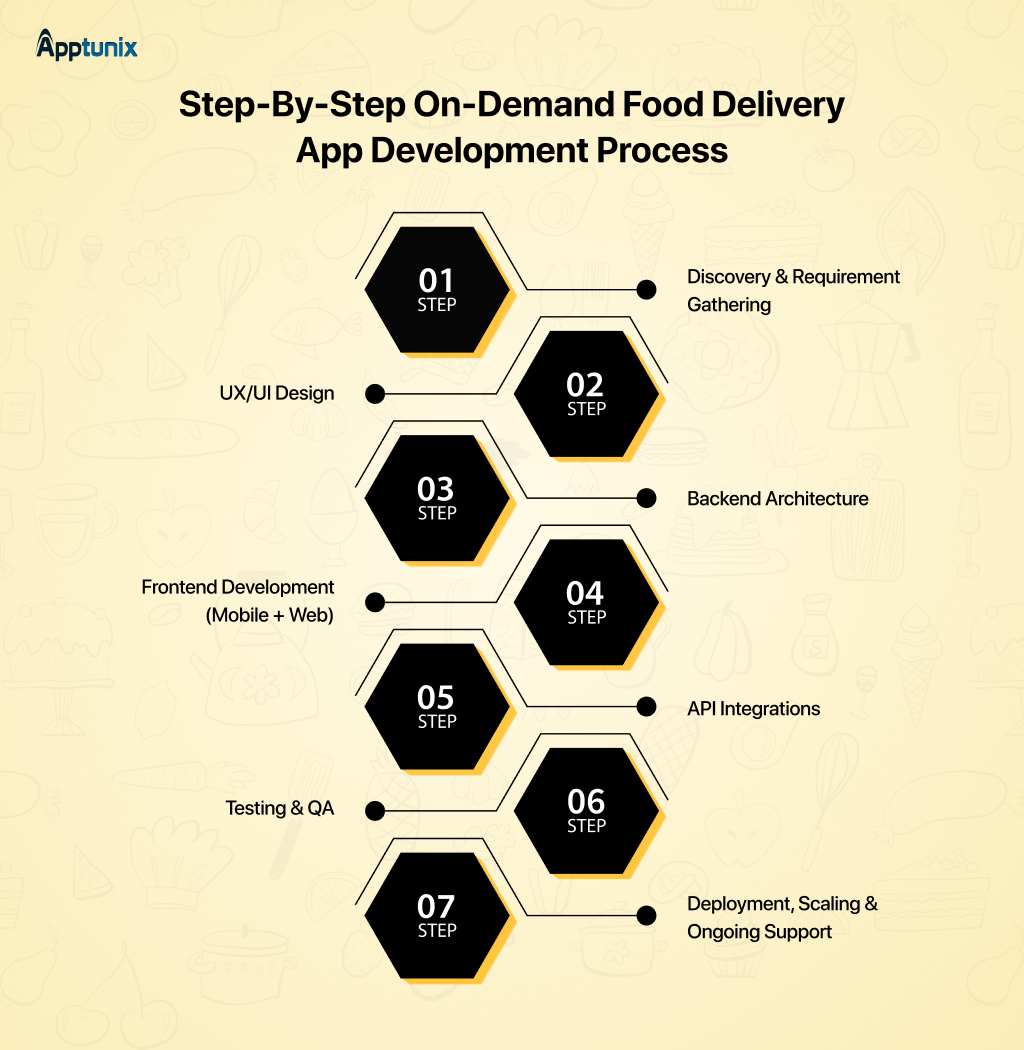
1. Discovery & Requirement GatheringUnderstand the target audience, competitor landscape, and user expectations. Map delivery logistics, define platform scope, prioritize features, and determine whether to launch an MVP or full-scale app. This stage sets the foundation for on-demand food delivery app development services and reduces development risks.
2. UX/UI DesignCreate frictionless flows for users, drivers, and restaurants. The design should support quick ordering, transparent tracking, and smooth payments. Well-designed interfaces improve conversion, reduce abandonment, and enhance the user experience of your Postmates-like food delivery app.
3. Backend ArchitectureBuild a scalable backend capable of handling high-volume orders, real-time courier tracking, and dynamic pricing. A strong backend ensures reliability and supports the launch Postmates-like food delivery app strategy.
4. Frontend Development (Mobile + Web)Develop iOS and Android apps using native or cross-platform frameworks. Include dashboards for restaurants, drivers, and admins. Hiring experienced iOS and Android app developers ensures stability, smooth performance, and a polished user experience.
5. API IntegrationsIntegrate essential APIs for:
6. Testing & QAPerform rigorous testing to ensure order accuracy, app stability, and payment security. Test across devices, simulate high-traffic scenarios, and resolve bugs to increase the ROI of food delivery platform development.
7. Deployment, Scaling & Ongoing SupportLaunch in target cities, monitor performance, and scale infrastructure as demand grows. Continuous updates, feature additions, and support maximize food delivery app monetization strategies and ensure long-term growth.
How to Build a Food Delivery App Like Keeta: A Step-by-Step Guide
Understanding the revenue model of Postmates app is essential for founders planning to launch Postmates-like food delivery app. Modern platforms rely on multiple revenue streams to maximize profitability.
Charge restaurants a percentage of each completed order, typically 15–30%. This is the primary revenue stream in most Postmates clone app development projects.
Customers pay a variable delivery fee based on distance, time, and demand. Delivery fees provide immediate revenue and incentivize timely fulfillment.
Adjust fees during peak hours or high-demand events to ensure courier availability and maintain margins. Surge pricing is key for scaling on-demand food delivery app development services profitably.
Offer subscription plans for users or restaurants that provide:
Monetize through partnerships, advertising, featured restaurant placement, and enterprise POS integrations. These revenue streams of Postmates-style delivery app diversify income and improve ROI.
If you’re planning to build an app like Postmates, choosing the right development partner can define your success. That’s where Apptunix comes in. With 13+ years of experience and a global portfolio, Apptunix has helped startups and enterprises launch scalable, profitable Postmates-style food delivery apps that users love and investors value.
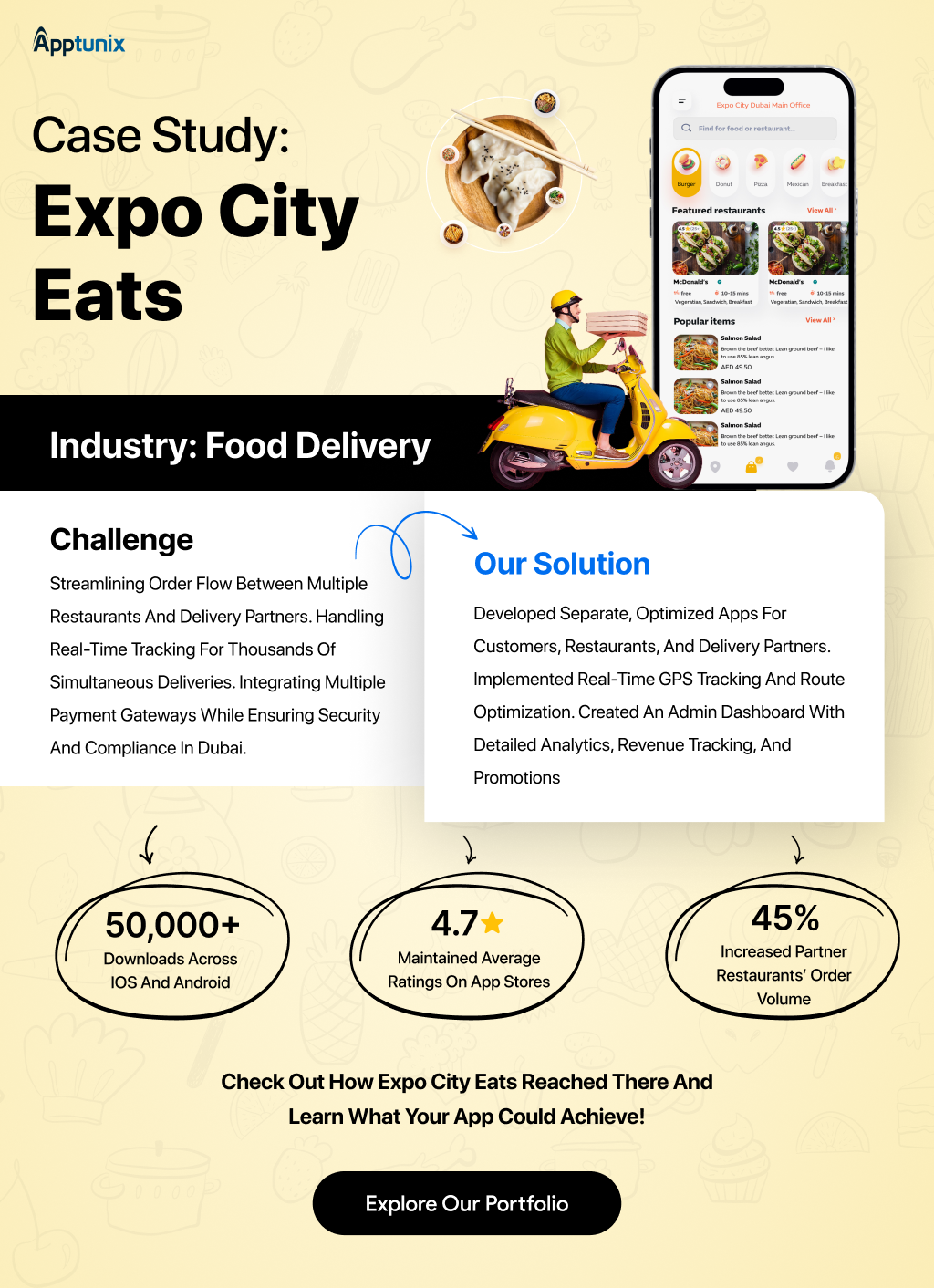
One standout project is Expo City Eats, a hyperlocal food delivery platform developed for Dubai Expo City. The goal was simple but ambitious: enable seamless food ordering and delivery for thousands of visitors in a high-demand, fast-moving environment.
This project shows exactly how Postmates clone app development can be executed efficiently while delivering a strong ROI.
Why Founders Trust Apptunix
Building a Postmates-like food delivery app is a strategic investment that requires careful planning, advanced features, and the right food delivery app development company to execute.
At the end of the day, it’s about balancing speed, quality, and cost.
Let’s build your Postmates-like food delivery app together—capture your market, delight users, and scale globally.

Q 1.How much does it cost to build a food delivery app like Postmates?
The cost to build a food delivery app like Postmates typically ranges from $20,000 to $200,000. The exact price depends on features, platforms, design, and the development team’s location.
Q 2.How does a Postmates-like food delivery app work?
Customers browse, order, and track deliveries. Restaurants manage orders on dashboards, drivers navigate via the app, and admins oversee the platform. This is the core of food delivery platform development.
Q 3.What features should a food delivery app include?
Core features: login, search, menu, ordering, tracking, payments, ratings. Advanced features: AI recommendations, surge pricing, loyalty programs—essential for how to make Postmates-style delivery app.
Q 4.How fast can you build a Postmates-style app?
MVP: 14–20 weeks; full-feature app: 25–33 weeks. Experienced food delivery app developers and a trusted food delivery app development company reduce timelines.
Q 5.What tech stack is best for a food delivery app?
iOS: Swift, Android: Kotlin, or cross-platform Flutter/React Native. Backend: Node.js/Python/Java. Databases: MySQL/MongoDB. APIs for GPS, payments, notifications.
Q 6.How to develop a food delivery marketplace like Postmates?
Follow discovery, design, backend & frontend development, API integration, testing, and deployment. A skilled food delivery app development company ensures smooth execution.
Q 7.Can I customize a Postmates clone app?
Yes. You can tailor branding, features, UI/UX, and workflows while leveraging Postmates clone app development best practices.
Q 8.Why choose Apptunix for Postmates-like food delivery app development?
Apptunix has 13+ years’ experience delivering scalable food delivery platform development globally. You can hire iOS and Android app developers or use cross-platform solutions to build an app like Postmates.
Q 9.Does Apptunix handle full Postmates clone app development?
Yes. From MVP to advanced apps, Apptunix covers UX/UI, backend, frontend, APIs, and post-launch support. Scalable backend architecture, cloud infrastructure, and efficient APIs let your Postmates-like food delivery app development grow with demand.
Q 10.Can Apptunix help with monetization strategy?
Yes. Apptunix advises on commissions, surge pricing, subscriptions, and B2B revenue to maximize ROI of food delivery platform development.
Get the weekly updates on the newest brand stories, business models and technology right in your inbox.
Book your consultation with us.
Book your consultation with us.


One Central, The offices 3, Level 3, DWTC, Sheikh Zayed Road, Dubai
+971 50 782 1690