Airbnb Business Model & Revenue Strategy: 5 Insights for New-Age Businesses
6683 Views 12 min January 8, 2026


Zomato has transformed the way millions of people eat, shop, and get things delivered. With more than 1.5 million restaurants listed and millions of orders processed daily, the Zomato business model has created a profitable and scalable ecosystem that keeps everyone in the loop: customers are satisfied, merchants are growing, and deliveries are running efficiently.
What began in 2008 as a simple restaurant discovery website in India quickly evolved into a full-scale delivery service, now operating across 24 countries and serving over 70 million active users monthly. From a restaurant guide to a global on-demand delivery powerhouse, Zomato proves that a well-designed business model can turn convenience into a billion-dollar opportunity.
In this guide, we’ll break down the Zomato revenue model and explore the strategies behind its rapid growth. Whether you’re a startup founder aiming to launch your first delivery platform or an enterprise seeking a reliable food delivery app development company, this blog is packed with actionable insights you can immediately use to grow your business.
Zomato started in 2008 as a simple restaurant discovery website in India. Its mission was to help users find dining options with menus, reviews, and ratings. Within a few years, it evolved into a full-fledged on-demand delivery platform, expanding beyond food into groceries, alcohol, and cloud kitchens. Today, Zomato operates in over 24 countries, serving more than 80 million monthly active users and partnering with over 1.5 million merchants globally.
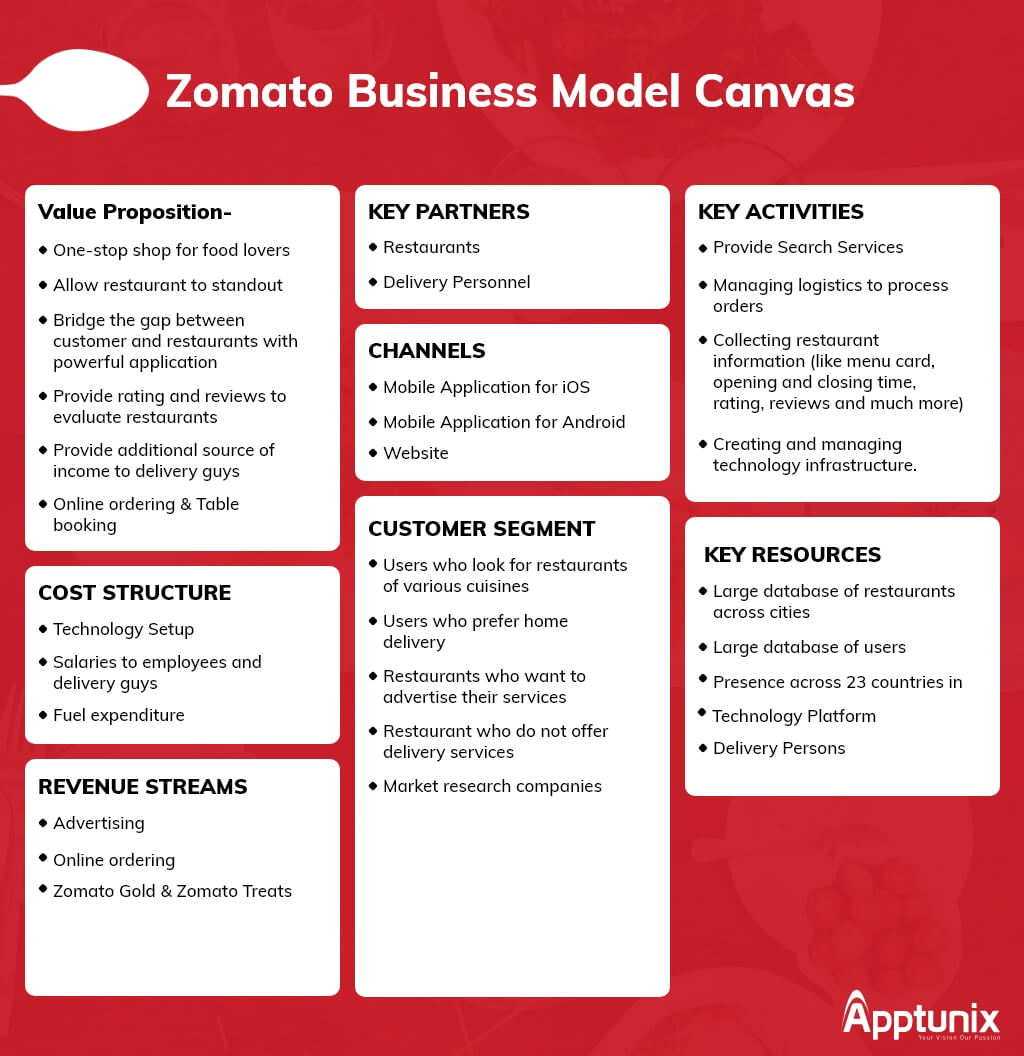
At its core, Zomato is a three-sided marketplace: connecting customers, delivery partners, and businesses. The platform combines an aggregator model with logistics-driven operations, ensuring not just discovery but also fast, reliable, and tracked deliveries.
Zomato’s model is designed for scalability. It utilises AI-powered route optimisation and predictive analytics to manage peak demand, enhance delivery efficiency, and offer personalised recommendations to users. Its approach demonstrates that a food delivery app business model can be profitable, scalable, and adaptable across verticals
A Zomato-style platform succeeds because every stakeholder enjoys a personalised and intuitive experience. Modern food delivery app like Grubhub go beyond basic ordering; they focus on convenience, engagement, and efficiency. Here’s how each component works:
A. Customer App B. Restaurant Dashboard C. Delivery Partner App D. Admin PanelRecommended: Food Delivery App Development: Cost, Features, and Investment Guide
Understanding the Zomato business model involves examining how it generates revenue from multiple streams. Unlike single-source startups, Zomato has layered monetisation strategies that maximise both customer and restaurant value.
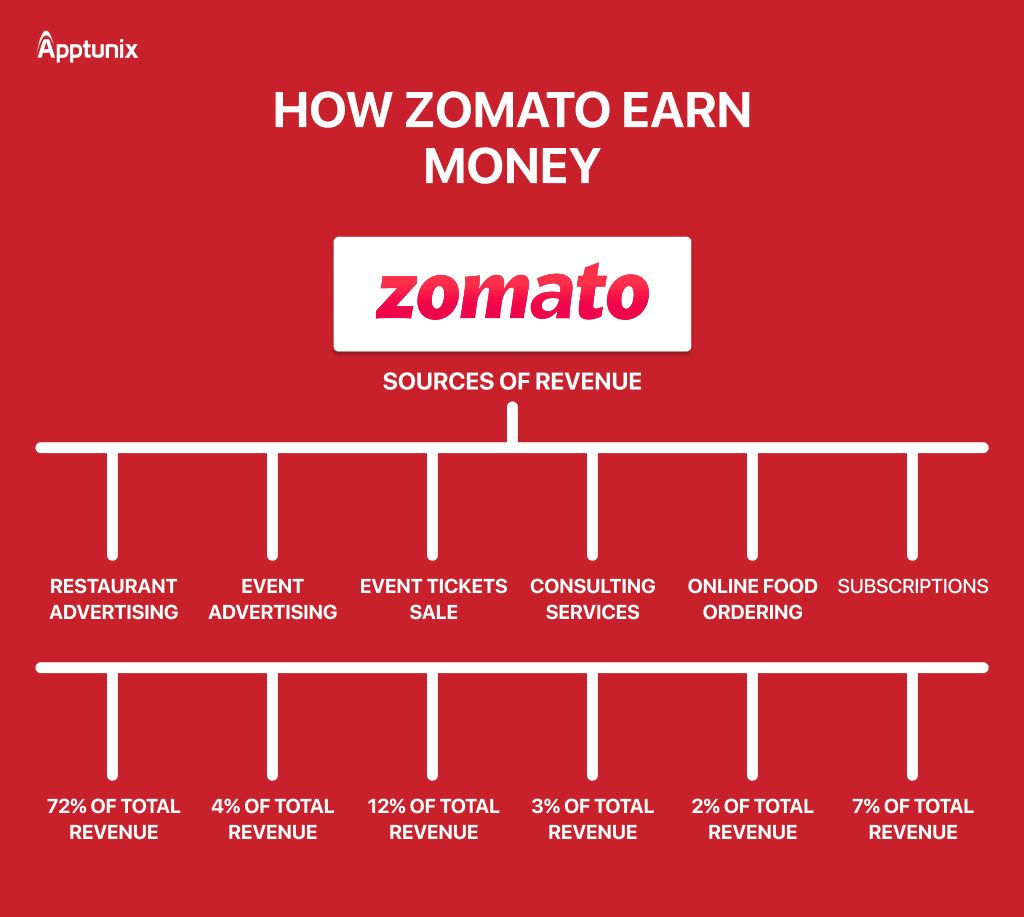
1. Commission from RestaurantsZomato charges restaurants a commission per order, typically ranging from 15% to 30% depending on location and services used. This ensures that as restaurants earn more through increased orders, Zomato scales its revenue alongside them.
2. Delivery Fees from CustomersCustomers pay delivery fees per order, which may vary depending on distance, time, or order value. During peak hours, surge pricing is applied to balance demand and ensure timely deliveries.
3. Customer-Side MonetizationDelivery fees & surge pricing: Extra fees for faster deliveries during high-demand periods.
Subscriptions: Zomato Pro (formerly Gold) offers benefits like free delivery and discounts for a monthly or annual fee, increasing recurring revenue.
4. Restaurant-Side MonetizationCommissions on orders: Core revenue driver for Zomato’s revenue model.
Advertising & featured listings: Restaurants pay for higher visibility in search results or on the app homepage.
5. Subscription ServicesZomato Pro/GOLD encourages loyal customers to order more frequently, boosting overall order volume and increasing both customer retention and platform revenue.
6. Advertising and PromotionsSponsored listings, banner ads, and featured restaurants generate high-margin income. Brands like Domino’s or Starbucks often invest in visibility to gain more orders.
7. Strategic Partnerships and Premium ServicesCollaborations with cloud kitchens, corporate clients, or premium brands create additional high-value revenue streams. By diversifying across these channels, Zomato demonstrates a food delivery app business model that balances recurring and transactional revenue.
How to Build a Food Delivery App Like Keeta: A Step-by-Step Guide
Zomato handles millions of orders monthly across 24 countries, translating to billions in annual GMV. Its subscription services increase order frequency: Pro members order nearly twice as often as non-members. Restaurant partners see measurable growth in customer reach, which makes Zomato’s commission fees more acceptable and scalable. Zomato’s success lies in monetizing both sides of the marketplace.
The Zomato business model is a blueprint for building a scalable, profitable platform in the on-demand delivery space. Entrepreneurs looking to replicate its success can take away several key lessons:
1. Diversify Revenue Streams Early
Zomato didn’t rely solely on delivery fees. By combining commissions from restaurants, customer delivery charges, subscription services, advertising, and corporate accounts, it created multiple layers of income. For startups planning a food delivery app business model, this approach ensures financial stability and long-term growth.
2. Focus on Seamless Customer Experience and Convenience
Customer retention is central to Zomato’s business strategy. Real-time tracking, easy reordering, loyalty rewards, and personalized recommendations keep users engaged. Startups should prioritize UX/UI, fast checkout processes, and reliable delivery to build trust from day one.
3. Embrace Technology and AI-Powered Optimization
From predictive analytics to AI-driven route optimization, Zomato leverages technology to increase efficiency and reduce costs. For any startup or enterprise planning Zomato clone app development, integrating AI-powered mobile app development for delivery apps can improve delivery times, forecast demand, and optimize workforce management.
4. Build Strategic Partnerships
Zomato’s collaborations with cloud kitchens, restaurant chains, and corporate clients accelerated growth. Startups can replicate this by identifying high-value partnerships that enhance reach, revenue, and customer loyalty.
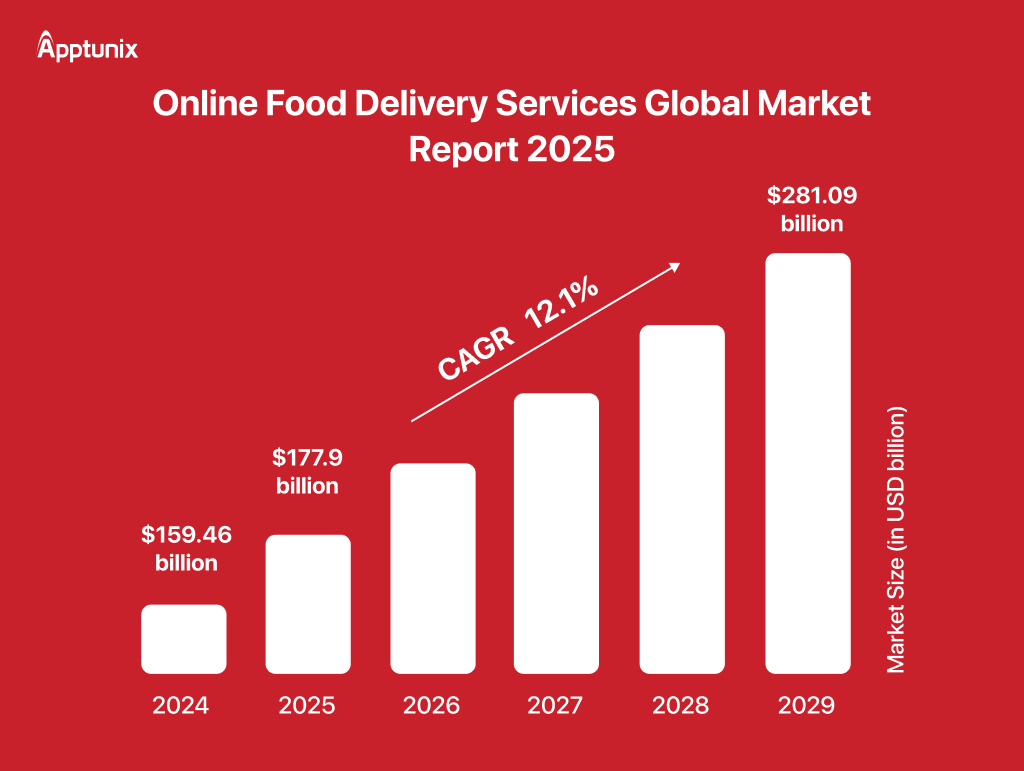
Startups and enterprises are increasingly looking to build an app like Zomato, not only for food delivery but for other on-demand verticals such as groceries, liquor, retail, and cloud kitchens. Zomato expanded into groceries, alcohol delivery, and even cloud kitchens to diversify revenue and retain customers. This shows that a Zomato clone app development approach can be adapted to multiple sectors, allowing startups to enter niche markets without reinventing the wheel.
Tip: Start with a white-label Zomato clone app solution to validate your idea quickly. Once traction is achieved, you can expand features, integrate AI analytics, and scale efficiently.
If you’re planning to build an app like Zomato, one of the first questions on every entrepreneur’s mind is the food delivery app development cost. The truth is, there’s no one-size-fits-all answer—it depends on the platform, feature set, level of customization, and where your development team is based. Let’s break it down in detail.
An MVP focuses on the core features that allow you to test the market without overspending. Typical features include:
Working with an affordable mobile app development company, an MVP can cost anywhere between $25,000 to $50,000. This is ideal for startups wanting to validate their food delivery app business model and gain initial traction.
A full-featured Zomato-style app includes advanced capabilities that improve user experience, operational efficiency, and revenue potential:
Developing such a comprehensive solution with an enterprise mobile app development company can cost $100,000 to $200,000, depending on complexity, integrations, and customization.
The location of your development team significantly impacts cost to build food delivery apps like Postmates or Zomato:
For entrepreneurs or startups on a tighter budget, a white-label Zomato clone app solution offers a smart alternative:
By following this roadmap, startups and enterprises can build a future-ready delivery platform that’s profitable, scalable, and technologically advanced.
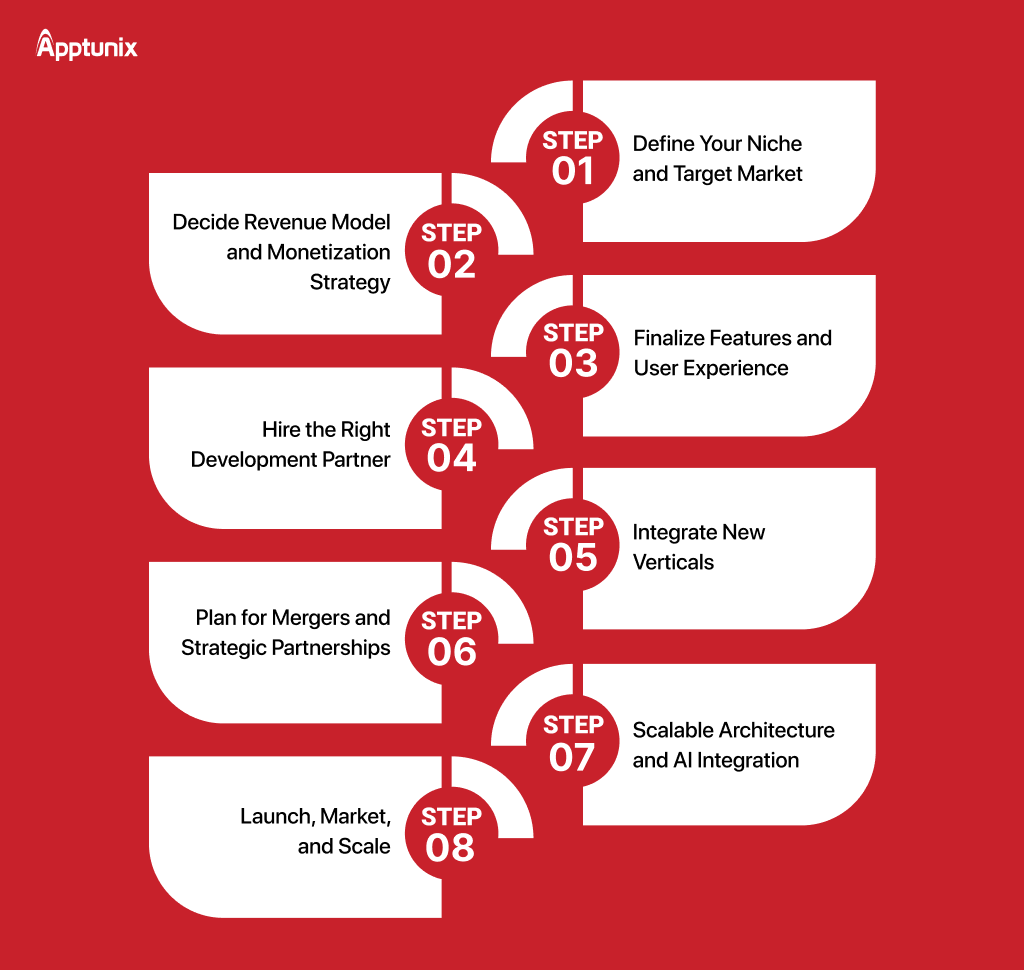
Decide whether you’ll start with food delivery alone or expand into groceries, alcohol, retail, or cloud kitchens. A clear niche helps shape your food delivery app business model and marketing strategy.
Understand how Zomato makes money—commissions, delivery fees, subscriptions, advertising, and partnerships. Apply similar monetization strategies early to ensure sustainable growth.
Choose features that delight users and streamline operations. Personalized recommendations, loyalty programs, AI-based logistics, and predictive analytics are now essential.
Startups can benefit from an affordable mobile app development company or a white-label Zomato clone app solution, while enterprises may require an enterprise mobile app development company for scalability and high-volume transactions.
Expand beyond food delivery to groceries, alcohol, essentials, or cloud kitchens. Multi-vertical support increases revenue streams and customer retention.
Learn from Zomato’s acquisition of Uber Eats. Strategic partnerships and collaborations can accelerate growth and market penetration.
Ensure your platform can handle millions of users, dynamic demand, and multiple cities. Implement AI-powered mobile app development for delivery apps to optimize routing, reduce costs, and predict demand patterns.
Start with key cities, gather feedback, iterate, and gradually expand. Use analytics and marketing campaigns to acquire and retain customers while scaling your operations efficiently.
7 Features to Add to Your Zomato Clone and Be a $4Billion Company
At Apptunix, we build complete delivery ecosystems that drive measurable business growth. One of our most successful projects in the on-demand delivery space is Expo City Eats, a platform designed to transform food delivery operations through AI-powered efficiency and a customer-first approach.
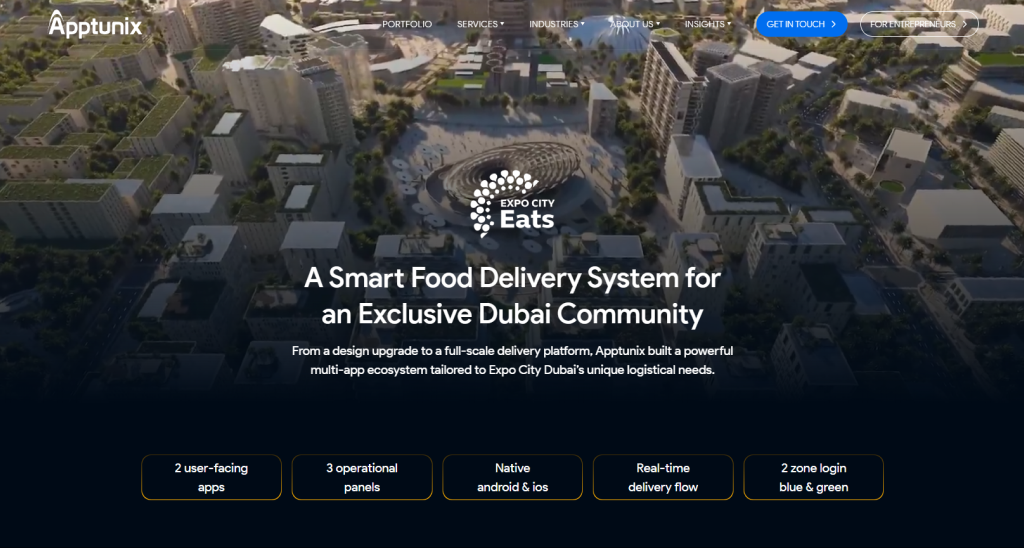
Expo City Eats wanted more than a standard food delivery app. They needed a platform that could:
At Apptunix, we built a complete AI-powered delivery ecosystem instead of just another food delivery app. Here’s how we solved their challenges:
The results spoke for themselves:
We helped Expo City Eats select a custom solution that matched their unique vision. However, for businesses seeking to launch quickly, we also offer white-label Zomato clone app solutions—affordable, ready-to-deploy, and easy to scale.
Zomato didn’t become a household name overnight. It scaled by mastering the fundamentals—diversified revenue streams, relentless focus on user experience, and smart use of technology. The good news? You can take the same playbook, tailor it to your niche, and build a food delivery platform that thrives.
Building the next Zomato-style success story requires more than code—it needs strategy, scalability, and innovation. That’s where we come in! From Expo City Eats to Dine In, our food delivery app development company knows how to scale businesses.
Apptunix doesn’t just build apps—we build empires.
Your market is waiting! The question is—will you lead it or let someone else take the first step? Get a Tailored App Development Roadmap Today.
Q 1.What makes Zomato’s business model successful?
Zomato thrives by blending multiple revenue streams—restaurant listings, advertising, food delivery, and memberships. This flexibility helps it adapt quickly, expand its user base, and maintain steady growth, rather than relying on just one source of income.
Q 2.How does Zomato generate revenue from food delivery?
Zomato earns revenue through delivery fees charged to customers and commissions collected from partner restaurants. This model allows Zomato to grow alongside the increasing demand for online food delivery while keeping the service affordable and reliable.
Q 3.How does Zomato ensure timely food delivery?
Zomato uses a network of delivery personnel equipped with GPS and smartphones to receive orders instantly. This technology-driven system optimizes routes and speeds up deliveries, ensuring food reaches customers quickly and efficiently.
Q 4.What benefits do restaurants get by partnering with Zomato?
Partnering with Zomato gives restaurants exposure to millions of users, opportunities to promote special offers, and access to customer reviews that help improve their services and attract more diners.
Q 5.Why is customer experience important for Zomato?
Customer satisfaction is key for Zomato’s growth. They focus on easy-to-use apps, fast deliveries, transparent pricing, and responsive support to keep users happy and encourage repeat orders.
Q 6.What is Zomato’s core business model?
Zomato follows a platform-based aggregator model. It connects customers with restaurants and delivery partners, acting as a middle layer that facilitates food ordering and delivery.
Q 7.How does Zomato make money from restaurants?
Zomato charges restaurants a commission (15–30%) per order placed through its platform. Additionally, restaurants can pay for advertising and sponsored listings to boost visibility.
Q 8.Does Zomato earn from customers as well?
Yes. Customers pay delivery charges, convenience fees, and also subscribe to Zomato Gold / Pro / Pro Plus, which provide benefits like free delivery, discounts, and priority services.
Q 9.What is Hyperpure, and why is it important for Zomato’s revenue?
Hyperpure is Zomato’s B2B supply chain initiative, delivering fresh ingredients and kitchen supplies to partner restaurants. It diversifies revenue and strengthens long-term relationships with restaurants.
Q 10.Does Zomato operate cloud kitchens?
Yes. Through Zomato Kitchens, the company partners with restaurants to set up shared kitchen spaces (cloud kitchens). Zomato earns through rent or commissions, helping restaurants expand without high overhead costs.
Q 11.Apart from food delivery, how else does Zomato generate income?
Zomato also earns from:
White-label solutions (helping restaurants build branded apps).
Data insights & analytics sold to restaurants.
Consulting services for restaurant growth.
Q 12.How much does it cost to build a food delivery app like Zomato?
The cost typically ranges between $15,000 to $150,000+ depending on features, complexity, and the development team’s location.
Q 13.Is Zomato profitable?
While Zomato has invested heavily in growth and acquisitions, it has been moving toward profitability by diversifying revenue streams (delivery, subscriptions, Hyperpure, ads, cloud kitchens) and optimizing operations.
(1 ratings, average: 4.00 out of 5)
Get the weekly updates on the newest brand stories, business models and technology right in your inbox.
6683 Views 12 min January 8, 2026

6847 Views 12 min December 21, 2025
7444 Views 12 min November 26, 2025
Book your consultation with us.
Book your consultation with us.


One Central, The offices 3, Level 3, DWTC, Sheikh Zayed Road, Dubai
+971 50 782 1690


Offer Ends Soon
Get a quick expert response in under 5 minutes.