
Compliance-Ready Software Development in Saudi Arabia: Laws, Standards and Best Practices
38 Views 11 min July 15, 2026

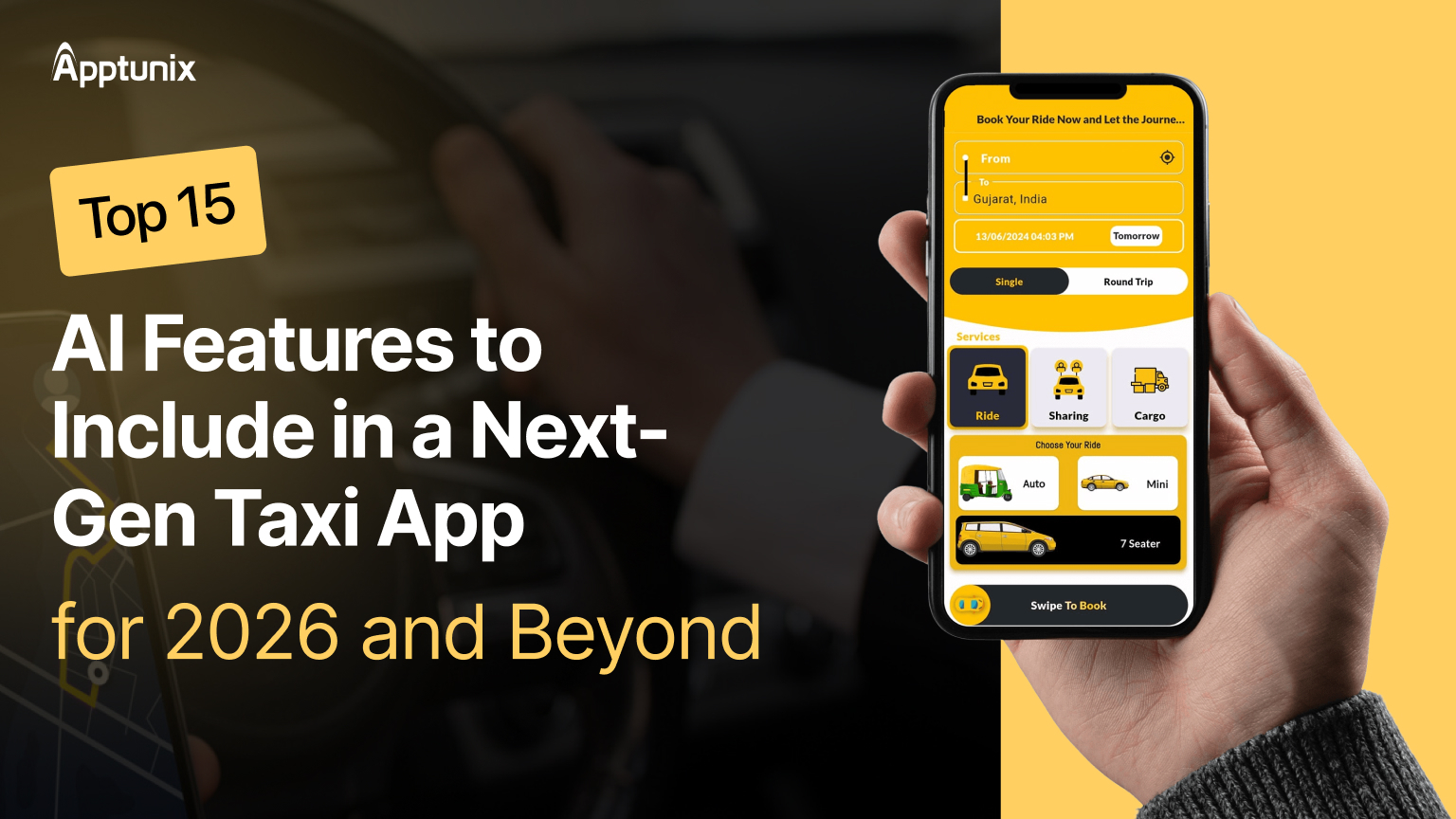
By 2028, nearly 80% of ride-hailing operations will be automated through AI systems
Market signals shaping the future of AI-powered mobility, including automation and revenue growth
A deep dive into the 15 most important AI features in taxi apps redefining ride-hailing platforms
How leading apps like Uber, Careem, and Bolt use AI to optimize matching, pricing, and routes
The core AI technologies powering taxi apps: machine learning, NLP, and computer vision
A real-world case study showing how Apptunix built a scalable AI-driven taxi platform
Why now is the right time to invest in AI taxi app development before the gap widens
The future of ride-hailing belongs to self-learning, data-driven mobility platforms
This blog showcases how companies like Apptunix are already delivering AI-first taxi platforms at scale
A few years ago, watching your taxi move on a map felt magical. Getting an upfront fare felt advanced. Today, those features are just the entry ticket. The real magic is now happening behind the scenes, where AI features in taxi apps quietly power the entire ride-hailing experience.
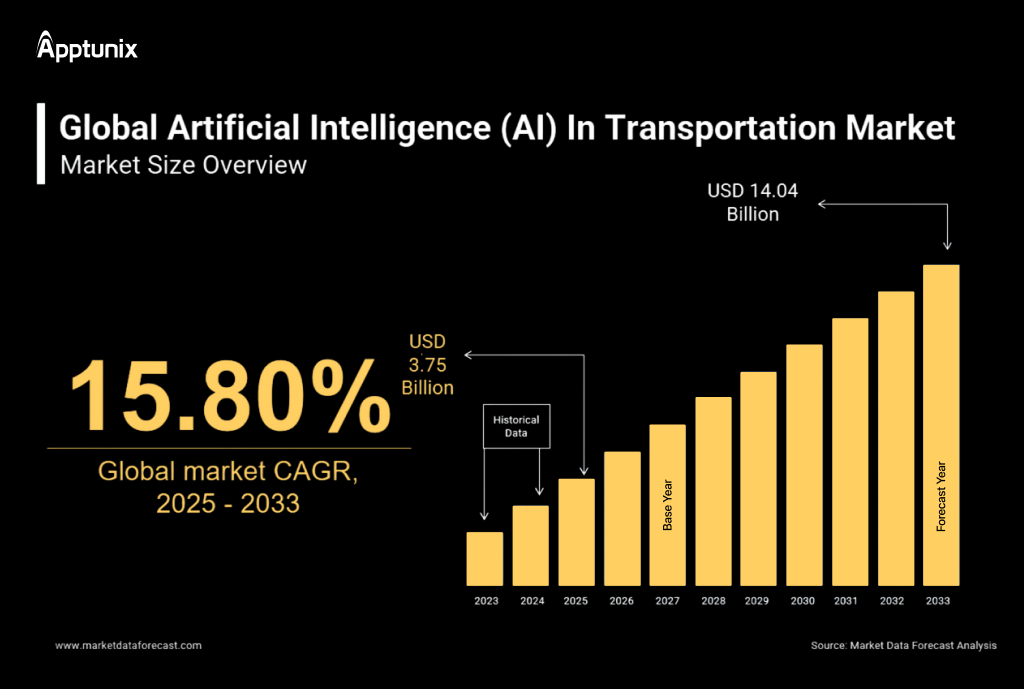
The numbers are even more convincing. Analysts predict that AI in the transportation market will cross 15 billion dollars by 2030. By 2028, nearly 80% of ride-hailing operations will be automated.
Every time an Uber driver reaches you faster than expected, or your Careem ride takes a smarter shortcut, that’s AI at work. It’s constantly learning from millions of trips. It studies traffic, rider habits, peak-hour patterns, and even weather changes. That’s how AI features in taxi apps help reduce waiting times, improve matching accuracy, and boost driver earnings.
So if you’re planning to build a taxi app with AI, this is the perfect time to explore taxi booking app development services. Let’s create the kind of intelligent, self-learning system users already expect in 2026 and beyond.
Operating a taxi business without AI in 2026 is like trying to navigate traffic with your eyes closed. The competition is fierce, customers expect instant precision, and efficiency is the only way to win.
That’s where AI integration for taxi apps changes the game. It automates the toughest parts of the business while improving the customer experience. Whether it’s dispatching, routing, pricing, or safety, AI works silently behind the scenes to make everything faster, smarter, and more cost-effective.
Here’s how AI transforms your taxi app from ordinary to outstanding:
The difference between a regular taxi app and an AI-powered ride-hailing app is night and day. One reacts. The other thinks. As the industry moves toward hyper-personalized, on-demand mobility, AI taxi app development is becoming the new standard.
If you’re gearing up to launch a taxi app with AI features, now is the moment to act. Every year you wait, the gap widens between traditional services and AI-driven platforms that keep improving themselves with every single trip.

The taxi app industry is growing fast, and artificial intelligence is at the center of that growth. What started as simple ride-matching platforms has evolved into intelligent mobility systems that use AI to make every trip smarter, faster, and more profitable.
According to Fortune Business Insights, the global ride-hailing market is projected to reach over $400 billion by 2028. This expansion is being driven by companies that have deeply integrated AI in transportation operations.
Uber uses AI to manage more than 20 million ride matches per day, constantly analyzing routes, pricing, and demand patterns. Bolt has improved driver utilization by 25% through AI-based route prediction, while Careem uses machine learning to forecast demand peaks and automatically allocate drivers.
This makes one thing clear: AI is a taxi app development framework that defines efficiency, cost savings, and customer satisfaction.
For startups, this shift presents a big opportunity. AI features in taxi apps help new entrants compete with larger platforms by leveraging smart automation rather than large teams. For established companies, AI taxi app development ensures better scalability, higher retention, and lower operational costs.
From AI taxi dispatch systems to demand forecasting and dynamic pricing, artificial intelligence is becoming the core of modern mobility solutions. Businesses that invest early in AI integration for taxi apps will lead the next phase of innovation in the ride-hailing market.
If you’re planning to build a taxi app with AI, the real game-changer lies in how smart your app can get. The best taxi apps today rely on artificial intelligence to make thousands of small decisions every second: which driver to assign, what fare to set, and how to predict demand before it even happens.
Below are 15 AI features in taxi apps that define success in 2026 and beyond.
1:Smart Driver & Passenger MatchingOne of the most practical applications of AI in taxi app development is intelligent ride matching. Instead of randomly assigning nearby drivers, AI analyzes live data such as distance, traffic, driver rating, and even passenger preferences to find the best possible match.
This not only shortens waiting times but also increases driver utilization and satisfaction. Uber’s Batch Matching algorithm, which pairs riders and drivers based on predicted trip efficiency, has reduced idle time by over 20%.
This kind of AI-powered taxi booking app development creates smarter logistics that work for everyone — users, drivers, and operators alike.
2:Dynamic Pricing OptimizationIf you’ve ever noticed your fare increase during a rainy evening, it’s AI at work. Machine learning algorithms dynamically adjust prices based on current demand, traffic, time of day, and even local events. This feature keeps prices fair for passengers while maximizing revenue for drivers and platform owners.
For those exploring AI in taxi apps , dynamic pricing is an essential feature that balances profitability with customer trust.
3:Route Optimization with AISmart routing is one of the top AI-powered features of ride-hailing apps that users instantly appreciate. Using real-time traffic data, AI suggests the fastest, most fuel-efficient route.
It accounts for variables such as road closures, weather, and historical congestion data, helping drivers save time, reduce fuel consumption, and boost customer satisfaction. This level of route optimization with AI also improves overall fleet productivity, making your app more dependable and scalable.
4:Predictive Demand ForecastingThe next big leap for mobility apps is prediction. AI can analyze past trip data, city events, weather forecasts, and even social media activity to predict when and where ride demand will peak.
This allows drivers to position themselves proactively in high-demand areas, increasing earnings and reducing downtime. For businesses, it ensures better fleet utilization and customer availability. Integrating predictive analytics is a key part of taxi app development with AI features, helping operators make data-driven decisions in real time.
5:Smart Dispatch SystemTraditional dispatch systems rely on fixed zones or manual control. With AI taxi dispatch systems, that’s changing completely.
AI automates the entire process from receiving a booking request to assigning the most suitable driver based on real-time conditions, trip history, and driver proximity. The result is faster trip assignments, fewer cancellations, and more efficient fleet movement.
Startups planning to develop a taxi booking app should make this a must-have feature. It not only improves trip turnaround but also sets the foundation for scaling your fleet without increasing operational costs.
6:Driver Behavior MonitoringIf you want your taxi platform to truly stand out, focus on safety and service quality — and that starts with how your drivers perform. With AI features in taxi apps, driver behavior monitoring has become a must-have for every serious operator.
AI systems now track data from GPS, motion sensors, and accelerometers to understand how a driver handles each trip. It can detect harsh braking, speeding, fatigue, or even distracted driving in real time.
For startups wondering cost to develop a taxi booking app, this feature builds user trust and keeps your operations compliant with local transport regulations. It’s one of the smartest ways to combine passenger safety with brand reliability.
Feature #7:Passenger Safety and Fraud DetectionSafety is the foundation of user loyalty in ride-hailing. AI now makes that easier and more reliable than ever.
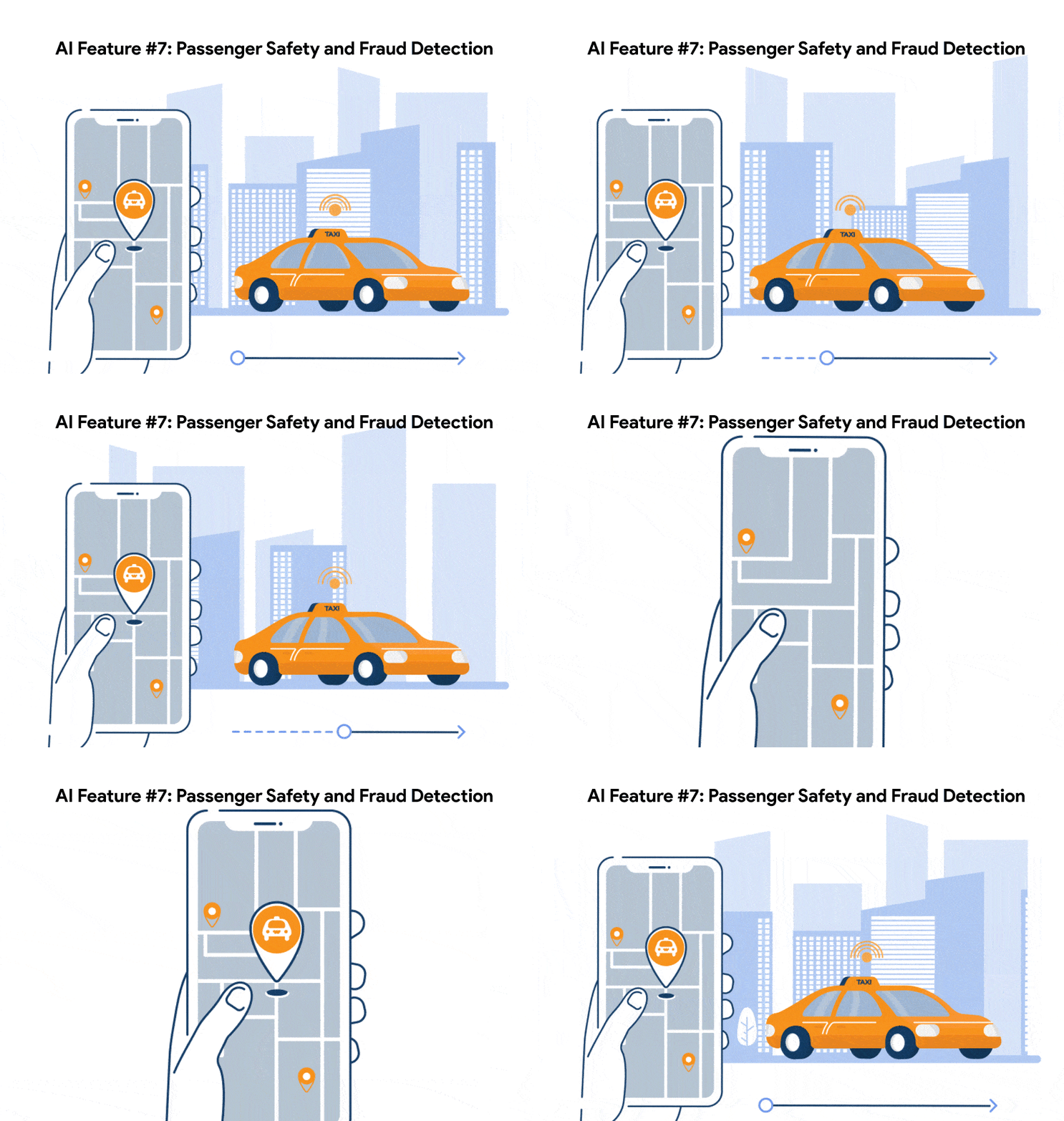
Using real-time analytics and AI-based taxi dispatch systems, your app can detect unusual behavior during rides such as route deviation, extended idling, or unsafe stops. It can instantly trigger an alert to both the passenger and your support team.
Many leading companies are already integrating facial recognition for driver verification, ensuring that the person behind the wheel matches the account on record. AI can also identify fake accounts, duplicate bookings, and payment fraud by spotting patterns human operators might miss.
8:Chatbots and Voice AssistantsNot every user wants to tap through multiple screens just to book a ride. With AI integration for taxi app platforms, chatbots and voice assistants are changing how people interact with mobility services.
AI chatbots can handle tasks like bookings, cancellations, payment queries, and feedback through natural conversation. Pair that with integrations like Alexa or Google Assistant, and your users can say, “Book me a cab to the airport,” and have it done in seconds.
From a business standpoint, these assistants reduce reliance on manual support, shorten response times, and keep users engaged. It’s one of those AI-powered taxi booking app features that feels futuristic yet instantly practical.
9:Sentiment and Feedback AnalysisReviews are valuable, but they’re even more powerful when AI helps you understand them. AI models can now analyze thousands of passenger reviews, social media mentions, and in-app feedback to detect sentiment positive, negative, or neutral. This lets you pinpoint what users love, where they’re frustrated, and how to improve service in real time.
For instance, if many users mention long wait times in a particular area, your system can automatically alert your dispatch algorithms to adjust driver positioning there.
These insights also help you design personalized retention campaigns, like discount offers for users who had a poor experience. It’s one of the must-have AI features for taxi booking app development that turns customer data into actionable business growth.
10:Predictive Vehicle MaintenanceA single breakdown can derail operations, frustrate users, and impact your brand’s credibility. That’s where predictive maintenance, one of the most impactful AI features in taxi apps, makes all the difference.
With artificial intelligence in ride-hailing apps, your system can analyze vehicle data like mileage, engine temperature, brake usage, and vibration patterns to predict when a vehicle might need servicing. Instead of reacting to failures, your fleet can stay proactive, reduce downtime, and keep rides safe.
Leading taxi operators already use AI-driven diagnostics to schedule maintenance before problems escalate. If you plan to build a taxi app with AI, adding predictive maintenance is cost-effective and future-proof.
11:Fleet Optimization and ManagementManaging a fleet efficiently is one of the hardest parts of running a ride-hailing business. AI now simplifies that challenge. Using real-time analytics and machine learning models, your app can monitor active vehicles, balance supply and demand, and automatically reduce idle time. It ensures every driver is utilized effectively, boosting revenue per vehicle.
This level of optimization sets apart modern AI-powered taxi booking app development from traditional fleet systems. It’s a crucial capability for any brand looking to scale smartly and sustainably. The best part? These insights become sharper over time as AI continues to learn from your operations.
12:Personalized Ride RecommendationsUsers love personalization, and AI is what makes it possible. By studying each rider’s travel habits, preferred pickup timings, destinations, and even budget range, AI can tailor recommendations for future rides. For example, a user who often books rides to the airport early morning might receive a “Scheduled Ride” suggestion when they need it.
This kind of personalization increases engagement, retention, and customer satisfaction. When planning taxi app development with AI features, personalization should be at the heart of your UX strategy. It’s how apps like Hala and Lyft keep millions of users coming back every day.
13:Predictive Revenue and Demand AnalyticsWant to know where your next 1,000 rides will come from? AI can tell you. Predictive analytics is one of the top AI trends in taxi app development for 2026 and beyond. By combining historical trip data with real-time conditions, AI can forecast future ride volumes and revenue patterns.
These insights help business owners make smarter decisions about promotions, driver allocation, and even pricing models. For entrepreneurs wondering how to develop a taxi booking app that truly scales, predictive analytics is the engine that keeps your strategy ahead of the curve.
14:Automated Customer SupportNo one likes waiting for help, and that’s why AI-driven customer support is transforming the ride-hailing experience.
Chatbots and conversational AI can resolve up to 80% of rider queries instantly, from refund requests to ride cancellations and payment issues. They can understand context, respond naturally, and escalate complex cases to human support when needed.
For any taxi app development company, this reduces support costs while maintaining 24/7 availability. It’s also a vital part of delivering the kind of frictionless user experience that today’s customers expect.
15:Computer Vision for Enhanced SafetyAI-powered computer vision technology is being integrated into AI taxi app development to enhance safety in real time. Cameras equipped with AI can detect driver drowsiness, monitor in-ride activity, and verify passengers through facial recognition.
Beyond safety, it also improves operational compliance detecting whether drivers are following local road and mask regulations. For startups planning to launch a taxi app with AI features, this technology builds instant trust and long-term retention. It’s how leading apps ensure accountability and safety at scale.

AI makes taxi apps more intelligent over time. Every trip, every route, and every user interaction generates data that can be used to improve the next experience. That’s the real advantage of building a taxi app with AI.
Here’s how it works in practice:
Machine Learning (ML) is the decision-making engine. It studies trip histories, peak demand times, and user behavior to predict future patterns. This helps the app assign drivers more quickly, plan optimal routes, and automatically balance pricing.
Natural Language Processing (NLP) improves how users interact with your app. Chatbots powered by NLP handle support queries instantly, while voice commands let users book rides hands-free. It’s simple automation that adds real convenience.
Computer Vision strengthens safety and trust. AI cameras can detect driver fatigue, verify passenger identities, and even monitor in-ride behavior, all of which enhance safety.
When these technologies work together, they form an intelligent network that constantly improves. That’s why partnering with an experienced on-demand taxi app development company matters. Experts know how to integrate frameworks such as TensorFlow, PyTorch, and OpenAI APIs effectively to build scalable, secure, and high-performing systems.
A successful AI-powered ride-hailing app doesn’t just execute commands; it learns from every trip to optimize operations automatically. From route optimization to demand prediction, AI ensures your platform delivers faster service, higher driver income, and better customer satisfaction.
Every great mobility transformation begins with one challenge: inefficiency.
A growing ride-hailing startup in the Middle East approached Apptunix, seeking to fix what most fast-scaling taxi apps face: delays, underutilized drivers, and unpredictable peak-hour demand. Their platform had users and traction, but not the intelligence to scale efficiently. They wanted to build a taxi app with AI that could think, predict, and respond faster than manual systems ever could.
Their biggest question? How to transform a basic system into a smart AI-powered taxi booking app that could optimize itself in real time.
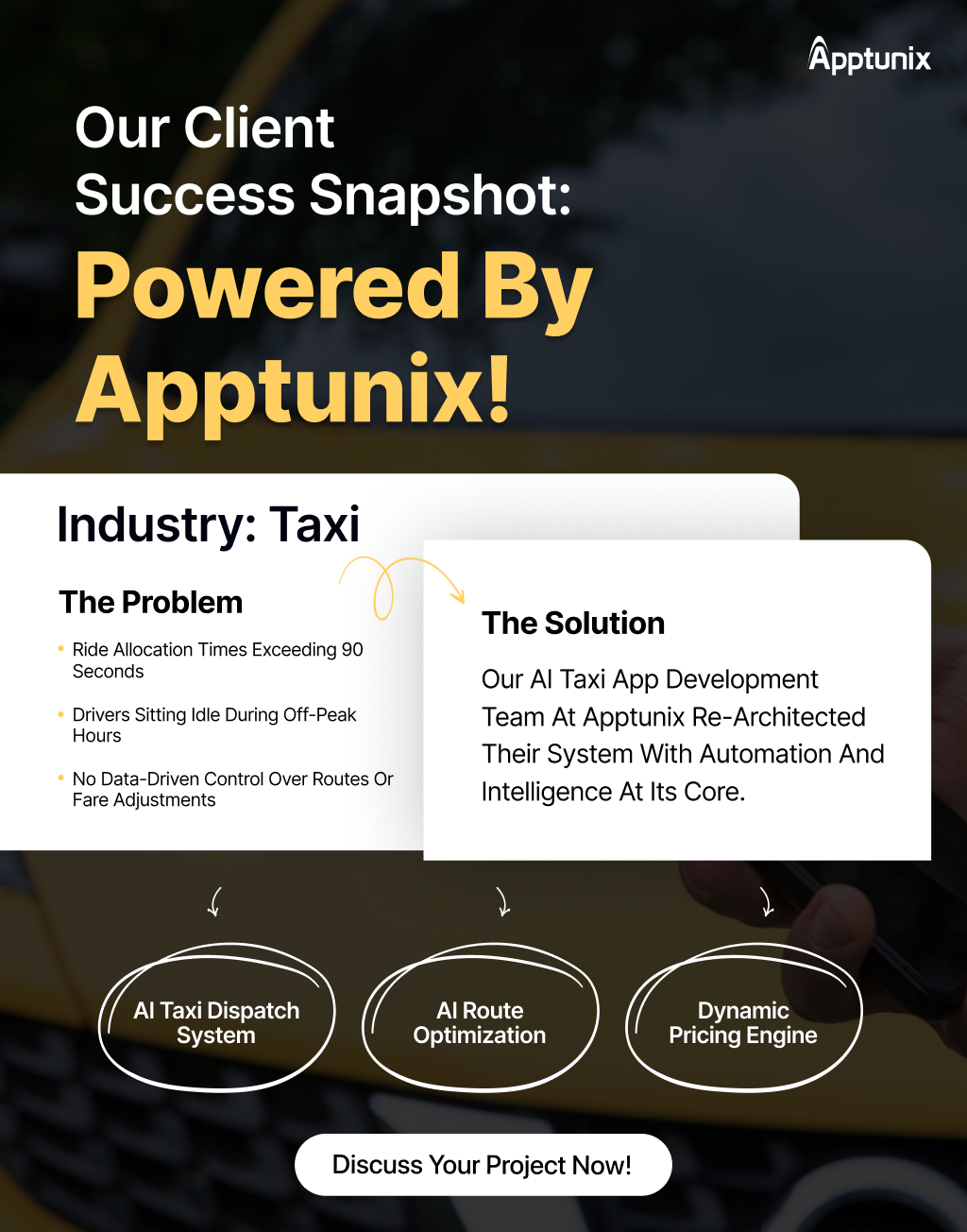
This was full-scale AI integration for taxi app performance, built to think and react instantly. The results spoke for themselves:
Today, the platform operates seamlessly across three major cities and completes over 50,000 rides daily powered entirely by artificial intelligence in ride-hailing apps. Our portfolio is a clear example of what’s possible when you partner with a proven taxi app development company that understands both AI and mobility ecosystems.
Let’s wrap it up. AI features in taxi apps are the core of next-gen mobility. The future belongs to apps that think ahead. AI predicts demand, allocates drivers, plans routes, and even detects fraud. It’s how ride-hailing businesses grow faster and operate smarter.
The best part? AI keeps evolving. The more data your app collects, the more accurate and efficient it becomes.
At Apptunix, a leading taxi app development company, we’ve spent over a decade mastering this craft. We’ve built AI-powered taxi booking apps that scale globally and perform flawlessly. Whether you’re planning to develop a taxi booking app, estimate the cost to develop an AI-powered taxi app, or integrate AI into an existing system, we’ve got you covered.
Start your AI taxi app journey with Apptunix. Get a free consultation with our AI taxi app developers and discover how we can help you turn your idea into a high-performing, scalable, and future-ready taxi platform.
Q 1.What are the must-have AI features in a taxi booking app?
Key features include AI-powered dispatching, route optimization, dynamic pricing, demand prediction, driver behavior monitoring, chatbots, and fraud detection.
Q 2.How does AI improve a ride-hailing app compared to a traditional taxi app?
AI makes the system smarter by predicting demand, reducing wait times, improving route selection, and improving pricing accuracy. This leads to higher efficiency and better user experience.
Q 3.What is an AI taxi dispatch system?
It’s an intelligent engine that assigns the nearest available and most suitable driver to a rider based on location, traffic, demand patterns, and driver performance data.
Q 4.How does route optimization with AI work?
AI studies traffic patterns, rider history, time of day, and live map conditions to deliver the fastest, safest, and most cost-efficient route.
Q 5.How does AI help detect fraud or unsafe activity?
AI monitors trip anomalies, unusual routes, inconsistent driver behavior, and identity mismatches. It automatically flags suspicious activity in real time.
Q 6.Can an AI-powered taxi app support multiple cities and regions?
Yes. With the right architecture and scalable AI models, your app can expand into new locations without redesigning the platform.
Q 7.How long does it take to develop a taxi app with AI?
A basic MVP takes around 4 to 12 weeks, while a full-featured AI-powered app can take 4 to 6 months, depending on complexity.
Q 8.What tech stack is used for AI in taxi app development?
Popular choices include Python, TensorFlow, PyTorch, AWS, Firebase, Kotlin, Swift, Google Maps SDK, and custom ML pipelines.
Get the weekly updates on the newest brand stories, business models and technology right in your inbox.
38 Views 11 min July 15, 2026

130 Views 11 min June 26, 2026

252 Views 11 min June 9, 2026
Book your consultation with us.
Book your consultation with us.


One Central, The offices 3, Level 3, DWTC, Sheikh Zayed Road, Dubai
+971 50 782 1690


Offer Ends Soon
Get a quick expert response in under 5 minutes.