The CTO's Guide to Build vs Buy Internal Tools in 2026
246 Views 14 min May 18, 2026

With over 20+ years of experience in driving global digital initiatives, Nikhil Bansal is the CEO & Director of Apptunix. He specializes in orchestrating large-scale digital transformations, enterprise-grade software solutions, and high-level business strategies that redefine industry standards. Nikhil is known for his ability to bridge the gap between complex business challenges and innovative technology, helping Fortune 500 companies and startups alike achieve sustainable growth. A visionary leader, he empowers enterprises to navigate the digital landscape with agile, ROI-focused models and future-ready business strategies.
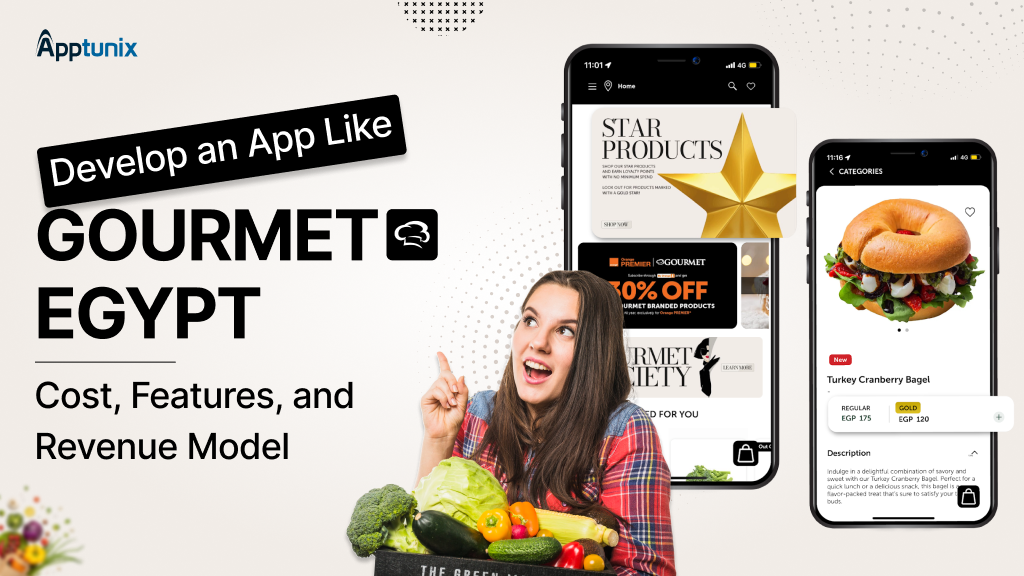
The era of gourmet convenience is here and digital grocery market is taking off!
The Egyptian e-grocery market is projected to exceed $19 billion by 2030, growing at a rate of more than 20% per annum. As busy lifestyles and digital habits reshape consumer behaviour, more Egyptians are turning to premium, curated grocery platforms. This shift has created a massive opportunity for entrepreneurs looking to develop an app like Gourmet Egypt.
What is most interesting about Gourmet Egypt’s business model is that it is both luxurious and efficient. By selecting a product range with efficient logistics and technology-driven delivery, the brand achieved high-quality service with speed. This grocery delivery app business model demonstrates that a well-designed app can create a profitable niche if it focuses on trust, speed, and personalisation.
Let’s break down key app features, development costs, revenue models and how to build a gourmet grocery delivery app like Gourmet Egypt.
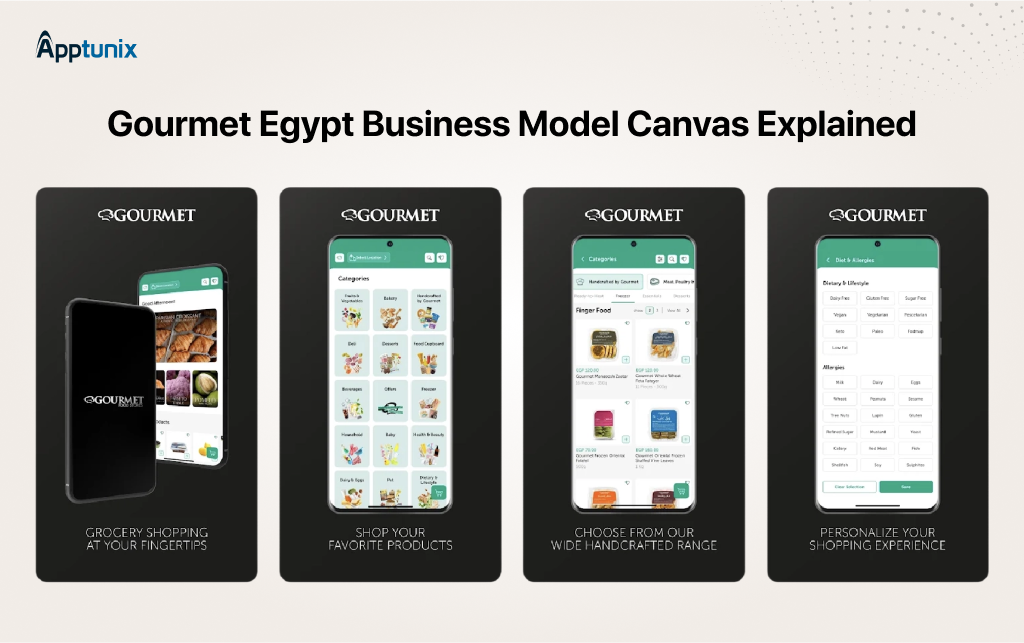
Gourmet Egypt has revolutionised the way upscale grocery delivery app development is done in the market. The site connects clients with a carefully selected network of vetted suppliers and manages delivery processes in-house. This hybrid model grants Gourmet Egypt total authority over logistics and quality, both of which are key to creating an authentic luxury grocery experience.
Consumers access the app to order a wide range of products, from fresh fruits to imported pantry staples, with the assurance that each item has passed rigorous quality tests. Vendors, on their end, obtain greater digital reach without having to create or host their own eCommerce websites. For business owners, developing an on-demand grocery delivery app like Gourmet Egypt is well worth emulating. It integrates the scale and scope of a marketplace with the uniformity of a managed delivery network.
The application enables multiple sellers to market their products, including fresh produce and gourmet items sourced from around the world. Customers are free to browse by category, brand, or curated suggestions. The inventory is updated in real-time to reflect availability as soon as the product is ordered.
Gourmet Egypt employs a hybrid grocery delivery app business model. The company utilizes an in-house fleet for urgent deliveries and cooperates with third-party couriers to expand its reach. The hybrid grocery delivery app business model offers a flexible approach to efficiently and affordably deliver consumers’ orders, while ensuring reliable product delivery. Route optimisation decreases delivery times and incurs less grocery app development cost.
Qualifying as standard groceries, Gourmet Egypt also offers subscription boxes, meal kits, seasonal specials, and gift hampers. These options provide some revenue certainty and foster loyalty to the company, which is intended to encourage customers to adopt e-commerce. AI in grocery delivery apps enhance the customers’ experience, increases repeat orders, and increases customer engagement.
Egypt’s grocery delivery market is undergoing a significant transformation. With growing urbanization, higher disposable incomes, and increasingly busy lifestyles, customers are shifting from traditional grocery runs to convenient, on-demand shopping through mobile apps. The quick commerce sector, which includes rapid grocery delivery services, is anticipated to grow at a CAGR of 9.79% reaching $3.7 billion by 2033.
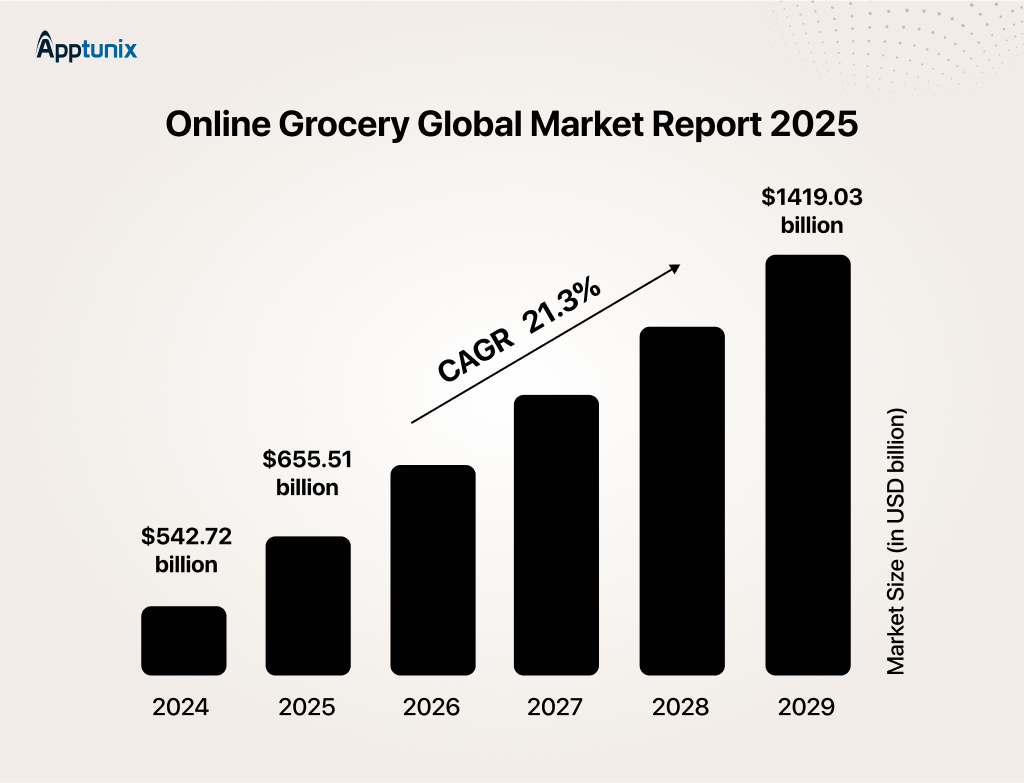
Even though the demand is strong, Egypt’s grocery delivery market still faces challenges. Logistics for fresh and frozen goods require proper cold-chain handling, which many smaller players lack. Vendor fragmentation often leads to inconsistent product quality. Cash-on-delivery remains dominant in some regions, and last-mile delivery in crowded urban areas like Cairo can slow down operations.
This is exactly where smart technology makes the difference. A well-built, AI-powered grocery delivery app can predict demand, optimize delivery routes, and improve vendor coordination. Real-time inventory management prevents stockouts and waste, while digital wallets and secure payment gateways increase convenience.
By combining personalization, automation, and smart logistics, startups can create a grocery delivery app like Gourmet Egypt that not only meets customer expectations but also scales efficiently across multiple cities.
Creating a grocery delivery app that stands out requires more than just listing products. A successful app combines convenience, personalisation, and operational efficiency for customers, vendors, and admins alike. This section breaks down the must-have elements that develop an app like Gourmet Egypt, both profitable and scalable.
The customer can save several addresses, payment methods, and shopping preferences. Profiles drive fast repeat orders, track order history, and provide loyalty points that are personalised to the customer’s buying behaviour.
Robust and advanced search features allow customers to search by category, brand, dietary needs, price, or popularity. An AI-driven grocery delivery app development feature displays frequently purchased products, trending products, or seasonal products to increase the average order value.
Users can search for products that fit their lifestyle such as organic, imported, gourmet, or seasonal deals. Oftentimes, this results in upselling and/or cross-selling opportunities.
Users can check out seamlessly and straightforwardly, using multiple payment methods, including credit/debit cards, e-wallets, Fawry, and cash-on-delivery. Auto-applied promo codes, digital receipts, and saved carts all contribute to improved checkout conversion rates.
These include an interactive map to track the order in real-time, while explaining the delivery as it is ordered. Send push notifications during order confirmation, dispatch, estimated delivery time, or any order delays to keep all users informed.
Customers can rate products, leave reviews, and collect loyalty points to earn discounts or promotional offers. Develop gamification for the loyalty program to foster repeat purchasing cycles, ultimately leading to long-term retention.
Users can save a list of favourite products or vendor lists for simple reordering. This feature increases engagement and repeat sales.
Grocery boxes for weekly or monthly needs, specialty kits, or subscriptions for frequently used items provide consistent income and convenience for busy consumers.
Users can resolve questions or issues quickly by communicating directly with vendors or customer service agents. AI in grocery delivery apps come with chatbots that can be programmed to respond to otherwise unresolved questions 24/7.
Arabic, English and various regional dialects seamlessly support audiences around Cairo, Alexandria, and other cities throughout the region.
Vendors can keep track of inventory levels, manage product availability, and set pricing rules. Admin can oversee fulfillment, pending orders, and returns.
Vendors can make data-driven decisions based on detailed reporting on sales, top-selling products, customer orders and vendor performance.
Marketplace administrators can onboard and identify new vendors, verify the product, and maintain marketplace standards.
To develop an app like Gourmet Egypt, a daily dashboard is important for service monitoring, complaints, order disputes, and returns.
Vendors can disclose discounts, bundles, and seasonal promotions with vendor approval, and ongoing campaigns may also be reviewed by admins per vendor and campaign to ensure compliance with standards.
Automatically manage commissions, vendor payouts, subscription revenue, and promotional discounts.
AI in grocery delivery apps offer personal suggestions to further cross-selling and raise average order value. Using machine learning, your site can better predict user preferences and even trends by seasonal variables.
Forecast demand for popular products well in advance to avoid shortages. Further optimise delivery routing for fewer delays and lower grocery app development costs.
Quickly and easily handle commonly asked questions for all users, ensuring continuity in customer satisfaction around the clock.
Send personalised offers to your customers, such as abandoned cart reminders or specific specials based on location and proximity.
How Much Does It Cost To Build A Grocery Delivery App Like Instacart?
Building a grocery delivery app like Gourmet Egypt takes more than just good tech — it takes strategy, planning, and flawless execution. Here’s a step-by-step guide to help you understand what goes into creating a successful grocery delivery app that customers love using.
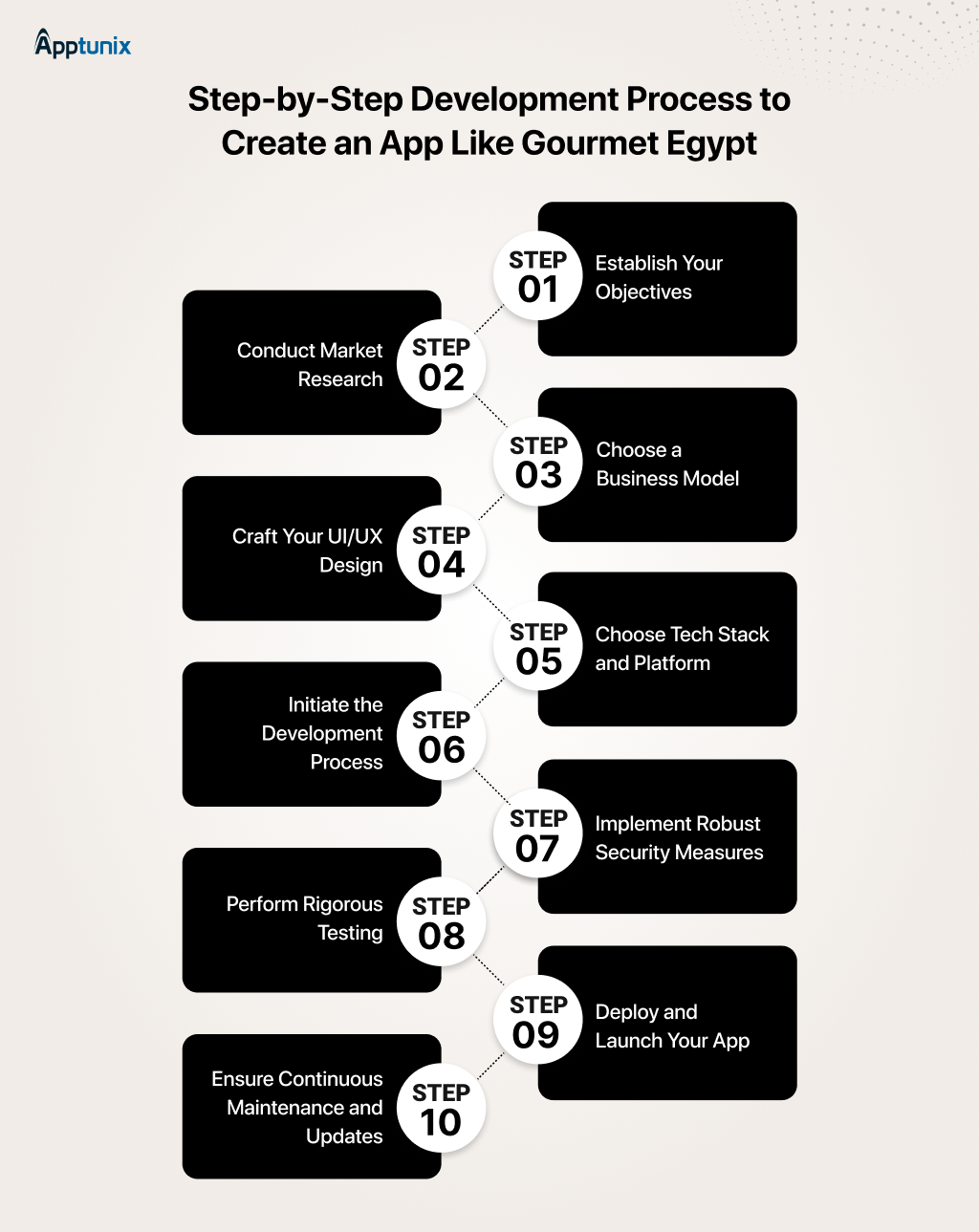
1. Establish Your Objectives Start by defining what your grocery app will achieve. Are you focusing on daily essentials, organic groceries, or premium gourmet products? Clear objectives will help you decide your target market, app features, and monetization strategy. This step sets the foundation for your grocery delivery startup in Egypt.
2. Conduct Market ResearchBefore you begin development, research your competitors and local market trends. Study how apps like Gourmet Egypt or Rafeeq Picker attract customers and handle logistics. Look into popular grocery categories, average spending patterns, and delivery expectations in Egypt’s key cities like Cairo and Alexandria. These insights will guide your app’s positioning and feature set.
3. Choose a Business ModelDecide how your grocery delivery app will generate revenue. You can earn through vendor commissions, delivery fees, subscriptions, or in-app promotions. If you plan to onboard multiple grocery stores, go for a multi-vendor marketplace model as it’s scalable and attracts diverse vendors and customers.
4. Craft Your UI/UX DesignUser experience can make or break your grocery delivery app. Focus on clean visuals, easy navigation, and a fast checkout process. A clutter-free, intuitive interface builds trust and encourages repeat orders. Apps like Gourmet Egypt stand out because their design feels premium yet effortless.
5. Choose Tech Stack and PlatformSelect the right technology stack to ensure your grocery app runs smoothly. For startups, Flutter or React Native are great for cross-platform development, saving time and cost. For high-end performance, native apps for iOS and Android are ideal. Also, invest in a secure backend that supports real-time tracking, AI-driven product suggestions, and multi-vendor inventory management.
6. Initiate the Development ProcessNow comes the core part of app development. Work with an experienced team like Apptunix, which has over 12 years of expertise in grocery delivery app development and has built successful apps. Start with a Minimum Viable Product (MVP) that includes essential features, and expand it with advanced functionalities after launch.
7. Implement Robust Security MeasuresSecurity should never be an afterthought. Integrate secure payment gateways, encrypt user data, and comply with Egypt’s digital transaction laws. Users trust apps that keep their information safe — it’s a major factor in customer retention.
8. Perform Rigorous TestingBefore going live, test your app on multiple devices and networks. Verify smooth payments, accurate order tracking, and fast loading times. Quality assurance ensures your app performs well under real-world conditions and delivers a seamless grocery shopping experience.
9. Deploy and Launch Your AppOnce testing is complete, publish your app on Google Play Store and Apple App Store. Use launch campaigns, social media ads, and referral discounts to attract early users. Collaborate with local grocery vendors to ensure a wide range of products from day one.
10. Ensure Continuous Maintenance and UpdatesAfter launch, your grocery delivery app needs continuous monitoring and updates. Regular maintenance helps fix bugs, improve performance, and introduce new features. Apptunix provides end-to-end maintenance services, ensuring your grocery app stays fast, secure, and scalable as your user base grows.
Building a luxury on-demand grocery delivery app in Egypt requires a clear roadmap, robust operational planning, and a scalable technology stack. Success depends not only on features but also on understanding customer expectations, vendor workflows, and market dynamics.
The cost to build a grocery delivery app like Gourmet Egypt varies widely based on complexity, features, platform choice, and region of development. Entrepreneurs need a realistic budget to plan development and ensure a profitable launch.
The design of your grocery app plays a big role in attracting and retaining users. A clean, modern, and intuitive interface can make or break your platform. Apps like Gourmet Egypt invest heavily in UI/UX because it defines the customer experience — smooth navigation, quick checkout, and attractive visuals. The more personalized and user-friendly the design, the higher the design cost will be.
The number and complexity of features directly affect the cost to develop a grocery app. Basic features like product listings, search, and payments are affordable to build, while advanced ones like AI-powered recommendations, subscription models, real-time order tracking, and multi-vendor management increase both development time and cost. It’s smart to start with an MVP and add advanced features as you scale.
The technology you choose impacts both performance and scalability. For instance, using a cross-platform framework like Flutter or React Native can lower costs and speed up development, while native iOS and Android builds offer smoother performance but take longer. Your backend technology also matters — it must support secure transactions, fast inventory updates, and multiple vendor integrations.
The cost to create a grocery app like Gourmet Egypt also depends on the team behind it. Hiring an experienced development company like Apptunix, with 12+ years in marketplace and grocery app development, ensures you get skilled developers, designers, testers, and project managers who can deliver a robust, scalable product. The more experienced the team, the higher the upfront cost — but it reduces long-term risks.
In Egypt, grocery delivery apps must comply with local laws and data protection guidelines. Integrating secure payment gateways, maintaining customer privacy, and adhering to food delivery regulations all contribute to increased development time and cost. These steps are essential to avoid legal or operational issues post-launch.
A grocery delivery app handles thousands of real-time transactions daily. That’s why testing and QA are critical. The app must perform well under high traffic, maintain accurate stock updates, and deliver error-free transactions. Comprehensive testing ensures reliability but also increases the project timeline and budget.
Once your app is live, it needs regular updates, bug fixes, and performance monitoring. Ongoing maintenance and support help you retain users and ensure smooth operations. This is usually a recurring cost, typically 15–20% of your total grocery app development budget annually.
If you’re planning to create a grocery delivery app in Egypt, the first big decision is choosing between a white-label solution and a custom-built app. Both approaches can help you enter the fast-growing online grocery market, but they differ in flexibility, cost, and long-term returns.
A white-label grocery app is a pre-built platform that can be branded and launched quickly. It’s ideal for startups that want to launch fast and test the market with minimal investment. You get essential features like customer ordering, vendor dashboards, and payment integration without months of development time. The trade-off is limited customisation and moderate scalability.
A custom-built grocery delivery app, on the other hand, is designed from the ground up to fit your exact business goals. It enables complete control over design, features, and integrations, including AI-powered recommendations, multi-vendor management, and subscription modules. Although the initial development cost is higher, the app scales easily, supports unique business models, and delivers stronger long-term ROI.
Here’s a quick comparison to help you decide which path suits your strategy best:
If you aim to develop an app like Gourmet Egypt, a custom approach offers the flexibility to innovate. For those testing the market, a white-label app offers a faster, more affordable entry point. At Apptunix, we help entrepreneurs choose the right strategy, whether you want to launch fast with a white-label grocery app or build a custom AI-driven grocery platform that grows with your business.
If you’re looking to create an app like Gourmet Egypt, it’s essential to understand the revenue methodology for the app. Gourmet Grocery app development in Cairo has multiple revenue streams. Instead, it uses a combination of different ways to monetise a service, which will sustain constant revenue, while bringing value to the customer and the vendor.
1. Delivery Fees: The fees are calculated based on the distance from the vendor to the customer, the number of items in the order, and the delivery speed. It is the main revenue source coming from the customer side. Premium customers are willing to pay higher delivery fees to have the order delivered quickly or at a specified time.
2. Vendor Commissions: Each vendor in the app pays a commission on each sale, typically ranging from 10% to 20%. This ensures that the app will generate revenue regardless of the sale, and also provides vendors with an incentive to showcase their best product offerings on the site and to fulfil all orders in a timely manner.
3. Subscription Fees: In addition to charging for delivery and a commission fee for each order, Gourmet Egypt has introduced a premium subscription that requires customers to pay a recurring monthly fee. The grocery delivery app business model enables predictable revenue from recurring customers and promotes customer loyalty.
4. Promotion/Advertisement: Vendors will pay to “feature” their product on the app, run seasonal campaigns or push promotions within the app. This increases vendor visibility, but also provides an additional source of revenue.
5. Surge Fees: Delivery fees may increase during peak times or holidays to help manage demand and ensure operational viability.
6. Small-Cart Fees or Charges: Low-value orders may incur additional fees or charges to cover the grocery app development cost. To develop an app like Gourmet Egypt, make sure delivery is completed profitably without compromising the service experience.
7. Monetising From Both Sides: Build a grocery delivery app like Gourmet Egypt that successfully monetises from customers and vendors. Customers will pay for the convenience, curated product, and expedited delivery. Vendors will pay for new customer access, use analytics, and marketing tools. This dual approach to earning income enables the business to create an app like Gourmet Egypt, become more efficient, and maintain profitability.
Top 12+ Grocery App Development Companies to Build a High-Growth App
With over 12 years of experience in building high-performing mobile and web applications, Apptunix has mastered the art of crafting solutions that blend innovation with real-world impact. One of our recent success stories is Rafeeq Picker, a premium grocery delivery app built to serve Egypt’s growing demand for curated, high-quality groceries.
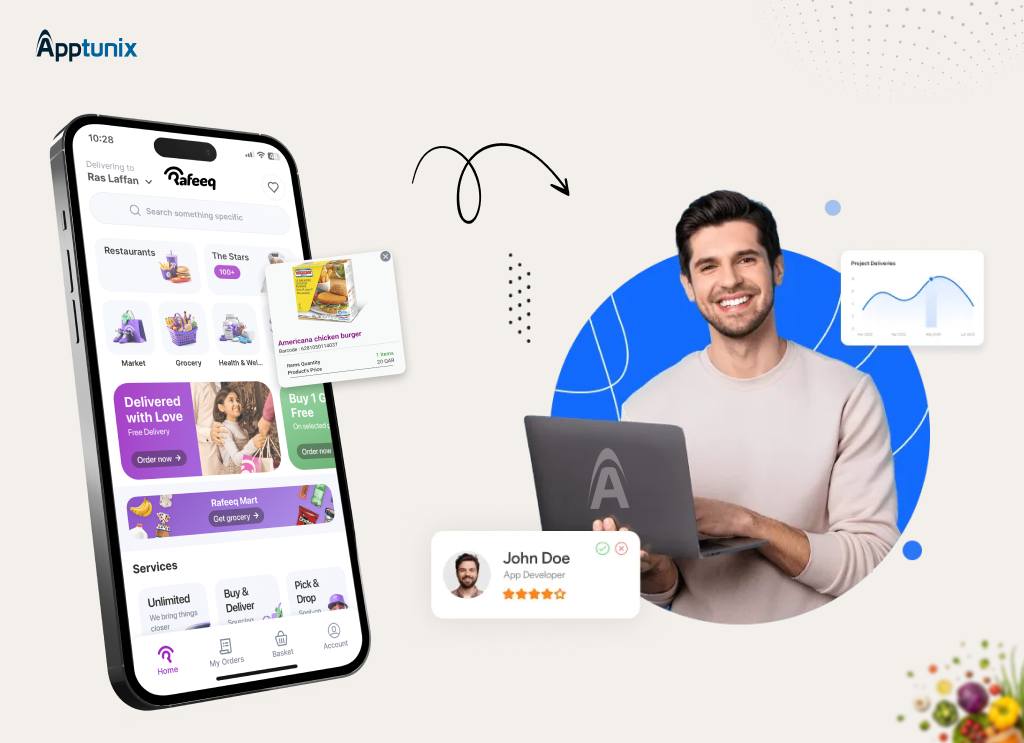
Apptunix designed Rafeeq to do more than deliver groceries. The app combines AI-driven product recommendations, multi-vendor management, and optimized logistics to ensure every user experiences smooth, reliable service.
Impact:
For entrepreneurs looking to develop an app like Gourmet Egypt, Rafeeq demonstrates that success lies in combining smart technology, operational planning, and a customer-first approach. Partnering with an experienced company like Apptunix ensures your grocery delivery app can scale efficiently, offer top-notch service, and maximise profitability.
Apptunix continues to lead the way in grocery delivery app development, helping businesses build platforms that redefine digital convenience and customer satisfaction.
Every month, an increasing number of consumers are shifting to online grocery shopping, particularly for premium, curated products. This creates a massive window of opportunity for entrepreneurs who act fast to develop an app like Gourmet Egypt and generate predictable revenue.
Your competitors are already thinking about their next move—why wait?
At Apptunix, our grocery delivery app development company creates platforms that scale, perform, and dominate the market. Our experience with Rafeeq and other luxury grocery apps proves we can transform an idea into a fully operational, revenue-generating platform. From AI-powered personalisation to multi-vendor management and seamless logistics, we understand what it takes to build a successful grocery delivery app in this competitive space.
Start building your gourmet grocery delivery app today and secure your spot in Egypt’s booming online grocery market. Contact Apptunix for a consultation, demo, and cost estimate for grocery app development in Cairo.
Q 1.What is a Gourmet Egypt-style grocery delivery app?
It’s a premium online grocery app that combines multi-vendor support, AI recommendations, subscription modules, and real-time delivery tracking.
Q 2.What’s the cost to build a Gourmet Egypt clone app?
A Gourmet Egypt-style app costs $20,000–$40,000 for an MVP and $50,000–$100,000+ for a full-featured, AI-enabled version. Features, platforms, and customisations drive the price.
Q 3.How to ensure profitability?
Focus on subscriptions, loyalty programs, upselling, and efficient logistics. AI-powered personalisation and smart monetisation maximise ROI.
Q 4.How long does it take to build a grocery delivery app?
Typically, an MVP can be developed in 3–5 months, while a full-featured app may take 6–9 months, depending on complexity.
Q 5.What features should a luxury grocery delivery app include?
Key features include AI-powered product suggestions, multi-vendor management, subscription boxes, loyalty programs, and real-time tracking.
Q 6.How to manage logistics efficiently?
Use AI route optimisation, real-time tracking, predictive inventory, and automated notifications to ensure fast and reliable delivery.
Q 7.White-label vs custom development – which is better?
White-label apps are faster and cheaper, but custom-built apps provide scalability, AI features, and flexibility ideal for a premium app like Gourmet Egypt.
Q 8.How to attract and retain customers in a competitive market?
Offer personalised recommendations, loyalty programs, subscription boxes, and ensure fast delivery with real-time tracking to keep customers engaged.
Q 9.How can Apptunix help me launch a grocery app faster?
Apptunix leverages pre-built modules, AI integrations, and a scalable architecture to accelerate development, enabling you to enter the market quickly without compromising quality.
Q 10.Can Apptunix build AI-powered grocery apps?
Yes. Apptunix integrates AI recommendations, predictive analytics, and personalised experiences to increase order value and retention.
Q 11.Will Apptunix support my app after it goes live?
Absolutely. Apptunix provides ongoing maintenance, feature updates, and performance optimisation, so your app remains competitive, scalable, and ready for growth.
Q 12.Can Apptunix add subscription and loyalty features to retain customers?
Absolutely. We create recurring orders, subscription boxes, and rewards programs that increase engagement, boost repeat purchases, and stabilise revenue.
Get the weekly updates on the newest brand stories, business models and technology right in your inbox.
With over 20+ years of experience in driving global digital initiatives, Nikhil Bansal is the CEO & Director of Apptunix. He specializes in orchestrating large-scale digital transformations, enterprise-grade software solutions, and high-level business strategies that redefine industry standards. Nikhil is known for his ability to bridge the gap between complex business challenges and innovative technology, helping Fortune 500 companies and startups alike achieve sustainable growth. A visionary leader, he empowers enterprises to navigate the digital landscape with agile, ROI-focused models and future-ready business strategies.
Book your consultation with us.
Book your consultation with us.


One Central, The offices 3, Level 3, DWTC, Sheikh Zayed Road, Dubai
+971 50 782 1690


Offer Ends Soon
Get a quick expert response in under 5 minutes.