Fleet Management Software Development: Cost, Features, Process & AI Guide for Enterprise Fleets
91 Views 12 min June 24, 2026

With over 20+ years of experience in driving global digital initiatives, Nikhil Bansal is the CEO & Director of Apptunix. He specializes in orchestrating large-scale digital transformations, enterprise-grade software solutions, and high-level business strategies that redefine industry standards. Nikhil is known for his ability to bridge the gap between complex business challenges and innovative technology, helping Fortune 500 companies and startups alike achieve sustainable growth. A visionary leader, he empowers enterprises to navigate the digital landscape with agile, ROI-focused models and future-ready business strategies.
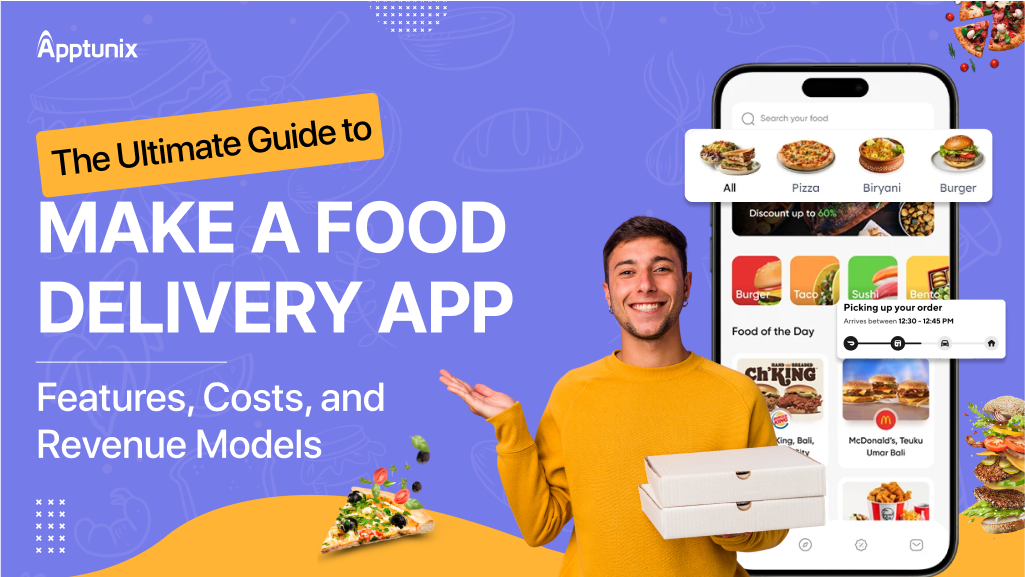
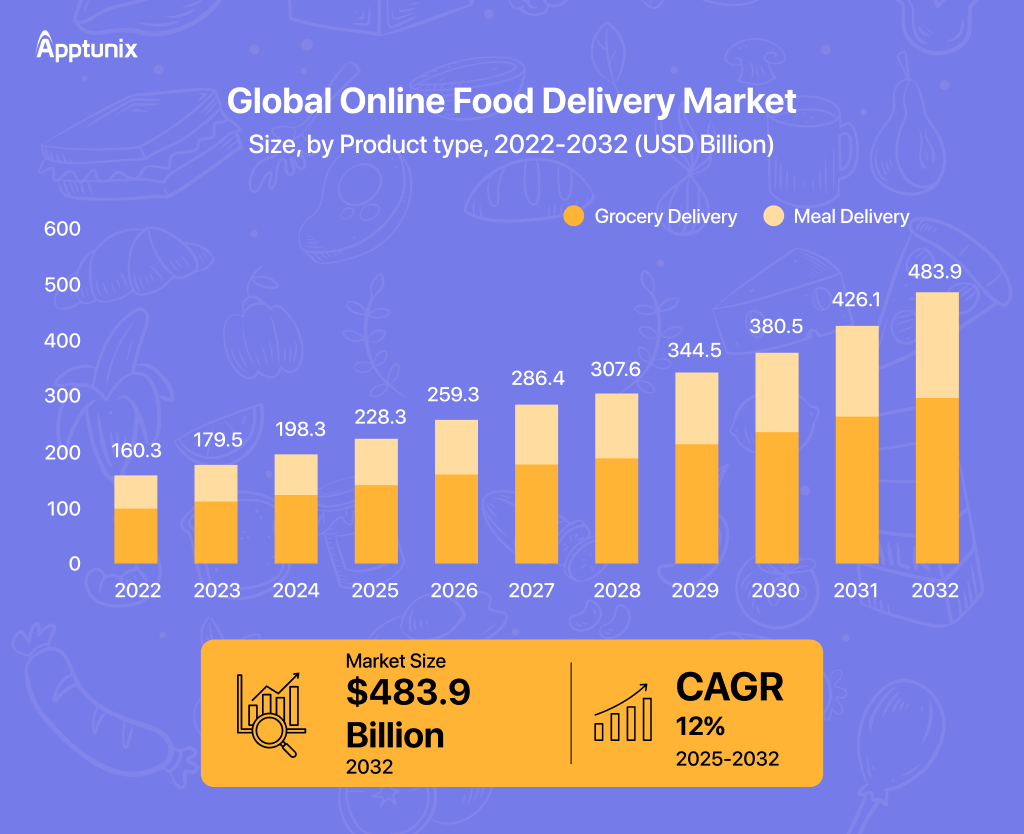
Getting food has been transformed forever. A few screen taps now substitute for lengthy phone calls, standing in line, or browsing several websites. The international food delivery market will reach $250 billion by 2027, and restaurants without a dedicated app stand to lose a significant share of that business.
Each tap counts. Are your competitors winning customers while your business lingers offline?
Whether you’re a restaurant owner, a startup founder, or an entrepreneur exploring digital opportunities, knowing how to make a food delivery app opens a massive growth avenue. Early adopters capture the most customers. A thoughtfully designed food delivery marketplace app can turn a single-location restaurant into a digital hub, streamline daily operations, and unlock new revenue streams.
With the right on-demand food delivery app development services, your platform will grow alongside your business, increase order volume, and make your brand the go-to option for hungry consumers. The sooner you move, the sooner you capture your stake in this thriving market.
Industry moguls such as Grubhub, DoorDash, Zomato, and Swiggy offer a clear recipe for triumph. DoorDash had $6.6 billion in revenue in 2023 alone, while Uber Eats earned well over $9 billion worldwide. Their success illustrates that platforms offering fast delivery, easy navigation, clear order tracking, and effortless payments take the lead. Growth isn’t confined to North America and Europe—expanding markets in Asia, the Middle East, and Latin America are driving adoption through rising smartphone penetration, higher disposable incomes, and changing consumer lifestyles.
Customers today want more than convenience. Speed, dependability, and contactless pickup are table stakes. Personalization is the key differentiator today. Menu suggestions powered by AI, predictive ordering, and smart recommendations are driving loyalty and repeat orders. With AI, apps can predict peak order times, streamline delivery routes, and decrease operational expenses, driving superior experiences for customers and restaurants alike.
For companies looking to develop a food delivery app or capitalize on a food delivery marketplace, incorporating these trends from the outset is essential. AI-driven features not only address customer expectations but also give your app a competitive advantage, enabling you to steal market share and access the vast revenue streams of the on-demand food delivery industry.
The food delivery market is exploding. For restaurants, delivery startups, and entrepreneurs, this is a prime moment to build a food delivery app that captures loyal customers and generates recurring revenue.
Investing in a food delivery business model today gives you a clear competitive advantage. Businesses that move early can stand out against competitors still relying on phone orders or limited delivery services. A well-designed app lets restaurants manage orders seamlessly, optimize delivery routes, and offer personalized experiences that today’s customers expect.
Scalability is another key benefit. Once your app is live, you can expand to multiple locations, onboard additional restaurants, or integrate new delivery services. This opens the door to repeat business, predictable revenue, and long-term growth. Partnering with a custom food delivery app development company ensures your app is built to perform now and scale efficiently as your business grows.
A few of the newest AI-enabled advancements that are transforming the industry are:
The food delivery market is booming, and AI-powered apps are reshaping how businesses and customers interact. By choosing the correct type of AI-powered food delivery app, you can develop a food delivery app that meets customer expectations, improves operational efficiency, and maximizes revenue from day one.
Knowing these app types also helps plan features, development strategy, and food delivery app development cost-effectively. Integrating AI from the beginning ensures your app delivers a smarter, faster, and more personalized experience, helping it stand out in the competitive marketplace.
1. Single-Restaurant Apps: These apps focus on a single restaurant or brand, allowing loyal customers to place orders directly. AI can recommend personalized menu items, predict preferences, and suggest upsells, making each order more engaging and tailored.
2. Multi-Restaurant Marketplace Apps: Platforms like Posmates and DoorDash bring multiple restaurants together in one app. AI enhances these apps by recommending restaurants based on user behavior, predicting peak ordering times, and optimizing delivery routes for faster service.
3. On-Demand Delivery Apps: Ideal for instant delivery of meals, groceries, or specialty foods, these apps use AI for real-time tracking, route optimization, and demand forecasting. AI ensures orders reach customers quickly while keeping operational costs low.
4. Subscription-Based Delivery Apps: These apps let users subscribe to recurring meal plans or scheduled deliveries. AI personalizes subscriptions, suggests menu variations, forecasts inventory, and helps maintain loyalty, creating steady revenue streams and repeat business.
Food Delivery App Development: Cost, Features, and Investment Guide
Building a food delivery app is about creating a platform that connects restaurants, delivery partners, and customers efficiently, while driving revenue. Whether you want to create a food delivery app like Uber Eats, every step of the development process matters. Here’s how experts approach it.
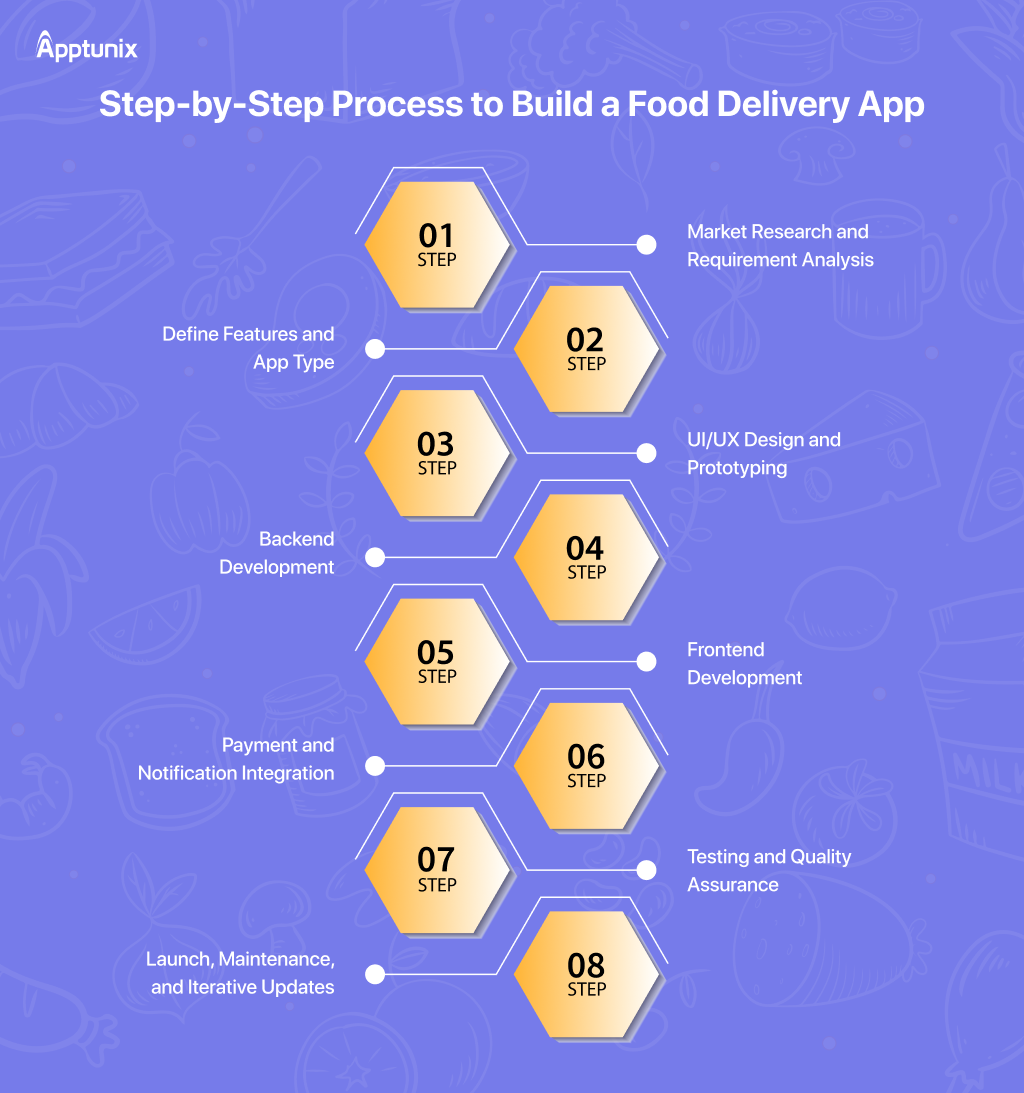
Step 1: Market Research and Requirement AnalysisBefore a single line of code is written, you need to know your audience inside out. Who are your customers, what frustrates them about existing apps, and what solutions are they craving? Study competitors like Uber Eats, DoorDash, Zomato, and Grubhub clone delivery app development. Spot gaps, trends, and opportunities. This research sets the stage for your food delivery marketplace app development, ensuring your app addresses real problems and stands out in a crowded market.
Step 2: Define Features and App TypeNot all food delivery apps are the same. Decide whether you want a single-restaurant app, a multi-restaurant marketplace, an on-demand delivery service, or a subscription-based model. This choice impacts your food delivery app development cost, feature set, and scalability. Choosing wisely ensures your app is not only functional but positioned to grow with the market.
Step 3: UI/UX Design and PrototypingDesign isn’t decoration—it’s the foundation of engagement. Map user journeys, create wireframes, and develop interactive prototypes. A smooth, intuitive interface keeps customers coming back, reduces drop-offs, and encourages repeat orders. Early testing with prototypes saves time and cost later, helping your custom food delivery app development company deliver a polished product faster.
Step 4: Backend DevelopmentThe backend is the engine of your app. It handles orders, payments, delivery tracking, notifications, and analytics. A scalable backend ensures your platform can handle multiple restaurants, thousands of users, and peak traffic without lag. For a reliable on-demand food delivery app development service, this is where performance and stability are built.
Step 5: Frontend DevelopmentThe frontend is what your users see and interact with. Build responsive, fast, and visually appealing apps for customers, restaurants, and delivery partners. Real-time updates, smooth navigation, and clear interactions create trust and drive engagement. Pairing a robust backend with a clean frontend ensures a professional food delivery mobile app development service.
Step 6: Payment and Notification IntegrationSecure, instant payments and real-time notifications are non-negotiable. Integrate trusted gateways, offer multiple payment options, and provide push notifications for order updates, promotions, or personalized suggestions. These features build loyalty and confidence, making your on-demand food delivery app development services feel professional and reliable.
Step 7: Testing and Quality AssuranceBefore launch, rigorous testing is essential. Identify bugs, optimize performance, and verify cross-device compatibility. QA ensures your app runs flawlessly in real-world conditions, reinforcing your brand’s credibility and user trust.
Step 8: Launch, Maintenance, and Iterative UpdatesLaunching is just the beginning. Deploy your app, monitor performance, gather user feedback, and continuously update features. Regular maintenance ensures your affordable food delivery app development services investment scales with demand, keeps users engaged, and maintains your competitive edge.
The right food delivery app features can improve usability, boost retention, and increase revenue. Whether you want to build a food delivery app like DoorDash using a white-label solution or hire a custom food delivery app development company, focusing on core features ensures your platform stands out in a competitive market.
A:Customer App FeaturesB:Restaurant App FeaturesC:Delivery Partner App FeaturesD:Admin Panel FeaturesRecommended Read: Developing Green App – What Investors Must Know?

A solid tech stack is crucial if you want to build a food delivery app or one like Uber Eats. Using the right technology ensures your mobile app development services are future-proof, scalable, and efficient. When you hire the best iOS and Android app developers for your project, your app will meet modern standards while delivering a high-quality user experience.
Here’s a practical guide for on-demand food delivery app development services:
Developing a food delivery app is not a one-size-fits-all project. Understanding the cost to develop a food delivery app like Postmates is crucial for planning your investment and ensuring a scalable, revenue-generating platform. The food app development cost depends on the features you include, the platforms you target, the complexity of your app, and the region where development takes place.
A:MVP (Minimum Viable Product)An MVP is your app’s basic version with core functionalities to test your idea in the market. An MVP focuses on essential features like user registration, menu browsing, order placement, tracking, and payments. The average cost to develop a restaurant app at this stage typically starts from $10,000 and takes 1-3 months to launch. This approach is ideal for startups testing the market with on-demand food delivery app development services.
B:Mid-Level AppMid-level apps include advanced features such as multi-restaurant support, loyalty programs, analytics dashboards, and push notifications. The food delivery app development cost at this level usually ranges from $25,000 to $50,000, with a timeline of 3-5 months. This is suitable for businesses ready to expand operations and improve user engagement.
C:Advanced AppAn advanced app is a full-scale platform comparable to leading apps in the market. Advanced apps feature AI-powered recommendations, route optimization, multiple payment integrations, subscription models, and enterprise-grade admin dashboards. Developing a full-featured app can exceed $70,000 and may take 6-8 months. Partnering with a custom food delivery app development company ensures your platform is scalable, secure, and optimized for high traffic.
The platforms you choose—iOS, Android, or web—directly affect cost and development time. Building for both iOS and Android usually costs more than a single platform, and adding a web-based admin panel increases complexity.
Region-wise, development costs vary significantly. In the US and Europe, higher hourly rates lead to higher project costs. Skilled on-demand app development companies can deliver high-quality apps at more affordable rates, helping businesses launch without compromising features.
A food delivery app isn’t just about connecting customers with restaurants—it’s a revenue-generating engine. Understanding food delivery app revenue models is key if you want your app to be profitable and scalable. Let’s break down the most effective ways to monetize your platform, with real-world examples. By implementing these strategies, your app can generate revenue from day one while providing value to both customers and restaurants. Partnering with a skilled on-demand app development company ensures your platform is built to handle multiple monetization models, while mobile app development services help scale your app reliably as your user base grows.
Most multi-restaurant apps earn through commissions. Every order placed through your app generates a percentage of revenue for your platform. For example, DoorDash takes a commission from partner restaurants on every order, ensuring steady income as your user base grows. This model works well for food delivery marketplace app development, as it aligns your revenue with the number of transactions processed.
Charging a small delivery fee is a direct and consistent way to generate revenue. You can make it dynamic—higher during peak hours or for longer distances. Apps like Zomato effectively use this model, combining convenience for users with revenue for the platform.
Subscription-based monetization is becoming increasingly popular. Customers can pay a monthly or yearly fee for perks like free delivery, priority orders, or exclusive discounts. Restaurants can also subscribe for premium listings or featured placements. This approach creates predictable revenue while enhancing customer loyalty. Example: Uber Eats Pass offers users unlimited free deliveries for a monthly fee.
Your app can generate extra revenue by allowing restaurants to promote their listings, run in-app campaigns, or offer special discounts. This is a low-barrier way to monetize without charging customers directly. Smaller restaurants, for example, often pay to appear in the top search results or featured banners, similar to how Zomato promotes partner restaurants.
In-app purchases can include meal add-ons, special deals, or exclusive menu items. Pairing this with a loyalty program—points, rewards, or tiered benefits—encourages repeat orders and increases customer retention. Example: Swiggy’s loyalty program allows users to earn points on every order, redeemable for discounts or free meals.
Building a food delivery app today goes far beyond coding—it’s about creating a platform that seamlessly connects restaurants, delivery partners, and customers while generating consistent revenue. At Apptunix, we help businesses turn ideas into reality. We specialize in on-demand app development, providing end-to-end solutions that cater to startups, growing businesses, and large enterprises alike.
What sets Apptunix apart is our hands-on approach. We don’t just build apps; we design experiences. Our food delivery mobile app development services cover iOS, Android, and web platforms, ensuring your app reaches users wherever they are. Businesses can hire the best iOS and Android app developers who understand the ins and outs of on-demand food delivery app development services, from managing orders and real-time tracking to secure payments and advanced analytics.
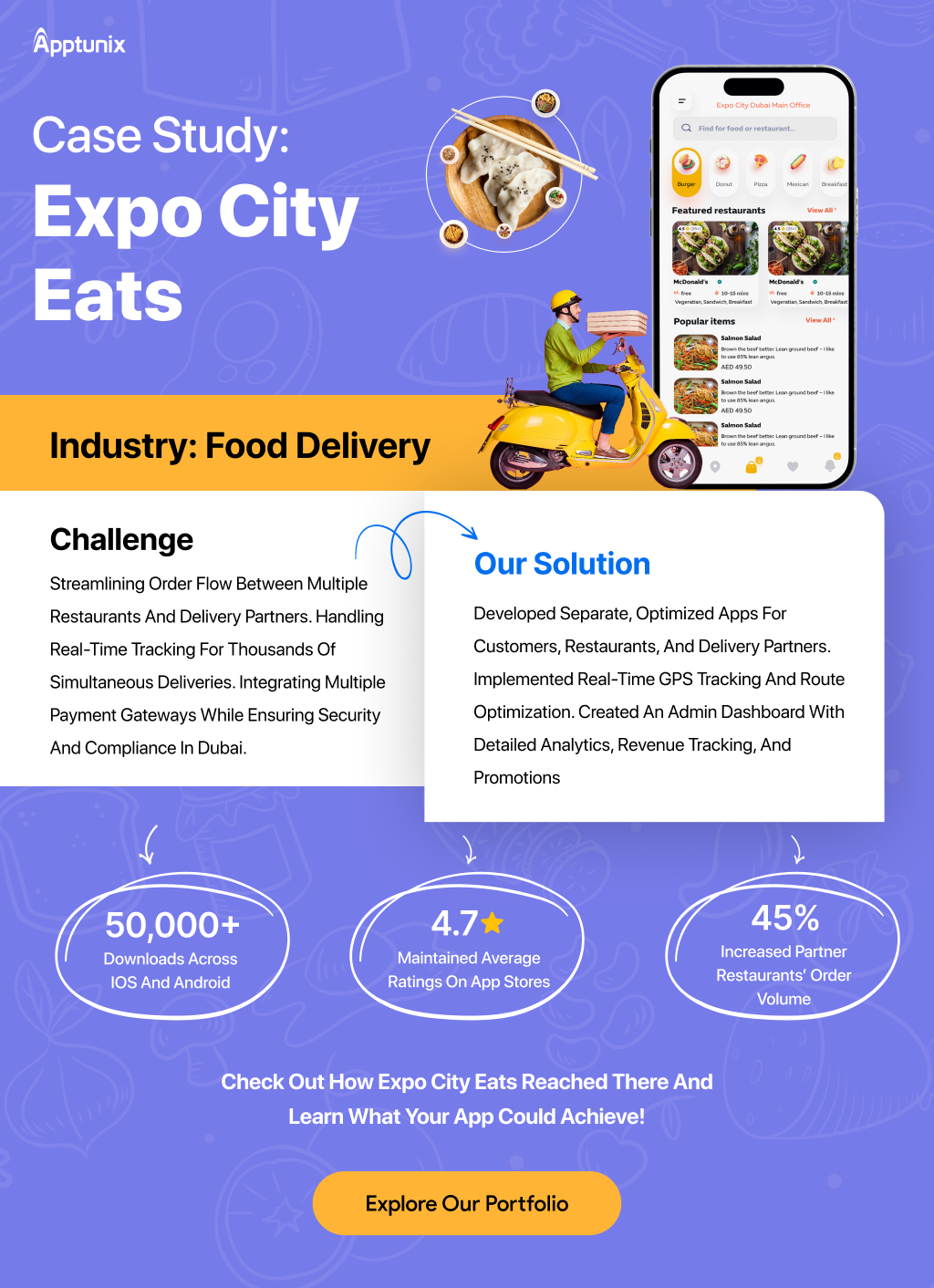
With deep expertise in food delivery marketplace app development, we focus on building apps that keep customers engaged, help restaurants operate efficiently, and allow delivery partners to manage jobs effortlessly. Every solution we deliver is tailored to your business goals, designed for growth, and optimized for long-term success. At Apptunix, we help you build platforms that connect people, drive business, and lead your market.
The food delivery market is exploding, with billions in projected revenue and user demand surging like never before. Every day, more customers are turning to mobile apps for convenience, speed, and reliability. The sooner you act, the faster you can capture market share, increase customer loyalty, and create scalable revenue streams. Waiting means letting competitors dominate the space while opportunities slip away.
Partnering with Apptunix gives you more than just development expertise. You gain a strategic partner with a proven track record in on-demand food delivery app development services. We help businesses build apps that scale effortlessly, drive revenue from day one, and keep users coming back. From MVPs to full-feature enterprise apps, our solutions are designed to turn ideas into high-performing platforms.
The competition isn’t waiting, and neither should you. Work with top iOS and Android developers who know how to make a food delivery app that scales. Start today, capture the opportunity, and build a platform that connects millions, drives business growth, and positions your brand as a leader.
Q 1.Why should I build a food delivery app?
Food delivery apps are very popular today. People love ordering food from their phones. If you build a food delivery app, you can earn good money, help restaurants get more orders, and make it easy for customers to get food at their doorstep.
Q 2. How long does it take to build a food delivery app?
Development typically takes 1–3 months for an MVP and up to 6–8 months for full-featured apps.
Q 3.Which technologies are used to build a food delivery app?
Developers usually use:
These tools help make the app fast and secure.
Q 4.How much does it cost to make a food delivery app?
The food delivery app development cost depends on features, platforms, and complexity. MVP apps can start around $10,000, while advanced apps may exceed $70,000.
Q 5.What are the common challenges in developing a food delivery app?
Building a food delivery app can be tricky. Some common problems include:
Working with an experienced development team can help avoid or fix these problems.
Q 6.Can I launch an MVP first to reduce cost?
Yes. An MVP food delivery app lets you test the market, gather feedback, and scale gradually with advanced features.
Q 7.What is the revenue model of a food delivery app?
Revenue can come from commissions, delivery fees, subscriptions, promotions, and loyalty programs.
Q 8.How can I hire the best developers for my food delivery app?
Partnering with a custom food delivery app development company ensures you can hire experienced iOS and Android developers for scalable solutions.
Q 9.What is the difference between single-restaurant and multi-restaurant apps?
Single-restaurant apps focus on one brand, while food delivery marketplace app development connects multiple restaurants in one platform.
Q 10.How can Apptunix help me build a food delivery app?
Apptunix is a custom food delivery app development company that offers end-to-end solutions. We handle everything from MVP to full-scale food delivery marketplace app development, ensuring your app is scalable, reliable, and revenue-ready.
Q 11.Can I hire experienced developers from Apptunix?
Yes. You can hire the best iOS and Android app developers at Apptunix who specialize in on-demand food delivery app development services and create apps that perform under high traffic.
Q 12.Does Apptunix provide affordable food delivery app development services?
Absolutely. Apptunix offers affordable food delivery app development services without compromising quality, helping startups and enterprises launch fast while managing costs efficiently.
Q 13.Does Apptunix help with app launch and growth strategy?
Yes. Beyond development, Apptunix assists with market-ready deployment, feature optimization, analytics integration, and growth strategies so your app maximizes downloads, engagement, and revenue.
Get the weekly updates on the newest brand stories, business models and technology right in your inbox.
With over 20+ years of experience in driving global digital initiatives, Nikhil Bansal is the CEO & Director of Apptunix. He specializes in orchestrating large-scale digital transformations, enterprise-grade software solutions, and high-level business strategies that redefine industry standards. Nikhil is known for his ability to bridge the gap between complex business challenges and innovative technology, helping Fortune 500 companies and startups alike achieve sustainable growth. A visionary leader, he empowers enterprises to navigate the digital landscape with agile, ROI-focused models and future-ready business strategies.
91 Views 12 min June 24, 2026

96 Views 12 min June 22, 2026
106 Views 12 min June 19, 2026
Book your consultation with us.
Book your consultation with us.


One Central, The offices 3, Level 3, DWTC, Sheikh Zayed Road, Dubai
+971 50 782 1690


Offer Ends Soon
Get a quick expert response in under 5 minutes.