10 Best Construction Project Management Software & How To Build Your Own?
31 Views 12 min August 27, 2026

Reena Bhagat, the CTO and Head of AI at Apptunix, is a seasoned technology strategist with a deep-rooted expertise in emerging technologies. With a focus on AI/ML integration, product engineering, cloud management, she leads the technical vision for high-performance SaaS infrastructures. Reena is recognized for building secure, scalable, and decentralized systems that solve real-world complexities. Her passion lies in leveraging data science and future-tech to create resilient digital products, making her a trusted authority for organizations looking to lead in the age of intelligent automation.
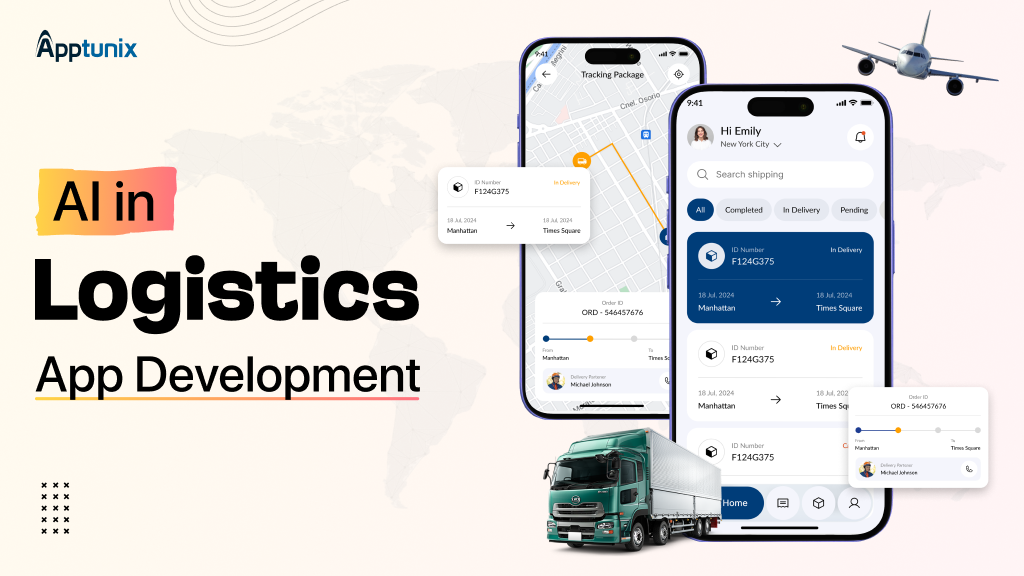
You’re already behind if your logistics operation still runs on guesswork.
Harsh, but true.
Delays pile up. Costs creep in. Customers lose patience. And somewhere, a competitor is quietly fixing all of this with smarter systems.
That’s where AI in logistics app development starts to change the story. It turns scattered data into clear decisions. It replaces reactive workflows with predictive ones. And it brings a level of control that used to feel out of reach.
This momentum is very hard to ignore. Also, recent reports estimate that the global AI in logistics market is expected to grow beyond $599.5 billion by 2033. That’s not hype. That’s a clear signal of where the industry is heading.
We’ve seen businesses hesitate at first, often due to complexity or cost concerns. That hesitation usually fades when operational inefficiencies begin to impact scale and customer experience.
This is why choosing the right AI logistics app development company becomes a business-critical decision. The focus has shifted from just building an app. It’s about creating a system that continuously learns, adapts, and improves how your logistics operate.
So if you’re wondering where to begin or what really matters, you’re in the right place.
This article will help you cut through the noise and focus on what counts.
Let’s walk through this together.
This shift is not happening randomly. It’s fueled by the fact that traditional systems just can’t solve the operational gap. Businesses now need faster decisions, tighter control, and better visibility. This is where AI shifts from novelty to necessity.
Here is why this transformation is inevitable for your business:
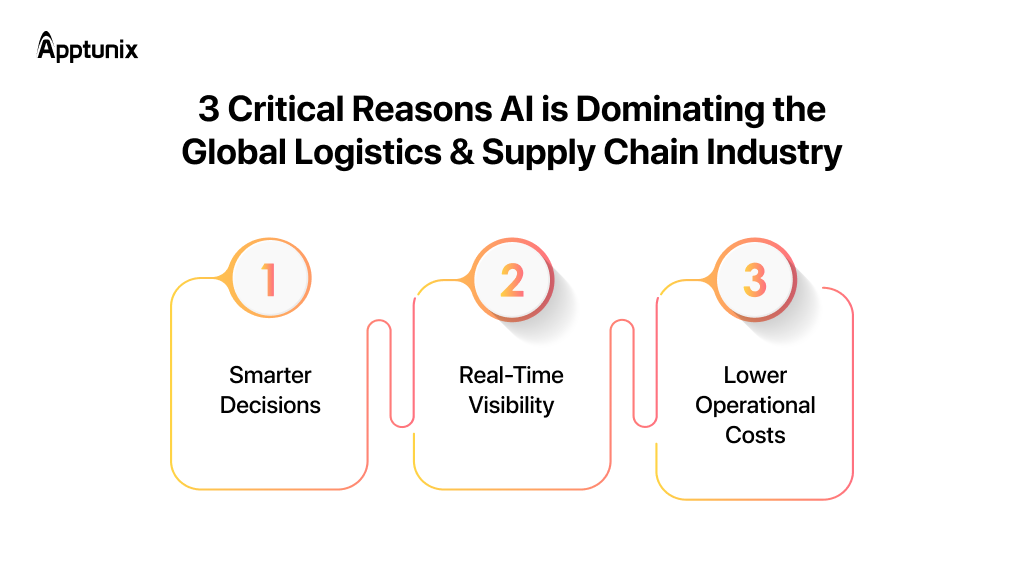
1: AI-Driven Smarter Decision MakingWith AI in supply chain management, decisions are no longer based on assumptions. AI analyzes demand patterns, traffic data, and operational history instantly. Reports suggest AI-driven forecasting can improve accuracy by up to 30–50%. That means fewer stockouts, better planning, and more confident decisions across your entire logistics network.
2: Real-Time Operational ControlA real-time tracking logistics app changes how businesses manage movement. You don’t wait for updates anymore. You see everything live. Delays, route changes, and delivery status.
FedEx uses AI-powered sensors to monitor cargo health and location in real-time. This provides a level of real-time tracking logistics app precision previously impossible. You can now detect and resolve transit delays before they impact the final customer experience.
3: Cost & Efficiency OptimizationEfficiency is a survival kit. This is where route optimization using AI for delivery management truly stands out. AI calculates the quickest and most efficient routes and minimises wasted miles.
DHL reports that AI-driven route optimization can reduce operational costs by up to 15%. By automating load planning and scheduling, you maximize every cubic inch of your fleet. This turns your smart logistics solution into a high-margin, waste-free revenue engine.
Now that you understand the shift, let’s explore the features that actually make AI logistics apps work smarter.
Now comes the part that really shapes your product. Features decide whether your app feels like a tool… or a true business asset. A well-planned AI-powered logistics app connects customers, drivers, and operations into one smooth system.
Let’s break it down by panels you must integrate during AI logistics software development:
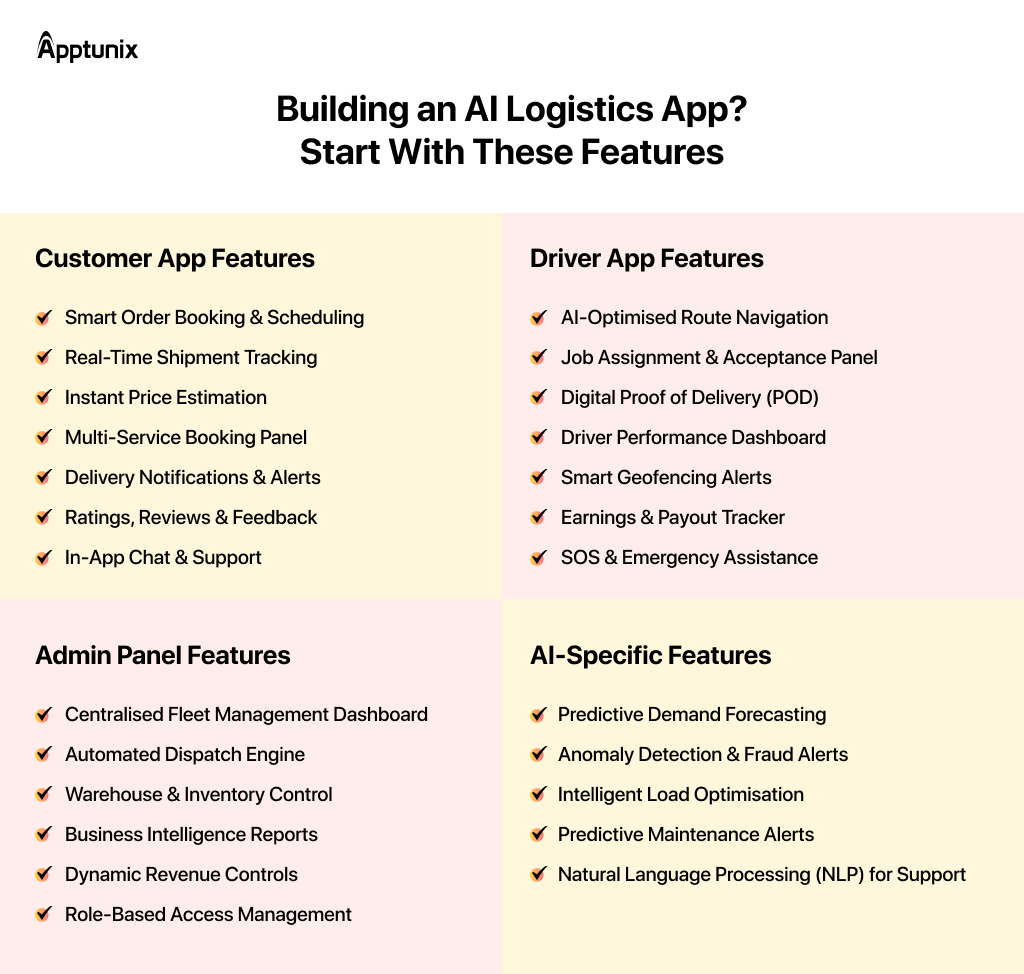
The customer app is your brand’s first impression. If it’s confusing, slow, or uninformative, they’ll find someone else. These features ensure they stay.
🔹 Smart Order Booking & SchedulingUsers receive instant, accurate quotes based on real-time market fluctuations, vehicle availability, and historical data. This will provide you with pricing transparency and a quicker checkout time for your business.
🔹 Real-Time Shipment TrackingForget “out for delivery.” Give users a live, sensor-integrated view of their cargo’s precise location and environmental status.
🔹 Instant Price EstimationNobody likes hidden costs. AI calculates pricing instantly using distance, demand, and load factors. It ensures transparency while helping businesses stay competitive within evolving smart logistics solutions.
🔹 Multi-Service Booking PanelUsers often need more than one service. This feature allows booking across deliveries, transport types, or logistics categories. It aligns well with a Multi-Service Transport Platform, improving flexibility and engagement.
🔹 Delivery Notifications & AlertsAutomated updates keep customers informed at every step. AI can trigger alerts based on delays, route changes, or delivery completion.
🔹 Ratings, Reviews & FeedbackTransparency builds trust. Let customers rate their experience, giving you the data needed to elevate your service quality.
🔹 In-App Chat & SupportIntegrated chat enables instant communications with drivers or support teams. AI chat assistance can handle common queries, improving response time and efficiency.
Drivers are your front line. If their app is clunky, your retention drops and your risks rise. You need to give them a tool that makes their job easier, not harder.
🔹 AI-Optimised Route NavigationRe-calculates paths in real time, depending on the conditions on the road. This cuts down on idling time, decreases fuel usage, and has a direct effect on your fleet’s daily overhead.
🔹 Job Assignment & Acceptance PanelAI assigns tasks based on proximity and workload. Drivers can accept or reject jobs easily. This keeps operations balanced and supports an efficient fleet management app with AI workflows.
🔹 Digital Proof of Delivery (POD)Drivers can capture signatures, photos, or OTP confirmations. AI can validate delivery data, reducing disputes and ensuring accountability across the delivery process.
🔹 Driver Performance DashboardDrivers can track completed trips, efficiency, and ratings. AI-driven insights highlight improvement areas. This encourages better performance and accountability across the system.
🔹 Smart Geofencing AlertsGeofence triggers notify drivers when entering or exiting delivery zones. This reduces missed stops and supports the fleet management app with AI compliance workflows.
🔹 Earnings & Payout TrackerTransparency matters for drivers, too. This feature shows earnings, incentives, and payout history. It improves trust and keeps drivers motivated.
🔹 SOS & Emergency AssistanceOne-tap emergency alerts with live location sharing. Critical for long-haul routes and lone-driver scenarios. And a non-negotiable for any responsible logistics app development project.
This is where your operations team shifts from “firefighting” to “orchestrating.” This is the core of logistics software development services.
🔹 Centralised Fleet Management DashboardAdmins get a complete overview of vehicles, drivers, and deliveries. This supports a Unified Transport & Logistics Platform, enabling better visibility and faster decision-making.
🔹 Automated Dispatch EngineAI automates driver allocation based on real-time conditions. It improves efficiency and reduces human error in AI logistics software development systems.
🔹 Warehouse & Inventory ControlAdmins monitor stock levels, inbound shipments, and pick-pack-ship cycles in real time. Warehouse automation AI integration services flags low stock, misplaced inventory, and fulfilment bottlenecks before they escalate.
🔹 Business Intelligence ReportsAdvanced analytics provide clarity on costs, delivery times, and performance trends. This supports smarter scaling decisions.
🔹 Dynamic Revenue ControlsSet surge pricing rules, promotional rates, or zone-based pricing. AI adjusts rates based on demand patterns, ensuring profitability without manual intervention.
🔹 Role-Based Access ManagementAssign specific access levels to dispatchers, warehouse managers, fleet supervisors, and finance teams. Sensitive data stays protected. Everyone sees exactly what they need to.
These are the features that separate a regular logistics app from an intelligent one. These capabilities define true enterprise AI logistics solutions.
🔹 Predictive Demand ForecastingAI analyzes historical and real-time data to predict demand. This helps in inventory planning and reduces wastage, making AI logistics software development more strategic than reactive.
🔹 Anomaly Detection & Fraud AlertsMachine learning continuously monitors transactions and delivery patterns. Unusual behaviour like duplicate orders, route deviations, and payment irregularities gets flagged automatically and instantly.
🔹 Intelligent Load OptimisationMaximizing vehicle capacity matters. AI suggests optimal load distribution, reducing empty space and improving delivery efficiency.
🔹 Predictive Maintenance AlertsAI monitors vehicle health and predicts maintenance needs. This prevents breakdowns, reduces downtime, and keeps operations running smoothly without unexpected disruptions.
🔹 Natural Language Processing (NLP) for SupportConversational AI handles customer queries, shipment updates, and complaint resolution in multiple languages. Support quality scales without headcount scaling with it.
These are some of the core features businesses commonly prioritize during AI logistics app development. But honestly, when AI enters logistics operations, the possibilities expand far beyond a fixed feature list.
Our team is proficient in some other advanced features as per your demand. We specialize in AI in custom logistics software development services that tackle unique hurdles. This includes Computer Vision for instant cargo damage detection. We also integrate Agentic AI for autonomous freight rate negotiations. Our experts build Digital Twins to simulate entire supply chain disruptions safely. We can even implement Generative AI to automate complex customs paperwork. Every feature we add is designed specifically for your operational DNA.
Features shape the experience, but the real magic lies in how these platforms are built. Let’s break that down next.
We’ve seen many businesses rush into development, only to rebuild everything later because the foundation was weak. That’s expensive, frustrating, and completely avoidable.
The smartest approach to AI in logistics app development is building with purpose from day one. Based on our experience building complex, AI-powered logistics app solutions, we know that generic roadmaps fail. We’ve successfully delivered platforms that handle real-world chaos, like port strikes and driver shortages. Every stage must solve a real operational challenge, not just add another feature.
Here’s how we handle AI logistics software development behind the scenes to ensure your app actually performs in the field.
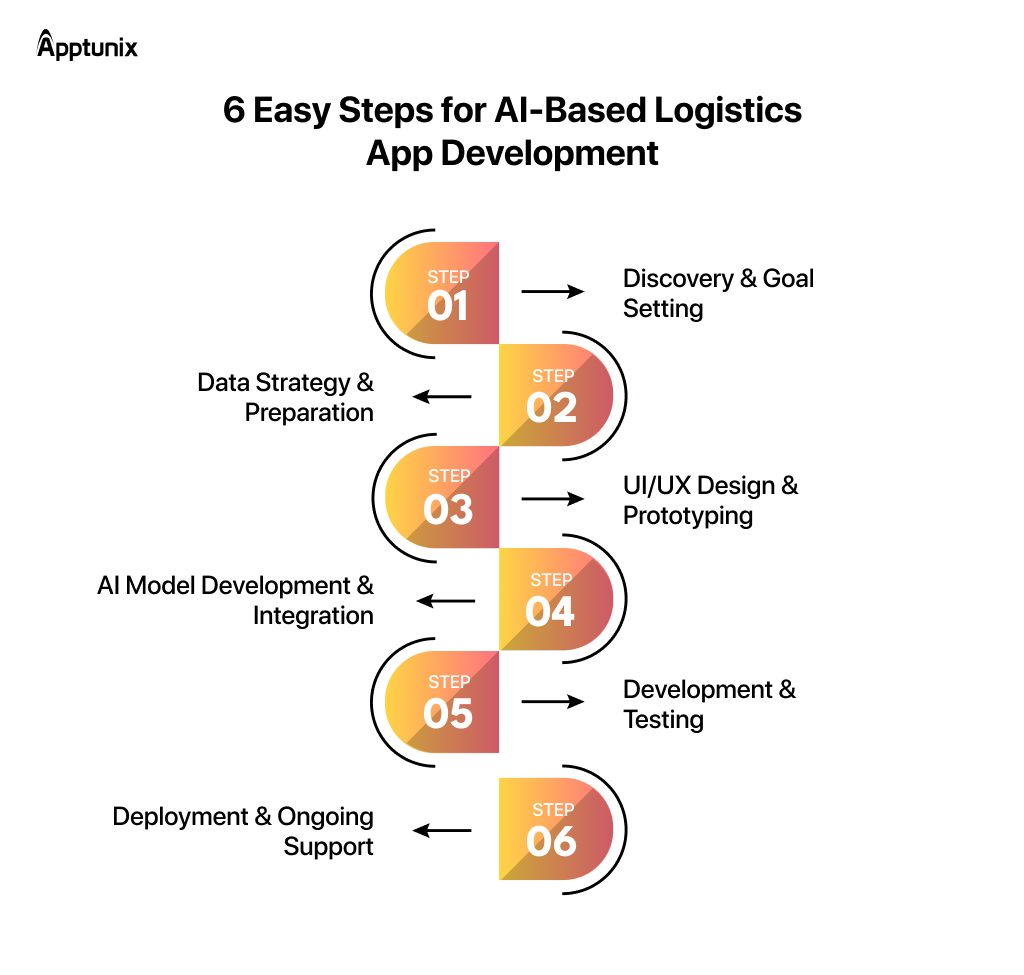
Step 1: Discovery & Goal SettingBefore development starts, we study your logistics operations deeply. We identify gaps, delays, and scaling challenges. This helps us shape the right enterprise AI logistics solutions from the beginning.
What we define here:
This stage prevents expensive rebuilds later.
Step 2: Data Strategy & PreparationAI depends on clean and structured operational data. We organize logistics records, delivery history, and fleet data carefully. This improves prediction accuracy and operational intelligence inside AI logistics software development.
Our team prepares datasets for:
Step 3: UI/UX Design & PrototypingBefore development starts, we create user-focused workflows for customers, drivers, and admins. The goal is to simplify operations without overwhelming users. From booking flows to driver navigation, every screen is designed around real logistics behavior. This ensures your AI-powered logistics app feels operationally efficient from day one.
Step 4: AI Model Development & IntegrationNow comes the intelligence layer.
This stage transforms a traditional app into an adaptive system capable of learning from operational behavior. Depending on business goals, AI models are trained using historical logistics data and real-time inputs.
This is where features like:
begin taking shape.
For businesses investing in enterprise AI logistics solutions, this phase often includes deeper integrations with:
AI also powers advanced capabilities like warehouse automation AI, helping businesses reduce manual coordination inside fulfillment centers.
And the biggest advantage?
The system keeps improving as more operational data flows through it.
Step 5: Development & TestingOnce designs and AI workflows are approved, development begins. We build secure customer apps, driver panels, and admin dashboards together. APIs, cloud infrastructure, and tracking systems are integrated carefully.
Testing happens under real logistics conditions. This helps us validate speed, scalability, and reliability before launch. Strong testing reduces operational disruptions later.
Step 6: Deployment & Ongoing SupportAfter deployment, we monitor app performance closely. AI systems continue learning from operational behavior and delivery patterns. This improves long-term efficiency and decision-making.
As businesses grow, we scale the platform into broader smart logistics solutions. This supports multiple logistics operations from one ecosystem.
Once the process is clear, the next big question is obvious: what technologies power these intelligent logistics systems?
To build a logistics management software that actually scales, you need a modular architecture. This will enable you to change AI models without rebuilding the entire back-end. We didn’t just pick these tools from a list. In our recent AI logistics software development projects, we specifically chose this stack to handle massive data spikes.
The industry-standard high-performance AI logistics software development stack we use is as follows:
Technology defines performance, but investment defines scalability. Here’s what AI logistics app development really costs.
The cost of building an AI-powered logistics app isn’t just a development invoice. It’s the price of replacing manual dispatching, driver miscommunication, fuel wastage, missed deliveries, and reactive decision-making with one intelligent system that handles all of it.
Still, if you want the estimated range, then it is around $20,000 to $200,000+ for AI in logistics app development.
This variance isn’t arbitrary. It represents the shift from a streamlined MVP to a fully autonomous enterprise AI logistics solution. You aren’t only paying for code. You are funding a proprietary decision engine that handles global orchestration while your competitors are still stuck on manual dispatch.
Many businesses look at development costs and immediately focus on the final number. But the real question is different: What exactly are you paying for?
In reality, the cost of AI logistics app development depends on how intelligent, scalable, and operationally advanced the platform needs to become. Here are the biggest factors that influence the investment:
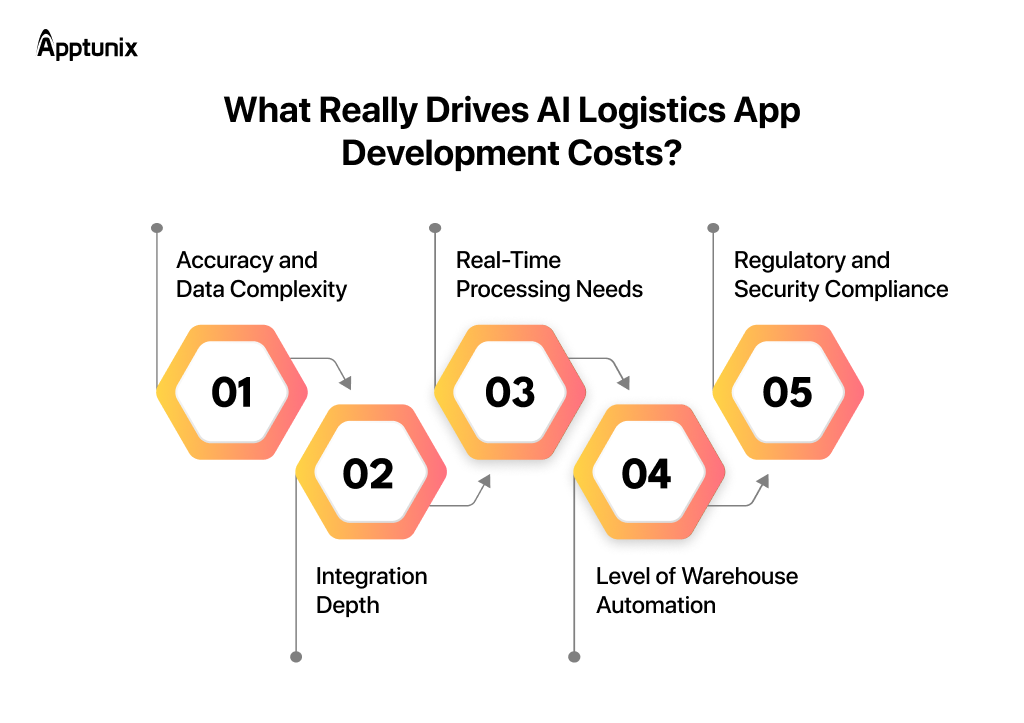
1: Accuracy and Data Complexity2: Integration DepthDoes your app need to talk to old legacy ERPs? Or maybe custom IoT sensors?
Complex integrations increase the AI logistics software development price. Connecting fragmented systems into a Unified Transport & Logistics Platform takes specialized middleware and serious testing.
3: Real-Time Processing NeedsLatency is a silent profit killer. Building a real-time tracking logistics app that updates every second is expensive. High-speed data streaming requires a robust, premium tech stack. This ensures your dispatchers see the truth the moment it happens, with zero lag.
4: Level of Warehouse AutomationAdding warehouse automation AI scales your budget quickly. This involves syncing software with physical robotic systems or AGVs. It’s a deep technical challenge. However, the ROI from 24/7 automated picking usually justifies the higher initial development cost.
5: Regulatory and Security ComplianceGlobal logistics involves sensitive trade data. Keeping your enterprise AI logistics solutions secure isn’t cheap. We must implement high-level encryption and data privacy protocols. This protects your business from leaks. It also ensures you meet international shipping and digital standards.
Cost explains the investment. But the real value appears when AI starts solving real logistics problems at scale.
The real value of AI in logistics app development appears when businesses apply it to practical, everyday operations. Here are the AI in logistics use cases creating the biggest impact across the logistics and supply chain industry:
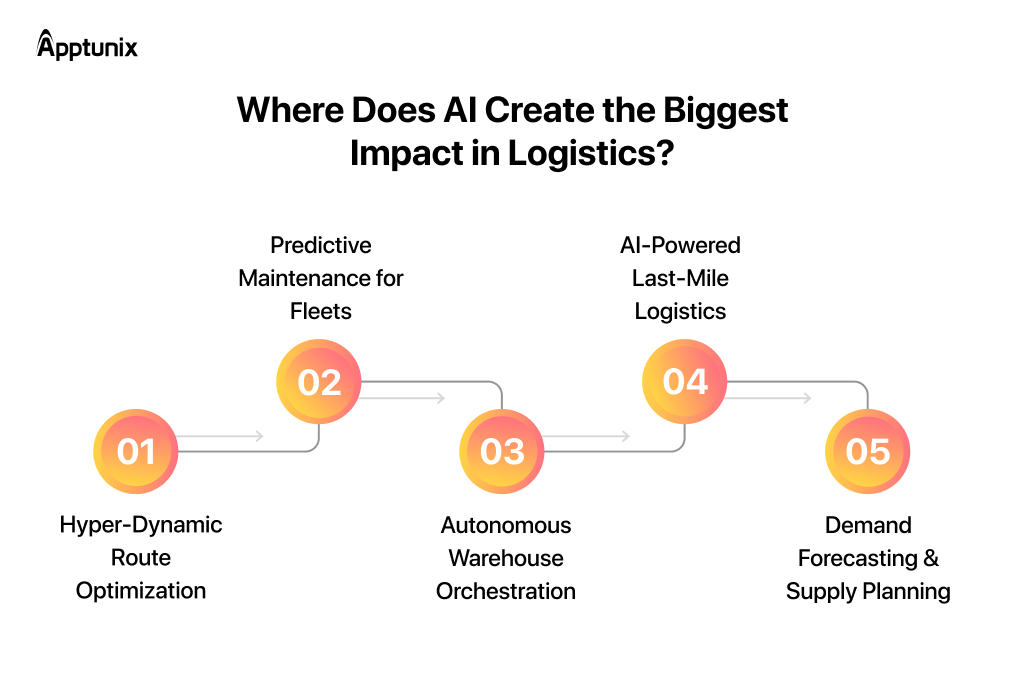
1: Hyper-Dynamic Route OptimizationTraditional GPS tells you the shortest path. Route optimization using AI tells you the most profitable one. It analyzes live port congestion, fuel prices at specific stops, and even driver fatigue levels. This isn’t just a map; it’s a strategic navigator that slashes fuel costs by up to 20%.
2: Predictive Maintenance for FleetsNothing kills a budget like an engine blowing out on a highway. A fleet management app with AI uses sensor data to hear problems before they happen. By predicting a part failure weeks in advance, you move from “emergency repairs” to “scheduled maintenance.”
3: Autonomous Warehouse OrchestrationThe days of manual clipboards are dead. Warehouse automation AI manages the “dance” of robots and human pickers. It optimizes shelf placement based on real-time demand shifts. High-velocity items move to the front automatically. It reduces picking time by nearly 40% during peak seasons.
4: AI-Powered Last-Mile LogisticsThe last mile is the most expensive. AI for delivery management solves this by clustering deliveries with surgical precision. It factors in building access times, local parking trends, and customer availability. This ensures your drivers make more successful drops in fewer hours, protecting your reputation and your wallet.
5: AI Demand Forecasting for Supply Chain PlanningOne of the biggest challenges of AI in supply chain management is predicting demand accurately. Overstocking increases costs. Understocking impacts deliveries.
AI analyzes historical trends, seasonal demand, and customer behavior. This improves planning and inventory allocation across logistics operations.
6: Agentic AI for Carrier Coordination & DispatchAgentic AI is transforming logistics app development through autonomous carrier coordination and smart dispatching. These AI systems manage shipment allocation, route selection, and delivery communication without manual intervention. DHL and project44 are adopting agentic AI to improve logistics visibility, operational speed, and transportation efficiency.
Logistics businesses can’t afford slow systems anymore. Customer expectations are rising too quickly. Operations are becoming harder to manage manually. And competition keeps getting sharper every year.
That’s exactly why businesses are investing in smarter, connected, and AI-driven platforms.
From predictive delivery planning to warehouse automation, AI in logistics app development is changing how logistics operations perform. It helps businesses reduce operational pressure, improve visibility, and make faster, more confident decisions.
But technology alone is never enough.
The real difference comes from building solutions around actual business challenges. This is where experience counts. We have already built and deployed a robust, AI-powered logistics platform that handles complex, real-world fleet demands. That’s why businesses now prefer AI for custom logistics software development services rather than relying on rigid off-the-shelf systems.
At Apptunix, we focus on building logistics platforms that align with real operational workflows.
From intelligent delivery systems to enterprise-grade transport solutions, our team creates scalable products designed for long-term growth.
Whether you’re planning a smart delivery platform or a complete Unified Transport & Logistics system, the goal stays the same. Build technology that makes operations simpler, faster, and easier to scale.
Because the future of logistics won’t be managed manually.
It will be predicted, automated, and optimized through AI.
Q 1.What is AI in Logistics App Development?
AI in logistics app development is the process of integrating “thinking” algorithms into your supply chain software. Unlike traditional logistics apps that merely record data, AI-powered apps process, learn, and act on that data.
Q 2.How much does it really cost to develop an AI logistics app in 2026?
The investment typically ranges from $40,000 to $200,000+. A basic MVP with core tracking and automated dispatching starts at the lower end. While enterprise-grade solutions featuring AI in supply chain management, digital twins, and full warehouse automation reach the higher bracket.
Q 3.How long does the AI logistics app development process take?
A basic AI logistics application may take 3–5 months. However, the enterprise-grade platforms with advanced AI features can take 10–12 months or longer.
Q 4.What Are the Key Benefits of AI in Logistics Apps?
Integrating smart logistics solutions isn’t just a luxury; it’s a massive efficiency play. Here is why businesses are migrating to AI-powered logistics apps:
Q 5.Can AI-enabled logistics apps integrate with my existing ERP or WMS?
Absolutely. Modern AI logistics software development relies heavily on APIs and middleware. We design these apps to act as an “intelligent layer” that sits on top of your current SAP, Oracle, or custom legacy systems. It helps in pulling data without requiring a total system overhaul.
Q 6.What is the future of AI in logistics app development?
(4 ratings, average: 5.00 out of 5)
Get the weekly updates on the newest brand stories, business models and technology right in your inbox.
Reena Bhagat, the CTO and Head of AI at Apptunix, is a seasoned technology strategist with a deep-rooted expertise in emerging technologies. With a focus on AI/ML integration, product engineering, cloud management, she leads the technical vision for high-performance SaaS infrastructures. Reena is recognized for building secure, scalable, and decentralized systems that solve real-world complexities. Her passion lies in leveraging data science and future-tech to create resilient digital products, making her a trusted authority for organizations looking to lead in the age of intelligent automation.
31 Views 12 min August 27, 2026
172 Views 12 min June 24, 2026

190 Views 12 min June 22, 2026
Book your consultation with us.
Book your consultation with us.


One Central, The offices 3, Level 3, DWTC, Sheikh Zayed Road, Dubai
+971 50 782 1690