How to Create a Weight Loss App Like Noom?
4 Views 15 min August 10, 2026

Arohi Singh is a technology content strategist at Apptunix, where she writes about software and app development across industries, from on-demand and logistics to fintech, healthcare, and applied AI. With over 5 years of experience, she works closely with Apptunix’s engineers, product managers, and solution architects to turn real project insights into clear, decision-ready guidance for founders and business leaders. Her writing focuses on what matters before you build: market context, feature trade-offs, realistic costs, and compliance considerations
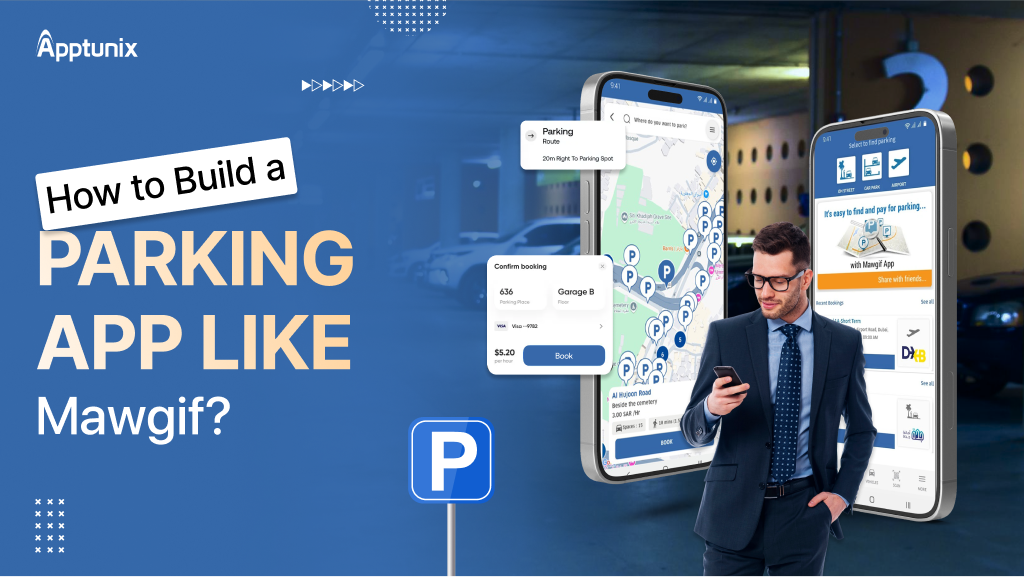
Want to disrupt the mobility sector? Then you need to build a parking app like Mawgif.
Parking may sound simple, but it is one of the most difficult daily struggles in modern cities. The moment you arrive at any business district or airport, you start circling lanes and wasting time in queues. The frustration is real, and that’s exactly where digital innovation has come in to rescue.
The way people search, reserve, and pay for parking has changed dramatically in recent years. All thanks to the smart parking application.
And one name that stands out in this transformation is Mawgif, a dominant parking solution in the Middle East. By combining real-time parking availability, cashless payments, and digital management, Mawgif made city parking effortless and efficient.
This shift didn’t just solve a problem for drivers; it created a massive business opportunity. As more cities in the MENA region push toward smart mobility, the demand for parking mobile app development is growing fast. Businesses now aim to build a parking app like Mawgif to modernize urban parking and tap into a convenience- and technology-driven market, often partnering with a trusted mobile app development company in Dubai to bring these solutions to life.
In this article, we’ll go over every aspect of creating a Mawgif-like app in detail. So, let’s get going.
Mawgif is one of the most recognized smart parking apps in the Middle East. Founded in Saudi Arabia, soon evolved into a brand that clients relied on for digital parking management.
Mawgif has grown over the years, overseeing thousands of parking lots in major cities like Riyadh, Dubai, Abu Dhabi, and Doha. It facilitates the gap between drivers and parking operators, making the parking process quicker and more sustainable.
The company’s approach to smart parking app development has become a benchmark in the mobility industry.
The Middle East smart parking market is projected to expand from $4.9 billion in 2025 to $12.7 billion by 2031. With increasing vehicle ownership and expeditious urbanization, this growth shows no signs of slowing down. Cities are nowadays actively investing in parking app development solutions to support their smart city initiatives.
Now that you know about Mawgif, let’s dive into why building a parking app like Mawgif could be a game-changing business move.
Parking might seem like a small inconvenience, but in big cities, it’s a billion-dollar problem waiting for smart solutions. Let’s look at why investing in parking app development can be a highly profitable move right now.
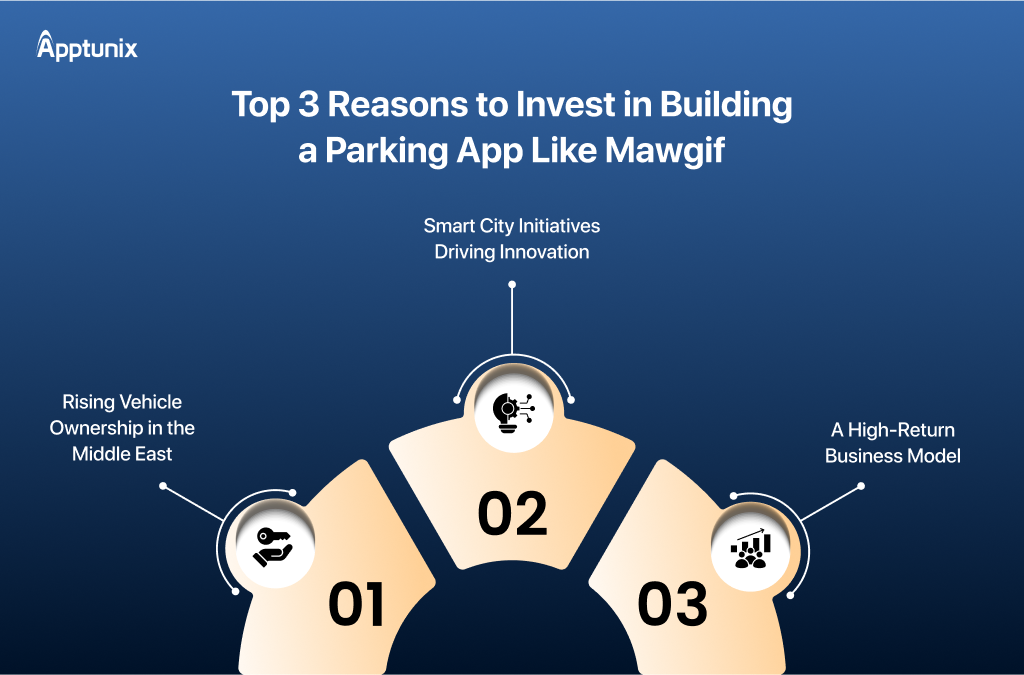
1. Rising Vehicle Ownership in the Middle EastAccording to research, vehicle ownership in the GCC region is growing at an average rate of 6–7% annually. More vehicles mean greater demand for organized and digital parking systems.
The conventional parking facilities are just not in a position to match. That’s why cities are moving towards smart parking apps like Mawgif to regulate traffic and deliver real-time availability updates. By developing an app like Mawgif, you tap into a growing urban necessity that’s scaling fast.
2. Smart City Initiatives Driving InnovationThe Middle East is witnessing a massive smart city revolution. Projects like NEOM (Saudi Arabia) and Smart Dubai 2030 are heavily investing in IoT, AI, and mobility tech.
Reports indicate that the smart cities market in the UAE will reach over $78.1 million by 2030. These initiatives explicitly facilitate the development of parking apps. To integrate with the city infrastructure for better traffic flow and sustainability.
A Mawgif-style smart parking app fits perfectly into this ecosystem, blending mobility with innovation to create smarter, greener cities.
3. A High-Return Business ModelAlong with convenience, building a parking app like Mawgif offers a scalable revenue model. The global parking management market was valued at $4.7 billion in 2023 and is expected to exceed $9.2 billion by 2030.
The opportunities to generate income through hourly reservations to digital ads are enormous and untapped. A well-designed smart parking app solution can generate consistent income for businesses in multiple ways.
Having known about the business prospects, now we should discuss which features are needed in your parking app. These features should match the efficiency and innovation of Mawgif.
Building a smart parking app that can outshine Mawgif requires more than just basic booking features. Here’s a breakdown of the essential features your Mawgif-like parking app must include:
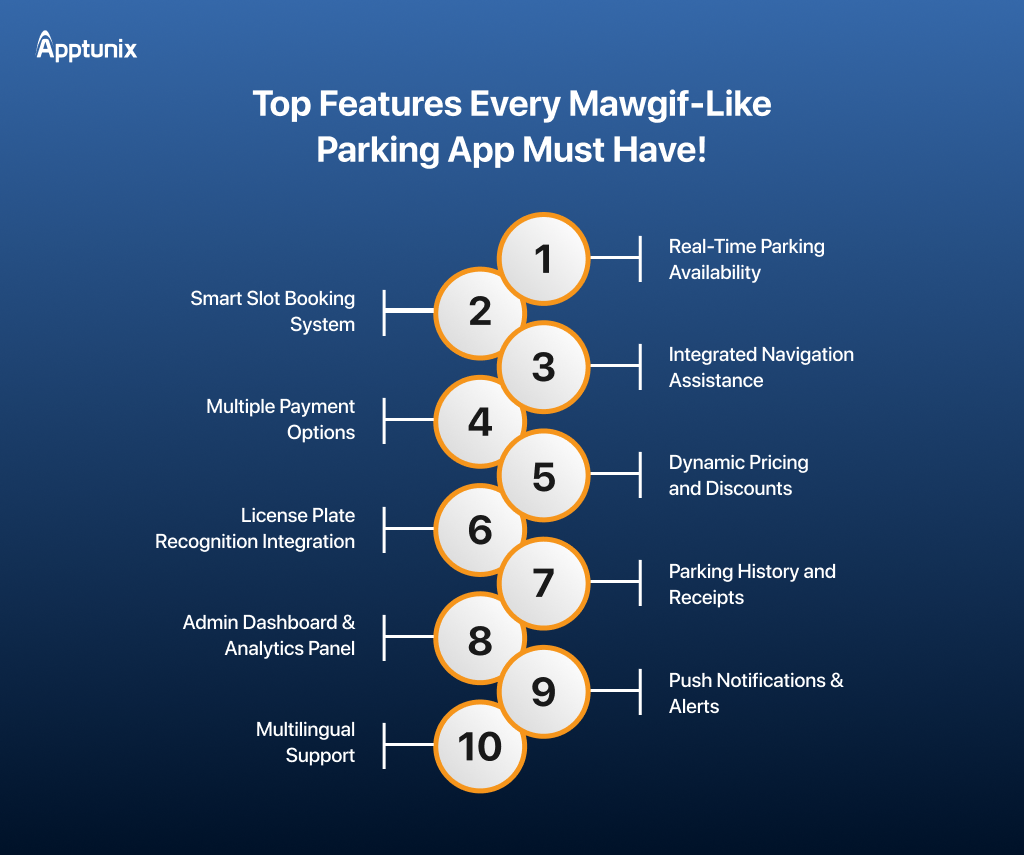
1. Real-Time Parking AvailabilityAt the centre of any parking app like Mawgif is a real-time slot tracking. Users can instantly check prices, distance, and available parking spaces around. The feature is based on IoT sensors and GPS integration that ensures that the data is constantly updated.
Using this, users can avoid circling endlessly, saving time, fuel, and frustration.
2. Smart Slot Booking SystemUsers should be able to book parking slots in advance with just a few taps. The Mawgif app does this exceptionally well; it allows both instant and scheduled bookings for maximum flexibility.
This feature can be further enhanced by allowing users to extend their time remotely or cancel bookings with minimal effort.
3. Integrated Navigation AssistanceIn case a user reserved a spot, then the app ought to show the parking place to them. The integration of Google Maps, Apple Maps, or Waze API will provide effortless navigation. It assists users in getting to the parking bay from their current location.
Some smart parking apps also offer in-garage navigation, where AR or BLE beacons guide the driver to a reserved parking space. This feature creates a next-level experience that amplifies user satisfaction.
4. Multiple Payment OptionsDigital payments are now the new standard method of transaction. The Mawgif app offers multiple payment options, including credit/debit cards, Apple Pay, Google Pay, and digital wallets.
The inclusion of a secure payment gateway will facilitate secure transactions and build trust in the user. You can also implement wallet-based systems or loyalty points, encouraging users to top up and return frequently.
5. Dynamic Pricing and DiscountsDynamic pricing keeps users engaged and makes the most profits possible. Apply dynamic pricing models that vary rates depending on demand, time, or location.
Provide discounted fares during off-peak hours or subscription plans for regular users, as Mawgif provides. This not only maximizes use but also maintains app engagement.
6. License Plate Recognition (LPR) IntegrationTo maximize automation, include license plate recognition in your parking app development process. It assists in automating the check-ins and check-outs without any manual intervention. The system also auto-verifies their booking through camera-based scanning. This feature boosts efficiency, reduces operational costs, and outperforms basic parking solutions.
7. Parking History and ReceiptsThe app dashboard should provide every user with a summary of their parking history, payments, and receipts. This information will assist users in controlling their costs as well as give them insight into parking patterns. Which can later be used for loyalty programs or predictive recommendations.
8. Admin Dashboard & Analytics PanelYour Mawgif clone app should include a robust admin panel that allows parking operators or businesses to manage everything from a single screen.
Features may include:
Adding AI-based analytics can help predict peak hours, optimize pricing, and improve overall operations.
9. Push Notifications & AlertsUpdate users regularly with alerts for bookings, confirmations of payments, or offers. Push notifications are extremely essential for holding the user back.
For example, if a user parks frequently in the same zone, the app can send personalized offers or remind them of upcoming events nearby.
10. Multilingual SupportSince the Mawgif app caters to users across GCC countries, offering Arabic and English language support is a must. It also makes your app more convenient and provides a distinctly local feel. Through this feature, you can reach a broader audience in the Middle East parking app market.
These features form the backbone of a market-leading application. Next, we will discuss the parking app development steps to bring these features to life.
Creating a parking app like Mawgif is a blend of innovation, precision, and strategy. It’s not only about coding an app. But designing a seamless experience that solves real-world parking challenges while driving profitability.
Let’s break down the whole development process, starting with the validation of the idea, up to post-launch scaling.
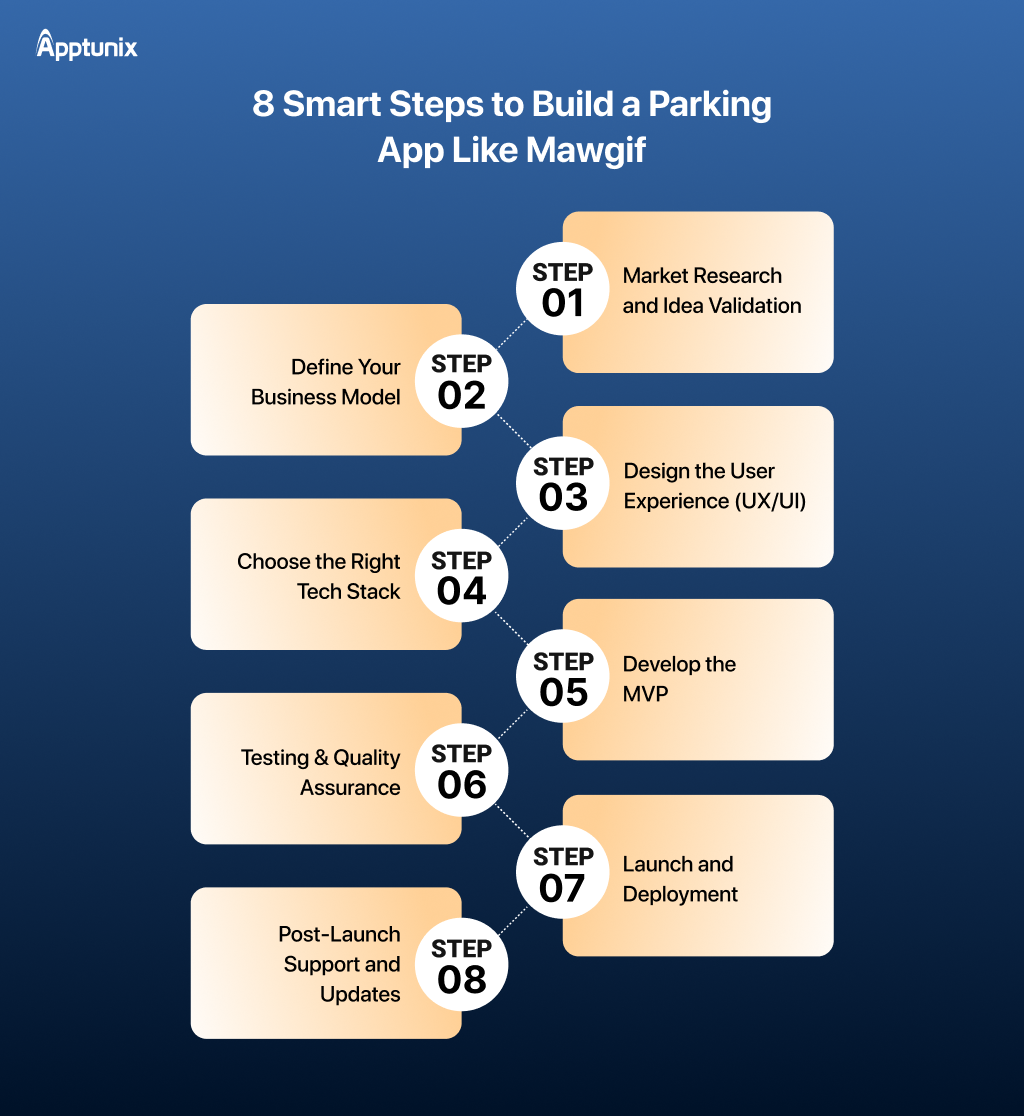
Step 1: Market Research and Idea ValidationVerify your idea before jumping into parking app development. Evaluate market dynamics, audience behavior, and competitor offerings. In the Middle East, the smart parking market is flourishing due to urban expansion.
Knowing user preferences aids in creating the distinctive value proposition of your app.
Step 2: Define Your Business ModelSecondly, determine how your car parking app will generate revenue. Will it operate on a commission basis, subscription plan, or hourly booking fee? Defining your model early helps shape your feature set and marketing plan.
Step 3: Design the User Experience (UX/UI)A clean and intuitive interface is of utmost importance for a good start. The Mawgif app is loved for its simplicity and speed, and your design should follow the same logic.
Design Goals:
Prior to full-scale development, spend money on clickable prototypes and wireframes. The best tools for visualizing user journeys are Adobe XD and Figma.
Step 4: Choose the Right Tech StackThe tech stack defines the performance, scalability, and reliability of your Mawgif clone app. Here’s a recommended tech architecture for your smart parking app development project:
Pro Insight: If you want to develop a parking app like Mawgif, focus on compliance first. Verify that your payment gateways and cloud services adhere to regional laws. Some of them are like Saudi Arabia’s SAMA and the United Arab Emirates’ TRA.
Step 5: Develop the MVP (Minimum Viable Product)Prior to going full scale, begin with an MVP parking app. A version that has only the most critical features. This offers you a possibility to test the app, gather user feedback, and make improvements early. Deploying an MVP smart parking app serves to validate your idea and bring in early investors. It also minimizes development risk and expense.
Step 6: Test & Quality AssuranceTesting is what separates a good app from a great one.
Conduct extensive testing once it has been developed. Thorough QA ensures your custom parking app like Mawgif, runs error-free across devices, browsers, and network conditions. A bug-free, fast-loading app builds confidence and enhances retention.
Step 7: Launch and DeploymentAfter passing QA, your app is ready to go live on App Store and Google Play. Plan a soft launch in one or two cities before full-scale expansion. Gather feedback, measure performance, and iterate based on real-world metrics.
Step 8: Post-Launch Support and UpdatesOne successful launch is not the final step but the stepping stone for iteration. Keep improving your Mawgif-like parking app through updates, security patches, and new feature rollouts.
In addition, monitor user analytics to have an idea about the booking trends and improvement areas. This continuous improvement aid keeps your app relevant and competitive in the fast-evolving parking app development landscape.
Bonus: If you’re not tech-savvy, collaborating with an experienced Mawgif parking app development company can make all the difference.
They’ll handle everything from UI/UX design to IoT integration, ensuring your app aligns with MENA market needs.
Next, we address the cost to build a parking app like Mawgif.
The cost to build a parking app like Mawgif can basically range between $25,000 to over $150,000+. It depends heavily on the complexity, features, and geographic location of the development team. A simple Minimum Viable Product with core functionality might start at the lower end. However, incorporating advanced features can significantly escalate the investment.
Cost Breakdown by App Complexity
Planning to launch your parking app across the MENA region?
It’s essential to acknowledge the factors that impact Parking App Development Cost to estimate the budget more accurately. Let’s explore the most important cost determinants that shape your project timeline and investment:
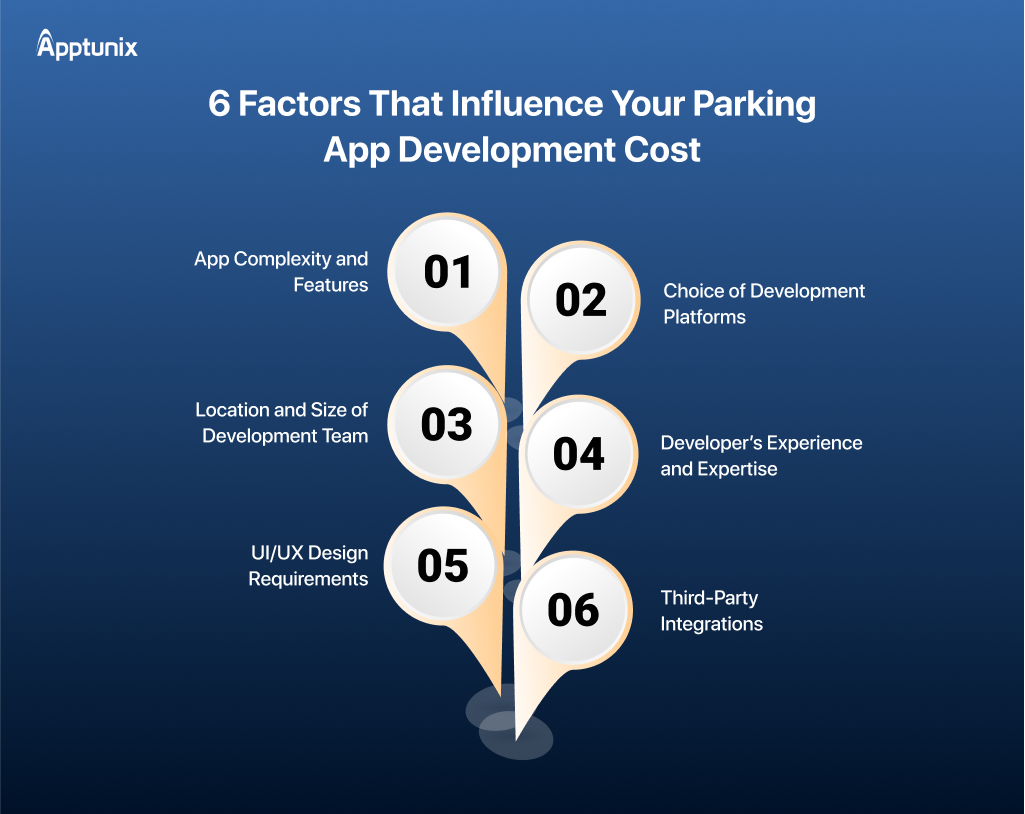
1. App Complexity and FeaturesHigher app complexity clearly states the higher development cost. A basic parking app with features like user login, slot booking, and payments will naturally cost less. However, adding advanced features definitely raises costs.
Hence, defining your feature list for a Mawgif-like parking app early can help streamline costs without degrading quality.
2. Choice of Development PlatformsYour selected platform directly impacts the Mawgif parking app development cost. Building a native app for Android and iOS separately ensures outstanding performance, but can twice your expenses.
Cross-platform frameworks like Flutter or React Native are affordable alternatives. It allows faster deployment with a single codebase. Businesses in the parking app market often prefer hybrid apps to balance quality and budget.
3. Location and Size of Development TeamThe location of your development team acts as a catalyst in determining overall cost. Developers in the GCC, UAE, or Saudi Arabia impose premium rates. While offshore teams in countries like India or Egypt offer more budget-friendly options. Additionally, the team size matters a lot.
A larger team with specialized roles accelerates timelines but raises cost. Collaborating with an experienced parking app development company helps maintain quality within budget.
4. Developer’s Experience and ExpertiseHiring developers with prior experience in smart parking app solutions costs more but ensures fewer errors and faster delivery.
Expert teams already understand the peculiarities of real-time tracking, IoT integration, and regional payment systems. Through that, you can save your money in the long run by reducing post-launch issues and rework.
5. UI/UX Design RequirementsThe interface of your app is the first impression one has. A sleek UI/UX design tailored for Arabic and English users enhances engagement but adds to design time and cost.
If you plan to build a custom parking app like Mawgif, expect to invest more in interactive elements, responsive layouts, and RTL support. Advanced design prototypes and user testing ensure a smoother user journey.
6. Third-Party IntegrationsIntegrating third-party APIs hugely influences your parking app development cost. From Google Maps, IoT sensors, and payment gateways to ANPR and smart camera systems, each integration adds complexity and licensing costs.
These integrations upgrade accuracy and convenience but require additional testing and maintenance. So, while they boost functionality, they also raise initial development investment for any Mawgif clone app.
Curious what it would actually cost to create a parking app like Mawgif in different parts of the world? Understanding regional pricing helps plan your budget smartly and choose the right development partner.
Here’s a detailed region-wise cost breakdown for parking app development in 2025:
Up next, let’s explore how you can make your investment profitable through smart parking app monetization models.
A smart parking app offers multiple income sources. Relying only on standard hourly fees would not be enough. A well-planned Mawgif-like parking app monetization model can help you generate a steady flow of earnings.
Let’s check the most profitable monetization methods that can turn your smart parking app into an enduring business growth.
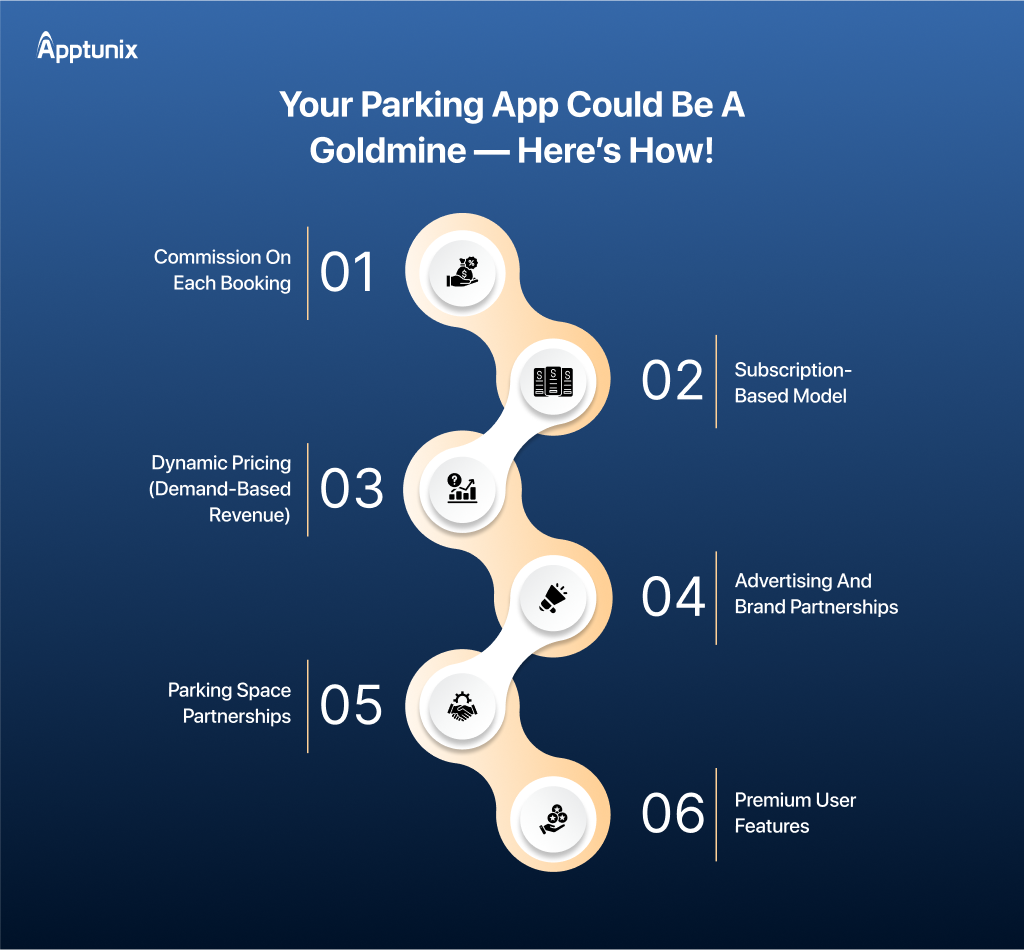
1. Commission on Each BookingThe most popular revenue model for parking apps like Mawgif is per-booking commission. Every time a user reserves a slot through your platform, a small percentage is earned by your business.
This model is scalable and can expand your user base. High-demand cities like Dubai, Riyadh, or Doha have found this model effective because of limited parking spaces.
2. Subscription-Based ModelOffer monthly or annual subscription plans for frequent users or corporate clients. Subscribers can enjoy benefits like discounted parking rates, priority booking, and exclusive slots during peak hours.
This model fosters loyalty and also ensures predictable recurring revenue for your Mawgif-like parking app.
3. Dynamic Pricing (Demand-Based Revenue)Dynamic pricing allows you to set the prices of parking according to location, demand, or time. Just like surge pricing in ride-hailing apps, it helps maximize revenue during peak hours or occasions. For example, parking rates can rise near stadiums or malls during weekends.
Your smart parking app can automatically recommend the best prices using AI and analytics, ensuring both profitability and fairness.
4. Advertising and Brand PartnershipsLocal businesses, car washes, or service centers can advertise on your platform. This model generates an extra income stream without charging users directly. You can display in-app promotions, banner ads, or location-based offers.
Collaborating with local brands in the UAE and GCC region can enhance your app’s ecosystem while generating consistent ad revenue.
5. Parking Space PartnershipsPartnering with private parking operators, malls, airports, and real estate developers can open a new source of revenue.
You can charge a listing fee or earn a share of each transaction made through your app. This B2B revenue model helps expand your coverage across multiple cities.
6. Premium User FeaturesIntroduce paid premium features such as advanced slot booking, cashless entry and exit, or real-time parking analytics. These exclusive tools cater to power users who value speed and convenience. It’s an excellent way to boost revenue without cluttering your app with ads.
Let’s now explore the top alternatives to Mawgif that inspire innovation and competition in smart parking spaces.
Mawgif has become a pioneer in smart parking app solutions across the Middle East. But remember, it’s not the only successful model out there. Several global and regional players are redefining how users find, book, and pay for parking. Let’s explore five major alternatives to Mawgif that are making a global impact.
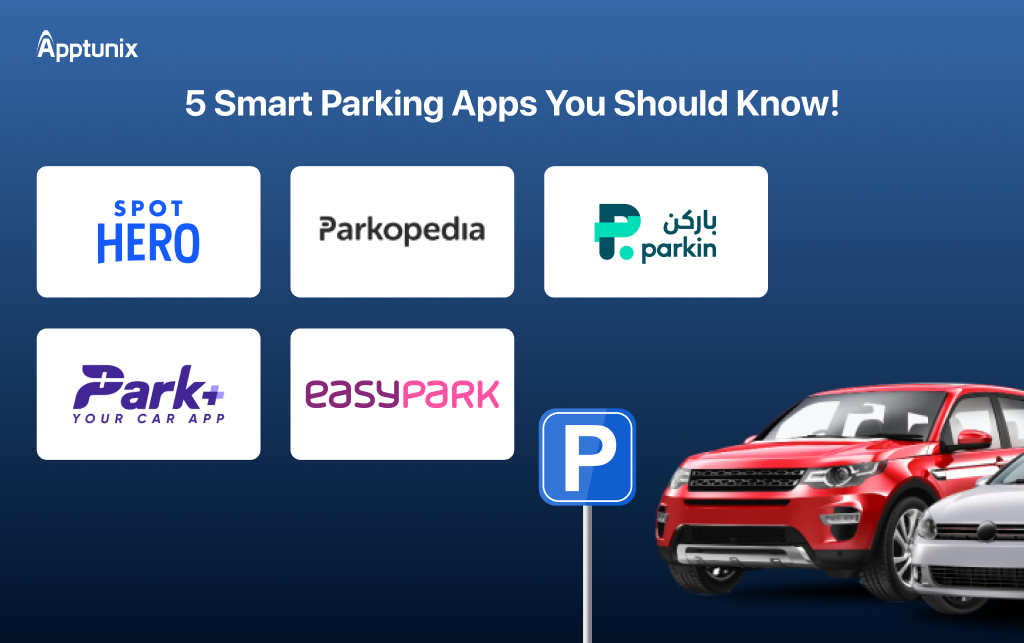
1. SpotHeroSpotHero is one of the widely recognized names in the parking app industry. It connects drivers with thousands of parking garages, offering easy pre-booking and digital payments.
The popularity of SpotHero indicates the value of convenience and user experience. If you’re developing a Mawgif-like parking app, focusing on seamless navigation and flexible payment options can help attract urban users.
2. ParkopediaParkopedia is often called the “Wikipedia of parking.” It covers over 70 million parking spaces across 90 countries. With detailed data, maps, and payment integrations, it’s a global leader in parking space booking apps.
Parkopedia proves how data accuracy and scale can drive user trust. Entrepreneurs planning Mawgif clone app development can leverage this model to offer detailed parking data for MENA regions, ensuring reliability and retention.
3. ParkinParkin is an emerging smart parking app designed for Middle Eastern markets. It offers contactless entry, real-time slot updates, and easy payments. It closely resembles Mawgif’s business model.
Parkin’s rise reflects the growing need for localized parking app development in the Middle East. For entrepreneurs in the UAE or Saudi Arabia, developing an app like Mawgif or Parkin can tap into the region’s accelerating smart city initiatives.
4. Park+Park+ started as a parking automation app and has evolved into a full vehicle management platform. Popular in Asian and Middle Eastern regions, it allows users to manage parking, insurance, tolls, and car maintenance in one place.
Park+ highlights the power of a super app strategy, offering more than just parking.
5. EasyParkEasyPark is one of Europe’s leading smart parking app solutions, with operations in 20+ countries. It simplifies urban parking through AI-driven predictions and real-time navigation to open spaces.
EasyPark emphasizes innovation and automation. Integrating similar AI-driven navigation or predictive analytics can make your Mawgif parking app development more advanced and user-friendly.
If you’re ready to turn your parking app idea into reality, Apptunix is a trusted mobile app development company in UAE delivering reliable solutions tailored to your business needs. With over 12+ years of experience, we specialise in building custom smart parking app solutions designed specifically for the MENA market.
Our team of experienced developers, designers, and strategists understands what it takes to build a parking app like Mawgif. From MVP parking app development to enterprise-grade Mawgif clone solutions, we ensure every project is built for scalability, performance, and long-term growth.
At Apptunix, we focus on:
We don’t just develop apps, we help you launch, scale, and dominate your niche. Our parking app development services are trusted by enterprises across the Middle East region for their quality, innovation, and ROI-driven approach.
So, if you want to create a parking app like Mawgif, contact Apptunix to make it happen.
Let’s build your next-generation parking solution today.
Q 1.Are parking apps profitable?
Yes, parking apps are highly profitable, especially in regions with limited parking space like the Middle East. Apps like Mawgif earn through commissions, hourly booking fees, and premium parking subscriptions.
Based on Fortune Business Insights, the smart parking market worldwide is expected to grow up to $16.54 billion by 2030. With the increasing usage of smart city infrastructure, parking apps earn consistent revenue.
Q 2.What is the cost to build a parking app like Mawgif in the Middle East?
On average, the cost to develop a parking app like Mawgif in the Middle East ranges between $20,000 to $150,000+, depending on features, tech stack, and location.
Factors like IoT integration, AI-based prediction, and bilingual support (Arabic–English) can influence the overall investment. It is better to partner with a seasoned Mawgif parking app development firm to ensure maximum optimization and ROI.
Q 3.How long does it take for parking app development?
Developing a parking app like Mawgif usually takes 4 to 6 months.
Here’s a quick breakdown:
Timelines may vary depending on app complexity, number of features, and platform (iOS, Android, or both).
Q 4.What is the use of AI in parking app development?
AI plays a vital role in smart parking app development by enhancing user convenience and system efficiency.
Key applications include:
Q 5.How to choose the best parking app development firms in GCC?
When choosing a parking app development company in the GCC, look for:
Proven experience in smart mobility.
Apptunix, for example, has delivered several custom parking app solutions across the UAE, Saudi Arabia, and Qatar.
Q 6.What are the features needed in a parking app like Mawgif?
A parking app like Mawgif must include:
Q 7.What are the benefits of a smart parking app?
A smart parking app enhances convenience, minimizes traffic congestion, and assists drivers in saving time. These apps have given governments and operators the means to maximize the utilization of parking space and improve urban mobility.
Q 8.How can I create a parking app like Mawgif?
To create a parking app like Mawgif, follow these essential steps:
Q 9.How do car parking apps work?
The car parking apps operate based on location-based technology, which links parking spaces to drivers in real time. Here’s how:
Q 10.What is the business model of a parking app?
A parking app like Mawgif can generate revenue through multiple business models:
(8 ratings, average: 5.00 out of 5)
Get the weekly updates on the newest brand stories, business models and technology right in your inbox.
Arohi Singh is a technology content strategist at Apptunix, where she writes about software and app development across industries, from on-demand and logistics to fintech, healthcare, and applied AI. With over 5 years of experience, she works closely with Apptunix’s engineers, product managers, and solution architects to turn real project insights into clear, decision-ready guidance for founders and business leaders. Her writing focuses on what matters before you build: market context, feature trade-offs, realistic costs, and compliance considerations
Book your consultation with us.
Book your consultation with us.


One Central, The offices 3, Level 3, DWTC, Sheikh Zayed Road, Dubai
+971 50 782 1690